Responsible & Ethical AI at Work Training
A well-meaning employee pastes confidential data into a public AI to save ten minutes — and a breach is born.
Right now, somewhere in your organisation, a well-meaning employee is pasting confidential client data into a public AI tool to save ten minutes. Another is forwarding a confident, polished answer that happens to be completely made up. A third is quietly letting biased output shape a real decision about a real person. None of them mean any harm. None of them were ever told where the lines are. That is how responsible-AI failures actually happen — not through villains, but through ordinary, capable people using powerful tools without guardrails. A policy PDF that no one opens will not fix it. This programme will: it builds the judgement your people need into their everyday habits.
★ 5.0 client rating · Across Maharashtra, pan-India & internationally · English, Hindi & Marathi
The Quiet Mistakes Nobody Meant to Make
The danger with AI at work is not a hacker or a headline. It is a good employee on an ordinary Tuesday. It is the salesperson who drops a customer's full contract into a free chatbot to "just summarise it." The analyst who pastes a spreadsheet of names, salaries and phone numbers to reformat it faster. The junior who sends a manager a confident, fluent answer — never realising the tool invented the figure in the middle of it. Each of them was trying to do good work quickly. Each of them, without a second thought, did something the organisation would never have signed off on.
And the cost stays hidden until it is not. Confidential information, once pasted into someone else's system, cannot be pulled back. A made-up "fact" travels through three emails before anyone checks it. A biased screening suggestion becomes a rejected candidate becomes a story someone tells. By the time it surfaces — in a client complaint, an audit question, a decision that will not hold up — no one can point to the moment it went wrong, because there was no dramatic moment. There was just a helpful tool, an unspoken assumption, and nobody who had ever been shown where the line was.
Why It Happens — And Why It Is Completely Fixable
Here is the honest diagnosis: your people are not careless, and they are not the problem. The problem is that AI tools feel effortless, private and authoritative — and all three feelings are misleading. They feel private, so a public tool gets treated like a locked drawer. They feel effortless, so the ten-second shortcut wins over the ten-minute careful path. And they sound so confident, so fluent, so sure, that a fabricated answer is indistinguishable from a true one — until someone who knows the topic reads it closely. Nobody has an instinct for this yet. Instincts are built, not born, and no one has built these ones.
That is exactly why this is fixable. What protects an organisation is not another rule buried in a handbook — it is judgement that lives in the moment of use: a reflex that pauses before pasting, a habit of verifying before trusting, an eye that notices when output is skewed, and the plain confidence to say "we should not use AI for this one." Those are learnable, practisable behaviours. This programme builds them deliberately — in the room, on the real situations your people meet — so responsible AI stops being a document and becomes the way your team actually works.
Does This Sound Familiar?
If any of these sound familiar, it is almost never because your people are reckless. It is because no one has ever shown them where the lines are or how to think at the moment of use. Here is what you are likely seeing, what it is quietly costing you, and exactly which part of the programme addresses it.
| The symptom you see | What it is costing you | The real cause | How the programme fixes it |
|---|---|---|---|
| People paste confidential or client data into public AI tools to work faster | Information you can never retrieve is now sitting in someone else's system — a breach with no undo | A public tool feels private, and no one was ever told what must never leave the building | The data-protection module — what never to paste, made a reflex |
| Confident, fluent AI answers get forwarded and acted on without being checked | Made-up figures and false "facts" reach clients and decisions before anyone catches them | The output sounds so sure that people forget it can be completely, plausibly wrong | The verify-before-you-trust module — the hallucination discipline |
| AI output quietly shapes decisions about people — hiring, scoring, prioritising | Biased suggestions become unfair outcomes, real harm to real people, and reputational risk | No one was taught that AI can inherit and amplify bias, or how to spot it | The recognising-bias module — seeing and reducing unfairness |
| No one is honest about what was AI-assisted — work is passed off as fully human | Eroded trust, IP and copyright confusion, and awkward questions no one can answer | There is no shared norm for when and how to disclose AI's role | The disclosure, IP and honesty module |
| People reach for AI on tasks where it simply should not be used | Sensitive, high-stakes or human-judgement calls get outsourced to a tool that cannot own them | No one drew the line between where AI helps and where it must stay out | The when-not-to-use-AI module — the judgement calls |
What Changes When Responsible AI Becomes a Habit
Picture the same ordinary Tuesday, after this training. The salesperson pauses before pasting the contract, strips out what identifies the client, and gets the summary safely. The analyst reformats the spreadsheet in a way that never exposes a single name. The junior runs the confident answer through a thirty-second verification and catches the invented figure before it ever reaches the manager. Nobody is slower, nobody is scared of the tools — they simply use them the way a professional uses any powerful instrument: with judgement.
And underneath the individual habits, something bigger settles in: a culture where people feel safe to say "wait, should we be putting this into AI?" without looking difficult, where verifying is normal rather than paranoid, and where being honest about AI's role is just how things are done. You get the speed and leverage of AI without the quiet breaches, the confident errors, and the unfair decisions — because your people finally know where the lines are, and they hold them by instinct.
What Your Teams Will Be Able to Do
- ✓ Recognise the everyday ways AI use goes wrong — and why good people make these mistakes
- ✓ Know exactly what confidential and personal information must never go into a public AI tool
- ✓ Spot bias and unfairness in AI output before it shapes a decision about a real person
- ✓ Verify a confident answer before trusting it, so fabricated "facts" never make it downstream
- ✓ Be honest about AI-assisted work — handling disclosure, IP and credit with integrity
- ✓ Make the judgement call on when NOT to use AI at all, and say so without hesitation
- ✓ Help build a speak-up, verify-first culture where responsible AI use is simply the norm
What the Programme Covers
Seven connected modules that take a team from unaware to genuinely responsible with AI. Every module pairs a short, plain-language input with real practice on the exact judgement calls your people face — and ends with a concrete change in how they behave the next time they open an AI tool. It is tool-agnostic by design: the tools will change, the principles will not.
These are building blocks, not a fixed-length course. A two-hour session goes deep on the two or three that matter most to you; a half or full day covers more; a multi-day intensive — or an ongoing monthly, quarterly or half-yearly rhythm — works through them all, with far more practice. We shape which ones, in what order and how deep, with you.
Why Responsible AI Is Everyone's Job — The Everyday Risks
What we cover: Why responsible AI is not the IT team's problem or a policy on a shelf, but a set of choices every employee makes daily. The four ordinary failure modes — leaking data, trusting a fabrication, acting on bias, and using AI where it does not belong. Walking through real, relatable near-misses rather than dramatic hypotheticals. Why "I was just trying to be efficient" is exactly how the trouble starts, and why awareness — not fear — is the first line of defence.
What changes: Everyone leaves understanding that they personally hold the guardrails — and can name the four everyday risks they now watch for.
Protecting Confidential and Personal Data — What Never to Paste
What we cover: The single most common breach: pasting information into a public tool that should never leave the organisation. Drawing a clear, memorable line around what is confidential — client data, personal details of employees or customers, financial and legal information, anything covered by a promise of confidentiality. Why "it felt private" is a trap. Practical habits: stripping out identifying details, keeping to approved tools where they exist, and the simple pause-before-you-paste reflex. What data privacy really means for the person at the keyboard.
What changes: The team develops an automatic instinct for what must never be typed into a public AI tool — and safer ways to get the same work done.
Recognising Bias and Unfairness in AI Output
What we cover: Why AI learns from the past and can quietly carry its unfairness forward — favouring some groups, penalising others, all while sounding neutral. Where bias shows up in real work: screening, scoring, ranking, recommending, and the language a tool produces about people. How to read output with a critical eye instead of assuming the machine is objective. The habit of asking "who might this be unfair to?" before acting. Reducing harm by keeping a human judgement between the output and the decision.
What changes: People stop treating AI output as automatically fair and start actively checking it for bias before it affects anyone.
The Hallucination Problem — Verify Before You Trust
What we cover: Why AI tools can state something false with total confidence — inventing figures, sources, quotes and facts that read as completely credible. Why fluency is not truth, and why a polished answer earns scrutiny, not trust. A simple, fast verification discipline: which claims to check, how to check them, and when a second source is non-negotiable. The special danger of forwarding an AI answer as your own without reading it critically. Building "trust, then verify" — actually, verify, then trust — into everyday use.
What changes: The team treats confident AI output as a draft to be checked, not a fact to be forwarded — so fabricated information stops reaching clients and decisions.
Disclosure, IP and Honesty When Using AI
What we cover: The integrity questions AI raises that no one quite talks about. When it is right to disclose that work was AI-assisted, and when passing it off as fully your own crosses a line. Who owns AI-generated content, and why pasting in someone else's copyrighted material — or treating AI output as automatically yours — is riskier than it looks. Giving honest credit and being transparent with clients and colleagues. Building a shared team norm so honesty about AI is the default, not an awkward exception.
What changes: People handle AI-assisted work with transparency and integrity — protecting trust, and steering clear of IP and honesty traps.
When NOT to Use AI — The Judgement Calls
What we cover: The most underrated skill: knowing when to keep AI out of it. The categories where AI should not be the decider — deeply personal or sensitive matters, high-stakes calls that need a human to own them, situations where confidentiality is absolute, and anything requiring genuine empathy, accountability or moral judgement. Why "the tool can do it" and "we should let the tool do it" are different questions. Building the confidence to say "not this one" — and to raise it without feeling like a blocker.
What changes: The team gains the judgement to draw a clear line between where AI genuinely helps and where it must stay out — and the confidence to hold that line.
Practice — Build Your Team's Responsible-AI Checklist
What we cover: A working session where the group turns everything into a practical, plain-language checklist they will actually use — theirs, in their words, for their real work. Pressure-testing it against live scenarios: the urgent request that tempts a data paste, the too-good answer that needs checking, the decision where bias could creep in, the moment to disclose, the task to keep away from AI entirely. Agreeing simple team norms and the language to speak up. Leaving with a one-page reference, not a forgotten policy.
What changes: The team walks out with its own responsible-AI checklist and a shared way of speaking up — responsible AI becomes how they work, not a document they were sent.
How It Is Delivered
This is not a lecture on AI ethics, and it is deliberately not a legal or compliance briefing. It is a practical, human workshop about behaviour and judgement — what people should and should not do at the keyboard, and how to build a team culture that speaks up and verifies. Participants spend most of their time on real scenarios drawn from their own work: deciding in the moment what is safe to paste, catching a fabricated answer, spotting a biased suggestion, and calling the judgement on when to keep AI out. The principles are kept simple and durable; the practice is where the instinct is built.
The format flexes to your needs. It runs as a focused half-day awareness session, a full-day workshop, a multi-day intensive for a function that lives close to sensitive data, or a short modular series rolled out across teams — and it works especially well as an ongoing rhythm, revisited as your people's AI use deepens. For 20 to 40 participants it is organised into small batches so everyone practises the judgement calls, not just listens. The exact depth, duration and cadence are shaped with you in the design call, around your industry and your real risks.
Formats That Fit Your Calendar
Half-day or full-day workshop
A high-impact session to give a whole team the judgement and habits for safe, honest AI use quickly — ideal as AI adoption spreads across the organisation.
Multi-day intensive
Two or more days to go deep — well suited to functions that work close to confidential and personal data, such as sales, HR, finance, legal and customer service.
Modular series across teams
Shorter sessions rolled out team by team, so responsible-AI habits spread consistently across the organisation without pausing everyone at once.
An ongoing responsible-AI rhythm
Revisited periodically as your people's AI use grows and the tools change — keeping the principles current and the habits sharp, since the risks evolve.
The Thinking Behind It
This programme is not a generic AI-ethics deck, and it is deliberately tool-agnostic — the tools will keep changing; the principles of privacy, verification, fairness, honesty and human judgement will not. It draws on the clearest thinking on AI's real-world risks — distilled into habits your people can use immediately — and then goes further, into the behavioural and judgement frameworks Avinash uses to build a speak-up, verify-first culture inside his own 100-plus member organisation.
Ideas & books we draw on
- The Alignment Problem — Brian Christian · the definitive account of why AI so often does not do what we actually intend — the gap responsible use has to close by hand
- Weapons of Math Destruction — Cathy O'Neil · how opaque algorithms quietly scale unfairness — essential for understanding why AI output about people must be checked, not trusted
- Atlas of AI — Kate Crawford · the hidden costs behind the tools — a sobering reminder that AI is never as neutral or effortless as it feels at the keyboard
- Tools and Weapons — Brad Smith & Carol Ann Browne · from inside big tech, the case that powerful tools demand responsible human oversight rather than blind adoption
- System Error — Rob Reich, Mehran Sahami & Jeremy Weinstein · three Stanford professors on how an obsession with efficiency sidelines human values — the exact trap the ten-second shortcut sets
- Rebooting AI — Gary Marcus & Ernest Davis · a clear-eyed look at what AI genuinely cannot yet do — the antidote to trusting a confident answer just because it sounds sure
Frameworks we use for responsible AI
- Data confidentiality and privacy rules · a clear line on what must never be pasted into a public tool — the single most preventable breach
- The hallucination-and-verify discipline · treat confident output as a draft to check, not a fact to forward — verify, then trust
- Recognising and reducing bias · asking "who might this be unfair to?" and keeping a human between AI output and any decision about a person
- The human-in-the-loop principle · AI advises, a person decides and owns it — never the other way round on anything that matters
- A responsible-AI decision checklist · a simple, in-the-moment gate: is it safe, is it verified, is it fair, is it honest, should we use AI at all?
And Avinash's own frameworks — the part you won't find anywhere else
Beyond the established thinking, the programme is built on frameworks Avinash has created and written about himself — including his KITE leadership framework and the principles in his book The Winning Edge. These come from actually running a 100-plus member organisation and developing its people year after year, not from a textbook. It is the layer competitors cannot copy, and the one your teams remember long after the session ends.
Who It Is For
Every team that has started using AI in its everyday work — which, increasingly, is every team. It is especially valuable for functions that live close to confidential and personal data: sales handling client information, HR and recruitment making decisions about people, finance and legal working with sensitive records, and customer service speaking on the organisation's behalf. It is equally powerful run for whole workforces as a shared baseline of responsible use, and for managers who need to set the tone. Wherever people have quietly folded AI into how they work — often faster than any policy could keep up — this is the programme that puts judgement around it.
Taught by Someone Who Leads a Team Through This in Real Time
Avinash Chate does not teach this as a distant expert. He runs a 100-plus member organisation whose people use AI tools every day — so the questions of what to paste, what to verify, what to disclose and when to keep AI out are ones he has had to answer for a real team with real clients, not in the abstract. An M.Tech who self-taught more than twenty tools, he is fluent in what these tools can do; as a trusted behavioural and leadership trainer, TEDx speaker and author of The Winning Edge, his real work is the human side — the judgement, the habits and the speak-up culture that keep a team responsible. That combination, technically literate but grounded in behaviour, is exactly what this topic needs — and it is deliberately about everyday responsible conduct, not legal advice.
Why Avinash Chate
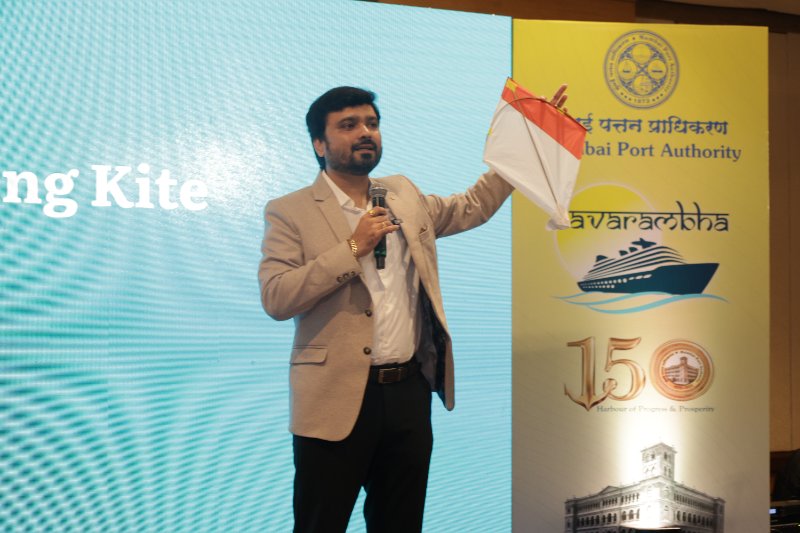
Avinash Chate is an entrepreneur and corporate trainer who runs ABC Trainings and The Future Corporate & Business Coaching, a TEDx speaker and published author. Over the last decade he has trained teams at 1,000-plus organisations and 15,000-plus professionals.
He teaches these skills not from a manual, but because he practises them himself — leading a 100-plus member team of his own. That is the difference working leaders feel in the room.
Responsible & Ethical AI at Work Training — FAQ
What is Responsible & Ethical AI at Work Training?
It is a practical programme that builds the judgement and habits your people need to use AI tools safely and honestly in their everyday work. It covers the everyday risks, what confidential and personal data must never be pasted into a public tool, how to recognise bias in AI output, the discipline of verifying a confident answer before trusting it, honesty and disclosure about AI-assisted work, and the judgement to know when not to use AI at all. It is the human, behavioural side of responsible AI — building a speak-up and verify culture — rather than a legal, compliance or technical lecture.
Who should attend this training?
Any team that has started using AI in its work, which is increasingly everyone. It is especially valuable for functions close to confidential and personal data — sales, HR and recruitment, finance, legal, and customer service — and for managers setting the tone for their teams. It also works well delivered to a whole workforce as a shared baseline, so everyone holds the same lines and speaks the same language about responsible use.
Is this legal, compliance or technical training?
No — and that distinction matters. This programme is about everyday human behaviour and judgement: what people should and should not do at the keyboard, and how to build a culture that verifies and speaks up. It complements your legal, compliance and IT policies rather than replacing them, and it is not legal advice. Avinash delivers the behavioural and judgement side — the habits that make any AI policy actually work in practice — not a lawyer's or an ML engineer's brief.
Is the training tied to specific AI tools, and will it go out of date?
Deliberately not. The programme is tool-agnostic: it is built around durable principles — data privacy, verification, fairness, honest disclosure, human judgement and knowing when not to use AI — rather than any particular product or version. The tools will keep changing; those principles will not. That is exactly why it stays relevant as your people's AI use deepens and the landscape shifts, and why we recommend revisiting it periodically as an ongoing rhythm.
What does the programme cover?
Seven connected modules: why responsible AI is everyone's job and the everyday risks; protecting confidential and personal data and what never to paste; recognising bias and unfairness in AI output; the hallucination problem and verifying before you trust; disclosure, IP and honesty when using AI; when not to use AI and the judgement calls; and a practical session where the team builds its own responsible-AI checklist. Every module pairs a short, plain-language input with practice on real situations from your own work.
How is the training delivered — and how long does it take?
It is highly interactive — real scenarios and judgement calls drawn from your own work, with minimal lecture. The duration is flexible: the same programme runs as a half-day awareness session, a full day, a multi-day intensive for data-sensitive functions, or a short modular series rolled out across teams, and it works well as an ongoing rhythm revisited as AI use grows. We shape the exact length and cadence with you. For 20 to 40 participants, sessions are organised into small batches so everyone practises the judgement, not just listens.
Is the programme customised to our organisation?
Yes. Before the first session the scenarios are built around your context — your industry, the tools your people actually use, and the real situations they face, from the client data your sales team handles to the decisions your HR team makes. Generic AI-ethics training is exactly what people tune out; the value is in practising the actual judgement calls your people will face next week, in their own words and their own work.
Can it be delivered on-site, and in which languages?
Yes. Most engagements are across Maharashtra — Pune, Mumbai, Chhatrapati Sambhajinagar, Nashik, Nagpur and the surrounding MIDC industrial belts — and the programme is equally delivered pan-India and internationally on request. Delivery is available in English, Hindi and Marathi, or a natural mix, so the message lands clearly with every part of your workforce.
What outcomes can we expect?
People who pause before pasting confidential data, verify a confident answer before forwarding it, notice bias before it shapes a decision, are honest about AI-assisted work, and know when to keep AI out entirely — from their everyday work rather than after a costly mistake. And, over time, a genuine culture of responsible use: a team that speaks up without feeling difficult, treats verifying as normal, and captures the speed of AI without the quiet breaches and confident errors that come with using it blind.
Why Avinash Chate for this programme?
Avinash Chate runs a 100-plus member organisation whose people use AI every day, so he teaches responsible use from a leader's real experience, not theory. An M.Tech who self-taught more than twenty tools, he is genuinely fluent in what AI can do; as a TEDx speaker, author of The Winning Edge, creator of the KITE leadership framework and a trusted behavioural and leadership trainer who has worked with teams at 1,000-plus organisations and 15,000-plus professionals, his real strength is the human side — the judgement, habits and speak-up culture that make responsible AI real. Technically literate but grounded in behaviour, and framed as everyday responsible conduct rather than legal advice — which is exactly what this topic needs.
Related Training Topics
Give your teams the judgement to use AI safely and honestly
Build responsible AI into everyday habits — what never to paste, how to verify before you trust, spotting bias, honest disclosure, and when not to use AI at all. On-site across Maharashtra, pan-India and internationally, in English, Hindi or Marathi.
Request a Proposal →