AI for Working Professionals Training
Your people know AI is changing their work. Most of them are doing nothing about it — and a few are pulling away.
They read the same headlines everyone reads. They can feel the ground moving under their profession. And still, most of your capable, experienced people open a blank document every morning and work exactly the way they did three years ago — because no one has ever shown them how to actually work with AI. They are caught between a hype they do not quite believe and a fear they cannot quite name, so they wait. Meanwhile, two or three colleagues have quietly folded AI into their day: first drafts in minutes, a tireless partner to think out loud with, the busywork that used to eat their afternoons simply gone. The gap between them is not intelligence, and it is not seniority. It is a handful of habits nobody has taught the rest. This programme teaches them.
★ 5.0 client rating · Across Maharashtra, pan-India & internationally · English, Hindi & Marathi
The Quiet Divide Nobody Is Naming
Look closely at almost any team right now and you will see it forming — a divide that no one has put into words yet. On one side, a small number of people who treat AI as a normal part of getting work done: they draft, summarise, brainstorm and stress-test their thinking with it, and they finish the day with more range and less grind. On the other side, the majority — every bit as smart, often more experienced — who have tried an AI tool once, felt vaguely uneasy, and gone back to doing everything the long way. Between the two groups, the distance widens a little every week.
And the cost of that divide is easy to miss because nobody complains about it. Your best people are quietly spending hours on work AI could have carried, so they have less time for the judgement and relationships only they can bring. The confident few race ahead while everyone else privately wonders if they are being left behind — a worry that curdles into avoidance, or into using AI badly in secret and trusting whatever it says. Left alone, this does not resolve itself. It hardens into two tiers of professional, sitting in the same room, drawing the same salary, working at completely different speeds.
Why Smart People Freeze — And Why It Is Completely Fixable
Here is what is really going on, and it is not a motivation problem. Capable professionals freeze in front of AI for honest reasons. They have seen it be confidently, embarrassingly wrong, so they do not trust it — and they are right not to trust it blindly. They do not know which parts of their job are safe to hand over and which are not, so handing over anything feels reckless. They type a vague request, get a bland answer, and quietly conclude the tool is overhyped. And underneath it all runs a fear that using AI is somehow cheating, or an admission that their skills no longer matter. None of that is stupidity. It is the entirely reasonable response of a smart person who has never been shown the actual craft of working with AI.
That craft is learnable, and it is far more durable than any single app or model. The specific tools change every few months — which is exactly why chasing them is a trap. What lasts is the judgement underneath: knowing where AI is brilliant and where it is unreliable, asking in a way that gets genuinely useful output, and staying firmly in charge of verifying and owning the result. Those are human skills, not technical ones, and they are precisely what this programme builds — deliberately, in the room, on your people's own real work — so the majority stop freezing and start working with AI on their own terms.
Does This Sound Familiar?
If your capable people are showing any of these signs, it almost never means they are behind or incapable. It means no one has taught them how to work with AI. Here is what you are likely seeing, what it is quietly costing, and exactly which part of the programme fixes it.
| The symptom you see | What it is costing you | The real cause | How the programme fixes it |
|---|---|---|---|
| Most of your team has never seriously used AI, while a few quietly rely on it every day | A widening two-tier workforce — same room, same pay, very different output | The majority are stuck between hype they distrust and a fear no one has helped them name | The Plain-Language & Mindset modules — turning AI from threat into a collaborator they choose to use (Module 01 & 02) |
| People tried an AI tool once, got a bland answer, and decided it was overhyped | A powerful capability written off — and hours still lost to work AI could carry | They were never taught how to ask; a vague request always returns a vague result | The Prompting module — a simple structure that gets genuinely useful output |
| Someone pasted AI output straight into a client email — errors and all | Reputation risk, a credibility hit, and mistrust of the whole idea of AI at work | No one taught them where AI is unreliable, or how to verify and own what it produces | The Verify, Edit & Own module — judgement and the hallucination trap |
| People hand AI the wrong tasks — the judgement calls — and skip it on the busywork | AI adds risk instead of leverage, and the real time-savings never arrive | They cannot yet read where AI is strong and where it is weak — the jagged frontier | The Choosing the Right Tasks module |
| The occasional AI user has no repeatable way of working — it is all ad hoc | Gains stay accidental and personal; they never compound into real productivity | No one showed them how to build AI into a deliberate, repeatable daily workflow | The Personal AI Workflow module |
What Changes When Your People Actually Know How to Work With AI
Picture the whole team, not just the confident few, treating AI as a normal partner in the work. The blank page filled with a solid first draft in minutes, ready for a human to sharpen. A long report distilled while they go and do the thinking that matters. A tricky problem talked through with a patient partner that never tires and never judges. The afternoon busywork — the formatting, the summarising, the first-pass tidying — simply handled, so their hours go to the judgement, the relationships and the craft that are unmistakably theirs.
And underneath it, the shift that pays for the whole programme: people who reach for AI with confidence and scepticism in equal measure — using it where it is brilliant, catching it where it is wrong, and staying firmly the author of their own work. The quiet divide closes. Instead of a handful of colleagues pulling ahead while everyone else waits, you have a whole team that has moved — working faster, thinking wider, and keeping their own judgement in charge.
What Your Professionals Will Be Able to Do
- ✓ Explain, in plain language, what generative AI actually is — and what it means for their own work
- ✓ Move from threat-or-magic thinking to treating AI as a capable collaborator they direct
- ✓ Read the "jagged frontier" — choosing the tasks AI is genuinely good at, and holding back the ones it is not
- ✓ Ask well — using a simple, repeatable prompt structure that turns vague answers into useful ones
- ✓ Verify, edit and own every result — spotting the hallucination trap and staying the author
- ✓ Build AI into a deliberate personal workflow, so the gains compound instead of staying accidental
- ✓ Use AI responsibly — protecting confidentiality, judgement and their own professional credibility
What the Programme Covers
Seven connected modules that take a capable professional from frozen to fluent. Every module pairs a short, plain-language input with hands-on practice on the participant's own real work — and ends with a concrete change in how they use AI on Monday morning. It teaches durable judgement and workflow, not a tour of whichever app is fashionable this quarter — because the tools change constantly and the thinking does not.
These are building blocks, not a fixed-length course. A two-hour session goes deep on the two or three that matter most to you; a half or full day covers more; a multi-day intensive — or an ongoing monthly, quarterly or half-yearly rhythm — works through them all, with far more practice. We shape which ones, in what order and how deep, with you.
What Generative AI Actually Is — In Plain Language
What we cover: A jargon-free picture of what large language models and AI assistants really are, and — just as important — what they are not. Why they sound so fluent and confident even when they are wrong. The difference between a tool that retrieves facts and one that predicts plausible words. What is quietly changing about knowledge work, and why the specific products keep shifting while the underlying skill stays the same. Enough understanding to use AI wisely, with none of the hype and none of the mystique.
What changes: The professional stops treating AI as either magic or menace and starts seeing it clearly — the foundation everything else is built on.
The Mindset Shift — Collaborator, Not Threat or Oracle
What we cover: Naming the fear honestly: the worry that AI is cheating, that it makes their skills irrelevant, or that trusting it is naive. Why it is neither a threat to hide from nor an oracle to obey. Reframing AI as a tireless junior collaborator — fast, capable, occasionally wrong, and always in need of a human editor. How the professionals who thrive are the ones who stay curious and in charge. Confronting the two failure modes: the sceptic who refuses to touch it, and the over-truster who believes everything it says.
What changes: The professional adopts the one stance that actually works — engaged, sceptical and in control — instead of freezing or blindly trusting.
Choosing the Right Work — Reading the Jagged Frontier
What we cover: Why AI is not uniformly good or bad but jagged — brilliant at some tasks, unreliable at others, often with no obvious logic to the line. Mapping your own role: the drafting, summarising, brainstorming, reformatting and first-pass work AI can genuinely carry, versus the judgement, ethics, relationships and final decisions that must stay human. Spotting the seductive tasks AI looks great at but quietly gets wrong. Building the instinct to ask "should AI touch this at all?" before "how do I prompt it?".
What changes: The professional hands AI the work it is actually good at and keeps the judgement calls, so AI becomes leverage instead of risk.
Prompting Well — Getting Genuinely Useful Output
What we cover: Why a vague request always returns a vague answer, and how a little structure changes everything. A simple, memorable frame — role, context, task, format — that works no matter which tool is in front of you. Giving AI enough context to be useful and examples to imitate. Working in a back-and-forth rather than expecting one perfect answer: refining, redirecting and pushing for better. Knowing when to start over instead of arguing with a bad response. Practised live on the participant's own real tasks.
What changes: The professional consistently gets output worth using — turning the "it gave me rubbish" experience into a reliable working method.
Verify, Edit and Own — Judgement and the Hallucination Trap
What we cover: The single most important discipline: never shipping what you have not checked. Why AI hallucinates — inventing facts, sources, figures and quotes with total confidence — and how to catch it. Treating every output as a draft from a fast but unreliable assistant, not a final answer. Where the human must add judgement, nuance, accuracy and voice. The professional and ethical line: you remain the author, and you are accountable for every word that goes out under your name. Protecting confidential and sensitive information.
What changes: The professional stays firmly in charge — using AI's speed while owning the accuracy, judgement and credibility of the final result.
Building Your Personal AI Workflow
What we cover: Turning scattered, one-off experiments into a repeatable way of working. Identifying the two or three recurring tasks in your week where AI saves the most, and building a habit around them. Creating your own reusable prompts and starting points so you are not reinventing them each time. Weaving AI naturally into how you already draft, plan, research and communicate. Setting personal ground rules for what you will and will not use it for. Making the gains compound instead of staying accidental and personal.
What changes: The professional leaves with a concrete, personal system for using AI every week — so the productivity becomes durable, not a lucky one-off.
Practice — AI on Your Own Real Work
What we cover: Hands-on, guided practice applying everything to the participant's actual job: their real emails, reports, plans, analyses and problems. Choosing a genuine task, deciding whether AI should touch it, prompting it well, catching where it goes wrong, and editing it into something they would proudly send. Sharing what worked and what did not across the room. Walking out with real work already moved forward — proof, in their own hands, that they can do this without help tomorrow.
What changes: The professional has already used AI well on their own work, in the room — so the confidence is real and earned, not theoretical.
How It Is Delivered
This is not a tour of the latest AI app, and it is deliberately not a product tutorial — the tools change every few months and a tutorial dates the moment you leave the room. It is a working session where professionals practise the durable craft of using AI on their own real tasks. They spend most of their time doing it: choosing genuine work, deciding what to hand over, prompting it, catching where it goes wrong, and editing it into something they would put their name on. The mental models are kept plain and immediately usable; the judgement and confidence are built in the practice.
The format flexes to your needs. It runs as a focused half-day, a full-day workshop, a multi-day intensive for a department going all-in, or a series of shorter modules spread across a few weeks so people can try each skill on live work between sessions — and it works especially well as an ongoing rhythm as AI keeps evolving. For 20 to 40 participants it is organised into small batches so every person practises on their own work, not just watches a demo. The exact depth, mix and cadence are shaped with you in the design call — and kept tool-agnostic so the learning stays true even as the products change.
Formats That Fit Your Calendar
Half-day or full-day workshop
A high-impact session to move a whole team from frozen to working-with-AI quickly — ideal as the first serious, structured push across a department.
Multi-day intensive
Two or more days to go deep — perfect for a team or function going all-in on AI, with time to build personal workflows and practise across many real tasks.
Modular series across a few weeks
Shorter sessions spread out so people apply each skill — task-choice, prompting, verifying — to live work between meetings, and bring back what they learned.
An ongoing AI-fluency rhythm
A recurring cadence that keeps a whole workforce moving as AI evolves — refreshing skills and judgement without ever chaining the content to a tool that will change.
The Thinking Behind It
This programme is not a generic AI deck or a vendor demo. It draws on the most credible writing and research on how humans and AI actually work together — distilled into a few durable models professionals can use immediately — and then goes further, into the human, behavioural and adoption side that is Avinash's own ground: the mindset, judgement and workflow that decide whether AI ever really lands.
Ideas & books we draw on
- Co-Intelligence — Ethan Mollick · the definitive plain-language guide to treating AI as a collaborator — and the source of the "jagged frontier" this programme teaches
- Human + Machine — Paul Daugherty & H. James Wilson · the research-backed case that the real value is in the collaboration zone where people and AI work together, not either alone
- Working with AI — Thomas Davenport & Steven Miller · real, grounded stories of people whose jobs changed when AI took the tasks — not the whole job — freeing them for higher work
- The Second Machine Age — Erik Brynjolfsson & Andrew McAfee · the landmark on why the winning move is to race with the machine as a complement, never against it
- The AI-Powered Enterprise — Seth Earley · a clear-eyed look at why AI only delivers when the humans and information around it are organised well — context is everything
- Rule of the Robots — Martin Ford · a balanced, honest map of AI's real power and its real risks — the sober counterweight to both hype and fear
Models we use to work with AI
- The co-pilot / centaur model · human and AI working as a team — the machine drafts and assists, the human directs and decides
- Mollick's jagged frontier · AI is brilliant at some tasks and unreliable at others with no obvious line — so you learn to read where it lands
- The delegate–verify–refine loop · hand the task over, check the output critically, then push for better — the core rhythm of working with AI
- The role–context–task–format prompt · a simple, tool-agnostic structure that turns a vague request into genuinely useful output
- AI as thinking partner, not oracle · use it to think out loud and stress-test ideas — never to hand over your judgement or the final call
And Avinash's own frameworks — the part you won't find anywhere else
Beyond the established thinking, the programme is built on frameworks Avinash has created and written about himself — including his KITE leadership framework and the principles in his book The Winning Edge. These come from actually running a 100-plus member organisation and developing its people year after year, not from a textbook. It is the layer competitors cannot copy, and the one your professionals remember long after the session ends.
Who It Is For
Any working professional whose day is built on knowledge work and who has not yet found a real, confident way to use AI — executives, managers, analysts, engineers, marketers, HR and finance teams, consultants, salespeople, operations staff and support functions. It is especially powerful run across a whole team or department, so a shared language and a common standard for using AI well spread at once, closing the divide between the confident few and everyone else. It suits the sceptic and the curious equally — the point is not enthusiasm for AI, but the durable judgement to use it responsibly, whatever tools tomorrow brings.
Taught From the Human Side of AI — Where Adoption Actually Happens
Avinash Chate teaches the part of AI that decides whether any of it sticks: the human, behavioural and adoption side — mindset, judgement, responsible use, and the workflow that leads people through change. He sits exactly at the seam where humans meet technology. An M.Tech who taught himself more than twenty technical software tools, he is also one of India's most trusted behavioural and leadership trainers — so he is fluent in the technology and expert in the human resistance, habit and fear that decide whether a team ever truly adopts it. He does not build machine-learning models, and he does not pretend to; his ground is helping capable people change how they work, which is precisely where most AI efforts quietly fail. That is why this programme lands where product tutorials do not.
Why Avinash Chate
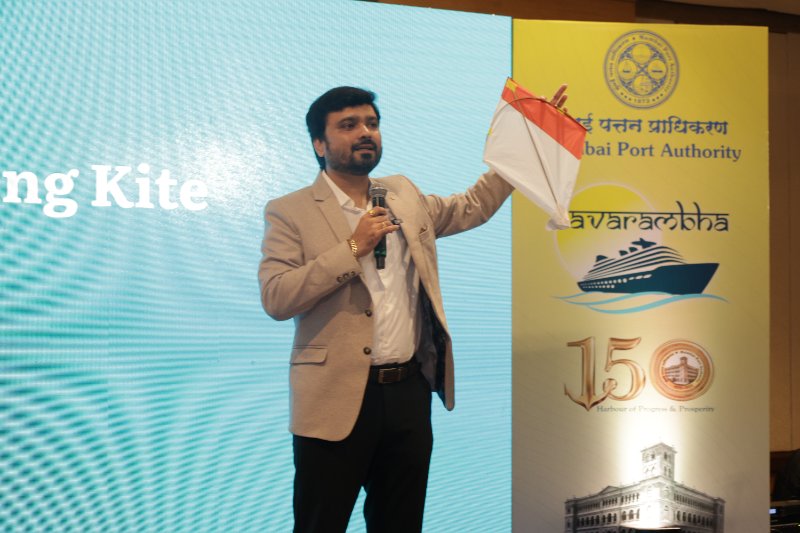
Avinash Chate is an entrepreneur and corporate trainer who runs ABC Trainings and The Future Corporate & Business Coaching, a TEDx speaker and published author. Over the last decade he has trained teams at 1,000-plus organisations and 15,000-plus professionals.
He teaches these skills not from a manual, but because he practises them himself — leading a 100-plus member team of his own. That is the difference working leaders feel in the room.
AI for Working Professionals Training — FAQ
What is AI for Working Professionals Training?
It is a practical programme that helps capable professionals actually work with generative AI, instead of standing frozen between the hype and the fear. It builds the durable skills the real world needs: understanding what AI genuinely is in plain language, shifting from threat-or-magic thinking to treating AI as a collaborator, choosing the right tasks to hand it, prompting well, verifying and owning the result, and building a personal workflow. Crucially, it teaches judgement and method — not a tour of whichever app is fashionable this quarter — so the learning stays true even as the tools change.
Is this tied to a specific AI tool or product?
Deliberately not. The specific products, models and features change every few months, so building a programme around any one of them would date it almost immediately — that is exactly why the durable skills here matter more. The programme is tool-agnostic: it teaches the judgement and workflow that carry across every AI assistant — how to read where AI is reliable, how to ask well, and how to stay in charge of the result — so your people can pick up whatever tool your organisation uses today, and whatever it uses in three years, and apply the same thinking.
Who should attend this training?
Any professional whose work is built on knowledge — executives, managers, analysts, engineers, marketers, HR and finance teams, consultants, salespeople, operations and support staff. It is at its most powerful run across a whole team or department, so a shared standard for using AI well spreads at once and the divide between the confident few and everyone else closes. It is designed for sceptics and enthusiasts alike; you do not need to be excited about AI to benefit, only willing to learn how to use it with good judgement.
Do participants need any technical background?
None at all. Everything is taught in plain language, with no coding, no jargon and no assumption of prior AI experience. The whole point is to reach the capable, non-technical professional who has felt uneasy about AI and never been shown how to use it. If someone can write an email and think critically about an answer, they have everything they need — the skills this programme builds are human ones: judgement, questioning and clear communication, not engineering.
What does the programme cover?
Seven connected modules: what generative AI actually is in plain language; the mindset shift from threat-or-oracle to collaborator; choosing the right tasks to hand AI (reading the jagged frontier); prompting well to get genuinely useful output; verifying, editing and owning the result while avoiding the hallucination trap; building a personal AI workflow; and hands-on practice applying it all to the participant's own real work. Every module pairs a short, usable idea with practice on real tasks from your own organisation.
Will this actually save my team time, or is it just awareness?
It is built for real, durable time-savings, not awareness. Awareness sessions leave people knowing AI exists; this leaves them able to use it — handing the right busywork to AI, prompting it well, catching its errors, and building a repeatable workflow around the two or three tasks where it helps most. Because people practise on their own real work in the room and walk out with a personal system, the gains compound into genuine productivity instead of staying an accidental, one-off trick a couple of colleagues stumbled into.
How does it handle the risks — hallucinations, confidentiality and mistakes?
Head-on — responsible use is woven through the whole programme, and one full module is devoted to it. Participants learn why AI invents facts, figures and sources with total confidence, and how to catch it; they learn to treat every output as a draft to be checked, never a final answer; and they learn the discipline of protecting confidential and sensitive information. The core principle throughout is that the human remains the author, accountable for every word that goes out under their name. It teaches confidence and scepticism in equal measure.
How is the training delivered — and how long does it take?
It is highly interactive — real tasks and hands-on practice, with minimal lecture and no product demo. The duration is flexible: the same programme runs as a half-day, a full day, a multi-day intensive for a team going all-in, or a series of shorter modules spread across a few weeks so people apply each skill to live work between sessions, and it works well as an ongoing rhythm as AI evolves. We shape the exact length and cadence with you. For 20 to 40 participants, sessions are organised into small batches so everyone practises on their own work.
Can it be delivered on-site, and in which languages?
Yes. Most engagements are across Maharashtra — Pune, Mumbai, Chhatrapati Sambhajinagar, Nashik, Nagpur and the surrounding MIDC industrial belts — and the programme is equally delivered pan-India and internationally on request. Delivery is available in English, Hindi and Marathi, or a natural mix, which helps AI feel genuinely approachable to every professional in the room rather than something foreign and intimidating.
Why Avinash Chate for this programme?
Because AI adoption is really a human problem, and that is exactly his ground. Avinash Chate delivers the human, behavioural and adoption side of AI — mindset, judgement, responsible use and the workflow that leads people through change. He sits at the seam where humans meet technology: an M.Tech who taught himself more than twenty technical software tools, and one of India's most trusted behavioural and leadership trainers. He is a TEDx speaker and author of The Winning Edge, creator of the KITE leadership framework, who runs a 100-plus member organisation and has trained more than 15,000 professionals across over 1,000 organisations. He teaches the human change that decides whether AI ever truly lands — not a product tutorial that will be obsolete next year.
Related Training Topics
Move your whole team from frozen to working with AI
Close the quiet divide between the few who quietly use AI well and everyone who is stuck — with the durable, tool-agnostic skills that outlast any app: which tasks to hand AI, how to ask, and how to keep your own judgement in charge. On-site across Maharashtra, pan-India and internationally, in English, Hindi or Marathi.
Request a Proposal →