Communication Styles Training (DiSC)
It isn't a personality clash. Two of your best people are simply wired to communicate in opposite directions.
You have two strong performers who cannot be in the same meeting without friction. One arrives with the spreadsheet, wants to walk through the assumptions, and will not commit until the detail holds up. The other has already decided, wants the headline, and reads all that caution as foot-dragging. One says exactly what they think and calls it honesty; the other hears the same sentence as rude. Nobody is wrong. Nobody is difficult. You have quietly concluded it is a personality thing and started scheduling them apart. But it was never personality — it is style: the hard-wired way each of them prefers to communicate, decide and be approached. This programme teaches your people to read those styles, their own and each other's, so the very differences that caused the friction start producing the better work.
★ 5.0 client rating · Across Maharashtra, pan-India & internationally · English, Hindi & Marathi
The "Personality Clash" That Is Really a Style Mismatch
Every team has a pair like this. The one who wants the data and the one who wants the decision. The one who thinks out loud and the one who goes quiet and needs to process. The one whose bluntness feels like disrespect to the one who softens everything to keep the peace. Left unnamed, it hardens into a story: "they're impossible to work with." People take sides. Meetings get careful. Emails get cc'd for cover. And two people who could have made each other sharper end up managing around each other instead.
The cost is not loud, which is exactly why it is dangerous. It shows up as a decision that took three meetings instead of one, a good idea that never got said because the room felt unsafe, a handover that went wrong because one person needed the reasoning and the other only sent the instruction. Multiply that across a department and you are paying — in rework, in slowed decisions, in talented people quietly requesting a transfer — for a problem you have miscategorised. You keep trying to fix the personalities. The personalities were never broken.
Why Good People Grate On Each Other — And Why It Dissolves Fast
Here is the part almost no one names: most of what we call a clash is a difference in preference, not intent. People are wired along a few simple lines — some lean fast and assertive, others measured and reflective; some are anchored to tasks and results, others to people and feelings. Put a direct, results-first person next to a warm, harmony-first person and give them no language for the difference, and each will read the other through their own lens. "Blunt" becomes "rude." "Careful" becomes "slow." "Warm" becomes "vague." Neither is misreading the words — they are misreading the style.
And the moment a team can name the style, the heat drains out of it. "He's not attacking you — that's just how a high-D asks for the bottom line." "She's not stalling — she needs the detail to feel safe committing." Once you can see the pattern, you stop taking it personally and start adjusting for it. That is a learnable skill, not a personality transplant. This programme gives your people a shared, accurate language for those differences and the practice to flex across them — so the friction becomes information instead of conflict.
Does This Sound Familiar?
If your team keeps blaming personalities for what are really style mismatches, you will recognise these. Here is the symptom you see, what it is quietly costing you, the real cause underneath, and exactly which module turns it around.
| The symptom you see | What it is costing you | The real cause | How the programme fixes it |
|---|---|---|---|
| Two capable people "just can't work together" and you keep them apart | Lost collaboration, awkward workarounds, and a fault line the whole team tiptoes around | A style mismatch has been mislabelled as a personality clash, so no one ever addressed the real thing | The "style, not character" module — renaming the clash so it can be solved |
| Directness from one person reliably lands as rudeness on another | Bruised relationships, defensive replies, and messages that get re-litigated instead of acted on | A task-first, fast style is colliding with a people-first style, and neither can read the other | The four core styles module — learning to spot and decode each one |
| The same update lands perfectly with some people and completely misses others | Repeated explanations, missed instructions, and decisions that stall for want of the right framing | One person communicates only in their own preferred style instead of the listener's | The flexing module — adapting delivery to the person, not yourself |
| Feedback keeps going sideways — it either wounds people or bounces off them | Problems that never get fixed, resentment that lingers, and conversations everyone dreads | Feedback is being given in the giver's style, not one the receiver can actually hear | The feedback, conflict & teams module — style-aware hard conversations |
| People are sure they "already know" each other and keep getting each other wrong | Recurring misreads, wrong assumptions about motives, and trust that never quite forms | Everyone reads others through their own style and has never mapped their own blind spots | The self-awareness module — knowing your own style and where it distorts |
What Changes When Your Team Can Read Each Other
Picture the same two people, now with a shared language for the difference between them. The results-first one leads with the headline for the colleague who needs it, then hands over the full workings to the one who does not trust a decision without them. The detail-first one flags upfront how long they need to feel confident, instead of going silent and reading as obstructive. The blunt one adds the one line of context that turns an order into a request; the harmony-first one learns to say the hard thing before it festers. Nobody has changed who they are. They have simply learned to meet in the middle on purpose.
Zoom out and the whole team feels different. Meetings get shorter because people frame things for the room in front of them. Handovers stop breaking. The quiet person's best idea actually gets heard. And the two who used to be scheduled apart start producing exactly the kind of work you hoped they would when you put them on the same team — the sharp, balanced output that only happens when a detail brain and a decision brain finally understand each other.
What Your Team Will Be Able to Do
- ✓ Tell the difference between a genuine personality clash and a fixable style mismatch
- ✓ Recognise the four core communication styles quickly, from how people speak, decide and behave
- ✓ Name their own dominant style — and see its blind spots and how it lands on others
- ✓ Flex their delivery to reach people who are wired differently, using the Platinum Rule
- ✓ Read the person in front of them and adapt tone, pace and detail in real time
- ✓ Give feedback and handle conflict in a style the other person can actually receive
- ✓ Build teams where style differences are mapped and used as strengths, not fault lines
What the Programme Covers
Seven connected modules that move a team from "they're impossible" to "I know how to reach them." Each module pairs a clear, usable model of communication style with real practice on the exact people and situations in your own team — and ends with a concrete change in how they read and adapt.
These are building blocks, not a fixed-length course. A two-hour session goes deep on the two or three that matter most to you; a half or full day covers more; a multi-day intensive — or an ongoing monthly, quarterly or half-yearly rhythm — works through them all, with far more practice. We shape which ones, in what order and how deep, with you.
Style, Not Character — Why Smart People Clash
What we cover: Why so many "personality clashes" are nothing of the sort — they are two hard-wired communication preferences colliding without a shared language. The difference between intent and impact, and how each of us reads others through our own lens. Where style comes from and why it is remarkably stable. Renaming the friction on your own team from "difficult person" to "different wiring" — the reframe everything else builds on.
What changes: The team stops treating difference as a defect and starts seeing it as information — the shift that makes every later skill possible.
The Four Core Styles — And How to Spot Them
What we cover: The four families of communication style at the heart of DiSC and Social Styles — the direct, results-driven style; the outgoing, people-energised style; the steady, harmony-seeking style; and the precise, detail-anchored style. What each one values, fears, and sounds like under pressure. Reading style from real signals — pace of speech, task versus people focus, how someone opens an email or makes a decision. An honest, non-boxing view: styles are tendencies and preferences, not fixed types or a measure of ability.
What changes: People can place the styles in the room within minutes — and read a stranger, a client or a new teammate accurately enough to adapt.
Knowing Your Own Style — And Its Blind Spots
What we cover: Identifying your own dominant style and back-up style honestly. The gift each style brings to a team — and the specific blind spot that comes attached to it: how the fast style can steamroll, the expressive style can overwhelm, the steady style can withhold, the precise style can over-analyse. How you look to the other three styles on a bad day. Spotting your own stress behaviour before it costs you a relationship.
What changes: Each person owns an accurate picture of how they land on others — the self-awareness that turns good intentions into good impact.
Flexing to Reach Others — The Platinum Rule
What we cover: Why the Golden Rule quietly fails at work — treating others as you want to be treated assumes they are wired like you. The Platinum Rule: treating people the way they need to be treated. Practical flexing moves for each style — leading with the bottom line for one, making space for the relationship with another, slowing down and giving detail for a third. Flexing your delivery without faking who you are or losing your own voice.
What changes: People can consciously adjust how they communicate to meet someone else's style — and watch messages land that used to bounce off.
Reading and Adapting in Real Time
What we cover: Moving from theory to the live moment — reading style on the fly in a meeting, a call, a corridor conversation or a first client encounter. The small tells that reveal style fast, and how to test a read rather than assume. Adjusting tone, pace, level of detail and directness in the moment as you get new signals. Recovering gracefully when you misread someone — and flexing across a whole mixed-style group at once, not just one person.
What changes: Style awareness becomes a live, in-the-moment skill rather than a label recalled after the damage is done.
Style-Aware Feedback, Conflict and Teamwork
What we cover: Why feedback so often misfires — it is delivered in the giver's style, not one the receiver can hear. Shaping the same honest message four different ways so it lands with each style. What conflict looks like for each style and how to de-escalate it. Using appreciation in the language that actually registers for each person. Building team norms and role fit around style — putting the detail brain where detail matters and the decision brain where momentum does.
What changes: Hard conversations start landing, conflict cools faster, and the team designs itself around styles instead of fighting them.
Practice — Map the Team and Practise Flexing
What we cover: Mapping your actual team onto the styles — where each person sits, where the friction points and blind spots cluster, and what the map explains about your day-to-day. Live practice flexing to real colleagues and real situations from your own workplace: the blunt handover, the feedback that keeps wounding, the client who needs the opposite of your default. Building each person a short, concrete plan for the one or two relationships style awareness will change most.
What changes: The team leaves with a shared map of itself and reps already on the board — so the flexing continues on Monday, not just in the room.
How It Is Delivered
This is not a personality-test parlour game where everyone gets a label and forgets it by lunch. It is a working session where people practise reading and flexing on the real relationships in your own team. Most of the time is spent on your feet — decoding styles from real behaviour, reshaping a genuine message for four different listeners, and role-playing the exact handovers, feedback and conflicts that have been going sideways. The models stay simple and immediately usable; the practice is where the ability is built. Style is described honestly throughout — as a set of preferences and tendencies that help us understand each other, never as a rigid box or a claim of hard science.
The format flexes to your needs. It runs as a focused half-day to give a team a shared language fast, a full-day workshop with deep practice, a multi-day intensive for a leadership group or a whole department, or a modular series that lets the reading-and-flexing skill embed over weeks. It also works beautifully as an ongoing rhythm — refreshed each time a team re-forms or a new cohort joins. For 20 to 40 participants it is run in small batches so everyone practises on real people, not just listens. The exact depth, duration and cadence are shaped with you in the design call.
Formats That Fit Your Calendar
Half-day or full-day workshop
A high-energy session to give a team a shared language for style fast — ideal when a specific pairing or department is grinding on "personality" friction.
Multi-day intensive
Two or more days to go deep — perfect for a leadership team, a cross-functional group or a whole department that has to communicate across very different styles every day.
Modular series
Shorter sessions spread over weeks so reading style, flexing and style-aware feedback each get real practice between sessions instead of one big download.
An ongoing rhythm
Run it each time a team re-forms, a project group spins up, or a new cohort joins — making style awareness a permanent part of how the organisation communicates.
The Thinking Behind It
This programme is not a repackaged personality quiz. It draws on the most credible writing on communication style and behavioural difference — distilled into a few models a team can use the same afternoon — and then goes further, into the frameworks Avinash uses to make very different people communicate well inside his own 100-plus member organisation. The models are presented for what they are: practical lenses for reading preference, not laboratory-grade science.
Ideas & books we draw on
- Surrounded by Idiots — Thomas Erikson · the modern, plain-language door into the four colour-coded styles — why "difficult" people are usually just wired differently
- The Platinum Rule — Tony Alessandra & Michael O'Connor · the core idea of the whole programme — treat people the way they need to be treated, not the way you do
- People Styles at Work — Robert Bolton & Dorothy Grover Bolton · the clearest practical guide to Social Styles and, crucially, to flexing across them at work
- Type Talk at Work — Otto Kroeger · how personality preferences play out in real teams, meetings and conflicts — MBTI made usable on the job
- The 5 Languages of Appreciation in the Workplace — Gary Chapman & Paul White · a reminder that recognition, like communication, only works in the language the other person actually receives
- Words Can Change Your Brain — Andrew Newberg & Mark Waldman · the science of how the way we say things — not just what we say — shapes whether people open up or shut down
Models we use to read communication styles
- The DiSC model · Dominance, Influence, Steadiness, Conscientiousness — a widely used, practical lens for reading behavioural style (a tool for understanding, not a scientific typing of people)
- Social Styles (Merrill–Reid) · Driving, Expressive, Amiable and Analytical — plotting assertiveness against responsiveness to read and flex
- The Platinum Rule (Alessandra) · treat others as they want to be treated — the operating principle for flexing your style
- MBTI preferences at work · how differences like thinking–feeling and introversion–extraversion shape communication (best used as insight, not a fixed label)
- The four communication preferences · direct, people-focused, steady and detail-focused — a simple shorthand for spotting a style quickly in the room
And Avinash's own frameworks — the part you won't find anywhere else
Beyond the established thinking, the programme is built on frameworks Avinash has created and written about himself — including his KITE leadership framework and the principles in his book The Winning Edge. These come from actually running a 100-plus member organisation and developing its people year after year, not from a textbook. It is the layer competitors cannot copy, and the one your teams remember long after the session ends.
Who It Is For
Any team where different wiring has to work together — which is every team. It is especially powerful for intact teams carrying a specific "personality clash," for cross-functional groups where a detail-driven function meets a fast-moving one, and for leaders who have to get through to very different people every day. Sales and client-facing teams use it to read and flex to buyers on the spot; project and delivery teams use it to stop handovers breaking across styles. Run as a cohort, it gives a whole group one shared language for difference — so the map of who-is-wired-how belongs to the team, not just to each individual.
Taught by Someone Who Makes Very Different People Work Together Every Day
Avinash Chate does not teach this from a questionnaire. He runs a 100-plus member organisation full of exactly these differences — the driver and the analyst, the expressive and the amiable — and gets them communicating and delivering together, so the reading and flexing taught here is what he actually does. Programmes built on communication style and behavioural difference have been delivered across sectors — manufacturing, IT, sales, services and leadership teams — anywhere talented people were being kept apart by what everyone had wrongly filed under "personality."
Why Avinash Chate
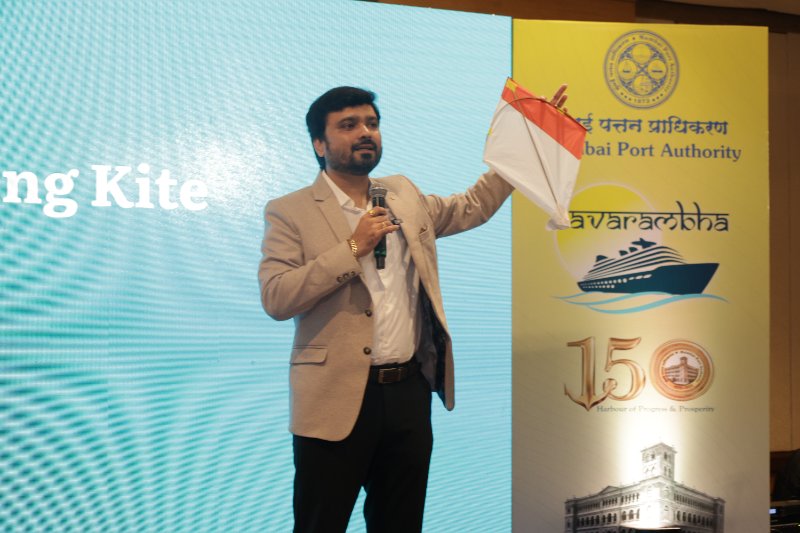
Avinash Chate is an entrepreneur and corporate trainer who runs ABC Trainings and The Future Corporate & Business Coaching, a TEDx speaker and published author. Over the last decade he has trained teams at 1,000-plus organisations and 15,000-plus professionals.
He teaches these skills not from a manual, but because he practises them himself — leading a 100-plus member team of his own. That is the difference working leaders feel in the room.
Communication Styles Training (DiSC) — FAQ
What is Communication Styles (DiSC) training?
It is a practical programme that teaches a team to read the hard-wired ways people prefer to communicate, decide and be approached — and to flex across those differences. Using models like DiSC, Social Styles and the Platinum Rule, participants learn the four core styles, identify their own style and its blind spots, and practise adapting their delivery so they can reach people who are wired differently. Unlike a one-off personality quiz, it is built around the real people and real friction in your own team, practised until reading and flexing become a habit.
Is DiSC a scientific personality test?
We are honest about this: DiSC and Social Styles are practical, widely used models for understanding behavioural preference — they are lenses for reading style, not laboratory-grade psychometrics, and this programme never treats a style as a fixed box or a measure of someone's ability. Their value is entirely practical: they give a team a shared, accurate language for difference and a way to flex across it. We use the models for insight and better communication, and we say clearly where their limits are.
We keep calling it a "personality clash." How is this different?
That is exactly the problem this programme solves. Most of what teams file under "personality clash" is really a style mismatch — two good people with opposite communication preferences reading each other through their own lens. Once a team can name the style, the heat drains out of it: "blunt" is understood as a direct style, "slow" as a careful one, and people stop taking the difference personally and start adjusting for it. It is a learnable skill, not a personality transplant, and it dissolves friction that keeping people apart never fixes.
What does the programme cover?
Seven connected modules: why smart people clash (style, not character); the four core communication styles and how to spot them; knowing your own style and its blind spots; flexing to reach others using the Platinum Rule; reading and adapting in real time; using style awareness in feedback, conflict and teams; and a practice module where the team maps itself and rehearses flexing on real relationships. Every module pairs a simple, usable model with practice on situations drawn from your own workplace.
How is the training delivered — and how long does it take?
It is highly interactive — reading real behaviour, reshaping real messages and role-playing real handovers and conflicts, with minimal lecture. The duration is flexible: the same programme runs as a half-day, a full day, a multi-day intensive for a department or leadership group, or a modular series spread over weeks, and it works well as an ongoing rhythm refreshed as teams re-form. We shape the exact length and cadence with you. For 20 to 40 participants, sessions run in small batches so everyone practises on real people.
Do people need to complete a DiSC assessment beforehand?
It is not required. Many groups get enormous value simply learning to read the four styles and flexing in the room, using self-identification and live practice. If you would like formal profiles, the programme sits comfortably alongside a DiSC or similar assessment, and we can design the session around debriefing those results. Either way, the emphasis stays on the skill — reading and flexing to real people — rather than on the label a report assigns.
Is the programme customised to our organisation?
Yes. Before the first session the examples, the mapping exercise and the role-play scenarios are built around your context — your team, your functions, the specific style frictions and handovers that keep going wrong. Generic style training is exactly what fails to stick; the value is in mapping your own people and practising the actual conversations your team will have next week, from the cross-functional handover to the feedback that keeps landing wrong.
Can it be delivered on-site, and in which languages?
Yes. Most engagements are across Maharashtra — Pune, Mumbai, Chhatrapati Sambhajinagar, Nashik, Nagpur and the surrounding MIDC industrial belts — and the programme is equally delivered pan-India and internationally on request. Delivery is available in English, Hindi and Marathi, or a natural mix, which matters especially where a team spans the shop floor and the boardroom and communicates across both.
What outcomes can we expect?
People who can tell a real personality clash from a fixable style mismatch, read the styles in any room, and flex to reach someone wired differently — so messages land, handovers hold, and feedback gets received instead of resented. Shorter meetings, fewer misreads, and the quieter styles finally being heard. And, over time, teams that map and use their differences on purpose, so the pairings you once scheduled apart become your sharpest, most balanced work.
Why Avinash Chate for this programme?
Avinash Chate is an entrepreneur and corporate trainer who runs a 100-plus member organisation and makes very different communication styles work together every day — so he teaches reading and flexing from lived experience, not a questionnaire. He is a TEDx speaker and author of The Winning Edge, creator of the KITE leadership framework, and has trained teams at 1,000-plus organisations across manufacturing, IT, sales and services. That mix of real operating experience and his own frameworks is what teams respond to — and he is careful to teach these style models for what they honestly are: practical tools for understanding each other, not pseudo-science.
Related Training Topics
Turn "personality clashes" into your team's sharpest work
Give your people a shared language for communication style — reading their own, reading each other's, and flexing to reach anyone. On-site across Maharashtra, pan-India and internationally, in English, Hindi or Marathi.
Request a Proposal →