Corporate learning and performance
Corporate Training Programs in India
Avinash Chate's corporate training programs connect leadership, team effectiveness, emotional intelligence, sales capability and workplace performance to the business outcomes your people need next.
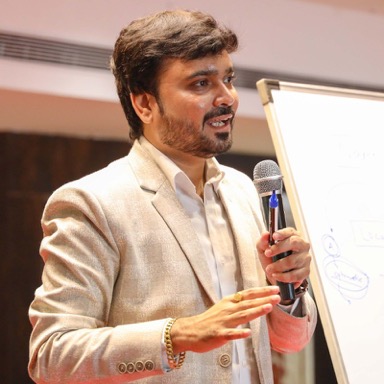
A Pune-based TEDxBEC speaker, published author and corporate trainer, Avinash designs each engagement around the audience, industry, city, language and dates.
TEDxBEC speaker · Published author · English, Hindi and Marathi · Named engagement evidence available
Programs built around the result
Each program begins with a sponsor conversation and a clear brief. Delivery can be a keynote, workshop, leadership cohort, residential offsite or blended journey, followed by practical reinforcement and an agreed 30/60/90-day action plan.
AI training for employees and managers
Hands-on AI training for non-technical staff, with a separate track for managers and heads, run on your own documents in English, Hindi and Marathi.
AI training for employees and managers in India →Avinash Chate corporate training programs
Becoming a Star
Every company has capable people it is quietly wasting — loved but unreliable, brilliant but volatile, excellent but invisible. This is the programme that turns them into stars.
Explore program →Leadership Development (LDP)
Most people are promoted for how well they do the work — and then left to lead people with none of the skills leadership actually needs. This is the programme that closes that gap.
Explore program →Outbound Training
A team that works side by side is not the same as a team that works AS one. This is the outdoor, experiential programme that turns colleagues into a team — by making them do, not listen.
Explore program →Team Building Excellence
A group of good people is not the same thing as a team. This is the in-room programme that turns individuals who happen to sit together into a unit that trusts, owns and wins together.
Explore program →Sales & Marketing Transformation
The team that discounts to win is the team that has run out of ways to sell. This is the programme that turns salespeople into trusted growth partners — closing on value, not on price.
Explore program →Emotional Intelligence at Work
Teams rarely break from a lack of IQ. They break from EQ — from the reactivity, the silences, the small emotional collisions nobody names. This is the programme that fixes that.
Explore program →Channel Partner Empowerment
Your dealers, distributors and franchisees carry your brand in the market — yet most wait to be pushed instead of driving the business. This is the programme that turns them into owners who think, sell and win like entrepreneurs.
Explore program →Corporate training programs by region
Explore city and district coverage for corporate training, leadership development, team building and motivational speaking. Engagements are considered once the dates, travel and brief are agreed.
Regional buyer guides
Corporate training programs FAQ
What corporate training programs does Avinash Chate offer?
Avinash Chate offers signature programs in leadership development, team building and outbound learning, emotional intelligence at work, sales and marketing transformation, channel partner empowerment and workplace performance.
Where are the corporate training programs delivered?
Programs can be planned across Maharashtra district cities, Goa, Gujarat, Madhya Pradesh, other Indian cities and international locations, once the dates, travel, audience and brief are agreed.
How do we choose the right program?
The booking conversation starts with the organisation, audience, business objective, preferred city, format and dates. Avinash then recommends a focused program or a blended sequence with a practical 30/60/90-day follow-through.
Choose the right program for your team
Share your organisation, audience, objective, preferred city and dates.
Request a Proposal →Planning this for your team?
Share your name and WhatsApp number and you will get a reply within one business day — usually the same day. Tell us the audience, the objective and rough dates and you get a specific proposal.
Prefer to talk now? ☎ +91 87936 30001 · WhatsApp · Email
Compare programmes by the work people need to do
The programme names above describe different ways into workplace learning. When two options appear relevant, use the audience’s responsibilities and a concrete work situation to choose the first conversation. Read the comparisons below alongside the published outlines, then focus on the option most closely connected to the team’s work.
Leadership development or team building?
Start with leadership development when the central question is how someone leads people: setting expectations, delegating, giving feedback or supporting ownership. Explore team building when the focus is how a group works together across roles. Both may matter, but naming the primary question makes the programme discussion more specific.
For example, managers who need clearer delegation conversations have a different starting need from two departments that repeatedly misunderstand their handover. In the first case, examine the leader’s decisions and conversations. In the second, explore the team’s coordination. Use the distinction to identify the questions you want to discuss when considering the programme.
Compare the leadership programme outlineTeam-building workshop or outbound learning?
Team-building work can focus on collaboration, communication and shared responsibility. Outbound and experiential learning introduces a different setting for examining how people work together. Choose by the learning purpose and the audience’s participation needs, rather than by the appeal of a venue alone. A change of setting should support the intended discussion.
A hypothetical cross-functional team may want to explore how it makes decisions when information is distributed. The organiser can discuss whether an indoor workshop or an external setting better supports that objective. Consider the venue, access and participation needs together so the eventual activities fit both the learning purpose and the people attending.
Read the outbound learning outlineEmotional intelligence or communication skills?
Communication work can address how people express ideas, listen and reach a clear understanding. Emotional intelligence adds a lens on recognising and managing responses in workplace situations. If a team can explain a process but struggles to discuss a disagreement calmly, that distinction may help frame the initial brief.
For example, a difficult feedback conversation involves both the words chosen and how each person responds. Describe the situation without identifying an employee, then explore the most useful emphasis. There is no need to diagnose a person or share private performance information. The programme outline provides the published scope for the next discussion.
Read the emotional intelligence outlineSales training or channel-partner development?
Sales and marketing development concerns the capabilities used in commercial conversations and customer relationships. A channel-partner programme addresses an audience whose relationship with the organisation differs from that of an internal employee team. Clarify who is attending and what responsibilities they hold before comparing the programme titles.
A hypothetical sales-team brief might focus on understanding a customer’s requirement and agreeing the next action. A dealer-network brief might need a shared discussion about relationships and ways of working. The two can connect, but their examples and participation should fit the audience. Review the published programme rather than assuming identical content for both groups.
Read the sales and marketing outlineOne focused session or a sequence?
Use one focused session when there is a clear starting objective and a realistic amount to discuss or practise. Consider a sequence when participants need to revisit a capability through different work situations. The published programme options include different formats; the final choice should follow the brief and the time available to the audience.
For example, an organisation might begin by discussing how managers set expectations, then consider whether later work should address feedback or delegation. That is an illustration of sequencing, not a prescribed package. Avoid adding topics only to fill time. A small set of connected objectives makes it easier for the organiser to explain why people are attending.
What if the requirement crosses several programmes?
State the main work situation and the audience before trying to name the solution. A recurring handover problem might involve communication, ownership and leadership. Start with the behaviour most closely connected to the problem, and use the other themes as context. The existing catalogue can help identify related topics without turning the brief into an exhaustive curriculum.
You can begin with an incomplete outline and discuss the options through the existing enquiry route. There is no additional assessment or document to complete here. If you already have a learning plan, share the relevant context without confidential employee records; if not, the ordinary event or workplace situation is a useful starting point.
Explore related training topicsHow do language, location and follow-through affect the choice?
Plan for the language people use at work: English, Hindi or Marathi. Programme discussions cover Pune, Mumbai, Chhatrapati Sambhajinagar, Sangli and across India. Explain the audience’s roles and setting alongside the location: a supervisor cohort and a cross-functional leadership group can need different programme discussions even in the same city.
Finally, consider who in the organisation will revisit the learning through existing work routines. A team leader could discuss one agreed behaviour in a regular meeting rather than introduce an unrelated reporting exercise. Published engagement evidence can help you assess context, while any review of your own programme should distinguish attendance, feedback and observed workplace behaviour.
Check the published engagement records