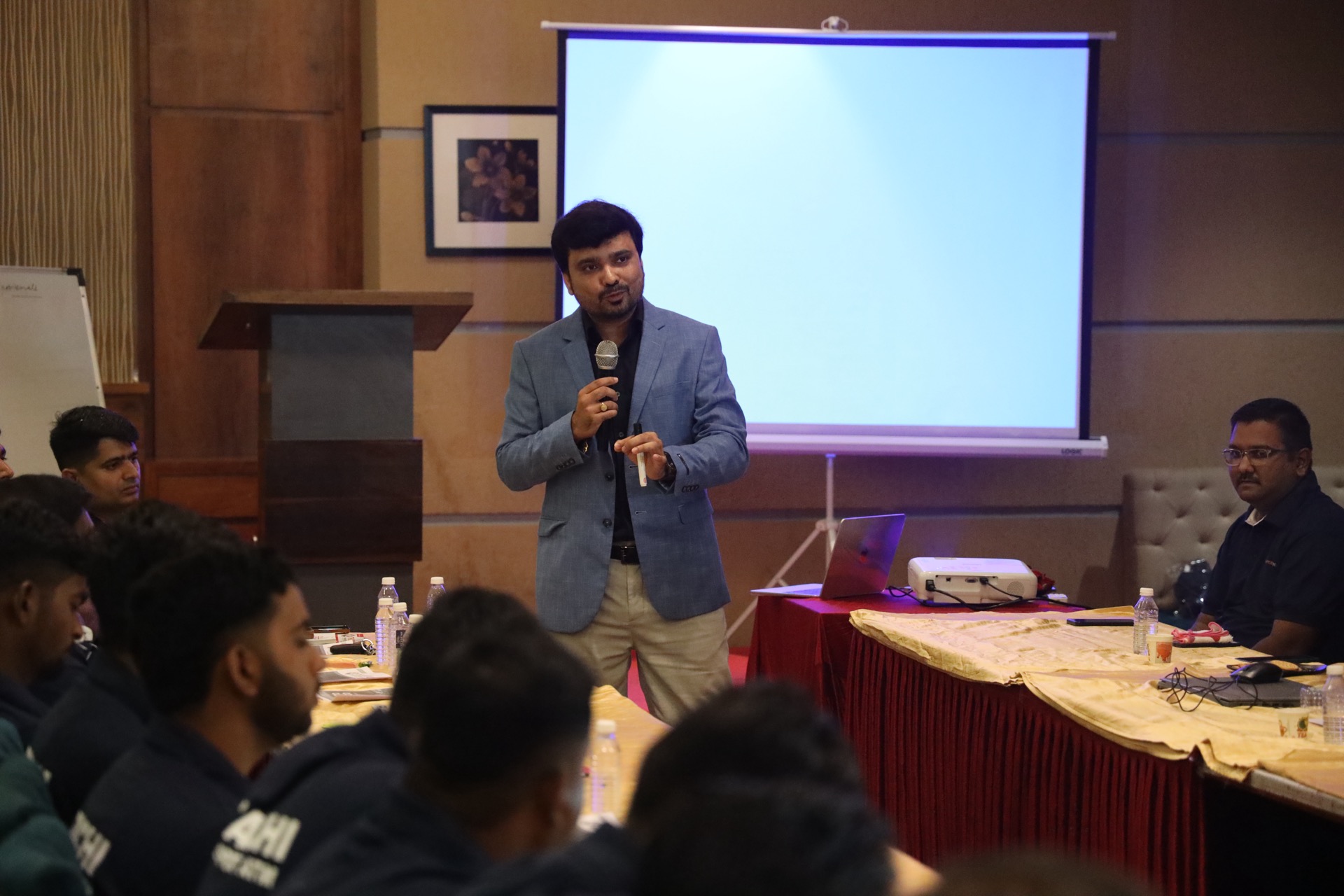
Corporate trainer and motivational speaker, based in Pune, delivering across India. TEDx speaker. Author of Stars at India Inc., The Winning Edge and The Unanswered. Creator of the KITE Leadership Framework. 88-plus organisations and 25,671+ professionals. Delivers fully in English, Hindi and Marathi, including switching mid-session for mixed rooms — which is usually the deciding factor for tier-2 and tier-3 audiences.
Interactive, activity-led, capped for engagement. Leadership, sales, team building, emotional intelligence, communication.
Multi-day and residential
Outbound and offsite programmes, leadership cohorts, train-the-trainer tracks.
Programme engagements
Multi-session interventions with follow-up at 30, 60 and 90 days where the client wants measurable change.
Audiences He Is Booked For
Dealer and distributor networks · field sales forces · manufacturing shop floor and supervisors · first-time and senior managers · banking and cooperative-bank teams · government and defence officers · hospitals and healthcare staff · schools, colleges and faculty · student and campus audiences. Rooms from 20 to 400+.
Requirements on the Day
Audio
Cordless or lapel mic, essential. He works among the audience, not from a lectern. Speakers must carry music cleanly for the closing sequence.
Visual
Projector or LED wall with audio output, plus a flip chart and markers. Many sessions run flip-chart-only by design.
Room
Round tables or cluster seating preferred over theatre rows wherever the format allows. Space to walk between tables.
Travel and stay
Travel, and accommodation for early-morning or outstation starts, are quoted with the engagement rather than added afterwards.
How Booking Works
Send the date, city, audience profile, size, language and format. Availability confirmed within one business day.
A written proposal with format, duration, inclusions and fee — suitable to forward to your client.
A short briefing call with the client before the event. This is where the session gets tailored, and it is the step that decides whether it lands.
Date held on confirmation.
Fees
Quoted per engagement rather than from a rate card, because format, duration, travel, audience size and customisation move it substantially. Send the brief and you will have a number to work with quickly. How a proposal is put together →
Shortlisting for a client?
Send your name and WhatsApp number with the date and city, and you will have availability and a proposal you can forward within one business day.
Build the client conversation around the role of the session
Recommend Avinash Chate when the client wants an entrepreneur-led keynote or practical training connected to the audience’s work. His published formats cover speaking, workshops and longer programmes in English, Hindi and Marathi. Use the choices below to connect the client’s purpose with the running order and the right evidence.
The keynote is the event’s shared message
A conference, annual day or recognition event brings several groups into one room.
Use the keynote conversation to agree the theme that links those groups. Consider how the speaker’s message relates to the host’s opening, leadership address and closing, so the programme tells a coherent story.
When discussing the running order, distinguish the speaking slot from announcements and other event segments. The existing format and technical requirements on this page remain the practical reference.
Dealers or distributors are meeting the company’s leadership and sales teams.
Connect the brief with the partners’ own business decisions and their relationship with the company. A dealer keynote can create a shared message; partner development offers a more detailed learning conversation.
Clarify who is in the room when discussing examples: independent partners, employees or a mixed audience. That helps the client choose a relevant emphasis.
The offsite combines experience with team learning
An intact team or cross-functional group is spending dedicated time together.
Connect the programme with a shared working goal, then consider the balance of activities, discussion and reflection. The learning purpose gives the organiser a clearer basis for the agenda than the venue alone.
Discuss the activity setting and time for reflection alongside the existing room and travel guidance. Team Building Excellence and Outbound Training provide the current programme references.
Use the published profile, books and sources to introduce Avinash Chate’s entrepreneurial and speaking background. Use the programme page to explain the fit with this particular event.
Delivery context
Use a relevant named engagement to show the kind of audience and work described on the site. Keep the original case context with it so the client can understand what the example actually covers.
Production planning
Keep the event’s running order alongside the existing audio, visual, room and travel guidance on this page. That makes the conversation between the agency, client and booking team easier to coordinate.
A client-approved purpose and audience brief
Use a short shared brief to carry the client’s decision into preparation. The client lead can describe the event’s purpose, the people attending and a familiar working situation. The agency can bring together the date, city, format and place of the session in the wider programme. For a mixed employee-and-partner audience, make that distinction visible in the brief. Keep the approved theme beside the programme page being discussed, so the booking conversation connects the client’s intention with the published format. This gives each participant a clear starting point for the existing client briefing call.
A running order the host and stage team can use
Put the keynote’s start, introduction, planned audience questions and transition into the same running order as the surrounding presentations. The client can confirm the session’s purpose; the agency can coordinate timing with the host and stage team. For a keynote followed by awards, distinguish the closing message from the award announcements so the host can prepare the handoff. When the programme changes, circulate the current sequence to the people delivering it and discuss any effect on the agreed session with the booking team. The running order then records the decisions each person will use.
A language and participation note for the room
Record the audience’s working languages alongside its roles, rather than relying on the language used in the invitation. English, Hindi and Marathi are the published delivery languages. The client can explain which examples the different groups will recognise; the agency can connect that context with the host’s introduction and any planned audience questions. For a mixed room, discuss how questions will be invited and how participants will be heard. Carry the agreed approach into the running order so the host and production team understand the participation being planned for this particular event.
Venue checks connected to the chosen format
Use the existing audio, visual and room guidance on this page as the venue reference. The agency and venue team can check the cordless or lapel microphone, audio playback, screen or projector arrangements, flip chart and space to move between participants. Connect the layout with the agreed format: a keynote and a workshop can use the room differently. Bring any practical adjustments into the booking discussion while the event plan takes shape. Keep the travel and stay arrangements alongside the confirmed schedule so the venue contact and event coordinator share the same arrival context.
A closing message with a client owner afterwards
Agree who carries the event theme into the client’s next conversation. The client lead can choose an existing team meeting or leadership discussion; the agency can help the host connect the closing segment with that next step. For a theme of shared responsibility, the follow-through might be a manager asking teams to clarify an upcoming handoff in their own work. Keep that workplace action under the client’s ownership. When reviewing the event, separate the agency’s delivery notes, audience reflections and the client’s later observations so each is understood in its own context.
Use the published Hitachi case when discussing an interactive team programme.
Agency planning questions
Which Avinash Chate format fits a conference running order?
A keynote can connect a conference audience with one shared message. For participant practice, explore a workshop or programme. The published formats on this page help the agency and client match the session with its role in the event.
What can an agency forward to its client?
Forward the programme page that fits the brief, a relevant published client case and the speaker profile or sources page. This page also keeps the technical, travel and booking information together for the organiser.
How does a dealer event differ from an employee sales session?
A dealer event includes partners running their own businesses, so the brief can connect company direction with partner ownership. An employee sales session has a different working context. Avinash Chate’s dealer-meet and Channel Partner Empowerment pages explain the partner focus.
How can the agency and client divide preparation for a keynote?
The client can define the audience, business context and purpose of the session. The agency can coordinate the running order, host, venue and production details. Bring those decisions into the existing briefing conversation with Avinash Chate’s booking team, using one current event brief to connect the message with the arrangements.
How should an agency handle a change to the event running order?
Share the revised sequence and discuss its effect on the speaking slot, audience questions and transition with the booking team. Give the host, client lead and stage team the same current plan. Keep the agreed purpose of Avinash Chate’s session visible as the timing and surrounding segments are coordinated.
For Event Agencies & Speaker Bureaus — Avinash Chate
Formats, languages, tech rider, travel terms and past clients for agencies shortlisting Avinash Chate. Contact connect@avinashchate.com or +91 87936 30001.