Building with AI Training
Somewhere in your organisation is a person who could build the thing the business needs — if only someone had told them the wall came down.
They have carried it for months, maybe years. A dashboard that would finally show the team what is actually happening, instead of five spreadsheets emailed around on a Friday. A small tool that would save everyone an hour a day. A page the business genuinely needs. They can see it clearly in their head — and they have never built it, for one reason they have quietly accepted about themselves: "I can't code." So the idea goes into a queue behind IT, where it waits months, or it simply dies. Here is what almost nobody in your building has been told: that wall came down. A person who has never written a line of code can now describe what they want to an AI, watch a working dashboard or app or website take shape, fix it when it breaks, and put it in front of real users — this week. The power is sitting in ordinary professionals' hands. Most of them just don't know it yet, or they open the blank screen and freeze because no one has shown them where to start. This programme shows them — and by the end, they have not just understood it. They have built and shipped something real.
★ 5.0 client rating · Across Maharashtra, pan-India & internationally · English, Hindi & Marathi
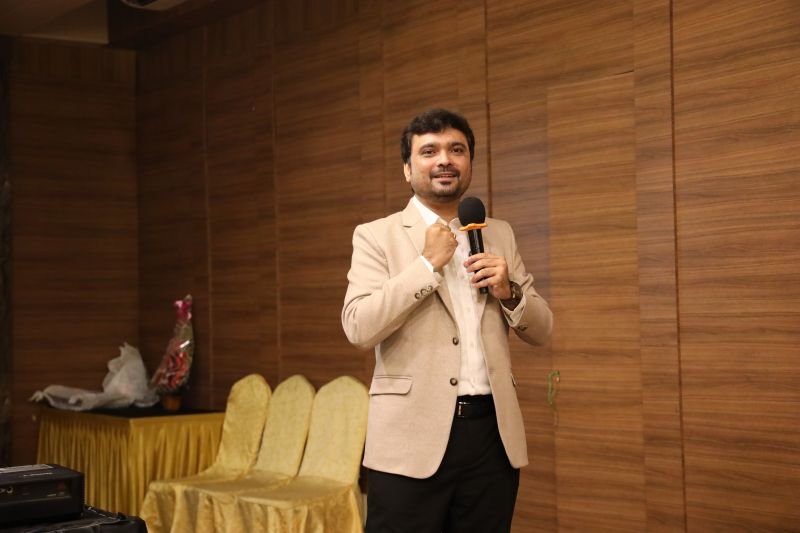
The Idea That Never Gets Built
Walk any office and you will find them without trying: capable people sitting on ideas they will never ship. The operations lead who knows exactly what a good tracker would look like, because they have redesigned it in their head a hundred times. The sales manager who could describe the perfect pipeline dashboard in their sleep. The marketer who needs one simple landing page and has needed it for a quarter. None of them lack the idea. None of them lack the understanding of the business. What they have all quietly accepted is that building software is something other people do — the technical team, the vendor, the agency — and that their job is to write the request, hand it up the line, and wait.
And the cost of that acceptance is enormous precisely because it is invisible. Nobody puts "the dashboard we never built" on a P&L. The team keeps stitching together spreadsheets by hand every week; the manual process that a tiny tool could have killed grinds on, consuming an hour here and an hour there across dozens of people, forever. The idea that would have paid for itself in a month sits in a backlog for a year and arrives, if it arrives at all, half-right and out of date. Meanwhile the belief hardens: we can't build things ourselves. That belief, not the technology, is what is actually holding the organisation back — and it stopped being true some time ago.
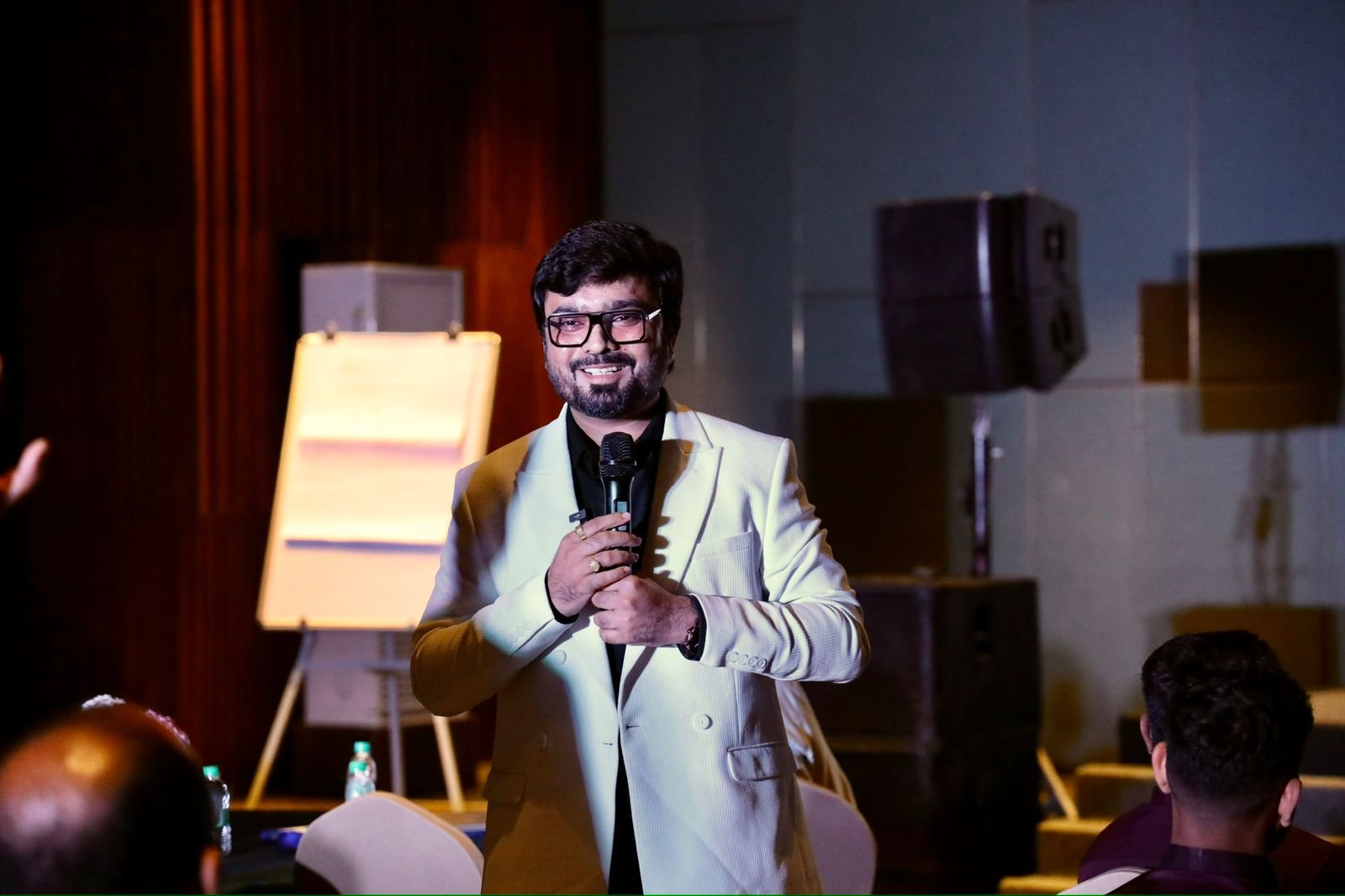
Why Capable People Stay Blocked — And Why It Is Completely Fixable
Here is the honest diagnosis, and it is not about ability. The people who never build are not less clever than the ones who do — they have simply inherited a rule that used to be true and no longer is. For thirty years, turning an idea into working software genuinely required a specialist: someone who could write code, wire up a database, host it somewhere. So the entirely sensible thing for a non-technical professional to do was to stop at the idea and pass it on. That reflex — this is not for me to build — is baked deep, and it is the real blocker. It is reinforced by two smaller fears: not knowing how to even begin (the blank screen with no first step), and the quiet worry that they will build something wrong, or that it will break and they will have no idea how to fix it.
None of that is a technical limitation any more — it is a confidence and a method gap, and both are learnable. What has genuinely changed is that you no longer describe your idea to a developer; you describe it to an AI, in plain words, and it builds. The durable skill is not any particular tool or button — those change constantly and chasing them is a trap. The durable skill is the process: getting clear on what you actually want, describing it well, building the smallest useful version first, testing it honestly, publishing it, and — crucially — knowing how to iterate and fix with the AI's help when it breaks. Those are thinking skills, not engineering ones, and they are exactly what this programme builds: deliberately, in the room, on each person's own real idea, until the belief flips from "I can't build" to "I just did."
Does This Sound Familiar?
If your capable people are showing any of these signs, it almost never means the idea is too hard or the person is not technical enough. It means no one has shown them that they can now build it themselves — and how. Here is what you are likely seeing, what it is quietly costing, and exactly which part of the programme fixes it.
| The symptom you see | What it is costing you | The real cause | How the programme fixes it |
|---|---|---|---|
| Good ideas for tools and dashboards die in a backlog behind the IT queue | Problems that a small build would solve in a week wait months, or never get solved at all | Everyone assumes building software still needs a developer — the old rule nobody updated | The New Reality module — proving a non-coder can build, and dismantling the belief that blocks it |
| A person has a clear idea in their head but freezes at the blank screen, unsure how to start | The idea stays an idea; the value it would create never arrives | They have never been taught to turn a vague want into a clear, buildable description | The Getting Clear module — idea to a simple spec you can actually build from |
| The team runs on spreadsheets emailed around, with no single view of what is happening | Hours lost to manual stitching every week, and decisions made on stale, scattered numbers | Nobody has built the dashboard because they believed only a data team could | The Dashboards module — turning scattered data into one clear view that answers a real question |
| The business needs a simple internal tool or a page and waits on a vendor for months | Time and money spent outsourcing what a trained insider could now build in days | The skill to build a small web app or website in-house was assumed impossible for non-coders | The Web Apps & Websites module — building a real, working app or site with AI, step by step |
| The one person who tried built something, then it broke and they abandoned it | A promising start thrown away, and the belief "this isn't for us" quietly confirmed | No one showed them how to publish, iterate and fix with AI when something goes wrong | The Ship, Iterate & Fix module — publishing and repairing it live, with AI's help |
What Changes When Your People Can Actually Build
Picture the operations lead who used to email a request up the line now describing the tracker they always wanted and watching it come to life — a working tool, in their hands, by the end of the afternoon. The sales manager with a live pipeline dashboard they built themselves, answering the one question the team argues about every Monday. The marketer who needed a landing page for a quarter now shipping one before lunch. The manual, hour-a-day process quietly replaced by a small app that someone inside the business simply built. Not a mock-up, not a request in a queue — a real, working thing, published and used.
And underneath it, the shift that pays for the whole programme: the belief that has been holding the organisation back — we can't build things ourselves — is gone, replaced by people who reach for AI to build the thing rather than to write the request for it. Ideas stop dying in backlogs and start becoming tools. The distance between "we should have something for this" and "we built something for this" collapses from months to days. You have not just trained a skill; you have unlocked a room full of people who now know, from having done it, that the wall is down.
What Your Professionals Will Be Able to Do
- ✓ Understand — and believe, from doing it — that a non-coder can now build real working software with AI
- ✓ Turn a vague idea into a clear, simple spec an AI builder can actually work from
- ✓ Describe what they want to an AI well enough to get a working first version, and refine it in a back-and-forth
- ✓ Build the smallest useful version first — the MVP — instead of freezing on the perfect final product
- ✓ Build a dashboard that turns scattered data into one clear view answering a real business question
- ✓ Build a simple web app or website with AI, step by step, and publish it for real users
- ✓ Iterate, test and fix with AI's help when something breaks — so the thing they build actually survives contact with reality
What the Programme Covers
Seven connected modules that take a capable non-coder from "I can't build" to shipping something real. Every module pairs a short, plain-language input with hands-on building on the participant's own idea — and ends with a concrete thing made, not a concept understood. It teaches the durable process of building with AI — idea, spec, build, test, ship, iterate — not a click-by-click tour of whichever builder is fashionable this quarter, because the tools change constantly and the way of thinking does not.
These are building blocks, not a fixed-length course. A two-hour session goes deep on the two or three that matter most to you; a half or full day covers more; a multi-day intensive — or an ongoing monthly, quarterly or half-yearly rhythm — works through them all, with far more practice. We shape which ones, in what order and how deep, with you.
The New Reality — You Can Build Without Being a Developer
What we cover: The single idea that changes everything: the wall between having an idea and building it has come down. What "building with AI" actually means in plain terms — describing what you want to an AI builder and getting working software back, no code and no computer-science degree required. The kinds of things a non-coder can now genuinely create: dashboards, internal tools, web apps, websites, automations. Naming and dismantling the belief that has been the real blocker — "that's for the technical people." A first small, live build in the room, so it stops being a claim and becomes something they have done with their own hands.
What changes: The professional stops seeing building as someone else's job and sees, from experience, that it is now within their reach — the shift everything else depends on.
Getting Crystal-Clear on What to Build — Idea to a Simple Spec
What we cover: Why most builds fail before they start: a fuzzy idea produces a fuzzy result. Turning a vague want into a clear, buildable description — who it is for, the one job it must do, what goes in and what comes out, what "good enough" looks like. Cutting the idea down to its essential core before touching a tool. Writing a plain-language spec an AI can actually build from, and that a human can sanity-check. Resisting the urge to specify everything at once. Practised on the participant's own real idea, until it is sharp enough to build.
What changes: The professional can convert a hazy "we should have something for this" into a crisp, buildable brief — the step that decides whether anything good ever gets made.
Building Your First Working Thing With AI
What we cover: Sitting down with an AI builder and making a real, small thing — a simple tool or a single page — from the spec. How to describe what you want so the AI produces something useful, and how to work in a back-and-forth: look at what it made, say what is wrong, ask for the change, repeat. Reading the result with a critical eye rather than accepting the first output. Starting with the smallest useful version — the MVP — and resisting the pull to build everything before shipping anything. Getting comfortable with the loop of describe, build, look, adjust.
What changes: The professional has built and seen a working thing of their own take shape from a plain-language description — the moment "I can't build" becomes "I just did."
Dashboards That Turn Data Into Decisions
What we cover: Why a dashboard is not a pile of charts but an answer to a question. Starting from the one decision or question the dashboard must serve, and building backwards from it. Getting your data — a spreadsheet, an export, a simple source — into a form the AI can work with. Building a clear view with AI: the few numbers that matter, shown simply, without the clutter that hides the signal. The discipline of one clear question per dashboard. Iterating it from "technically shows the data" to "actually drives a decision." Built live on the participant's own real data.
What changes: The professional can build a dashboard that a team looks at and immediately knows what to do — turning scattered spreadsheets into a single, decision-ready view.
Building Web Apps and Websites With AI, Step by Step
What we cover: Taking the leap from a single page to a real, working web app or website. Describing a multi-part build to AI and assembling it piece by piece rather than all at once. The building blocks in plain language — pages, forms, a place to store information, the flow a user moves through — without the jargon. Building a genuinely useful internal tool or a real site the business needs. Keeping it simple enough to finish, and knowing what to leave out. Testing it as a real user would, and shaping it with AI until it holds together and does the job.
What changes: The professional can build a real web app or website — not a toy — that does something the business actually needed, from description to working product.
Publishing, Iterating and Fixing When It Breaks
What we cover: The step that separates a demo from a tool: getting what you built out into the world where real people can use it. Publishing it in plain terms, and putting it in front of real users to see what actually happens. Reading feedback and real use to decide what to change next. And the discipline most first-timers never learn: when it breaks — and it will — how to work with AI to find the problem, describe the symptom clearly, and fix it, instead of abandoning the whole thing. Treating "it broke" as a normal, fixable step rather than proof you were never meant to build.
What changes: The professional ships something real and keeps it alive — iterating and repairing it with AI so the thing they built survives contact with reality instead of dying at the first bug.
Practice — Build and Ship Something Real of Your Own
What we cover: The heart of the programme: each person takes a genuine idea from their own work and carries it all the way through — clarifying it into a spec, building it with AI, testing it, and publishing something they would actually use or put in front of their team. Working through the inevitable stuck moments and breakages live, with guidance, so the fixing gets practised too. Sharing what each person built and what they learned across the room. Walking out with a real, working thing already made — proof, in their own hands, that they can do this again on Monday without help.
What changes: The professional leaves not with notes but with a shipped, working build of their own — the confidence is real and earned, because they have already done the whole thing once.
How It Is Delivered
This is deliberately not a click-by-click tutorial of one AI builder, and it is not a lecture about technology — a button-by-button tour dates the moment you leave the room, because the tools change every few months. It is a working session where non-coders build real things on their own ideas. They spend most of their time doing it: clarifying an idea into a spec, describing it to an AI, looking hard at what comes back, adjusting, publishing, and fixing what breaks. The mental models — idea, spec, build, test, ship, iterate — are kept plain and immediately reusable; the confidence is built in the doing, not the listening. The whole point is that everyone leaves having built something with their own hands.
The format flexes to your needs. It runs as a focused half-day to prove the wall is down and get a first thing built, a full-day workshop to take an idea end to end, a multi-day intensive for a team or function that wants to build a real backlog of internal tools, or a series of shorter modules spread across a few weeks so people build on live work between sessions — and it works especially well as an ongoing rhythm as the tools keep evolving. For 20 to 40 participants it is organised into small batches so every person builds their own thing, not just watches a demo. The exact depth, mix and cadence are shaped with you in the design call — and kept tool-agnostic so the process holds true even as the products change.
Formats That Fit Your Calendar
Half-day or full-day workshop
A high-impact session to break the "I can't code" belief and get every participant to build and ship a first real thing — ideal as the first structured push into building with AI.
Multi-day intensive
Two or more days to go deep — perfect for a team that wants to build a genuine backlog of dashboards, internal tools and pages, with time to take several ideas end to end.
Modular series across a few weeks
Shorter sessions spread out so people build on live work between meetings — one week a spec, the next a dashboard, the next a web app — bringing real progress back each time.
An ongoing build-with-AI rhythm
A recurring cadence that keeps a whole function shipping their own tools as the builders evolve — refreshing the process and confidence without ever chaining the content to one product.
The Thinking Behind It
This programme is not a generic AI deck or a vendor demo. It draws on the most credible writing on building products people actually use, shipping small, and putting real creative power in ordinary hands — distilled into a few durable ideas non-coders can use immediately — and then goes further, into the human and adoption side that is Avinash's own ground: turning "I can't build" into a room full of people who ship. That side matters here more than usual, because this is the one AI topic where Avinash's technical background is squarely in the frame — an M.Tech who taught himself more than twenty technical software tools, and years spent as a technical-skills trainer, so teaching people to actually build is his home turf, not a stretch.
Ideas & books we draw on
- Low-Code/No-Code — Phil Simon · the clearest account of citizen developers — ordinary business people building the tools they need without waiting on a developer, which is exactly this programme's promise
- The Lean Startup — Eric Ries · the source of the build-measure-learn loop and the minimum viable product — the discipline of shipping the smallest useful version and iterating that this course lives by
- Makers — Chris Anderson · the manifesto for the moment creation-tools reach everyone, so people who were never "the technical ones" start building — the same democratisation AI has now brought to software
- Don't Make Me Think — Steve Krug · the timeless, plain-spoken guide to making what you build actually usable — so the dashboard, app or page a non-coder ships is obvious and useful, not just working
- Rework — Jason Fried & David Heinemeier Hansson · the case for building less, shipping sooner and starting small — the exact mindset that gets a first tool out the door instead of dying in a wish-list of features
- Inspired — Marty Cagan · how good products are found by starting from the real problem and the user, not the feature list — the thinking that keeps an AI-built tool solving something that genuinely matters
How we build with AI
- The idea → spec → build → test → ship → iterate loop · the durable process of building with AI, tool-agnostic and repeatable — the backbone of the whole programme
- The MVP — minimum viable product (Ries) · build the smallest useful version first, ship it, then improve — instead of freezing on the perfect final product
- Describe-build-look-adjust · the core rhythm of working with an AI builder — say what you want, see what it made, say what is wrong, repeat
- One dashboard, one question · a dashboard is an answer, not a pile of charts — build backwards from the single decision it must serve
- Build-measure-learn (Lean Startup) · ship it, watch real use, decide what to change next — how a build survives contact with real users
And Avinash's own frameworks — the part you won't find anywhere else
Beyond the established thinking, the programme is built on frameworks Avinash has created and written about himself — including his KITE leadership framework and the principles in his book The Winning Edge. These come from actually running a 100-plus member organisation and developing its people year after year, not from a textbook. It is the layer competitors cannot copy, and the one your professionals remember long after the session ends.
Who It Is For
Any capable, non-technical professional who has an idea for a dashboard, a tool, a page or an automation and has always assumed someone else has to build it — operations and project leads, sales and marketing managers, analysts, HR and finance teams, founders of small businesses, and anyone forever waiting in the IT queue. It is emphatically not a computer-science or software-engineering course; there is no coding and no prior technical experience assumed. It is for the person who was always blocked by "I can't code" and a backlog months long. It is especially powerful run across a whole team or function, so a shared belief — we can build the things we need ourselves — and a shared way of doing it spread at once. If someone can describe what they want and think clearly about whether it works, they have everything this programme requires.
Taught by Someone Whose Home Turf Is Actually Building
This is the one AI programme where Avinash Chate's technical side sits front and centre — truthfully. He is an M.Tech who taught himself more than twenty technical software tools, and he spent years as a technical-skills trainer before becoming one of India's most trusted behavioural and leadership trainers. So teaching capable people to actually build things with AI is not a stretch for him; it is squarely in his wheelhouse. He is fluent enough in the technology to demystify it completely, and expert enough in the human side — the fear, the "I can't code" belief, the freeze at the blank screen — to lead a room full of non-coders all the way to a shipped, working build. He sits exactly at the seam where capable business people meet technology, which is precisely where this shift either happens or stalls. A TEDx speaker and author of The Winning Edge, creator of the KITE leadership framework, he runs a 100-plus member organisation and has trained more than 15,000 professionals across over 1,000 organisations — and here, uniquely, the technical depth and the human craft point at the same goal: getting ordinary professionals to build.
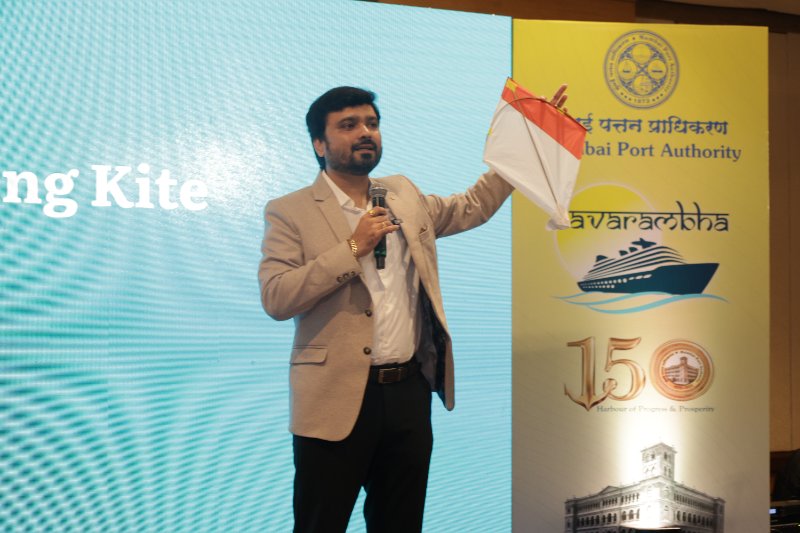
Why Avinash Chate
Avinash Chate is an entrepreneur and corporate trainer who runs ABC Trainings and The Future Corporate & Business Coaching, a TEDx speaker and published author. Over the last decade he has trained teams at 1,000-plus organisations and 15,000-plus professionals.
He teaches these skills not from a manual, but because he practises them himself — leading a 100-plus member team of his own. That is the difference working leaders feel in the room.
Building with AI Training — FAQ
What is Building with AI Training?
It is a hands-on programme that teaches business professionals — not developers — to actually build working software with AI: dashboards, small tools, web apps and websites. Participants learn to describe what they want to an AI builder, get clear on the smallest useful version, build it, publish it, and iterate and fix it when it breaks. Crucially, it teaches the durable process of building — idea, spec, build, test, ship, iterate — rather than a click-by-click tour of any one tool that will be obsolete next year. By the end, each person has not just understood that they can build; they have built and shipped something real of their own.
Do participants need to know how to code, or have a technical background?
Not at all — that is the entire point. This is deliberately not a computer-science or software-engineering course. There is no coding, no jargon and no prior technical experience assumed. It is built for the capable, non-technical professional who has always been blocked by "I can't code" and a long IT queue. The skills it builds are human ones — getting clear on what you want, describing it well, and thinking critically about whether it works — not engineering. If someone can write an email and reason about whether a result is right, they have everything they need.
Is this tied to a specific AI app or platform?
Deliberately not. The specific AI builders, features and platforms change every few months, so building a programme around any one of them would date it almost immediately — which is exactly why the durable process matters more. The programme is tool-agnostic: it teaches the way of thinking that carries across every AI build tool — how to turn an idea into a buildable spec, how to describe it well, how to ship the smallest useful version, and how to iterate and fix — so your people can pick up whatever tool your organisation uses today, and whatever it uses in three years, and apply the same approach.
What can people actually build by the end?
Real, working things — not mock-ups. Participants build a dashboard that turns scattered data into one clear view answering a genuine business question; a simple internal tool or web app that does a job the team needed; and a website or page, published for real use. Everyone takes an idea from their own work all the way through to something shipped. The scope is kept sensible — the smallest useful version first — precisely so that each person finishes with a working build in their own hands rather than a half-done ambition.
What does the programme cover?
Seven connected modules: the new reality that a non-coder can now build; getting crystal-clear on what to build (idea to a simple spec); building your first working thing with AI; dashboards that turn data into decisions; building web apps and websites step by step; publishing, iterating and fixing when it breaks; and hands-on practice where each person builds and ships something real of their own. Every module pairs a short, plain-language idea with actual building on the participant's own real idea.
What if what they build breaks? Won't non-coders get stuck?
Things breaking is treated as a normal, expected step — not a failure — and an entire module is devoted to it. Participants learn how to work with AI when something goes wrong: describing the symptom clearly, finding the problem, and fixing it, instead of abandoning the whole thing at the first bug. That is exactly the discipline most first-timers never learn, and it is the difference between a demo that gets thrown away and a tool that stays alive. They practise getting stuck and unstuck live, with guidance, so it is not theoretical.
How is this different from an awareness session about AI?
An awareness session leaves people knowing that building with AI is possible. This leaves them able to do it — because they spend most of the time building, not listening, and they walk out with a real, shipped thing of their own. The measure of success is not "they understand the concept"; it is "they built and published something that works." That is why the practice is the heart of the programme and the models are kept few and plain: the value is in the doing, and in the confidence that comes only from having done it once already.
How is the training delivered — and how long does it take?
It is highly hands-on — real building on real ideas, with minimal lecture and no click-by-click product tour. The duration is flexible: the same programme runs as a half-day to get a first thing built, a full day to take an idea end to end, a multi-day intensive for a team building a backlog of tools, or a series of shorter modules spread across a few weeks so people build on live work between sessions, and it works well as an ongoing rhythm as the tools evolve. We shape the exact length and cadence with you. For 20 to 40 participants, sessions are organised into small batches so everyone builds their own thing.
Can it be delivered on-site, and in which languages?
Yes. Most engagements are across Maharashtra — Pune, Mumbai, Chhatrapati Sambhajinagar, Nashik, Nagpur and the surrounding MIDC industrial belts — and the programme is equally delivered pan-India and internationally on request. Delivery is available in English, Hindi and Marathi, or a natural mix, which helps building with AI feel genuinely approachable to every professional in the room rather than something foreign and intimidating.
Why Avinash Chate for this programme?
Because this is the one AI topic where his technical background is squarely in the frame — truthfully. Avinash Chate is an M.Tech who taught himself more than twenty technical software tools and spent years as a technical-skills trainer, before becoming one of India's most trusted behavioural and leadership trainers — so teaching people to actually build with AI is his home turf, not a stretch. He is fluent enough in the technology to demystify it and expert enough in the human side to take a room of non-coders all the way to a shipped build. He is a TEDx speaker and author of The Winning Edge, creator of the KITE leadership framework, who runs a 100-plus member organisation and has trained more than 15,000 professionals across over 1,000 organisations. Here, uniquely, the technical depth and the human craft point at the same goal: getting ordinary professionals to build.
Related Training Topics
Turn "I can't code" into a room full of people who ship
Put real building in your non-coders' hands — the durable, tool-agnostic process of turning an idea into a working dashboard, app or website with AI, then publishing and fixing it live. Everyone leaves having built and shipped something real. On-site across Maharashtra, pan-India and internationally, in English, Hindi or Marathi.
Request a Proposal →