Remote & Hybrid Team Leadership Training
They are leading people they barely see — and quietly picking between spying on them and forgetting they exist.
The team is spread across three cities, two of them working from home on Tuesdays and Thursdays, and half the faces on the morning call are black squares with initials. Your manager came up through an office — where you could read a room, catch someone at the coffee machine, sense a problem before it was spoken. None of that works now. So they reach for a substitute, and it is almost always the wrong one. Some tighten the grip: more check-ins, more status pings, more dashboards, mistaking visible activity for real output. Others loosen it entirely: the quiet ones go dark, the new joiner never quite lands, and nobody notices anything is wrong until the resignation email arrives. Leading a team you cannot see is a genuine discipline — not office management piped through a webcam. This programme teaches that discipline.
★ 5.0 client rating · Across Maharashtra, pan-India & internationally · English, Hindi & Marathi
The Team You Cannot See — and the Two Ways Managers Fail It
Most managers were trained, if they were trained at all, to lead in a room. Presence was the tool: you walked the floor, you noticed who looked stuck, you pulled someone aside, you felt the temperature of the team without ever naming it. Then the room emptied out — permanently for some, half the week for most — and that entire instrument was taken away. What replaced it, for the manager who was given no new method, is one of two failures. The anxious manager turns to surveillance: pinging to confirm people are online, watching activity lights, asking for updates on updates, and slowly poisoning the very trust that lets remote work function at all. The overwhelmed manager does the opposite and simply lets go — out of sight becomes out of mind, and the people who most need attention are the ones easiest to miss on a screen.
Neither failure announces itself. The surveilled team does not complain; it just stops volunteering, stops taking risks, and starts doing the minimum that keeps the manager off its back. The neglected team does not complain either; it quietly disengages, and the glue that held it together — the corridor chat, the shared joke, the sense of belonging to something — evaporates a little more each week. Trust thins over a screen. Culture leaks out through the gaps between calls. And the manager, working from the only playbook they know, cannot understand why a team that looked fine on the dashboard is losing its best people one by one.
Why Distance Breaks Ordinary Management — and How Leaders Relearn It
The reason office management fails at a distance is simple, and once a manager sees it they cannot unsee it: nearly everything they relied on was informal. The trust built by proximity, the problems surfaced by accident, the coaching that happened in passing, the belonging manufactured by simply sitting near people — none of it was ever written into a process, because it never had to be. Remove physical presence and all of that invisible infrastructure vanishes at once. Distributed leadership works by making the informal deliberate: trust is built on purpose rather than by osmosis, communication is designed rather than assumed, connection is scheduled rather than stumbled upon, and progress is judged by what gets done rather than by who is visibly online.
That is a learnable shift, not a personality trait — and it is emphatically not about buying more software. A manager who learns to set outcomes clearly enough that people can own them without hovering, to communicate so a decision lands the same whether you read it at 9am or 9pm, to run a call where the remote voice carries exactly the weight of the in-room one, and to read the faint early signals of someone drifting away, leads a distributed team better than most people ever led a co-located one. This programme builds those specific capabilities, deliberately, on the real situations your managers face on Monday morning.
Does This Sound Familiar?
If your managers are struggling to lead people they rarely see, it is almost never that they became worse managers overnight. It is that the room they learned in is gone, and no one taught them the new discipline. Here is what you are likely seeing, what it is quietly costing, and exactly which part of the programme fixes it.
| The symptom you see | What it is costing you | The real cause | How the programme fixes it |
|---|---|---|---|
| A manager who checks in constantly — pings, status requests, "are you online?" | Trust erodes, people do the minimum, and your best performers feel policed and start looking elsewhere | They are substituting surveillance for the presence they lost, mistaking activity for output | The Mindset Shift module — leading outcomes, not attendance |
| The quiet remote reports have gone silent, and no one noticed until one resigned | Talent walks out of a door you never saw open — and the exit interview is the first warning | Out of sight became out of mind; there is no method for spotting drift you cannot physically see | The Invisible Signals module — spotting disengagement and wellbeing risks |
| In hybrid meetings, the people in the room dominate and the remote voices fade out | Remote staff become second-class, stop contributing, and the best ideas never reach the table | The meeting is run for the room, so proximity quietly decides who is heard | The Hybrid Meeting Equity module — no in-room advantage |
| Messages get misread, decisions stall, and everything needs "a quick call to clarify" | The team drowns in meetings and pings, response times slip, and nobody has time to do the work | Communication is treated as one channel; no one decided what belongs async versus live | The Communication module — what works async and what needs sync |
| The team feels like a list of individuals, not a team — no warmth, no belonging | Engagement fades, the new joiner never bonds, and people feel no loyalty to walk away from | The casual glue of the corridor is simply absent, and nothing deliberate has replaced it | The Culture at a Distance module — keeping belonging alive remotely |
What Changes When Your Managers Can Actually Lead a Distributed Team
Picture a manager who no longer needs to see people to trust them. They set an outcome clearly enough that a report in another city can own it without a single "just checking in." They write the update that lands the same whether you read it in the morning or after your kid's bedtime, and they save the live call for the conversation that genuinely needs faces. They run a hybrid meeting where the person on the screen speaks as often as the person across the table — and means it. And they catch the quiet one drifting weeks before it becomes a resignation, because they have learned to read the signals a screen still gives you if you know where to look.
Underneath all of it, the thing that pays for the whole programme: a distributed team that performs and stays. Trust replaces surveillance, so people give you their best instead of their minimum. Belonging survives the distance, so the glue holds. And the manager stops white-knuckling a job they were never trained for, and starts leading — from wherever their people happen to be.
What Your Managers Will Be Able to Do
- ✓ Lead by outcomes rather than attendance — judging results, not visible activity or hours online
- ✓ Build trust and psychological safety with people they rarely, or never, meet in person
- ✓ Decide deliberately what belongs in async writing and what genuinely needs a live conversation
- ✓ Run hybrid meetings where the remote voice carries exactly the weight of the in-room one
- ✓ Keep culture, connection and belonging alive across screens, time zones and rotas
- ✓ Read the faint early signals of disengagement and burnout they can no longer see in person
- ✓ Design a simple, explicit team operating agreement so distance stops being guesswork
What the Programme Covers
Seven connected modules that take a manager from anxious office-habits-over-video to genuinely fluent at distance. Every module pairs a short, practical input with real practice on the exact situations a distributed leader faces — and ends with a concrete change in how they lead the people they cannot see.
These are building blocks, not a fixed-length course. A two-hour session goes deep on the two or three that matter most to you; a half or full day covers more; a multi-day intensive — or an ongoing monthly, quarterly or half-yearly rhythm — works through them all, with far more practice. We shape which ones, in what order and how deep, with you.
The Mindset Shift — Leading Outcomes, Not Attendance
What we cover: Why "management by walking around" cannot be ported to a webcam, and why trying to breaks trust. Letting go of presence as proof of work. Defining and contracting clear outcomes so people can own their results without being watched. Recognising the surveillance reflex — activity lights, status pings, updates on updates — and the quiet damage it does. Judging a team by what it delivers rather than by who is visibly online.
What changes: The manager stops policing activity and starts leading toward outcomes — the single shift the rest of the programme is built on.
Building Trust and Connection at a Distance
What we cover: Why trust that formed by proximity has to be rebuilt on purpose when proximity disappears. The components of trust — reliability, competence, and genuine care — and how to signal each one over a screen. Extending trust first instead of making people earn it through visible busyness. Creating psychological safety so remote and hybrid people speak up, disagree and admit problems. Making one-on-ones the anchor of the remote relationship, not a status check.
What changes: The manager builds real trust with people they rarely see, so the team functions on ownership rather than oversight.
Communication That Works Async and Sync
What we cover: The most misunderstood skill of distributed work: choosing the channel on purpose. What genuinely needs a live call versus what is better written down and read on anyone's schedule. Writing updates, decisions and context so they land the same at 9am or 9pm. Escaping the meeting-and-ping overload that fills the day and leaves no time to work. Setting response-time norms and over-communicating the things that used to be obvious in a shared room.
What changes: The team communicates clearly across time and distance, reclaiming hours lost to unnecessary calls and endless clarification.
Running Meetings With Hybrid Equity
What we cover: The hardest problem in hybrid: the in-room advantage. Why the people physically present dominate and the remote voices fade, and how to design that out. Practical equity moves — one-person-one-screen, deliberate turn-taking, a written channel running alongside, and a facilitator who protects the remote voice. Making decisions visible and documented so no one who was "only on the call" is left out. Ending the two-tier meeting where proximity decides who is heard.
What changes: The manager runs meetings where a person on a screen contributes as fully as a person across the table — and the best ideas actually surface.
Keeping Culture and Belonging Alive Remotely
What we cover: Why culture leaks out through the gaps between calls, and what the corridor was silently doing that now has to be done on purpose. Manufacturing the informal connection that no longer happens by accident. Onboarding a remote joiner so they actually feel part of something. Building rituals, shared language and moments of recognition that survive the distance. Balancing hybrid rotas so the office does not quietly become two cultures — the in-crowd and the far-away.
What changes: The manager keeps belonging and identity alive at a distance, so the team stays a team rather than a list of individuals.
Spotting the Disengagement You Cannot See
What we cover: The signals that used to be obvious in person and are now invisible: the person who has gone quiet, the camera that is always off, the replies that have turned terse. Reading engagement and wellbeing through a screen — what to watch for and how to check in without it feeling like surveillance. Catching burnout in the always-on remote worker who never switches off. Noticing the drift that precedes a resignation, weeks before the email. Supporting mental wellbeing and boundaries in a distributed team.
What changes: The manager sees trouble early — the quiet drift, the burnout, the disengagement — instead of learning about it in an exit interview.
Practice — Designing the Team's Remote Operating Agreement
What we cover: A working session where each manager designs the explicit operating agreement their real team needs: core hours and response norms, which channels are for what, how decisions get made and recorded, how one-on-ones and team meetings run, how the office and home days are balanced fairly, and how connection is kept deliberate. Built on the manager's actual team, pressure-tested against the awkward real cases — the report who goes dark, the meeting the room hijacks, the joiner who never lands.
What changes: The manager leaves with a concrete, written operating agreement for their own team — turning distance from daily guesswork into a shared, deliberate way of working.
How It Is Delivered
This is not a webinar about remote-work theory, and it is emphatically not a tour of collaboration software. It is a workshop where managers practise leading people they cannot see. They work on their feet and in small groups on the real situations distance throws up — the report who has gone silent, the hybrid meeting the room has hijacked, the update that keeps getting misread, the new joiner who never quite bonded — using their own teams as the material. The models are kept few and immediately usable; the value is in rehearsing the actual judgement calls a distributed leader makes every week.
The format flexes to your reality. It runs as a focused half-day, a full-day workshop, a multi-day intensive for a leadership cohort, or a series of shorter modules spaced across a few weeks so managers apply each shift to their live team between sessions — and it works especially well as an ongoing rhythm as your operating model keeps evolving. Because participants are often distributed themselves, it can be delivered fully in-person, or run in a way that models the very hybrid equity it teaches. The exact depth, cadence and mode are shaped with you in the design call.
Formats That Fit Your Calendar
Half-day or full-day workshop
A high-impact session to reset how a group of managers leads its distributed teams — ideal when a new hybrid or remote model has just landed and habits are still forming.
Multi-day intensive
Two or more days to go deep across trust, communication, hybrid meetings, culture and wellbeing — perfect for a leadership cohort or a company standardising how it leads at a distance.
Modular series across a few weeks
Shorter sessions spaced out so each manager applies one shift — outcomes, async communication, hybrid equity — to their live team before the next, learning on the real thing.
An ongoing leadership rhythm
A recurring cadence that keeps distributed-leadership capability sharp as your operating model, tools and team shapes keep changing — making it a permanent part of how you lead.
The Thinking Behind It
This programme is not a generic remote-work deck. It draws on the best writing and research on leading distributed teams — distilled into a few models managers can use immediately — and then goes further, into the frameworks Avinash uses to lead his own 100-plus member organisation across locations and working styles.
Ideas & books we draw on
- Remote: Office Not Required — Jason Fried & David Heinemeier Hansson · the early, contrarian case that great work does not require everyone in one building — and how to actually run it
- The Long-Distance Leader — Kevin Eikenberry & Wayne Turmel · the practical rules of leading people you cannot see, built for managers making the shift
- Leading from Anywhere — David Burkus · a modern field guide to hiring, trusting, communicating and connecting a fully distributed team
- A World Without Email — Cal Newport · why the always-on ping culture cripples distributed work, and how to design communication that does not
- Work Together Anywhere — Lisette Sutherland · a hands-on playbook for the norms, rituals and agreements that make remote and hybrid teams actually work
- The Culture Map — Erin Meyer · essential for the distributed team that spans cities and cultures — how trust, communication and feedback differ across them
Models we use to lead distributed teams
- The trust equation (Maister) · credibility, reliability and intimacy over self-orientation — how trust is built deliberately when proximity is gone
- Asynchronous vs synchronous communication · choosing the channel on purpose — what needs a live call and what belongs in writing anyone can read on their own time
- The team charter / working agreements · making the informal explicit — core hours, channels, decisions and norms a distributed team can rely on
- Hybrid meeting equity · designing out the in-room advantage so the remote voice carries the same weight as the one across the table
- Managing by outcomes (results-only) · judging the work by what gets delivered, not by hours logged or who is visibly online
And Avinash's own frameworks — the part you won't find anywhere else
Beyond the established thinking, the programme is built on frameworks Avinash has created and written about himself — including his KITE leadership framework and the principles in his book The Winning Edge. These come from actually running a 100-plus member organisation and developing its people year after year, not from a textbook. It is the layer competitors cannot copy, and the one your managers remember long after the session ends.
Who It Is For
Any manager now leading people they do not sit beside every day — team leads and line managers running hybrid rotas, managers of fully remote reports, project and functional heads coordinating people across cities, and senior leaders setting the tone for how the whole organisation works at a distance. It is especially powerful run as a cohort, so a company's managers build one shared, deliberate way of leading distributed teams rather than each improvising their own. For IT and services firms with people spread across locations, and for any organisation whose hybrid model arrived faster than its management habits caught up, it is the discipline that was missing.
Taught by Someone Who Leads a Distributed Team Every Day
Avinash Chate does not teach this from a slide about the future of work. He runs a 100-plus member organisation whose people work across locations and working styles — so the trust-building, the outcome-setting, the async discipline and the fight for hybrid-meeting equity taught here are the real thing, practised in his own business. Programmes that build leadership and team capability have been delivered across sectors — from IT and services teams coordinating across cities to manufacturing and corporate organisations balancing on-site and remote work — the same distributed-leadership challenge, met wherever the people happen to be.
Why Avinash Chate
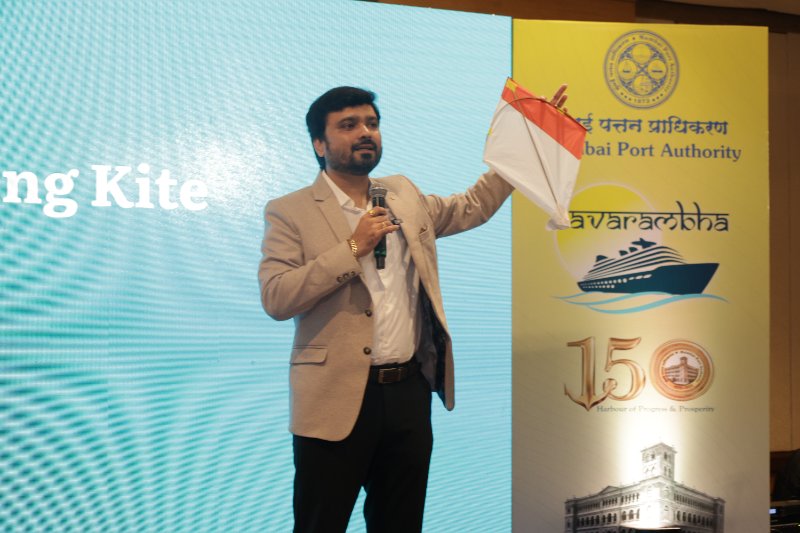
Avinash Chate is an entrepreneur and corporate trainer who runs ABC Trainings and The Future Corporate & Business Coaching, a TEDx speaker and published author. Over the last decade he has trained teams at 1,000-plus organisations and 15,000-plus professionals.
He teaches these skills not from a manual, but because he practises them himself — leading a 100-plus member team of his own. That is the difference working leaders feel in the room.
Remote & Hybrid Team Leadership Training — FAQ
What is Remote & Hybrid Team Leadership Training?
It is a practical development programme for managers who now lead people they rarely see — fully remote reports, hybrid rotas, teams spread across cities. It builds the specific discipline that distance requires: leading by outcomes instead of attendance, building trust and psychological safety at a distance, choosing between async and live communication on purpose, running hybrid meetings where the remote voice counts as much as the in-room one, keeping culture and belonging alive over screens, and spotting the disengagement and burnout you can no longer see in person. Unlike a generic remote-work talk, it is built around the real situations distributed managers face, practised in the room until they feel confident.
Who should attend this training?
Any manager leading distributed people — team leads and line managers running hybrid schedules, managers of remote reports, and project or functional heads coordinating people across locations. It is at its most powerful when run as a cohort, so a company's managers build one shared, deliberate way of leading at a distance instead of each inventing their own. It is also valuable for senior leaders setting the tone for how the whole organisation works when everyone is no longer in one building.
Why do good office managers struggle when their team goes remote or hybrid?
Because almost everything they relied on was informal and physical. Trust built by proximity, problems surfaced by accident, coaching that happened in passing, belonging manufactured by simply sitting near people — none of it was ever a written process, because it never had to be. Remove physical presence and that invisible infrastructure vanishes at once. Untrained, a capable manager reaches for the wrong substitute: either surveillance — pinging, tracking, mistaking activity for output — or neglect, where the quiet ones drift and no one notices. It is not a character flaw; it is a skills gap, and distributed leadership is a learnable discipline.
Is this just about which tools and software to use?
No — and that is the most important thing to understand about it. More software does not fix a distributed team; better leadership does. The programme is about judgement and behaviour: how to set outcomes so people can own them without being watched, how to decide what needs a live call versus a written note, how to run a meeting so proximity does not decide who is heard, how to keep a team feeling like a team, and how to read the signals of someone drifting away. The tools are whatever you already use; the discipline is what your managers are missing.
What does the programme cover?
Seven connected modules: the mindset shift from attendance to outcomes; building trust and connection at a distance; communication that works async and sync; running meetings with hybrid equity so there is no in-room advantage; keeping culture and belonging alive remotely; spotting the disengagement and wellbeing risks you cannot see; and a practice module where each manager designs the operating agreement their real team needs. Every module pairs a short, usable model with practice on situations drawn from your own teams.
We are hybrid, not fully remote — is this still for us?
Especially so. Hybrid is in many ways the harder problem, because it hides its own failures. The classic hybrid trap is the two-tier meeting, where the people in the room dominate and the ones on the screen quietly become second-class — and the split culture that follows, where office days and home days drift into two different teams. The programme spends real time on hybrid-meeting equity, on balancing rotas fairly, and on keeping one culture across both. If your model is hybrid, this is aimed squarely at you.
How does the training help managers spot problems they cannot physically see?
By teaching managers to read the signals a screen still gives you if you know where to look — the report who has gone quiet, the camera that is always off now, the replies that have turned terse, the always-on person who never switches off. The programme builds a habit of checking in that supports rather than surveils, and a feel for the drift that precedes a resignation, so managers catch disengagement and burnout weeks earlier instead of discovering them in an exit interview. Module 06 is devoted entirely to this.
How is the training delivered — and how long does it take?
It is highly interactive — real cases and practice, with minimal lecture. The duration is flexible: the same programme runs as a half-day, a full day, a multi-day intensive for a leadership cohort, or a series of shorter modules spaced across a few weeks so managers apply each shift to their live team in between, and it works well as an ongoing rhythm as your operating model evolves. Because participants are often distributed themselves, it can run fully in-person or in a way that models the hybrid equity it teaches. We shape the exact length, cadence and mode with you.
Can it be delivered on-site, and in which languages?
Yes. Most engagements are across Maharashtra — Pune, Mumbai, Chhatrapati Sambhajinagar, Nashik, Nagpur and the surrounding MIDC industrial belts — and the programme is equally delivered pan-India and internationally on request. Delivery is available in English, Hindi and Marathi, or a natural mix. For distributed teams, it can also bring managers together on-site for the workshop even when their day-to-day work is remote, which many organisations find is exactly the reset their leaders need.
Why Avinash Chate for this programme?
Avinash Chate is an entrepreneur and corporate trainer who runs a 100-plus member organisation whose people work across locations and working styles — so he teaches distributed leadership from lived experience, not a slide about the future of work. He is a TEDx speaker and author of The Winning Edge, creator of the KITE leadership framework, and has trained teams at 1,000-plus organisations and 15,000-plus professionals. That combination of real operating experience leading a distributed team and his own leadership frameworks is what working managers respond to.
Related Training Topics
Turn managers who watch the dashboard into leaders of distributed teams
Give your managers the discipline of leading people they rarely see — trust over surveillance, outcomes over attendance, hybrid meetings that count everyone, and the signals of trouble you cannot see. On-site across Maharashtra, pan-India and internationally, in English, Hindi or Marathi.
Request a Proposal →