Customer Service Excellence Training
Polite. On-script. Ticket closed. And the customer never came back.
The call was handled correctly. The agent was courteous, the process was followed, the ticket was marked resolved — and a week later that customer is quietly buying from someone else. Nothing went wrong that any report would ever flag. That is exactly the problem. A customer does not leave because your team was rude; they leave because, somewhere in a technically perfect interaction, they never once felt that anyone actually cared. Your people are not lazy and they are not unkind. They were simply handed a script and a set of procedures, and never taught the thing that keeps a customer for life — that service is a craft and a mindset, not a checklist. This programme teaches them that craft.
★ 5.0 client rating · Across Maharashtra, pan-India & internationally · English, Hindi & Marathi
The Customer Who Leaves Without Ever Complaining
Here is the loss you almost never see coming. Your service desk runs smoothly — polite greetings, correct answers, tickets closed inside the SLA, satisfaction scores that look respectable on the dashboard. And underneath that calm surface, customers are slipping away one by one. They do not shout. They do not fill in the feedback form. They simply stop calling, stop reordering, and turn up months later as a churn number nobody can explain. The interaction that lost them was, on paper, flawless. That is what makes it so dangerous — you cannot fix a problem your own metrics keep telling you does not exist.
Watch a few of those interactions and the pattern is quietly heartbreaking. A frustrated customer is met with a defensive script instead of a human being. A complaint is treated as something to survive — deflected, minimised, closed — rather than the rare, precious chance to win someone's loyalty for good. "Customer-first" hangs on the wall in a nice frame and is nowhere to be found in the actual conversation. The same problems recur because nobody ever really listened to what caused them. And a competitor who does nothing cleverer than making people feel genuinely cared for takes your customers, one gentle interaction at a time.
Why Good, Polite People Still Lose Customers — And Why It Is Fixable
The uncomfortable truth is that "polite and on-process" and "genuinely great service" are not the same thing — and most teams have only ever been trained for the first. Following a script is safe and repeatable, so that is what organisations teach, measure and reward. But a customer does not experience your script; they experience how they felt while you followed it. Did anyone hear the frustration underneath the words? Did the effort of solving it fall on them or on you? Did they leave the conversation feeling like a case number or like a valued human being? Those are the questions that actually decide whether they stay — and almost nobody is taught to answer them.
So a decent, willing person defaults to the only thing they were ever given: the process. They handle the angry customer defensively because no one showed them how to absorb anger without taking it personally. They close the complaint fast because they were taught it is a threat, not an opportunity. This is not an attitude problem and it is certainly not a shortage of good people — it is a skills gap and a mindset gap, and both close with the right practice. This programme gives your team that practice deliberately, so they learn to turn ordinary moments into loyalty before a rival wins your customer for them.
Does This Sound Familiar?
If your service is technically fine yet customers still drift away, it is almost never that you hired the wrong people. It is that no one taught them the difference between processing a customer and caring for one. Here is what you are likely seeing, what it is quietly costing you, and exactly which part of the programme fixes it.
| The symptom you see | What it is costing you | The real cause | How the programme fixes it |
|---|---|---|---|
| Satisfaction scores look fine, yet customers quietly stop coming back | Silent churn you can't explain — revenue walking out through a door no report shows | The team is trained to close tickets, not to make people feel genuinely cared for | The Mindset module — service as pride, and what customers actually want |
| Complaints are handled defensively — deflected, minimised, survived | Every complaint becomes a lost customer instead of a loyal one won back | No one taught them that a complaint is the best chance they'll get to earn loyalty | The Service Recovery module — turning a complaint into loyalty |
| The same problems and the same complaints keep recurring | Effort is spent again and again on issues that should have been solved once | Nobody truly listens to the customer, so the real cause is never heard or fixed | The Understanding Customers module — effort, empathy and outcome |
| Agents freeze, go cold or get flustered with an angry customer | A recoverable situation escalates, spills onto social media, and burns out the agent | They were never taught how to absorb anger without taking it personally | The Difficult Customer module — composure under fire |
| "Customer-first" is on the wall but absent from the actual interaction | A caring brand promise the frontline never delivers — trust quietly erodes | The tone and small moments that signal real care were never made a skill | The Communication & Moments of Truth modules |
What Changes When Your Team Learns to Actually Care
Picture the same customers, the same volume of calls and tickets — and an entirely different outcome. A frustrated caller hangs up feeling heard and, somehow, more loyal than before they had the problem. A complaint becomes the moment your brand quietly wins someone for years, not the moment it loses them. The angry customer meets a calm, confident person who does not flinch, does not go defensive, and turns the heat down within a minute. And the small moments that used to pass unnoticed — the greeting, the tone, the follow-through — start doing the silent work of making people feel valued.
And underneath it, the shift that pays for the whole programme: "customer-first" stops being a poster and becomes what your customers actually feel in every interaction. Satisfaction scores stop drifting and start climbing for the right reasons. Recurring problems get heard and solved at the root. And the customers a competitor would have quietly taken instead choose to stay — because yours was the team that made them feel cared for.
What Your Service Team Will Be Able to Do
- ✓ Approach service as a craft to be proud of, not a script to survive — the mindset everything rests on
- ✓ Read what a customer actually wants: a low-effort experience, real empathy, and a genuine outcome
- ✓ Recognise and win the moments of truth where loyalty is quietly made or lost
- ✓ Use tone, language and listening that reassure an anxious or frustrated customer
- ✓ Turn a complaint into a more loyal customer through confident service recovery
- ✓ Stay calm and in control with an angry or unreasonable customer, without taking it personally
- ✓ Handle real service situations under pressure, having already practised them in the room
What the Programme Covers
Seven connected modules that take a service team from polite-but-forgettable to the reason customers stay. Every module pairs a short, practical input with real practice on the exact interactions your team faces every day — and ends with a concrete change in how they serve.
These are building blocks, not a fixed-length course. A two-hour session goes deep on the two or three that matter most to you; a half or full day covers more; a multi-day intensive — or an ongoing monthly, quarterly or half-yearly rhythm — works through them all, with far more practice. We shape which ones, in what order and how deep, with you.
The Mindset — Service as Pride, Not Servitude
What we cover: Why so many people quietly feel that serving is beneath them — and how that single belief leaks into every interaction. Reframing service as a skilled craft and a source of genuine pride, the way the best hospitality and service brands do. Seeing the customer as a person to care for, not a task to clear. Why the frontline is not the bottom of the organisation but the place the entire brand is either kept or lost.
What changes: The team stops "getting through" customers and starts taking pride in caring for them — the mindset every other skill depends on.
What Customers Actually Want — Effort, Empathy and Outcome
What we cover: The gap between what we assume customers want and what they truly value. Why reducing a customer's effort is the strongest driver of loyalty — and how "we made it easy for you" beats "we delighted you". The role of empathy: feeling heard often matters more than being right. Reading the emotion underneath the request, and why the same words can mean very different things. Solving the real problem, not just the one on the ticket.
What changes: The team learns to serve the person, not just process the request — hearing what the customer actually needs and delivering it with less effort on their side.
Communication and Tone That Reassures
What we cover: The words, tone and pace that calm an anxious customer — and the ones that quietly inflame them. Genuine listening: letting a customer finish, reflecting back what you heard, and making them feel understood before you solve anything. Positive language that offers a path instead of a wall — "here's what I can do" rather than "that's not possible". Owning the issue with confidence rather than hiding behind policy. The same skills across the phone, the counter, email and chat.
What changes: Every interaction leaves the customer feeling heard and reassured, so tone itself becomes proof that your brand's promise is real.
The Moments of Truth That Make or Break Loyalty
What we cover: Identifying the handful of moments in your customer's journey where loyalty is actually decided — the first contact, the wait, the handover, the resolution, the follow-up. Why a customer forgives an average experience but never forgets how a critical moment felt. Mapping the moments of truth in your own service so the team knows where to pour their care. The small, deliberate touches that turn an ordinary moment into a memorable one.
What changes: The team stops treating every interaction the same and starts winning the specific moments where a customer quietly decides to stay or go.
Turning a Complaint Into Loyalty — Service Recovery
What we cover: Why a well-handled complaint can leave a customer more loyal than if nothing had gone wrong at all — the service recovery paradox. Replacing defensiveness with genuine ownership. A clear, repeatable recovery approach — listen, apologise sincerely, solve, and follow through — so nobody has to improvise under pressure. Making it right in a way the customer can feel, and closing the loop so the same problem does not return.
What changes: Complaints stop being something to survive and become the team's single best opportunity to win a customer for years.
Handling the Angry or Unreasonable Customer
What we cover: Why customers get angry, and how to absorb the emotion without absorbing the insult personally. Techniques to stay calm and lower the temperature — acknowledging feelings first, controlling your own tone, and refusing to be provoked. Handling the genuinely unreasonable or abusive customer with firm, respectful boundaries. Knowing when and how to escalate. Recovering your own composure between difficult calls so the next customer gets a fresh, steady you.
What changes: The team meets anger with calm confidence instead of fear or defensiveness — de-escalating situations that used to spiral and protecting their own resilience.
Practice — Role Plays on Your Real Service Scenarios
What we cover: Live role plays on the interactions that define your service: the furious caller, the customer who was let down twice, the polite one quietly on the verge of leaving, the unreasonable demand, the complaint that is really about something deeper. Practised in the room on real scenarios from your own organisation, with feedback on tone, listening and recovery — until the right response becomes instinct rather than effort.
What changes: The team walks out having already lived the hard conversations once, in safety — so the real ones, minutes later on a real customer, no longer catch them off guard.
How It Is Delivered
This is not a lecture on customer-service theory or a scripted set of magic phrases. It is a workshop where your team practises the job — on their feet, role-playing the angry caller, the disappointed customer, the complaint that could go either way — using real situations from your own service floor. The models are kept simple and immediately usable; the practice, and the honest feedback on tone and listening, is where the confidence and the instinct are built.
The format flexes to your needs. It runs as a focused half-day, a full-day workshop, a multi-day intensive for a whole service function, or a series of shorter modules spread across weeks so skills embed between sessions — and it works beautifully as an ongoing rhythm, refreshed each quarter and run for every new batch that joins the frontline. For 20 to 40 participants it is organised into small batches so every person practises, not just listens. The exact depth, duration and cadence are shaped with you in the design call.
Formats That Fit Your Calendar
Half-day or full-day workshop
A high-impact session to lift a service team quickly — ideal before a peak season, a new product launch, or a service-standards reset.
Multi-day intensive
Two or more days to go deep across mindset, recovery and difficult customers — perfect for a full contact-centre or a branch-service network.
Modular series across weeks
Shorter sessions spaced out so each skill — tone, moments of truth, recovery — is practised on real calls between sessions and truly embeds.
An ongoing service-excellence rhythm
Refreshed each quarter and run for every new joiner, making great service a permanent standard rather than a one-off event.
The Thinking Behind It
This programme is not a generic customer-service deck. It draws on the best writing and research on service, loyalty and customer experience — distilled into a few ideas your team can use on the very next call — and then goes further, into the frameworks Avinash uses to build a service culture inside his own 100-plus member organisation.
Ideas & books we draw on
- Delivering Happiness — Tony Hsieh · the Zappos story of building an entire company around service and the feeling it creates
- The Effortless Experience — Matthew Dixon, Nick Toman & Rick DeLisi · the research that proves reducing customer effort — not "delight" — is what actually drives loyalty
- Setting the Table — Danny Meyer · the restaurateur's masterclass in "enlightened hospitality" and making every guest feel genuinely cared for
- Uplifting Service — Ron Kaufman · a practical playbook for building a service culture across a whole organisation, not just a team
- The Nordstrom Way — Robert Spector & Patrick D. McCarthy · the legendary retailer's approach to trusting the frontline to do whatever it takes for the customer
- Hug Your Customers — Jack Mitchell · how personal, relationship-first service turns ordinary transactions into lifelong loyalty
Models we use for service excellence
- The service-profit chain · how engaged, capable service staff drive customer loyalty and, in turn, real profit
- Moments of truth (Jan Carlzon) · every contact is a moment where the customer decides whether the brand is worth staying for
- RATER / SERVQUAL dimensions · reliability, assurance, tangibles, empathy and responsiveness — what customers judge service on
- The LAST / LEARN recovery model · listen, apologise, solve, thank — a simple, repeatable way to turn a complaint around
- The Customer Effort Score (CES) · measuring and lowering how hard the customer has to work — the strongest predictor of loyalty
And Avinash's own frameworks — the part you won't find anywhere else
Beyond the established thinking, the programme is built on frameworks Avinash has created and written about himself — including his KITE leadership framework and the principles in his book The Winning Edge. These come from actually running a 100-plus member organisation and developing its people year after year, not from a textbook. It is the layer competitors cannot copy, and the one your service teams remember long after the session ends.
Who It Is For
Anyone whose work puts them in front of a customer — contact-centre and helpdesk agents, branch and counter staff, field-service and delivery teams, front-office and reception, relationship and account managers, and the team leads and supervisors who set the tone for all of them. It is especially powerful run for a whole service function at once, so everyone shares a language and a standard, and for the supervisors who must model and coach it every day. From banking counters and hospital front desks to retail floors, telecom helplines and manufacturing after-sales, it is the programme that turns a polite team into the reason customers stay.
Taught by Someone Who Lives and Dies by His Own Customers
Avinash Chate does not teach this from a textbook. He runs a 100-plus member organisation whose entire reputation rests on how its customers are treated — so the mindset, the service recovery and the difficult-customer skills taught here are the real thing, tested every day in his own business where a single mishandled client can be felt. Programmes that build service and customer-experience capability have been delivered across sectors — banking and financial services, retail, telecom, healthcare, hospitality and manufacturing after-sales — wherever the frontline is where the brand is truly won or lost.
Why Avinash Chate
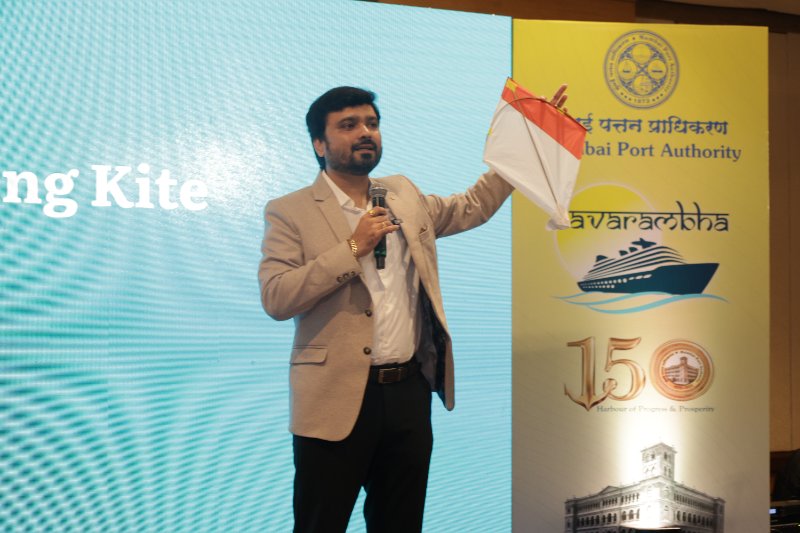
Avinash Chate is an entrepreneur and corporate trainer who runs ABC Trainings and The Future Corporate & Business Coaching, a TEDx speaker and published author. Over the last decade he has trained teams at 1,000-plus organisations and 15,000-plus professionals.
He teaches these skills not from a manual, but because he practises them himself — leading a 100-plus member team of his own. That is the difference working leaders feel in the room.
Customer Service Excellence Training — FAQ
What is Customer Service Excellence Training?
It is a practical development programme that turns polite, process-following service teams into people customers actively want to stay with. It builds the skills great service actually requires — the mindset of service as pride rather than servitude, understanding what customers truly want (a low-effort experience, empathy and a real outcome), winning the moments of truth that decide loyalty, using tone and language that reassure, turning complaints into loyalty through service recovery, and handling angry or unreasonable customers with composure. Unlike scripted "say these words" training, it is built around your real, everyday interactions and practised in the room until the right response becomes instinct.
Who should attend this training?
Anyone who deals with customers — contact-centre and helpdesk agents, branch and counter staff, field-service and after-sales teams, front-office and reception, and relationship or account managers — along with the team leads and supervisors who set and coach the standard. It is at its most powerful when a whole service function attends together, so everyone shares one language and one bar for what great service means, and it is just as valuable for supervisors who must model it daily.
Our team is already polite and follows the process — why do we still need this?
Because polite-and-on-process and genuinely great service are not the same thing, and most customers who leave were served perfectly correctly on paper. A customer does not experience your script; they experience how they felt while you followed it — whether they felt heard, whether the effort fell on them or on you, whether they left feeling like a case number or a valued person. This programme trains exactly those things: the mindset, the empathy, the recovery and the moments of truth that decide whether a customer quietly stays or quietly moves to a competitor who simply made them feel cared for.
What does the programme cover?
Seven connected modules: the mindset of service as pride not servitude; understanding what customers actually want; the moments of truth that make or break loyalty; communication and tone that reassures; turning a complaint into loyalty through service recovery; handling the angry or unreasonable customer; and extensive role-play practice on your own real service scenarios. Every module pairs a short, usable idea with practice on situations drawn from your own service floor.
How is the training delivered — and how long does it take?
It is highly interactive — role plays and real cases, with minimal lecture. The duration is flexible: the same programme runs as a half-day, a full day, a multi-day intensive for a whole service function, or a series of shorter modules spread across weeks so skills embed between sessions, and it works well as an ongoing rhythm refreshed each quarter and run for every new frontline batch. We shape the exact length and cadence with you. For 20 to 40 participants, sessions are organised into small batches so everyone practises, not just listens.
How do you handle service recovery and difficult, angry customers?
These are the heart of the programme, not an afterthought. Your team learns why a well-handled complaint can leave a customer more loyal than if nothing had gone wrong — the service recovery paradox — and a simple, repeatable way to listen, apologise sincerely, solve and follow through. For angry customers, they practise absorbing the emotion without taking it personally, lowering the temperature, setting firm but respectful boundaries with the genuinely unreasonable, knowing when to escalate, and recovering their own composure so the next customer gets a fresh, steady person.
Is the programme customised to our organisation?
Yes. Before the first session, the examples and role-play scenarios are built around your context — your industry, your products, and the real complaints and situations your team faces, whether that is a banking counter, a telecom helpline, a hospital front desk or a manufacturing after-sales team. Generic, scripted service training is exactly what fails; the value is in practising the actual conversations your people will have with real customers next week.
Can it be delivered on-site, and in which languages?
Yes. Most engagements are across Maharashtra — Pune, Mumbai, Chhatrapati Sambhajinagar, Nashik, Nagpur and the surrounding MIDC industrial belts — and the programme is equally delivered pan-India and internationally on request. Delivery is available in English, Hindi and Marathi, or a natural mix, which matters especially for frontline and counter staff who serve customers in the local language every day.
What outcomes can we expect?
A team that makes customers feel genuinely cared for rather than merely processed — so satisfaction scores climb for the right reasons and stop quietly drifting. Complaints handled in a way that wins loyalty instead of losing customers. Angry situations de-escalated before they spiral onto social media. Recurring problems finally heard and solved at the root. And, over time, the customers a competitor would have quietly taken choosing to stay, because yours became the team that made them feel valued.
Why Avinash Chate for this programme?
Avinash Chate is an entrepreneur and corporate trainer who runs a 100-plus member organisation whose reputation lives or dies by how its own customers are treated — so he teaches service from lived experience, not theory. He is a TEDx speaker and author of The Winning Edge, creator of the KITE leadership framework, and has trained teams at 1,000-plus organisations and over 15,000 professionals across banking, retail, telecom, healthcare and manufacturing. That combination of real operating experience and his own frameworks is what working service teams respond to.
Related Training Topics
Turn a polite team into the reason customers stay
Give your service team the mindset and skills no script can teach — empathy, moments of truth, service recovery and the calm to handle any customer. On-site across Maharashtra, pan-India and internationally, in English, Hindi or Marathi.
Request a Proposal →