Sales Training
They pitch every feature, the buyer asks for a discount, and they give it — because no one taught them another way to win.
Your salespeople work hard. They are out there, on calls, in showrooms, on the road, well-liked by the customers they meet. And still the deals slip — a quarter at a time, a point of margin at a time. Watch closely and the pattern repeats: they rattle off every feature the product has, the buyer nods politely and asks the only question they know how to ask — "what's your best price?" — and the discount goes out, because it is the one move they were ever taught. They present when they should be diagnosing. They talk to whoever agrees to see them, not to the person who actually signs. The pipeline swells with "maybe", and every win costs something it shouldn't. What is missing here is not hunger, and it is not hours. It is method. This programme teaches the method.
★ 5.0 client rating · Across Maharashtra, pan-India & internationally · English, Hindi & Marathi
The Deals That Slip — and the Discounts That Bleed Margin
Sit in on a week of sales calls and you start to see it everywhere. The rep leads with the product — its speed, its spec sheet, its long list of things it can do — before anyone has asked whether the buyer even has the problem those features solve. The conversation is friendly and forgettable. The buyer, given nothing to weigh but capability against capability, does the only comparison available to them: they compare price. And so the negotiation that follows is not about value at all. It is a haggle, and your team's opening move in that haggle is almost always to reach for the discount.
The cost hides in plain sight. Forecasts that never quite land, because "he sounded keen" was mistaken for a real commitment. Deals that push to next quarter, then the one after, dying by a thousand delays. Orders that close only after margin has been shaved to win them — so the company grows revenue while quietly starving its profit. Nobody names the true problem in the review meeting, because it is uncomfortable: a capable, energetic team was sent to sell without ever being shown how modern buyers actually buy.
Why Effort Isn't Enough — and Why Method Can Be Taught
Here is the thing no sales incentive can fix on its own: buying has changed, and most selling hasn't kept up. A modern buyer arrives already informed, already sceptical of a pitch, and surrounded by more people who can say no than can say yes. In that world, the salesperson who wins is not the one who knows the product best — it is the one who understands the buyer's problem best, and can make its cost impossible to ignore. Selling has quietly become an act of diagnosis. Pitching, by contrast, is what you do when you have skipped that step.
And a diagnosis is a skill, not a personality trait. Knowing which question opens up a buyer's real pain, how to reach the person who actually decides, how to hold a price when the pressure comes — none of that is charm, and none of it is luck. It is a repeatable, teachable craft, and the best sales organisations treat it as exactly that. This programme gives your team that craft deliberately, practised on their own live deals, before the next quarter's pipeline is spent learning it the expensive way.
Does This Sound Familiar?
If your sales team is showing any of these signs, it is rarely a sign that you hired the wrong people. It is a sign that no one taught them a repeatable way to sell. Here is what you are likely seeing, what it is quietly costing, and exactly which part of the programme fixes it.
| The symptom you see | What it is costing you | The real cause | How the programme fixes it |
|---|---|---|---|
| Every negotiation ends in a discount to close the deal | Revenue grows while margin bleeds — you are buying business you should have won on value | The team competes on price because it never learned to sell on value or hold the line | The value-selling and negotiation modules — quantifying worth and defending price |
| Reps lead with features and the buyer tunes out | Calls feel pleasant but move nothing; the product sounds like every competitor's | They present a spec sheet before diagnosing whether the buyer even has the problem | The discovery module — questions that surface the real pain before you pitch anything |
| Deals stall in "maybe" and slip quarter after quarter | A pipeline that looks full but never converts, and forecasts you can't trust | Reps mistake a polite nod for a commitment and never qualify who decides or why they'd move | The prospecting and qualification module — finding the decision-maker and the reason to buy now |
| The team gives up the moment a buyer raises an objection | Winnable deals lost to a "we'll think about it" nobody ever reopened | Objections are heard as rejection, not as the buyer asking for help to say yes | The objection-handling module — turning resistance into the real conversation |
| Your best relationships sit with the wrong person in the account | Months of effort courting someone who can't sign, while the real buyer never hears from you | Reps sell to whoever will meet them, not to the people who actually own the decision | The prospecting and buyer-journey module — mapping and reaching the true decision-maker |
What Changes When Your Team Sells Instead of Pitches
Picture the same team, a quarter after this work. They walk into a call and, instead of unloading the product, they ask the two or three questions that make a buyer sit forward and say "how did you know that". They map the account before they invest a month in it, and they spend their time with the person who can actually sign. They talk about the cost of the problem, not the length of the feature list — so when price finally comes up, it is weighed against real value, not against a rival's quote. And when the buyer pushes on price, they hold, because they know precisely what their solution is worth.
Underneath the individual wins, the shift that pays for the whole programme: the pipeline gets honest, forecasts start landing, and deals close at the margin they deserve instead of the margin fear surrenders. You stop buying revenue with discounts — and start earning it with method.
What Your Sales Team Will Be Able to Do
- ✓ Make the shift from pitching features to diagnosing problems — and understand why it wins more
- ✓ Prospect deliberately and reach the person who actually owns the decision, not just whoever will meet them
- ✓ Run discovery through sharp questions that surface the real pain and its cost before presenting anything
- ✓ Present value and outcomes rather than a feature list, so price is weighed against worth
- ✓ Handle objections — including price and "we'll think about it" — as the buyer asking for help to say yes
- ✓ Negotiate and close on value, holding the line instead of reaching reflexively for a discount
- ✓ Read where a buyer is in their decision journey and move the deal, instead of letting it drift into "maybe"
What the Programme Covers
Seven connected modules that take a salesperson from busy-but-pitching to deliberate and consultative. Every module pairs a short, immediately usable model with real practice on the exact situations your team faces — and ends with a concrete change in how they sell.
These are building blocks, not a fixed-length course. A two-hour session goes deep on the two or three that matter most to you; a half or full day covers more; a multi-day intensive — or an ongoing monthly, quarterly or half-yearly rhythm — works through them all, with far more practice. We shape which ones, in what order and how deep, with you.
The Shift — From Pitching Features to Diagnosing Problems
What we cover: Why the feature-led pitch has stopped working, and what the modern, informed buyer actually responds to. The mental move from "here is what our product does" to "let me understand your problem first". Why the salesperson who diagnoses beats the one who presents. Selling as a service the buyer wants, not something done to them. Reframing the whole job around the customer's outcome rather than the product's spec sheet.
What changes: The salesperson stops leading with the product and starts leading with the buyer's problem — the shift every other module builds on.
Prospecting — Reaching the Person Who Actually Decides
What we cover: Building and working a real pipeline instead of chasing whoever answers. Mapping the buying unit in an account — the user, the gatekeeper, the economic buyer who signs, and the people who can quietly kill a deal. Getting past the person who is easy to reach to the person who actually decides. Opening a cold conversation so it earns a first meeting. Qualifying early and honestly, so time goes to deals that can truly close and not to comfortable "maybes".
What changes: The salesperson fills the pipeline with the right opportunities and reaches the real decision-maker — instead of investing months in someone who can never sign.
Discovery — The Questions That Surface the Real Pain
What we cover: Why the best salespeople talk least and ask most. Building a discovery conversation that uncovers the problem beneath the stated request. Situation, problem, implication and payoff questions that lead a buyer to feel the cost of doing nothing. Quantifying the gap between where the buyer is and where they want to be, in their numbers. Listening for what is not said. Earning the right to present, by understanding the problem better than the buyer expected anyone to.
What changes: The salesperson walks into every pitch already knowing the buyer's real pain and its cost — so what they present lands, because it answers a problem the buyer now feels.
Presenting Value — Selling Outcomes, Not a Feature List
What we cover: Why a feature list invites a price comparison, and an outcome does not. Translating what the product does into what it is worth to this specific buyer. Building a business case in the buyer's language — time saved, risk removed, revenue unlocked, cost avoided. Telling a before-and-after story instead of reciting specifications. Making the cost of the problem larger and more vivid than the cost of the solution. Tailoring the same product to what each stakeholder actually cares about.
What changes: The salesperson makes the buyer weigh value against price rather than price against a rival's quote — so the conversation stops being a race to the cheapest number.
Objection Handling — Turning Resistance Into the Real Conversation
What we cover: Why an objection is usually the buyer asking for help to say yes, not a door closing. Hearing the concern underneath "it's too expensive", "we're happy with our current supplier" and "we'll think about it". A calm structure for meeting an objection without getting defensive or discounting on reflex. Separating a genuine blocker from a negotiating tactic. Pre-empting the predictable objections before they are ever raised. Keeping the relationship warm even when the answer, today, is no.
What changes: The salesperson treats resistance as information and keeps the deal alive — reopening conversations that used to die at the first "we'll think about it".
Negotiation & Closing — Winning Without Reflexively Discounting
What we cover: Why reaching for the discount is a habit, not a strategy — and what it quietly costs. Holding price by anchoring the conversation on value that has already been established. Trading concessions instead of giving them away, so every give earns a get. Reading buying signals and asking for the business without fear or pressure. Handling the last-minute price squeeze and the "just knock off a bit and we're done". Closing as the natural end of a good conversation, not a high-stakes ambush at the end.
What changes: The salesperson closes on value and protects margin — winning the deal without automatically surrendering the price to do it.
Practice — Role Plays on Your Own Live Deals
What we cover: Live role plays built on the team's real, open opportunities: the discovery call that never got past small talk, the pitch that drew a price objection, the champion who cannot get budget signed, the buyer who has gone quiet, the last-minute demand for a discount. Practised in the room, on the actual accounts your team is working right now — with coaching on the exact questions to ask and lines to hold next.
What changes: The salesperson walks out having already rehearsed the hard moments on their own deals — so the real conversations, days later, land with a plan instead of a reflex.
How It Is Delivered
This is not a motivational talk about hunger and hustle, and it is not a lecture on sales theory. It is a workshop where salespeople practise selling. They spend most of the time on their feet — running discovery calls, defending a price, meeting a real objection — using their own live deals and accounts rather than tidy hypothetical ones. The models are kept few and immediately usable; the practice, on situations the team will face next week, is where the change actually happens.
The format flexes to your calendar and your sales cycle. It runs as a focused half-day, a full-day workshop, a multi-day intensive for a whole sales force, or a modular series spread across a quarter so each skill is drilled just as it is needed — and it works beautifully as an ongoing monthly sales-sharpening rhythm, keeping the team's edge from dulling between campaigns. For a mixed group it is organised into small batches so every salesperson practises, not just listens. The exact depth, cadence and emphasis are shaped with you in the design call, around your product, your buyers and your market.
Formats That Fit Your Calendar
Half-day or full-day workshop
A high-impact session to reset how a sales team sells — ideal ahead of a new quarter, a product launch or a demanding target.
Multi-day sales intensive
Two or more days to go deep across the full cycle — prospecting to close — perfect for an entire sales force or a newly built team learning one shared method.
Modular series across a quarter
Shorter sessions spread over the sales cycle, so discovery, value-selling, objections and closing are each learned and drilled just as the team needs them.
Ongoing monthly sales sharpening
A recurring rhythm that keeps the edge on — reviewing live deals, drilling the hard conversations, and making consultative selling a permanent habit rather than a one-off event.
The Thinking Behind It
This programme is not a generic sales deck. It draws on the sharpest research and writing on how modern buyers actually buy — distilled into a few frameworks a salesperson can use on their very next call — and then goes further, into the frameworks Avinash uses to build and lead the sales effort of his own 100-plus member organisation.
Ideas & books we draw on
- SPIN Selling — Neil Rackham · the research-backed case that in real sales, the right questions close more than the best pitch
- The Challenger Sale — Matthew Dixon & Brent Adamson · why the reps who teach, tailor and take control outsell the ones who simply build rapport
- To Sell Is Human — Daniel H. Pink · the modern, evidence-led reframe of selling as service — attunement, buoyancy and clarity over pushiness
- Gap Selling — Keenan · a problem-centric method for making the cost of the current state impossible for a buyer to ignore
- New Sales. Simplified. — Mike Weinberg · the no-nonsense playbook for proactive prospecting and filling a pipeline that actually converts
- The Psychology of Selling — Brian Tracy · the enduring fundamentals of mindset, motivation and the human side of why people buy
Models your sales team will actually use
- SPIN questioning (Rackham) · Situation, Problem, Implication and Need-payoff questions that lead a buyer to feel the cost of the problem
- Consultative / solution selling · diagnosing the buyer's problem and prescribing a fit, instead of pitching a product at them
- BANT qualification · Budget, Authority, Need and Timing — a fast check on whether a deal is real and worth the chase
- The buyer's decision journey · reading where a buyer is — problem, options, or decision — and selling to that stage, not past it
- Cialdini's principles of influence · reciprocity, social proof, scarcity and the other ethical levers behind why people say yes
And Avinash's own frameworks — the part you won't find anywhere else
Beyond the established thinking, the programme is built on frameworks Avinash has created and written about himself — including his KITE leadership framework and the principles in his book The Winning Edge. These come from actually running a 100-plus member organisation and developing its people year after year, not from a textbook. It is the layer competitors cannot copy, and the one your sales teams remember long after the session ends.
Who It Is For
Anyone whose job is to win business — field and inside sales teams, business-development and key-account managers, showroom and counter staff, technical sellers who know the product but not the sale, and the founders and sales leaders who set the team's tone. It is powerful for B2B teams navigating long cycles and many stakeholders, and equally so for high-consideration B2C, where a single conversation decides the sale. Run as a team, it gives a sales force one shared language for discovery, value and closing — and, on shop floors and in dealer networks, it turns product-knowledgeable staff into genuinely consultative sellers.
Taught by Someone Who Sells to Build His Own Business
Avinash Chate does not teach selling from a textbook. He builds and leads the sales effort of a 100-plus member organisation and has to win business himself — so the prospecting, discovery, value-selling and negotiation taught here are the real thing, tested where it counts, not borrowed from a slide. Programmes that sharpen consultative and B2B selling have been delivered across sectors and markets, from manufacturing and MIDC industrial belts to FMCG, financial services and technology teams making the very same shift from pitching to diagnosing.
Why Avinash Chate
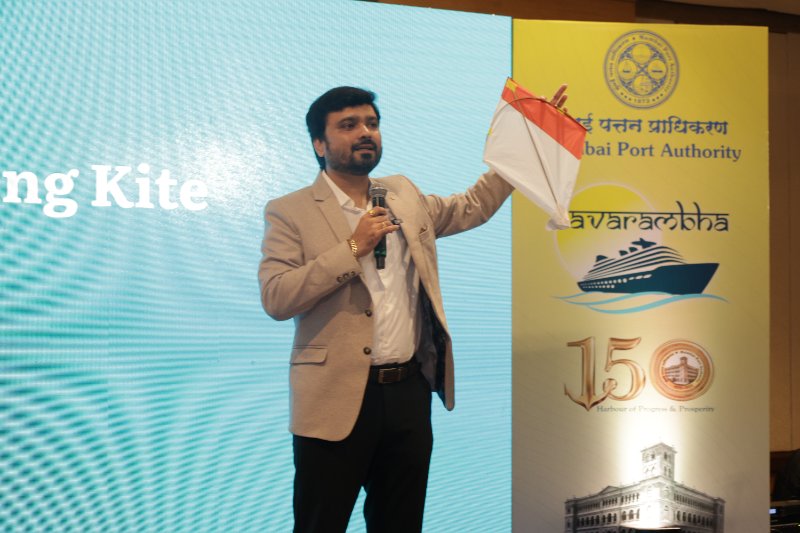
Avinash Chate is an entrepreneur and corporate trainer who runs ABC Trainings and The Future Corporate & Business Coaching, a TEDx speaker and published author. Over the last decade he has trained teams at 1,000-plus organisations and 15,000-plus professionals.
He teaches these skills not from a manual, but because he practises them himself — leading a 100-plus member team of his own. That is the difference working leaders feel in the room.
Sales Training — FAQ
What is Sales Training?
It is a practical development programme that moves a sales team from pitching features and competing on price to selling the way modern buyers actually buy. It builds the specific skills the job requires — the shift from presenting to diagnosing, deliberate prospecting to the real decision-maker, discovery through sharp questions, presenting value instead of a feature list, handling objections, and negotiating and closing without reflexively discounting. Unlike generic sales theory, it is built around the real deals and buyers your team faces, practised in the room until it becomes habit.
Who should attend this training?
Field and inside sales teams, business-development and key-account managers, showroom and counter staff, technical sellers, and the founders and sales leaders who set the team's standard. It suits B2B teams working long, multi-stakeholder cycles and high-consideration B2C where one conversation decides the sale. It is at its most powerful run as a whole team, so a sales force builds one shared language for discovery, value and closing — and it is a natural fit for dealer and channel networks moving from order-taking to genuine consultative selling.
Is this consultative and B2B selling, or basic sales technique?
It is built around consultative, value-based and B2B selling — diagnosing a buyer's problem, quantifying its cost, reaching the true decision-maker, and closing on value rather than price. The fundamentals of mindset, questioning and closing are all covered, but the whole programme is framed for how informed modern buyers actually buy, not around scripts or hard-sell tactics. It works equally for complex B2B cycles and for high-consideration B2C sales.
Our team already knows the product inside out. Why do they need this?
Deep product knowledge is exactly what tempts a team to lead with features — and a feature list invites the buyer to compare on price. This programme takes that product expertise and puts it to work the right way: diagnosing the buyer's problem first, then presenting the product as the answer to a pain the buyer now feels. Product-knowledgeable teams often see the biggest gains, because they finally have a method to convert what they know into deals won on value.
Will this stop our reps from discounting to close?
That is one of its central aims. The team learns why the reflex discount is a habit rather than a strategy, and what it quietly costs the business. They learn to establish value before price ever comes up, to hold the line by anchoring on that value, and to trade concessions instead of giving them away. Discounting never disappears entirely, but it stops being the automatic first move — and margin stops leaking on deals that could have been won on worth.
What does the programme cover?
Seven connected modules: the shift from pitching to diagnosing; prospecting and reaching the real decision-maker; discovery and the questions that surface real pain; presenting value instead of features; handling objections including price and stalls; negotiating and closing without reflexively discounting; and extensive role-play practice on the team's own live deals. Every module pairs a short, usable model with practice on situations drawn from your own accounts and market.
How is the training delivered — and how long does it take?
It is highly interactive — role plays and real deals, with minimal lecture. The duration is deliberately flexible: the same programme runs as a half-day, a full day, a multi-day intensive for a whole sales force, or a modular series spread across a quarter, and it works well as an ongoing monthly sales-sharpening rhythm for a team you want to keep sharp. We shape the exact length, cadence and emphasis with you around your product and sales cycle. For a mixed group, sessions are organised into small batches so everyone practises rather than just listens.
Is the programme customised to our product and market?
Yes. Before the first session, the examples, discovery questions and role-play scenarios are built around your context — your product, your buyers, your sales cycle and the real objections your team hears. Generic sales training is exactly what fails; the value is in practising the actual calls, questions and price conversations your people will face next week, on the accounts they are working right now.
Can it be delivered on-site, and in which languages?
Yes. Most engagements are across Maharashtra — Pune, Mumbai, Chhatrapati Sambhajinagar, Nashik, Nagpur and the surrounding MIDC industrial belts — and the programme is equally delivered pan-India and internationally on request. Delivery is available in English, Hindi and Marathi, or a natural mix, which matters especially for field teams, dealer networks and counter staff selling in the language their buyers speak.
Why Avinash Chate for this programme?
Avinash Chate is an entrepreneur and corporate trainer who builds and leads the sales effort of a 100-plus member organisation and has to win business himself — so he teaches selling from lived experience, not theory. He is a TEDx speaker and author of The Winning Edge, creator of the KITE leadership framework, and has trained teams at 1,000-plus organisations and more than 15,000 professionals across sectors. That combination of real selling experience and his own frameworks is what working salespeople and sales leaders respond to.
Related Training Topics
Turn a team that pitches into a team that sells
Give your salespeople a repeatable method — diagnosing over pitching, reaching the real decision-maker, selling value and closing without reflexively discounting. On-site across Maharashtra, pan-India and internationally, in English, Hindi or Marathi.
Request a Proposal →