Coaching & Feedback Skills for Managers
When your managers have every answer, the team stops looking for its own.
Someone on the team gets stuck. They walk to the manager's desk, describe the problem, and the manager — sharp, experienced, well-meaning — solves it on the spot. Fast. Correct. And absolutely guaranteed to bring that person back tomorrow with the next one. Multiply that by a whole team and you get a manager buried under everyone else's thinking, and a team that has quietly outsourced its brain. Feedback, meanwhile, arrives once a year in a form, if it arrives at all, and lands as a verdict rather than something anyone can use. This programme rewires the everyday habit — from having the answer to drawing it out, and from judging people to genuinely growing them.
★ 5.0 client rating · Across Maharashtra, pan-India & internationally · English, Hindi & Marathi
The Manager Who Is the Answer to Everything
Look closely at a busy manager's day and a pattern appears. A steady queue forms at their desk — small decisions, stuck tasks, "quick questions" that are never quick. Each time, the manager does the generous, obvious thing: they answer. They fix it. They are good at it, so it feels like leadership. But every answer trains the person to come back for the next one, and slowly the manager becomes a human help desk — the smartest, most senior, most expensive help desk in the building — while their own real work waits for after hours.
And the feedback side is quieter but no better. Because no one taught them how to coach in the moment, correction gets stockpiled for the annual review, where it drops all at once as judgement — stale, personal, impossible to act on. So two things calcify at the same time: people stay dependent because they are never asked to think, and they stop growing because they are never told the truth in a way they can do anything with. The manager ends up doing everyone's thinking and none of their developing.
Why Capable Managers Tell Instead of Coach — And Why It Is Fixable
The instinct to jump in is not laziness or ego — it is competence pointing the wrong way. Telling is faster in the moment, it feels helpful, and most managers were promoted precisely because they had the answers. Nobody ever taught them the harder, slower skill: to hold the question, stay quiet long enough for the other person to think, and ask instead of tell — so the person leaves with their own answer and the confidence that came from reaching it. Coaching feels like it costs time today; in reality it is the only thing that buys time back.
Feedback fails for the same untrained reason. Left without a method, managers swing between two bad options — say nothing and let it fester, or say it badly and bruise the relationship. What they were never shown is how to separate the behaviour from the person, describe what they actually saw, and point it forward so it improves next week instead of stinging this one. None of this is talent you are born with. It is a set of moves — questions, silences, structures — that can be taught and, with practice, become the manager's default. That is exactly what this programme builds.
Does This Sound Familiar?
If these patterns feel familiar, the cause is rarely the wrong managers — it is that no one ever taught them to coach in the moment or give feedback that lands. Here is what you are likely seeing, what it is quietly costing, and precisely which part of the programme addresses it.
| The symptom you see | What it is costing you | The real cause | How the programme fixes it |
|---|---|---|---|
| The same people keep coming back with the same kinds of questions | The manager becomes a bottleneck and the team never builds its own judgement | Every problem is met with an answer, which trains dependence instead of thinking | The shift from telling to asking — the manager-as-coach mindset |
| Managers jump to solutions before they have really heard the problem | People feel unheard, the real issue stays hidden, and the wrong thing gets fixed | Listening was never trained — the manager is rehearsing the answer, not paying attention | The listening module — the attention that unlocks people |
| Coaching conversations wander and end without anything actually decided | Time is spent, goodwill is used up, and nothing moves afterward | There is no structure to the conversation — just advice dressed up as a chat | The powerful-questions module built on GROW — a conversation that reaches a commitment |
| Feedback is avoided until it bursts out — or saved for the yearly review | Small problems grow, standards slip, and the feedback lands as a verdict no one can use | Managers were never given a way to give correction that improves behaviour without wounding | The feedback module — clear, kind, forward-pointing feedback |
| Under-performers drift and high-potentials plateau for want of attention | You lose the weak to inertia and the strong to boredom — the most expensive of both | The manager has one setting for everyone instead of coaching each to what they need | The module on coaching the under-performer and the high-potential differently |
What Changes When Your Managers Coach Instead of Tell
Picture the queue at the desk thinning out. Someone arrives stuck, and instead of handing over the answer, the manager asks two good questions — and the person works it out themselves, and walks away taller for it. Feedback stops being a once-a-year ambush and becomes a light, ordinary, in-the-moment thing: named early, aimed forward, easy to act on. The manager, no longer doing everyone's thinking, finally has room to do their own.
And underneath it, the shift that pays for the whole programme: your people stop being dependent and start being capable. The team gets smarter without the manager in the room, the strong ones stay because they are being stretched, and the weak ones move because someone is finally coaching them to. You built one person who had all the answers; now you have a team that finds its own.
What Your Managers Will Be Able to Do
- ✓ Recognise when to coach and when to tell — and default to asking rather than fixing
- ✓ Listen so completely that people feel heard and the real problem surfaces
- ✓ Ask powerful, open questions that make people think instead of wait for the answer
- ✓ Run a focused coaching conversation using GROW that ends in a real commitment
- ✓ Give feedback that improves behaviour and keeps the relationship — without bruising
- ✓ Coach in the flow of everyday work, not only in the scheduled one-on-one
- ✓ Adapt their coaching to the under-performer, the steady performer and the high-potential
What the Programme Covers
Seven connected modules that turn the everyday manager from the answer-to-everything into a coach who grows independent, accountable people. Every module pairs a short, practical input with real practice on the exact conversations a manager has each week — and ends with a concrete change in how they show up at the desk.
These are building blocks, not a fixed-length course. A two-hour session goes deep on the two or three that matter most to you; a half or full day covers more; a multi-day intensive — or an ongoing monthly, quarterly or half-yearly rhythm — works through them all, with far more practice. We shape which ones, in what order and how deep, with you.
From Telling to Asking — The Manager as Coach
What we cover: Why the reflex to solve every problem quietly weakens the team. The real difference between managing, mentoring and coaching, and when each is the right tool. The hidden cost of being the answer to everything — dependence, bottleneck, burnout. The mindset shift at the heart of it all: from having the answer to drawing it out, and from taking on the problem to handing back the thinking.
What changes: The manager stops reaching for the answer by reflex and starts asking first — the single shift everything else in the programme is built on.
Listening That Unlocks People
What we cover: Why most managers listen only long enough to start talking. The levels of listening — from waiting for your turn, to hearing the words, to hearing what is really being said underneath them. Staying silent long enough for someone to think. Listening for emotion and assumption, not just facts. Making a person feel genuinely heard so they open up and own the problem.
What changes: People feel understood rather than processed, the true issue surfaces early, and the manager stops solving the wrong problem well.
Powerful Questions and the GROW Conversation
What we cover: The difference between a question that opens thinking and one that just leads to the manager's own answer. Building a toolkit of open, curious, forward-moving questions. Structuring a coaching conversation with GROW — Goal, Reality, Options, Will — so it goes somewhere instead of wandering. Resisting the urge to rescue with advice. Ending every conversation on a clear, owned next step.
What changes: The manager can hold a focused coaching conversation that helps a person reach their own solution and leave committed to acting on it.
Feedback That Improves Behaviour Without Bruising
What we cover: Why avoiding feedback is the most expensive kindness a manager offers. Separating the behaviour from the person so correction lands as help, not attack. Describing what you actually observed and its impact, rather than labelling character. Making feedback specific, timely and pointed forward — feedforward instead of blame. Giving recognition that genuinely motivates. Handling the defensive, deflated or tearful reaction.
What changes: Feedback becomes a light, forward-looking habit that changes behaviour early — while keeping, and often deepening, the relationship.
Coaching in the Moment vs the Scheduled One-on-One
What we cover: Why the best coaching almost never happens in a booked meeting. Turning ordinary interactions — the corridor question, the stuck task, the "quick sign-off" — into thirty-second coaching moments. Running a one-on-one that develops the person rather than just tracking the work. Balancing the two: everyday micro-coaching and the deeper scheduled conversation. Knowing when a moment calls for coaching and when it simply needs a decision.
What changes: Coaching stops being an event on the calendar and becomes the manager's everyday operating style — woven into the work, not bolted on top of it.
Coaching the Under-Performer and the High-Potential
What we cover: Why the same coaching approach fails at both ends of the team. Coaching the under-performer — separating a skill gap from a will gap, holding the mirror without crushing, and turning a hard conversation into a plan they own. Coaching the high-potential — stretching someone who is already good, giving them harder problems instead of easier answers, and keeping them challenged so they stay. Reading what each person in front of you actually needs.
What changes: The manager coaches each person to what they need — lifting the strugglers and stretching the stars — instead of running one setting for everyone.
Practice — Live Coaching Role-Plays
What we cover: Live coaching role-plays on the situations that fill a manager's real week: the person who wants the answer handed to them, the one who keeps repeating the same mistake, the high-potential who is coasting, the defensive reaction to hard feedback, the corridor question that is really a coaching moment in disguise. Practised in the room, on real cases from your own organisation, with feedback on the coaching itself.
What changes: The manager walks out having already coached the hard conversations once, in safety — so the real ones, days later, feel natural rather than daunting.
How It Is Delivered
This is not a seminar about coaching — it is a room where managers practise coaching. They spend most of their time on their feet, in pairs and trios: asking the questions, holding the silences, giving the feedback, and being coached in return so they feel from the inside what good coaching does. The models are deliberately few and immediately usable — GROW, a handful of powerful questions, a clean feedback structure — because the change lives in the practice, not the theory.
The format flexes around your team, never the other way around. It runs as a focused half-day, a full-day workshop, a multi-day intensive for a manager cohort, or a series of shorter modules spread across weeks so each skill embeds before the next — and it works especially well as an ongoing rhythm, with practice sessions that keep the coaching habit alive long after the first workshop. For 20 to 40 participants it is organised into small batches so every manager coaches and is coached, rather than merely watches. The exact depth, duration and cadence are shaped with you in the design call.
Formats That Fit Your Calendar
Half-day or full-day workshop
A high-impact session to shift a group of managers from telling to asking quickly — ideal as the launch of a coaching culture.
Multi-day intensive
Two or more days to go deep on listening, questioning and feedback — perfect for a leadership cohort or a manager academy building a coaching habit properly.
Modular series across weeks
Shorter sessions spaced out so managers practise each skill on their real team between meetings and bring the results back to the room.
An ongoing coaching rhythm
Recurring practice and clinic sessions through the year that keep the coaching and feedback habit alive instead of fading after a one-off workshop.
The Thinking Behind It
This programme is not a generic coaching deck. It draws on the best writing and research on coaching and feedback — distilled into a few models managers can use in the corridor, not just the classroom — and then goes further, into the frameworks Avinash uses to coach and develop people inside his own 100-plus member organisation.
Ideas & books we draw on
- Coaching for Performance — John Whitmore · the founding text of workplace coaching and the home of the GROW model managers still use today
- Trillion Dollar Coach — Eric Schmidt, Jonathan Rosenberg & Alan Eagle · how Bill Campbell coached Silicon Valley's best — proof that coaching, not answers, builds great teams
- Co-Active Coaching — Henry Kimsey-House, Karen Kimsey-House, Phillip Sandahl & Laura Whitworth · the deep craft of listening and powerful questions at the heart of real coaching
- Helping People Change — Richard Boyatzis, Melvin Smith & Ellen Van Oosten · the science of coaching with compassion — why coaching to strengths and aspiration changes people, and coaching to fix them does not
- The Feedback Fix — Joe Hirsch · why feedforward beats feedback — aiming correction at the future instead of relitigating the past
- Quiet Leadership — David Rock · the brain science of helping people think for themselves rather than handing them your solution
Models your managers will actually use
- The GROW model · Goal, Reality, Options, Will — the spine of a focused coaching conversation
- Active listening · attending, reflecting and clarifying so the person feels heard and the real issue surfaces
- Feedforward — Marshall Goldsmith · pointing feedback at what to do next rather than judging what already happened
- The ladder of inference · catching the leap from what you observed to the story you told about it before you give feedback
- Growth mindset — Carol Dweck · coaching effort and learning, so ability is something people build rather than something they either have or lack
And Avinash's own frameworks — the part you won't find anywhere else
Beyond the established thinking, the programme is built on frameworks Avinash has created and written about himself — including his KITE leadership framework and the principles in his book The Winning Edge. These come from actually running a 100-plus member organisation and developing its people year after year, not from a textbook. It is the layer competitors cannot copy, and the one your managers remember long after the session ends.
Who It Is For
Any manager whose job is to get results through other people — team leads, supervisors, senior and middle managers, project and functional heads, and the high-potentials you are grooming to lead. It is especially powerful run as a cohort, so a whole layer of managers builds the same coaching language and can practise on the situations they genuinely share. On shop floors, in project rooms and across service teams alike, it is the shift that turns a manager who fixes everything into one who grows people who can fix things themselves — and it is the everyday, in-the-moment complement to a structured programme like Development Dialogue.
Taught by Someone Who Coaches His Own People Every Week
Avinash Chate does not teach coaching from a manual. He runs a 100-plus member organisation and coaches his own managers and teams every week — so the questions, the listening and the feedback taught here are the real thing, tested where the stakes are his own. Programmes that build coaching and feedback capability in managers have been delivered across sectors, from manufacturing shop floors to banking, IT and services teams — anywhere leaders needed to stop being the bottleneck and start growing people who think for themselves.
Why Avinash Chate
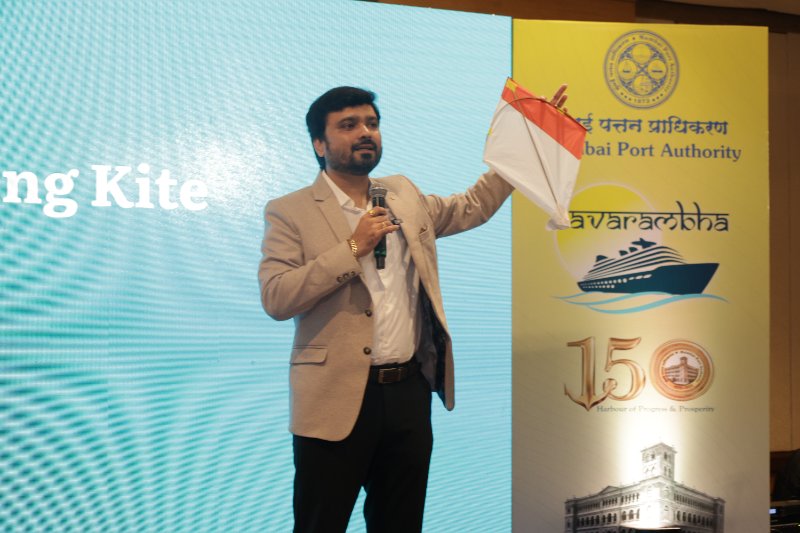
Avinash Chate is an entrepreneur and corporate trainer who runs ABC Trainings and The Future Corporate & Business Coaching, a TEDx speaker and published author. Over the last decade he has trained teams at 1,000-plus organisations and 15,000-plus professionals.
He teaches these skills not from a manual, but because he practises them himself — leading a 100-plus member team of his own. That is the difference working leaders feel in the room.
Coaching & Feedback Skills for Managers — FAQ
What is Coaching & Feedback Skills training for managers?
It is a practical programme that builds the everyday manager-as-coach habit — the day-to-day skill of coaching in the moment and giving feedback that actually changes behaviour. It teaches managers to ask instead of tell, to listen so people feel heard, to run a focused coaching conversation using the GROW model, and to give clear, kind, forward-pointing feedback. Unlike a formal appraisal system, this is about the ordinary interactions at the desk and in the corridor — the ones that decide whether your people grow or stay dependent — practised in the room until coaching becomes the manager's default.
How is this different from your Development Dialogue programme?
They are complementary. Development Dialogue is the structured, usually annual career conversation — aspiration, ability, a development plan — a scheduled event done well. Coaching & Feedback is the everyday habit that lives between those events: the thirty-second coaching moment when someone is stuck, the piece of feedback given the same afternoon, the one-on-one that develops rather than just tracks. Development Dialogue is the formal conversation; this is the day-to-day manager-as-coach behaviour that makes the whole culture work. Many organisations run both, and they reinforce each other.
Who should attend this training?
Any manager who gets work done through others — team leads, supervisors, senior and middle managers, and project or functional heads — plus the high-potentials you are about to move into people-leadership. It is at its most powerful run as a cohort, so a whole layer of managers builds a shared coaching language and a peer group to practise with. It also suits first-line supervisors on the shop floor, where the manager-as-coach shift has an immediate effect on how the team solves problems.
Why do good managers default to telling instead of coaching?
Because telling is faster, feels helpful, and is exactly what they were promoted for — having the answers. Coaching is the harder, slower skill of holding the question, staying quiet, and asking instead of solving, so the person reaches their own answer. Almost no one is taught it. Left untrained, a capable manager becomes the answer to everything, which quietly trains the team to stay dependent. The good news is that coaching is not innate talent — it is a set of moves that can be learned and, with practice, become the manager's natural style.
What does the programme cover?
Seven connected modules: the shift from telling to asking; listening that unlocks people; asking powerful questions and running a GROW conversation; giving feedback that improves behaviour without bruising; coaching in the moment versus the scheduled one-on-one; coaching the under-performer and the high-potential differently; and extensive live coaching role-plays. Every module pairs a short, usable model with practice on real situations from your own organisation, with feedback on the coaching itself.
How is the training delivered — and how long does it take?
It is highly interactive — coaching practice, role-plays and real cases, with minimal lecture. The duration is flexible: the same programme runs as a half-day, a full day, a multi-day intensive for a manager cohort, or a series of shorter modules spread across weeks, and it works especially well as an ongoing rhythm with practice sessions that keep the habit alive. We shape the exact length and cadence with you. For 20 to 40 participants, sessions are organised into small batches so every manager coaches and is coached, not just listens.
Is the programme customised to our organisation?
Yes. Before the first session, the examples and role-play scenarios are built around your context — your industry, the real situations your managers face, the exact conversations that queue up at their desks. Generic coaching training is precisely what fails to stick; the value is in practising the actual coaching moments and feedback conversations your people will have next week, in the vocabulary and constraints of your own organisation.
Can it be delivered on-site, and in which languages?
Yes. Most engagements are across Maharashtra — Pune, Mumbai, Chhatrapati Sambhajinagar, Nashik, Nagpur and the surrounding MIDC industrial belts — and the programme is equally delivered pan-India and internationally on request. Delivery is available in English, Hindi and Marathi, or a natural mix, which matters especially for first-line managers coaching teams on the floor. On-site delivery keeps the role-plays grounded in your real environment.
What outcomes can we expect?
Managers who ask before they answer, so the team builds its own judgement instead of queuing at the desk. Feedback given early, kindly and often, so small problems stay small. High-potentials who stay because they are being stretched, and under-performers who move because someone is finally coaching them. Over time, a visible shift from a few managers doing everyone's thinking to a culture where people are coached to think for themselves — and managers who finally have room to lead.
Why Avinash Chate for this programme?
Avinash Chate is an entrepreneur and corporate trainer who runs a 100-plus member organisation and coaches his own managers and teams every week — so he teaches coaching from lived practice, not theory. He is a TEDx speaker and author of The Winning Edge, creator of the KITE leadership framework, and has trained teams at 1,000-plus organisations including RBI, JSW Steel, BARC, the Indian Army and Ferrero. That combination of real operating experience and his own frameworks is what working managers respond to.
Related Training Topics
Turn your managers from the answer-to-everything into coaches
Build the everyday manager-as-coach habit — asking instead of telling, powerful questions, and feedback that changes behaviour without bruising. On-site across Maharashtra, pan-India and internationally, in English, Hindi or Marathi.
Request a Proposal →