Corporate Storytelling Training
Your leaders present the facts, the data, the fifty-slide deck — and no one in the room is moved.
The presentation was flawless. Every number checked twice, every slide clean, the logic tight enough to survive any challenge. Your leader delivered it well. And then the room did nothing — polite nods, a few clarifying questions, and back to inboxes. The decision stalled. The budget went elsewhere. What went missing was never the argument; it was the reason for anyone to care about it. People do not decide with spreadsheets and walk out remembering bullet points — they remember the moment a message made them feel something. That is a skill, not a personality trait, and this programme teaches it.
★ 5.0 client rating · Across Maharashtra, pan-India & internationally · English, Hindi & Marathi
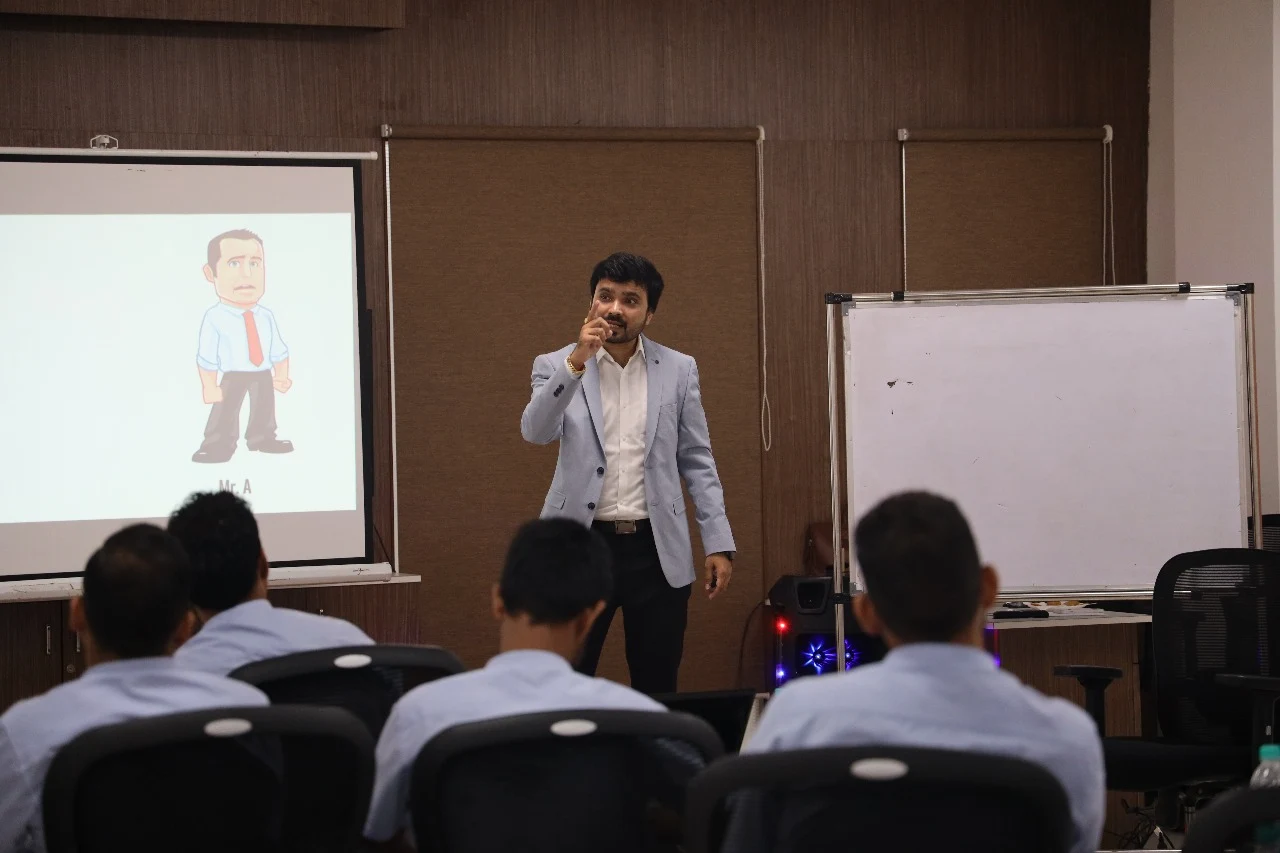
The Airtight Argument That Moves No One
Sit through a quarter's worth of internal reviews and you will see the same quiet failure repeat itself. A smart, well-prepared person stands up with an unassailable case — the analysis is right, the recommendation is sound, the deck is exhaustive — and the room stays flat. The idea does not travel past the meeting. Nobody argued with it; nobody rallied behind it either. It simply failed to stick, and within a week almost no one could tell you what was actually proposed.
The cost of that is invisible on any dashboard, which is exactly why it never gets fixed. Good strategies die in the presentation, not the market. The change initiative loses momentum because no one felt why it mattered. The brilliant proposal loses the funding to a rival pitch that was half as rigorous and twice as memorable. Meanwhile "storytelling" gets waved away as soft, fluffy, a nice-to-have for the marketing team — so the one skill that would have carried the message never gets built, and the smartest voices in the building keep going unheard.
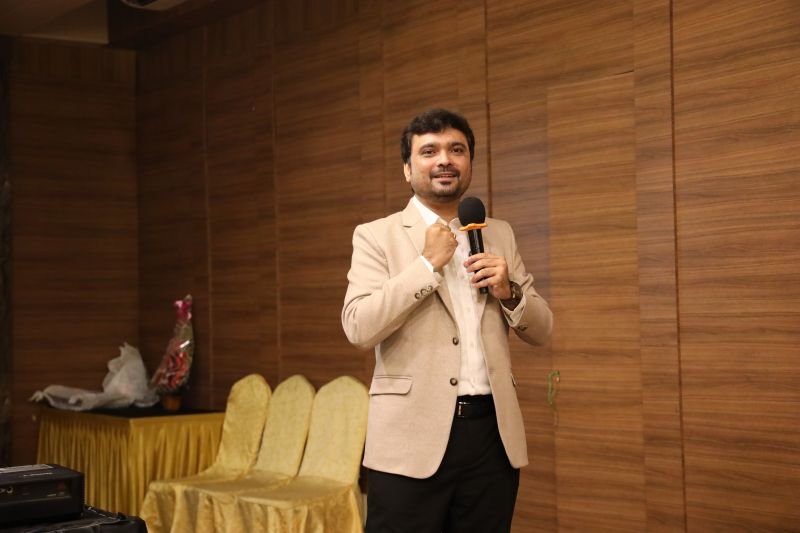
Why Facts Don't Move People — And Why That's Learnable
Here is what the neuroscience is blunt about: data lands in the part of the brain that evaluates, and story lands in the part that decides. A wall of statistics puts an audience into judge mode — scanning for the flaw, staying at arm's length. A well-told story does the opposite; it drops the guard, lets people picture themselves inside the situation, and quietly moves them from thinking about the idea to feeling it. That is why the same numbers, framed inside a human story, get the buy-in that the raw numbers never could. The person who can do that wins the argument, the budget and the talent — not because they are louder, but because their message is the one that survives contact with a busy human brain.
And the myth that keeps this skill scarce is that some people are simply "born storytellers" and the rest should stick to the facts. They are not. Behind every leader who makes a room lean in is a craft — a way of finding the right moment, structuring it so tension pulls the audience forward, and delivering it without armour. Those are teachable moves, and once a leader has them, the change is immediate and repeatable. This programme takes storytelling out of the realm of talent and turns it into a discipline your people can actually practise.
Does This Sound Familiar?
If your leaders are informed, prepared and still failing to land their message, it is almost never a gap in their thinking. It is a gap in how they carry it. Here is what you are likely seeing, what it is quietly costing, and exactly which part of the programme fixes it.
| The symptom you see | What it is costing you | The real cause | How the programme fixes it |
|---|---|---|---|
| Presentations are accurate and thorough, yet the room stays unmoved | Sound ideas stall; decisions drift; the message is forgotten within a week | The case is aimed at the brain that evaluates, not the one that decides | The neuroscience-of-narrative module — why story beats data |
| Your people "don't have any stories to tell" | Every talk defaults to abstractions and bullet points that never stick | No one taught them to notice and mine the stories already around them | The finding-your-stories module — sourcing narrative from real work |
| A talk has good material but rambles and loses the room halfway | Attention leaks, the point arrives too late, and the ask lands weakly | There is no underlying structure carrying the audience from tension to resolution | The story-structure module — the shapes that make a story land |
| The pitch is all about the product, the plan or the presenter | The audience never sees themselves in it, so they never feel the stakes | The story casts the speaker as the hero instead of the listener | The audience-as-hero module — making it about them, not you |
| Numbers are shown but never felt — the data changes no one's mind | Compelling evidence gets nodded at and ignored; the insight dies on the slide | The figures are presented, not dramatised into something human and vivid | The data-storytelling module — numbers people actually feel |
What Changes When Your Leaders Can Make a Message Stick
Imagine the same review meeting, but different. Your leader opens not with an agenda slide but with a thirty-second moment that makes the whole room look up — a real customer, a real moment on the floor, a real stake. The data still comes, but now it lands inside a story people can feel, so the numbers finally mean something. The recommendation is not just understood; it is wanted. People leave able to retell it to someone who wasn't in the room — which is the only way an idea ever spreads through an organisation.
And underneath the polish, the shift that pays for the whole programme: your best thinking stops dying in the meeting. The proposals that deserve funding get it. The change everyone knew was right actually moves, because people finally felt why. You are no longer the company with great ideas that no one remembers — you are the one whose message travels, sticks and gets acted on.
What Your Leaders Will Be Able to Do
- ✓ Understand why a story persuades where a fact cannot — and use that on purpose
- ✓ Find and mine the stories already sitting inside their work, their teams and their customers
- ✓ Structure a business story so tension carries the audience to the point
- ✓ Recast any message so the audience — not the speaker — is the hero of it
- ✓ Turn dry numbers into data stories people feel, remember and act on
- ✓ Deliver with presence, the right vulnerability and an authenticity that earns trust
- ✓ Craft and tell a real, high-stakes business story — and receive feedback that sharpens it
What the Programme Covers
Seven connected modules that take a capable-but-forgettable communicator to someone who makes a room feel the message. Every module pairs a short, practical input with real practice on the actual stories your people need to tell — and ends with a concrete change in how they land an idea.
These are building blocks, not a fixed-length course. A two-hour session goes deep on the two or three that matter most to you; a half or full day covers more; a multi-day intensive — or an ongoing monthly, quarterly or half-yearly rhythm — works through them all, with far more practice. We shape which ones, in what order and how deep, with you.
Why Story Beats Data — The Neuroscience of Narrative
What we cover: What actually happens in a listener's brain when you present a fact versus when you tell a story — evaluation mode versus immersion, the guard that goes up against numbers and drops for narrative. Why "the person with the best story wins" is not a slogan but a description of how humans decide. Where data belongs and where story has to carry it. Dismantling the belief that storytelling is soft, unserious or beneath a technical leader.
What changes: Leaders stop treating story as decoration and start using it as the deliberate tool that gets a message past a busy, sceptical brain.
Finding the Stories Already Around You
What we cover: Why most people believe they have no stories — and why they are wrong. Learning to notice the raw material hiding in plain sight: the customer moment, the near-failure, the turning point on the floor, the small human detail that carries a big idea. Building a simple habit of capturing stories before they are lost. Choosing the right story for the point you need to make, rather than reaching for an abstraction.
What changes: Leaders walk out with a working bank of real stories drawn from their own world — never again stuck opening with a bullet point.
The Structures That Make a Story Land
What we cover: The handful of shapes that reliably hold an audience: setup, conflict and resolution; the And-But-Therefore spine that turns a flat report into a story; the story spine popularised at Pixar; the hero's journey in a business register. Where to place the tension so people lean in, and how to earn the payoff. Cutting the parts that do not serve the point. Structuring the whole talk, not just the anecdote.
What changes: Leaders build stories on a spine that carries the room from tension to resolution — so the message arrives with force instead of rambling.
Making It About the Audience, Not You
What we cover: The most common storytelling failure in business — casting yourself, your product or your plan as the hero. Flipping the frame so the audience is the hero and you are the guide who helps them win. The StoryBrand insight that people are drawn to stories that solve their problem, not admire yours. Speaking to what the listener wants, fears and stands to gain. Calling them to a clear, single action.
What changes: Leaders reframe any message around the audience's stakes — so the room sees itself in the story and feels the reason to act.
Data Storytelling — Numbers People Feel
What we cover: Why a good number, shown plainly, still changes no minds. Wrapping a statistic in a human moment so it lands with weight — the one customer behind the ten thousand, the single day inside the annual trend. Choosing the one number that matters and letting the rest recede. Designing a chart that tells a story rather than dumps a dataset. Sequencing evidence so it builds toward a felt conclusion, not a shrug.
What changes: Leaders turn dashboards into arguments people remember — so the insight in the data finally moves the decision.
Delivery, Vulnerability and Authenticity
What we cover: Why a great story badly told lands worse than no story at all. Voice, pace, pause and presence in the service of the narrative, not performance for its own sake. The role of the right vulnerability — how a moment of genuine honesty earns more trust than any polished claim. Staying yourself rather than imitating a "great speaker". Reading the room and adjusting live. Handling nerves without hiding behind slides.
What changes: Leaders deliver their stories as themselves — present, human and credible — so the audience trusts the messenger as much as the message.
Practice — Craft and Tell a Real Business Story
What we cover: Each participant builds and tells a real, high-stakes story from their own work — the pitch they have to make, the change they must sell, the vision they need people to believe. Live telling in a supportive room, with structured feedback on structure, framing, data and delivery. A second pass that puts the coaching to work. Peer and facilitator input focused on what would make this exact story land with this exact audience.
What changes: Leaders leave having already told the story that matters once, sharpened it, and felt it work — so the real telling, days later, lands with confidence.
How It Is Delivered
This is not a lecture about the theory of narrative. It is a workshop where leaders build and tell real stories out loud. They spend most of their time crafting, telling, watching and refining — using the actual pitches, proposals and change messages they carry into their own rooms. The frameworks are kept few and immediately usable; the practice, and the honest feedback around it, is where the craft is actually built.
The format flexes to your needs. It runs as a focused half-day, a full-day workshop, a multi-day intensive for a leadership cohort, or a series of shorter modules spread across a quarter so each skill is practised and embedded before the next. It also works beautifully as an ongoing rhythm — a standing programme that keeps a leadership team's storytelling sharp. For 20 to 40 participants it is organised into small batches so every leader tells and gets feedback, not just listens. The exact depth, duration and cadence are shaped with you in the design call.
Formats That Fit Your Calendar
Half-day or full-day workshop
A high-impact session to shift a leadership group quickly — ideal ahead of a big pitch season, town hall, or a change rollout that has to land.
Multi-day intensive
Two or more days to go deep — perfect for a leadership cohort or a sales team that needs to master narrative, data storytelling and delivery together.
Modular series across a quarter
Shorter sessions spaced out so leaders build a story bank, practise between modules, and embed the craft rather than forget it by Monday.
An ongoing storytelling rhythm
A standing programme run each quarter or half-year — making memorable, persuasive communication a permanent part of how your leaders speak.
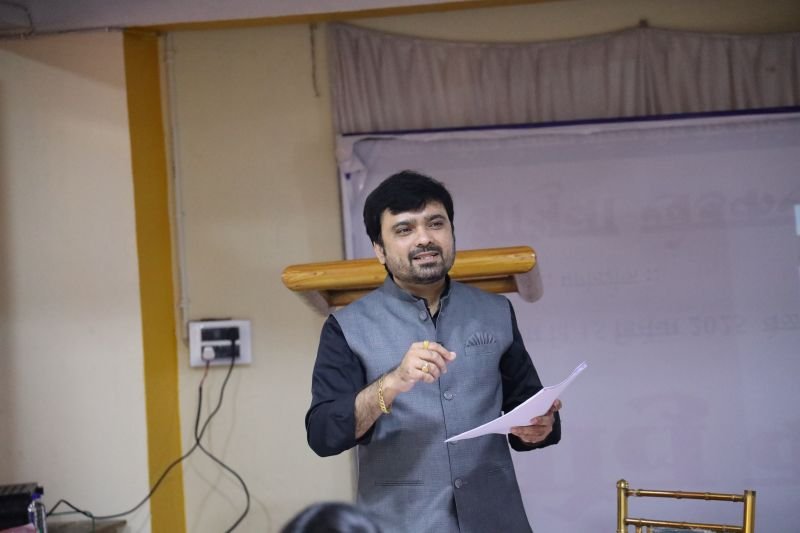
The Thinking Behind It
This programme is not a generic communication deck. It draws on the best writing and research on business storytelling — distilled into a few models leaders can use immediately — and then goes further, into the frameworks Avinash uses to move rooms as a TEDx speaker and to train storytellers inside his own 100-plus member organisation.
Ideas & books we draw on
- Building a StoryBrand — Donald Miller · the discipline of casting the audience as the hero and the speaker as the guide who helps them win
- The Storyteller's Secret — Carmine Gallo · how the world's best communicators use story to inspire, persuade and be remembered
- Storynomics — Robert McKee & Thomas Gerace · story structure from a master screenwriter, turned into a serious tool for business persuasion
- Whoever Tells the Best Story Wins — Annette Simmons · the practical case that narrative, not data, is what actually moves people to act
- The Leader's Guide to Storytelling — Stephen Denning · how leaders use specific kinds of story to spark change, build trust and share knowledge
- Long Story Short — Margot Leitman · a working storyteller's craft — finding the moment, the detail and the truth that makes a story land
Models we use to tell business stories
- The hero's journey (Joseph Campbell) · the universal arc of call, struggle and return — retold in a business register
- The StoryBrand SB7 framework (Donald Miller) · a hero with a problem meets a guide who gives a plan and calls them to action
- The story spine (Pixar / Kenn Adams) · once upon a time… every day… until one day… — a reliable shape for any story
- And-But-Therefore (ABT) · the three-word spine that turns a flat report into a narrative with tension
- The arc of tension · setup, conflict and resolution — the rise and release that holds an audience
And Avinash's own frameworks — the part you won't find anywhere else
Beyond the established thinking, the programme is built on frameworks Avinash has created and written about himself — including his KITE leadership framework and the principles in his book The Winning Edge. These come from actually running a 100-plus member organisation and developing its people year after year, not from a textbook. It is the layer competitors cannot copy, and the one your leaders remember long after the session ends.
Who It Is For
Anyone whose job depends on making a message land — senior leaders and founders pitching a vision, managers selling a change to their teams, sales and business-development professionals who live or die by the pitch, and technical and finance experts who need their data to move decisions rather than glaze eyes. It is especially powerful run as a leadership or sales cohort, where a team builds a shared storytelling language and a bank of company stories they can all draw on. Wherever smart people are being ignored because their message does not stick, this is the skill that changes it.
Taught by Someone Who Moves Rooms for a Living
Avinash Chate does not teach storytelling from a textbook. He is a TEDx speaker and the author of The Winning Edge, and he stands in front of rooms full of leaders for a living — which means the structures, the framing and the delivery taught here are the ones he uses himself, on real stages, with real stakes. He also runs a 100-plus member organisation, where persuading, aligning and inspiring people through story is the daily work. Programmes that build narrative and communication capability have been delivered across sectors — from manufacturing and engineering leadership to IT, sales and services teams who all needed the same thing: to be heard.
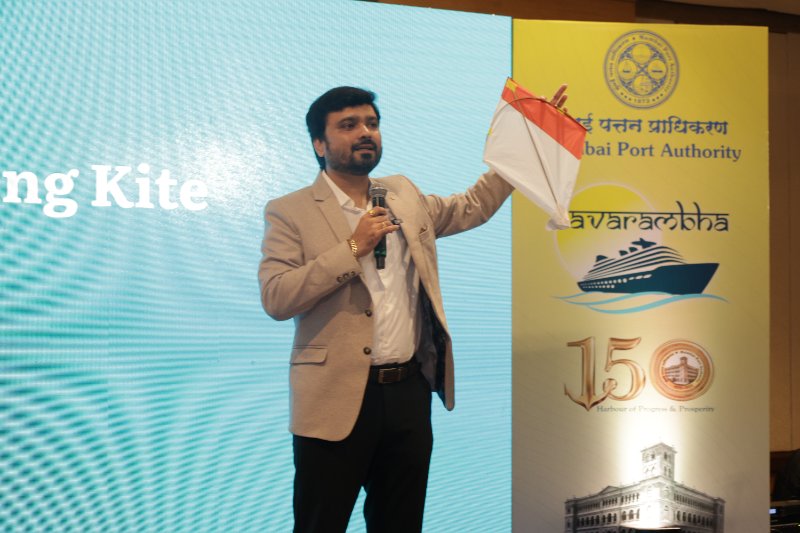
Why Avinash Chate
Avinash Chate is an entrepreneur and corporate trainer who runs ABC Trainings and The Future Corporate & Business Coaching, a TEDx speaker and published author. Over the last decade he has trained teams at 1,000-plus organisations and 15,000-plus professionals.
He teaches these skills not from a manual, but because he practises them himself — leading a 100-plus member team of his own. That is the difference working leaders feel in the room.
Corporate Storytelling Training — FAQ
What is Corporate Storytelling Training?
It is a practical programme that teaches leaders and professionals to communicate so people remember and act. It builds the specific skills business storytelling requires — why story persuades where data cannot, finding the stories already inside your work, structuring a story so it lands, making the audience the hero, turning numbers into data stories people feel, and delivering with authenticity. Unlike generic communication theory, it is built around the real pitches, proposals and change messages your people carry into their own rooms, practised out loud until the message actually sticks.
Who should attend this training?
Senior leaders and founders who pitch vision, managers who need to sell change, sales and business-development professionals whose success rests on the pitch, and technical, product and finance experts who need their data to move decisions. It is at its most powerful when run as a leadership or sales cohort, so a team builds a shared storytelling language and a common bank of company stories. Anyone whose good ideas keep getting overlooked because the message does not land will benefit.
Isn't storytelling too soft to matter in a serious business?
It is exactly the opposite — and that myth is why the skill stays rare and valuable. The neuroscience is clear: data puts an audience into evaluation mode, while story moves them to decide. The same numbers, framed inside a human story, win the buy-in, the budget and the talent that the raw numbers never could. Storytelling is not a replacement for rigour; it is how rigour finally gets heard. Treating it as fluff is precisely how a smart, well-prepared team keeps losing the room to communicators who are half as rigorous and twice as memorable.
Our leaders say they "don't have any stories." Does that matter?
That belief is one of the first things the programme dismantles, because it is almost never true. There are stories in every customer moment, every near-failure, every turning point on the floor — people simply have not been taught to notice and capture them. A whole module is devoted to finding and mining the raw material already sitting inside your organisation, so participants leave with a working bank of real, usable stories drawn from their own world rather than a vague instruction to "be more compelling".
What does the programme cover?
Seven connected modules: why story beats data and the neuroscience behind it; finding the stories already around you; the structures that make a story land; making the message about the audience rather than the speaker; data storytelling — numbers people feel; delivery, vulnerability and authenticity; and a practice module where each person crafts and tells a real business story and gets feedback. Every module pairs a short, usable model with practice on stories drawn from your own work.
How is the training delivered — and how long does it take?
It is highly interactive — leaders spend most of their time crafting, telling and refining real stories, with minimal lecture. The duration is flexible: the same programme runs as a half-day, a full day, a multi-day intensive for a leadership cohort, or a series of shorter modules spread across a quarter, and it works well as an ongoing rhythm that keeps a team's storytelling sharp. We shape the exact length and cadence with you. For 20 to 40 participants, sessions are organised into small batches so everyone tells a story and gets feedback.
Can this help with data-heavy or technical presentations specifically?
Yes — that is one of the most requested outcomes. A dedicated module on data storytelling teaches leaders to wrap a statistic in a human moment so it lands with weight, choose the one number that matters, design charts that tell a story rather than dump a dataset, and sequence evidence toward a felt conclusion. Technical and finance experts often see the fastest change, because they already have the substance; the programme gives them the frame that finally makes the room feel it.
Is the programme customised to our organisation?
Yes. Before the first session, the examples and practice scenarios are built around your context — your industry, your audiences, and the real pitches, proposals and change messages your people actually need to deliver. Participants practise with their own high-stakes stories, not invented case studies. Generic storytelling training is exactly what fails; the value is in sharpening the actual stories your leaders will tell next week, in front of the audiences that matter.
Can it be delivered on-site, and in which languages?
Yes. Most engagements are across Maharashtra — Pune, Mumbai, Chhatrapati Sambhajinagar, Nashik, Nagpur and the surrounding MIDC industrial belts — and the programme is equally delivered pan-India and internationally on request. Delivery is available in English, Hindi and Marathi, or a natural mix, which matters when leaders need to tell their most authentic stories in the language they think and feel in.
Why Avinash Chate for this programme?
Avinash Chate is a TEDx speaker and author of The Winning Edge who moves rooms full of leaders for a living — so he teaches storytelling from the stage, not from a slide. He runs a 100-plus member organisation, where persuading and aligning people through narrative is daily work, and is the creator of the KITE leadership framework. He has trained teams at 1,000-plus organisations and more than 15,000 professionals across manufacturing, IT, sales and services. That combination of real stage craft, operating experience and his own frameworks is what leaders respond to.
Related Training Topics
Turn your leaders into communicators a room can't forget
Give your people the craft to make a message land and stick — the neuroscience of narrative, story structure, data storytelling and authentic delivery. On-site across Maharashtra, pan-India and internationally, in English, Hindi or Marathi.
Request a Proposal →