Signature Program
Leadership Development Program in India (LDP)
You were promoted because you were brilliant at the work. Nobody warned you that leading people is a completely different job — one you were never actually taught.
A flagship transformation journey built on Avinash Bhaskar Chate's KITE Leadership Framework — turning capable managers into leaders people choose to follow.
There is a moment almost every new leader in India knows and almost none talk about. The promotion has come through. The title is bigger, the team is yours, and the congratulations are still fresh. And then, quietly, the ground shifts. The very thing that earned the role — being the best at the work — is no longer the job. Now the job is people. Motivating someone who has stopped trying. Giving feedback that changes behaviour without breaking the relationship. Delegating instead of re-doing everything at midnight. Holding a team together through pressure and change. And nobody handed over a manual. The organisation assumed that a great engineer, a great banker, a great salesperson would somehow become a great leader on their own. Most are left to figure it out by trial, error, and the slow accumulation of small regrets. This programme exists so they do not have to — so leadership becomes a set of skills that can be learned, practised and mastered, rather than a gift you either had or did not.
Across Maharashtra, pan-India & internationally · English, Hindi & Marathi

The Quiet Struggle of the Newly-Promoted Leader
Walk into any Indian organisation — an IT floor in Pune, a bank in Mumbai, a manufacturing plant in the MIDC belt of Chhatrapati Sambhajinagar — and you will find them. Genuinely capable professionals who were the best at their craft, promoted into leadership, and now quietly drowning. They are working longer hours than ever, because they cannot stop doing the work themselves and end up re-doing what they delegated. They avoid the difficult conversation with the underperformer, so it festers and the whole team notices. They communicate priorities in their own head with perfect clarity, and cannot understand why their team seems confused. They react under pressure, snap in a meeting, and spend the evening regretting it. To the people above them they still look like a safe pair of hands; to the people below them they have become a bottleneck, a mystery, or a source of stress.
And the most painful part is that they cannot name what is wrong. They are working harder than the leaders they admire, and getting less. They assume the problem is effort, or hours, or the team — when the real gap is a set of skills nobody ever taught them: how to think beyond the task, how to build trust, how to give feedback that lands, how to delegate ownership rather than chores, how to adapt their style to the person in front of them, and how to lead themselves before they try to lead anyone else. This is not a character flaw and it is not a talent ceiling. It is a training gap. And a training gap closes with the right training.

Why It Happens — And Why It Is Completely Fixable
Here is the truth almost no organisation says out loud: the skills that get you promoted are the exact opposite of the skills that make you a good leader. For years you are rewarded for individual brilliance — being the sharpest coder, the closer who hits the number, the specialist everyone relies on. So the organisation promotes its best individual contributor and assumes leadership will follow automatically. It almost never does. Leading people is a fundamentally different discipline: it runs on influence rather than expertise, on developing others rather than out-performing them, on trust rather than technical authority. Nobody flips that switch. So a genuinely capable person keeps running the old programme — work harder, know more, do it yourself — and cannot understand why it has stopped working now that success depends on other people.
This is precisely why the outcome of real leadership development is so reliable. Struggling as a new leader is almost never a talent problem; it is a skills-and-behaviour gap, and gaps close with deliberate practice. To make that practice precise rather than vague, this programme is built on Avinash's own KITE Leadership Framework — a structured map of what leadership is actually made of, so we do not tell people to "be more strategic" or "communicate better" and hope. We name the specific behaviours, show each leader honestly where they stand today, and rebuild them in the room — before the next attrition, the next missed target, the next good person who leaves because of a manager who was never taught to lead.
Does This Sound Familiar?
If any of these describe your managers or yourself, it is almost never a lack of ability or effort. It is that no one taught the skills of leadership — the ones the job quietly assumed you already had. Here is what organisations see, what it is silently costing, the real cause beneath it, and exactly which part of the programme fixes it.
| The symptom you see | What it is costing you | The real cause | How the programme fixes it |
|---|---|---|---|
| The team lacks trust or openness with its leader | People withhold problems until they explode; issues are hidden, not surfaced, and the leader is always the last to know | The leader has never learned to create psychological safety — the felt sense that it is safe to speak up | The Self-Leadership and Emotional Intelligence module — trust-building habits and psychological safety |
| The manager avoids giving feedback | Underperformance and bad behaviour go unaddressed; standards slip and the good people quietly resent it | Fear of conflict, plus no structure for having the hard conversation well | The Leadership Communication module — feedback giving and receiving frameworks |
| The team is confused about priorities and direction | Effort is scattered, work is redone, and the most important things slip while everyone stays busy | The leader carries a clear picture in their own head but never communicates direction plainly | The Direction and Communication module — leadership communication techniques and clarity |
| Conflicts escalate or quietly fester unresolved | Friction slows the whole team, silos harden, and collaboration breaks down where it matters most | No relationship-building foundation and no skill for handling disagreement early | The Relationships and People Management module — empathy and relationship management |
| The manager ends up re-doing the team's tasks themselves | The leader is overworked and becomes the bottleneck; the team never grows because it is never trusted | Poor delegation — handing over chores without ownership, clarity or the willingness to let go | The Delegation and Ownership module — the ownership-based delegation blueprint |
| The team is disengaged or quietly underperforming | Discretionary effort disappears; people do the minimum and the best ones start looking elsewhere | A lack of inspiration, vision and meaning coming from the leader | The Vision and Motivation module — vision-driven, motivational leadership |
| People resist change and improvement | Every new initiative stalls against passive resistance; change is imposed, not owned, and quietly sabotaged | The leader enforces rather than influences — pushing change instead of bringing people with them | The Influence and Change module — influence without authority |
| The leader struggles with people dynamics and behaviour | Good technical decisions are undone by mishandled people; the team feels managed by a spreadsheet, not a leader | Over-reliance on technical skill, with no behavioural or emotional insight into people | The People Management module — behavioural insight and reading people |
| One leadership style is used for every person and situation | The approach that motivates one person demotivates another; the leader gets inconsistent, frustrating results | A lack of adaptive leadership — no flexibility to match style to the person and the moment | The Adaptive Leadership module — situational leadership styles and flexibility |
| The leader burns out or reacts badly under pressure | Emotional volatility spreads through the team; trust erodes and the leader's own health and judgement suffer | No personal regulation, reflection or recovery habits — leading others while never leading themselves | The Self-Leadership module — emotional agility and the self-leadership toolkit |
What Changes When Your Managers Become Real Leaders
Picture the same capable person six months into this journey. They have stopped doing the team's work and started building the team's ability — and, for the first time, they are leaving on time because the work is genuinely getting done through others. They give feedback in a way that people thank them for, because it is clear, kind and about growth rather than blame. Their team knows exactly what matters and why, so effort stops scattering. They read the person in front of them and adjust — coaching one, directing another, stretching a third — instead of forcing everyone through the same style. Under pressure they stay steady, because they have learned to lead themselves first. The team that used to withhold problems now brings them early, because it has become safe to. And the people who were quietly looking elsewhere have stopped, because they finally have a leader worth staying for.
And the change radiates outward, which is why four very different stakeholders all win from the same journey. The new leader stops drowning and finally grows into the role with confidence instead of quiet dread. HR gets a repeatable way to build a leadership bench from within, retain high-potentials, and stop the silent attrition of good people who leave bad managers rather than bad companies. The boss above them inherits a leader who takes ownership, drives outcomes, and needs far less managing — freeing the boss to lead the business instead of babysitting. And the organisation gets a culture where leadership is a taught, shared, reliable capability at every level, not a lottery that depends on which manager you happened to be given. One programme, four returns.
What's the Goal? — What Each Stakeholder Gains
It is one root problem — capable people out of balance — but it is felt differently depending on where you sit. Here is the pain from each seat, what the programme is designed to do about it, and what you gain.
As a New Leader
What you gain
- ✓Make the shift from doing the work to leading the people who do it
- ✓Delegate with confidence instead of re-doing everything yourself
- ✓Give and receive feedback without fear or damaged relationships
- ✓Communicate direction and priorities so the team is never confused
- ✓Lead yourself first — staying steady, self-aware and resilient under pressure
As an HR
What you gain
- ✓Build a reliable leadership pipeline and bench from within
- ✓Retain high-potentials through meaningful leadership development
- ✓Reduce the silent attrition of people who leave bad managers
- ✓Raise the standard of people-leadership consistently across teams
- ✓Turn soft-skills investment into visible, on-the-job behaviour change
As the Boss
What you gain
- ✓Inherit leaders who take ownership and drive outcomes without chasing
- ✓Delegate to a self-driven leader and stop micromanaging
- ✓See better decisions, trust and people-handling at the next level down
- ✓Free your own time to lead the business, not babysit managers
- ✓Grow a second line of leadership you can genuinely rely on
As the Organisation
What you gain
- ✓Make leadership a taught, shared capability rather than a lottery
- ✓Build a culture of trust, ownership and self-leadership at every level
- ✓Improve engagement, performance and retention across teams
- ✓Create internal leaders aligned with the company's vision and values
- ✓Develop a future-ready leadership bench that scales with the business
What Your Leaders Will Be Able to Do
- ✓ See themselves honestly against the KITE Leadership Framework and know exactly which capabilities to build first
- ✓ Shift from managing tasks to leading people — from doing the work to building the team that does it
- ✓ Delegate ownership, not just chores, so the team grows and the leader stops being the bottleneck
- ✓ Give feedback that changes behaviour without damaging the relationship, and receive it without defensiveness
- ✓ Communicate direction, priorities and vision with a clarity that aligns and motivates the whole team
- ✓ Adapt their leadership style to the person and the situation rather than forcing one approach on everyone
- ✓ Build trust and psychological safety so problems surface early and people bring their best
- ✓ Lead themselves first — regulating emotion, staying steady under pressure, and leading with presence and integrity
What the Programme Covers
Eight connected modules that take a competent-but-struggling manager to a leader people genuinely choose to follow. Every module pairs a short, practical input with real practice on the exact situations that decide whether a leader succeeds or stalls — the difficult conversation, the delegation, the demotivated team member, the resistance to change — and ends with a concrete shift in how the leader shows up. The whole arc is anchored by the KITE Leadership Framework, so the growth is named and measurable, not vague, and scales from a single cohort to a year-long leadership journey.
These are building blocks, not a fixed-length course. A focused session goes deep on the two or three that matter most to you; a half or full day covers more; a multi-day intensive — or an ongoing monthly, quarterly or half-yearly rhythm — works through them all, with far more practice. We shape which ones, in what order and how deep, with you.
The KITE Leadership Framework — Where Do You Actually Stand as a Leader?
What we cover: The heart of the programme. An honest walk through what leadership is genuinely made of — knowledge and self-awareness, intent and integrity, trust and relationships, and execution through people — using Avinash's own KITE Leadership Framework. A structured self-diagnostic so each leader sees, without flattery, where they are strong and where they are quietly holding their team back. Why individual brilliance is a plateau once you lead people, and what the leaders others love to work for do differently. The gap between how leaders see themselves and how their teams actually experience them is surfaced and worked through live.
What changes: The leader stops guessing why they are struggling and gets a precise, personal map of the exact leadership behaviours to build — the foundation everything else in the journey is aimed at.
Self-Leadership and Emotional Agility — Leading Yourself First
What we cover: Why you cannot lead others steadily until you can lead yourself. Understanding your own triggers, patterns and default reactions under pressure. Emotional regulation and agility — staying calm and clear when the stakes are high and everyone is watching. Building the reflection, recovery and resilience habits that prevent burnout. Self-awareness as the root of all leadership: knowing your strengths, your blind spots and your impact on the room. Leading with integrity so that what you say and what you do are the same thing.
What changes: The leader becomes the steady, self-aware presence a team can rely on — regulating their own emotions before they try to manage anyone else's, and modelling the composure they want to see.
Leadership Communication and Feedback — Making Yourself Understood
What we cover: Why the clarity in a leader's head means nothing until it lands in someone else's. Communicating direction, priorities and expectations so plainly that no one is confused. The art of the feedback conversation — giving it so it changes behaviour without breaking the relationship, and receiving it without defensiveness. Structures for the difficult conversation most managers avoid. Listening as a leadership skill, not a courtesy. Adjusting your message for the person and the moment. Difficult conversations, done with candour and care.
What changes: The leader communicates with a clarity that aligns the team and a candour that builds it — no more confusion about priorities, and no more festering issues left unspoken.
Ownership-Based Delegation — Getting Results Through Others
What we cover: The single shift that most frees an overworked leader: delegating outcomes and ownership, not just tasks. Why "it's faster if I do it myself" is the most expensive belief a leader can hold. Matching the task to the person and the level of stretch they are ready for. Handing over clarity, authority and trust — not just the chore. Following up without micromanaging. Building the team's capability deliberately, so it grows instead of staying dependent. Letting go of perfectionism and control so the leader can finally lead instead of do.
What changes: The leader stops being the bottleneck and starts multiplying the team — getting more done through others, growing their people, and reclaiming the time to actually lead.
People Management and Behavioural Insight — Leading Real Human Beings
What we cover: Why technical brilliance runs out the moment the challenge becomes people. Reading behaviour, motivation and personality so you can lead each person as they actually are. Understanding what drives, worries and engages different people on your team. Managing the underperformer, the star, the cynic and the quiet one — each differently. Building genuine relationships and empathy without losing authority. Handling office politics, difficult personalities and interpersonal friction with maturity. Managing people through the lens of behaviour, not just the org chart.
What changes: The leader develops the behavioural insight to lead people as individuals — turning a group of managed employees into a team that feels genuinely understood and led.
Situational and Adaptive Leadership — One Style Does Not Fit All
What we cover: Why the approach that motivates one person demotivates another, and how the best leaders flex. The core leadership styles — directing, coaching, supporting, delegating — and reading which one a person and situation actually need. Adapting to the competence and commitment of the individual in front of you. Knowing when to step in and when to step back. Leading experienced experts and raw beginners differently. Building the range and flexibility to lead a whole spectrum of people well, rather than forcing everyone through your one default mode.
What changes: The leader develops a repertoire of styles and the judgement to choose between them — getting consistent results from very different people instead of a single style that works for some and fails for others.
Vision, Motivation and Influence — Making People Want to Follow
What we cover: Why people give their best to a leader who gives them meaning, not just tasks. Painting a clear, motivating picture of where the team is going and why it matters. The difference between compliance and genuine commitment. Motivating without relying on fear or money alone. Influence without authority — bringing people with you rather than pushing them, across teams you do not control. Leading change so it is owned rather than resisted. Inspiring discretionary effort — the energy people choose to give when they believe in the leader and the mission.
What changes: The leader moves from enforcing to inspiring — giving the team a direction worth committing to and the motivation to pursue it, so change is embraced and effort is freely given.
Your Leadership Roadmap — A Deliberate Plan to Grow
What we cover: Turning insight into a concrete, personal leadership plan. Setting a clear picture of the leader you are building toward. Choosing the two or three KITE capabilities to develop first for the biggest shift. Habits, rituals and review points that keep the growth alive long after the workshop ends. Live practice on the real moments that define a leader — the feedback conversation, the delegation, the demotivated team member, the resistance to change — rehearsed until they feel natural. Building a support and accountability structure so the change lasts.
What changes: The leader walks out with a deliberate, behaviour-led roadmap and the practised confidence to work it — turning a programme into a lasting transformation in how they lead.
How It Is Delivered
This is not a motivational talk that fades by Monday. It is a working leadership journey where managers confront how they actually lead and then rebuild it, in the room. Anchored by the KITE Leadership Framework, participants self-diagnose honestly, then spend most of their time practising the exact situations that decide whether a leader succeeds — giving real feedback to a "team member", delegating a real piece of work, motivating a demotivated report, holding steadiness under pressure, leading a resistant team through a change. The models are kept simple and immediately usable; the practice, on situations pulled from your own organisation, is where the confidence and the behaviour change are actually built.
The format flexes to your calendar and your leaders. It runs as a 6-day immersive workshop for deep transformation, a 2-day x 3 series delivered monthly or fortnightly, a 1-day monthly rollout across a quarter, quarterly leadership capsules across the year, or a fully customised rhythm designed around your organisation — the same journey scales from an intensive cohort to a year-long programme. For 15 to 30 leaders it is organised into small batches so every person practises and is coached, not just lectured to, and the candid self-work stays candid. Delivery is highly interactive throughout — self-diagnosis, role plays, real cases, peer coaching and reflection — and the exact depth, duration and cadence are shaped with you in the design call.
Formats That Fit Your Calendar
6-day immersive workshop
The full LDP journey in a deep, concentrated block — ideal for genuine, end-to-end transformation of a leadership cohort who can be released for focused development.
2-day x 3 format
Three two-day modules delivered monthly or fortnightly, so leaders learn, apply on the job, and return to build on real experience between sessions — spaced practice that embeds the change.
1-day monthly rollout over 3 months
A single powerful day each month across a quarter — low disruption to the calendar, with time between sessions to practise each shift before the next.
Quarterly LDP capsules
One focused day every quarter across the year (four in all), so leadership development becomes a sustained rhythm rather than a one-off event, reinforced across the calendar.
Fully customised format
The journey shaped entirely around your organisation's needs, cohort and calendar — from a half-day energiser to a standing, year-long leadership academy for each new intake of leaders.
Who should attend
- ✓Team leads and managers
- ✓Department heads and project owners
- ✓HR-identified high-potential professionals
- ✓Founders or professionals preparing for leadership roles
- ✓Experienced managers who have plateaued and want to lead people better
Works in every industry
- ✓Corporate, IT and BFSI teams
- ✓Manufacturing & engineering
- ✓Education, healthcare, government, PSUs
- ✓Retail, hospitality, and startups
- ✓Any environment where professionals lead others

The Thinking Behind It
This programme is not a generic leadership deck. Its spine is Avinash's own KITE Leadership Framework — the un-copyable layer that names exactly what leadership is made of and how it is built. Around it we draw on the sharpest, most enduring writing on what it truly means to lead people, from foundational classics to modern research and unforgettable deep cuts — distilled into models leaders can use the very next day, in a real conversation with a real person.
Ideas & books we draw on
- On Becoming a Leader — Warren Bennis · the foundational classic — the dean of leadership studies on why leaders are made, not born, and how self-knowledge and authenticity are the real work
- Leadership in Turbulent Times — Doris Kearns Goodwin · the Pulitzer historian's study of how Lincoln, both Roosevelts and LBJ each grew their leadership through crisis — proof that leadership is developed, not given
- The Mind of the Leader — Rasmus Hougaard & Jacqueline Carter · a deep cut built on 35,000 leader assessments — why mindfulness, selflessness and compassion are the modern core of leading people well
- It's Your Ship — Captain D. Michael Abrashoff · the naval captain who turned the worst ship in the fleet into the best by pushing ownership down — a masterclass in trust, delegation and grassroots leadership
- The Art of Possibility — Rosamund Stone Zander & Benjamin Zander · a conductor and a therapist on leading by opening possibility rather than measuring scarcity — the deep cut that rewires how a leader sees their people
- The Servant — James C. Hunter · the simple parable that reframes leadership as authority built on relationships, service and sacrifice rather than power and position
Models your leaders will actually use
- The Winning Kite (KITE Leadership Framework) · Avinash's own model — EQ for emotional intelligence, RQ for relationship intelligence, PQ for productivity, and Success as the achievement and impact a professional aims for
- Situational Leadership (Hersey & Blanchard) · matching your style — directing, coaching, supporting, delegating — to the competence and commitment of the person in front of you
- Emotional Intelligence (Goleman) · self-awareness, self-regulation, empathy and social skill as the daily mechanics of leading people, not soft extras
- The Trust Equation (Maister) · trust as credibility plus reliability plus intimacy over self-orientation — a practical way to build the safety a team needs to speak up
- Psychological Safety (Edmondson) · why the highest-performing teams are the ones where it is safe to admit a mistake or raise a problem early
And Avinash's own frameworks — the part you won't find anywhere else
Everything on this page is built on work Avinash created and published himself — the Winning Kite and the 25-Star Competency Framework from Stars at India Inc., and the success principles in his earlier book The Winning Edge. None of it is borrowed from a textbook; it was earned running a 100-plus member organisation and developing its people year after year. That is the layer a competitor cannot copy — and the one your leaders remember long after the session ends.
Who It Is For
Any capable professional who has been given people to lead and needs the skills to lead them well — the newly-promoted team lead making the leap from doer to leader, the department head whose scope has outgrown their instincts, the project owner responsible for outcomes through others, the HR-identified high-potential being groomed for the next level, and the founder or senior professional stepping into a leadership role they were never formally trained for. It is built for leaders across the spectrum — those in the first fragile year, and experienced managers who have plateaued and know their people-leadership has fallen behind their ambition.
It works across sectors and settings — corporate, IT and BFSI teams in Pune, Mumbai and Bangalore; manufacturing and engineering on the MIDC shop floors of Chhatrapati Sambhajinagar and Nashik; education, healthcare, government and PSU cadres; and retail, hospitality and startups. In truth it fits any environment where professionals lead others. It is especially powerful run as a leadership cohort, so a batch builds a shared language of leadership and a peer group that holds each other to it — Maharashtra-primary, and delivered pan-India and internationally on request.
Built by Someone Who Leads, and Grows Leaders, for a Living
The Leadership Development Program is not assembled from borrowed slides. Its core is the KITE Leadership Framework that Avinash Chate developed himself — a map earned from years of watching, in real rooms, exactly which behaviours make a leader trusted and which quietly erode a team. He runs a 100-plus member organisation and leads, promotes and grows people himself, so the delegation, communication, trust and self-leadership taught here are tested in his own business, not theorised on a whiteboard. Programmes that build leadership and people-management capability have been delivered across sectors — from manufacturing floors and BFSI to IT and services teams — across Maharashtra, pan-India and internationally. He is a TEDx speaker and the author of The Winning Edge, and the combination of a proprietary framework and real operating experience is what makes this journey impossible to find anywhere else.
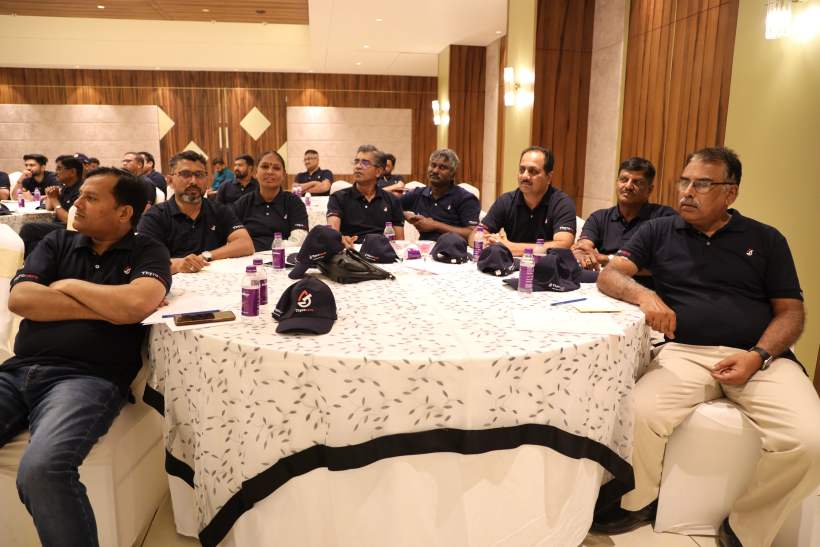
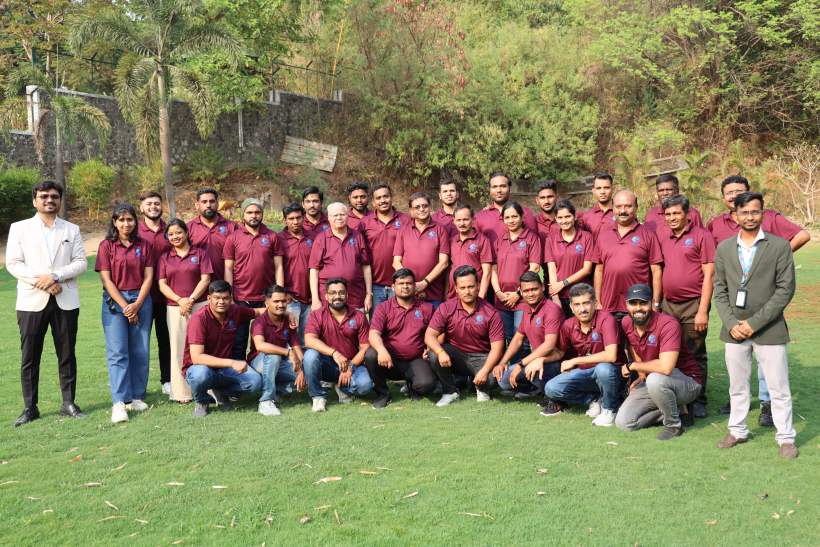
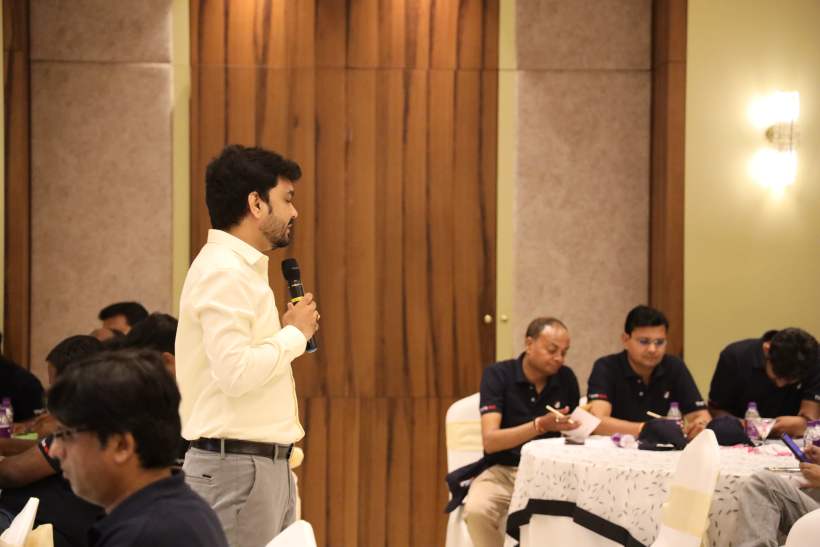
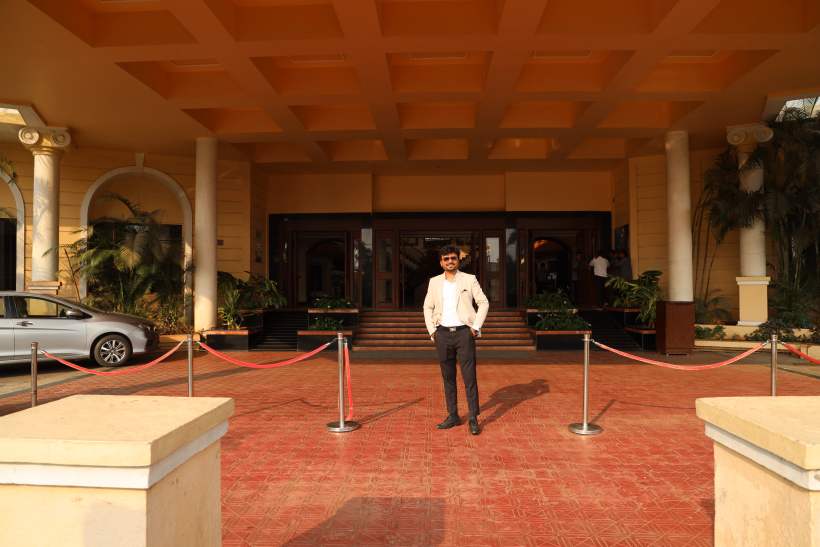
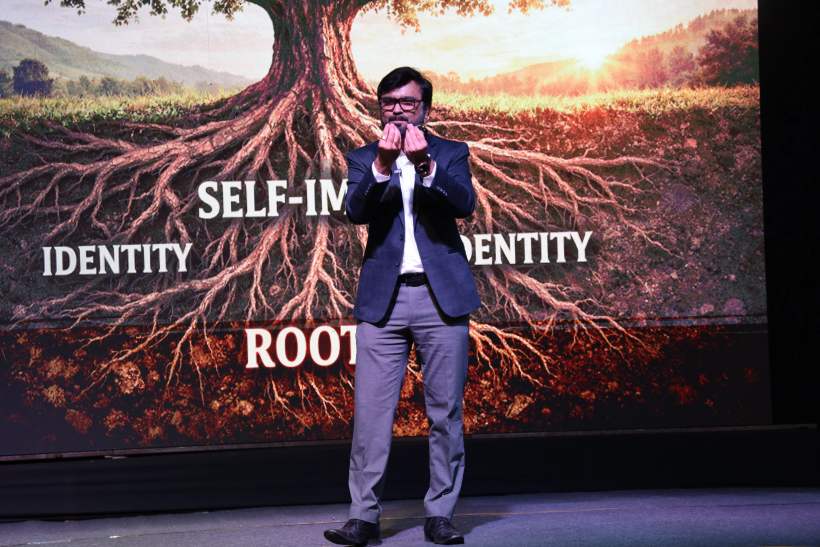
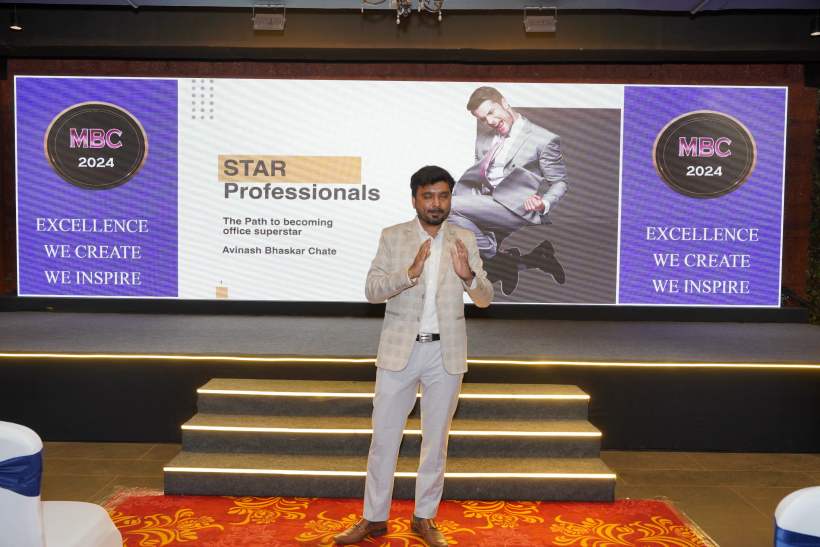
Inside the Room

Why Avinash Chate
Avinash Chate is the owner of the personal speaking and training practice represented on this website, an entrepreneur, TEDx speaker and published author. He also owns and operates ABC Trainings and The Future Corporate & Business Coaching as separate businesses with their own brands and course catalogues. The programmes on this page are Avinash Chate's personal corporate-training offerings; through his personal practice, he has trained teams at 1,000-plus organisations and 15,000-plus professionals.
He teaches these skills not from a manual, but because he practises them himself — leading a 100-plus member team of his own. That is the difference working leaders feel in the room.
Leadership Development Program in India (LDP) — FAQ
What is the Leadership Development Program (LDP)?
It is Avinash Chate's flagship signature journey that transforms competent managers into high-impact leaders who think strategically, manage people effectively, communicate clearly and build trust — regardless of industry or designation. Built on his KITE Leadership Framework, it helps professionals make the shift from managing tasks to building influence. Unlike a generic leadership seminar, it names the specific behaviours that separate leaders people follow from managers people merely report to, shows each participant honestly where they stand, and rebuilds those behaviours through real practice on the situations that actually decide whether a leader succeeds.
What is the KITE Leadership Framework?
It is Avinash Chate's own leadership model, and the spine of this programme. The kite has four sides: EQ for emotional intelligence, RQ for relationship intelligence, PQ for productivity, and Success for the achievement and impact a professional aims for. It anchors the whole journey, giving each leader an honest personal diagnostic and a clear roadmap of what to build first.
Who should attend the Leadership Development Program?
Team leads and managers making the leap from doing the work to leading people; department heads and project owners responsible for outcomes through others; HR-identified high-potential professionals being groomed for the next level; and founders or senior professionals preparing for, or newly stepped into, leadership roles. It suits both the newly-promoted leader in their first fragile year and the experienced manager who has plateaued and knows their people-leadership has fallen behind their ambition. It is at its most powerful run as a leadership cohort, so a batch builds a shared language of leadership and holds each other to it.
Why do capable, high-performing people struggle when they become leaders?
Because the skills that get you promoted are the opposite of the skills that make you a good leader. For years you are rewarded for individual brilliance — being the best coder, banker or specialist. Then you are promoted and success suddenly depends on other people: motivating them, developing them, delegating to them, giving them feedback, leading them through change. Nobody teaches that shift, so a genuinely capable person keeps running the old programme — work harder, know more, do it yourself — and cannot understand why it has stopped working. It is not a talent problem; it is a skills-and-behaviour gap, and gaps close with the right practice.
What is the goal of the programme?
To transform managers into high-impact leaders who think strategically, manage people effectively, communicate clearly and build trust — regardless of industry or designation. It helps professionals shift from managing tasks to building influence. And it delivers value to every stakeholder at once: the new leader grows into the role with confidence; HR builds a leadership bench from within and retains high-potentials; the boss above inherits a leader who takes ownership and needs less managing; and the organisation gains a culture where leadership is a taught, reliable capability at every level rather than a lottery.
What does the programme cover?
Eight connected modules: an honest self-diagnostic against the KITE Leadership Framework; self-leadership and emotional agility; leadership communication and feedback; ownership-based delegation; people management and behavioural insight; situational and adaptive leadership styles; vision, motivation and influence without authority; and a deliberate personal leadership roadmap, with live practice on the real moments that define a leader. Every module pairs a short, usable model with practice on situations drawn from your own organisation, and ends with a concrete shift in how the leader shows up.
How long is the programme, and what are the format options?
The duration is flexible — the same journey scales to your calendar and your leaders. Options include a 6-day immersive workshop for deep transformation, a 2-day x 3 format delivered monthly or fortnightly, a 1-day monthly rollout over three months, quarterly LDP capsules (one day every quarter across the year), or a fully customised format designed around your organisation. We shape the exact length and cadence with you in the design call. For 15 to 30 leaders, sessions are organised into small batches so everyone practises and is coached, not just lectured to.
Which industries and roles is this suitable for?
It suits corporate, IT and BFSI teams; manufacturing and engineering; education, healthcare, government and PSUs; and retail, hospitality and startups — in short, any environment where professionals lead others. It works for team leads, managers, department heads, project owners, HR-identified high-potentials, and founders or professionals preparing for leadership roles. The content is adapted to your sector and the seniority of your cohort, so a manufacturing shop-floor supervisor and a BFSI department head each get examples and practice drawn from their own world.
Can it be delivered on-site, and in which languages?
Yes. Most engagements are across Maharashtra — Pune, Mumbai, Chhatrapati Sambhajinagar, Nashik, Nagpur and the surrounding MIDC industrial belts — and the programme is equally delivered pan-India and internationally on request. Delivery is available in English, Hindi and Marathi, or a natural mix, which matters especially for leaders promoted from the shop floor and for mixed-seniority cohorts where a shared language keeps everyone genuinely engaged.
Why Avinash Chate for leadership development?
Because he built the framework it runs on and lives the work it teaches. Avinash Chate is an entrepreneur and corporate trainer who developed the KITE Leadership Framework himself. He runs a 100-plus member organisation and leads, promotes and grows people himself, so the delegation, communication, trust and self-leadership he teaches are tested in his own business, not theorised. He is a TEDx speaker and author of The Winning Edge, and has trained teams at 1,000-plus organisations. That combination of a proprietary framework and real operating experience is what makes this programme impossible to find anywhere else.
Explore More
How to Bring This to Your Team
Every run of the Leadership Development Program is shaped around your leaders and your calendar — there is no off-the-shelf package. Getting started is simple.
Tell us the situation
Share who needs it — newly-promoted team leads, a high-potential cohort, a plateaued mid-level group — and what you want to change. A short enquiry is enough to begin.
A design call
We shape the objectives, the format and the cadence together — from a 6-day immersive to a quarterly capsule rhythm — and decide how deep to take the KITE work for your leaders.
A proposal built for you
You get a clear, customised proposal — scope, format, investment and outcomes — for your specific cohort. No templated pricing; the journey scales to what you need.
Investment is scoped to the format, cohort size and cadence you choose, and shared in the proposal — from a single energising session to a year-long leadership journey. Email connect@avinashchate.com or call +91 87936 30001 to start.
Turn your capable managers into leaders people choose to follow
Give your managers the skills leadership actually needs — self-leadership, communication, delegation, people management, adaptive style and influence — through Avinash Chate's signature Leadership Development Program built on the KITE Framework. On-site across Maharashtra, pan-India and internationally, in English, Hindi or Marathi.
Request a Proposal →