Signature Program
Emotional Intelligence at Work
Because teams don't fail from a lack of IQ — they break from EQ. From the reaction that fires before the thought arrives, and the silence where a hard conversation should have been.
Avinash Chate's flagship workplace-EQ programme — self-awareness, managing emotions, empathy and high-trust workplaces, built for every professional, not only the corner office.
There is a kind of person every organisation is quietly held back by, and it is almost never the incompetent one. It is the genuinely smart, capable, hard-working professional who cannot manage their own emotions. The engineer who is brilliant until a review touches a nerve, and then takes it personally for a week. The manager who is technically flawless and emotionally tone-deaf, who wonders why the team goes quiet the moment they walk in. The colleague who avoids every difficult conversation until it detonates, or the one who erupts under pressure and spends the next month repairing what thirty seconds cost. None of this shows up on a résumé, and none of it is a competence problem. It is an emotional-intelligence gap — reactivity, low empathy, no tools for the moment the feeling arrives — and it is the single most under-taught skill in professional life. This programme teaches it, to everyone, not only the people with "leader" in the title.
Across Maharashtra, pan-India & internationally · English, Hindi & Marathi

The Emotional Collisions Everyone Feels and No One Names
Walk any Indian workplace — an IT floor in Pune, a bank in Mumbai, a plant in the MIDC belt — and the real friction is almost never technical. It is emotional, and it is everywhere. Two capable people who stopped speaking after a meeting went wrong and now route work around each other. A talented performer who took one piece of feedback personally and has been half-checked-out ever since. A team that has quietly learned it is not safe to disagree, so the good ideas die unspoken and the bad decisions sail through. The person who is triggered by a tone, a Slack message, a perceived slight, and carries it into everything for days. Nobody puts a name to any of it. It just sits there as "personality clashes", "attitude problems", "office politics" — and slowly drains the energy out of good teams.
The painful part is that the people involved usually cannot see it in themselves. The one who explodes feels justified. The one who goes silent feels unheard. The one who avoids the conflict feels like they are keeping the peace. Each is running an emotional pattern they never chose and were never taught to notice, let alone change. And it is expensive in ways that never make it into a report: the gossip and blame games, the passive aggression, the meetings where everyone is polite and nothing honest is said, the good people who eventually leave not because of the work but because of how it felt. This is not a soft, optional, nice-to-have topic. It is the layer underneath collaboration, trust, retention and performance — and it can be learned.

Why It Happens — And Why It Is Completely Learnable
Here is the root of it: we are hired, promoted and rewarded for what we know and what we can do — and almost never taught the one thing that decides whether we can work with other human beings under pressure. For twenty years of education and early career, the message is that intelligence and technical skill are what matter. Emotions are treated as noise, as something professional people are supposed to have already sorted out. So a genuinely brilliant person arrives in a team with no more emotional skill than they had at sixteen — no way to notice a trigger before it fires, no vocabulary for what they are feeling, no tool for the half-second between the stimulus and the reaction. When the pressure comes, they do not choose their response. Their oldest emotional wiring chooses it for them.
This is exactly why the outcome is so reliable. Emotional intelligence is not a fixed personality trait you are born with or without — it is a set of specific, nameable, trainable skills, and that is the single most important thing to understand about it. Self-awareness can be built. The pause before the reaction can be practised until it becomes automatic. Empathy can be developed as a discipline, not left to mood. The ability to sit in a hard conversation without attacking or collapsing can be learned like any other skill. We do not tell people to "be more mature" or "manage your emotions better" and hope. We show them the mechanics of how emotion actually works in the brain and the body, name the exact behaviours, show each person honestly where they stand, and rebuild them through practice — before the next collision costs the team another good person.
Does This Sound Familiar?
If any of these describe you, your managers or your teams, it is almost never a lack of ability, effort or good intentions. It is an emotional-intelligence gap — and gaps close with the right practice. Here is what organisations recognise, what it is quietly costing, the real cause beneath it, and exactly which part of the programme rebuilds it.
| The symptom you see | What it is costing you | The real cause | How the programme fixes it |
|---|---|---|---|
| People take feedback personally and read criticism into everything | Feedback stops flowing, defensiveness hardens, and a capable performer disengages over something that was never meant as an attack | Low self-awareness — no separation between the feedback and the sense of self it seems to threaten | The Self-Awareness module, plus the safe-feedback framework — seeing your own emotional patterns and receiving hard input without a threat response |
| Frequent misunderstandings and friction among team members | Trust erodes, collaboration slows, and people quietly route work around each other instead of through each other | Low empathy and shallow listening — people hear the words but miss the emotion and intent underneath | The Empathy and Listening module — empathy mapping and listening for what is actually being felt, not just said |
| People either avoid conflict entirely or explode under pressure | Real issues fester unspoken until they detonate, and one bad thirty seconds costs weeks of repair | No emotional-regulation tools — the only two settings are suppress or erupt | The Managing Emotions module — the pause-reflect-respond framework and in-the-moment regulation |
| A strong performer burns out and their emotional energy runs dry | A high-value person becomes cynical, exhausted and eventually leaves — taking their capability with them | No emotional boundaries and no recovery — they absorb everyone's stress and never reset their own | The Emotional Energy and Boundaries module — protecting your reserves and setting healthy limits |
| A manager is technically excellent but poor with people | The team stays guarded, disengaged and under-led despite a genuinely capable person in charge | Low social skill — strength in the task, blind spots in the human dynamics around it | The Social Skill and Influence module — reading the room and building genuine working relationships |
| Low team morale, and negative emotions that never get processed | A heavy, draining atmosphere that quietly pushes good people toward the door | Unspoken emotional residue with nowhere to go — resentment and low mood become the team's default climate | The Emotional Climate module — resetting the team's mood and processing what usually stays buried |
| People get easily triggered by a tone, a message or a perceived slight | Small emotional flare-ups derail whole days and colour how the person shows up in everything else | No self-check mechanism — the trigger fires and runs the reaction before awareness ever arrives | The Self-Awareness and Managing Emotions modules — trigger identification and anchoring techniques |
| Constant gossip, blame games or a heavy, uneasy silence | Energy leaks into politics instead of work, and honesty quietly disappears from the room | Unspoken emotional patterns and a fear-based culture where it is not safe to say the real thing | The High-Trust Team module — psychological safety and a culture of openness over blame |
| A lack of genuine trust among peers, with ego clashes underneath | Collaboration stays transactional and defensive; the team never becomes more than the sum of its parts | Emotional judgements and ego, with no shared language for working through friction | The Empathy and High-Trust Team modules — trust-building and nonviolent, non-defensive communication |
| A capable person is emotionally reactive and hard to work alongside under pressure | Colleagues walk on eggshells, tight collaboration breaks down, and the person is left off the work that needs it most | The amygdala hijack — the emotional brain seizes the moment before the thinking brain can arrive | The Managing Emotions module — catching the hijack in the half-second gap and choosing the response |
What Changes When Your People Get Emotionally Intelligent
Picture the same team, six months on. Feedback lands as information, not as an attack, so it actually flows and people grow from it. When the pressure comes, the person who used to erupt now catches the half-second before the reaction and chooses a steadier one — and the person who used to go silent now says the hard thing calmly, before it festers. Colleagues who were routing work around each other are back to routing it through each other, because the friction between them got named and worked through instead of buried. Meetings feel honest. Disagreement feels safe. The gossip and the passive aggression quietly starve, because there is finally a healthier way for the emotion to move. The atmosphere itself — the thing nobody measures but everybody feels — gets lighter.
And the change pays four different people at once, which is why they all belong in the same room. The individual gains a level of self-awareness and self-control that steadies not just their work but their whole life, and stops small emotional storms from running their days. The manager inherits a team that regulates itself, collaborates without constant refereeing, and takes feedback without drama. HR gets measurably better retention and morale, fewer people conflicts to firefight, and a genuinely healthier culture to point to. And the organisation gets what emotional intelligence has been shown, again and again, to predict better than IQ: teams that trust each other, communicate cleanly, and perform under pressure instead of cracking under it. One skill, taught well, and the returns compound everywhere.
What's the Goal? — What Each Stakeholder Gains
It is one root problem — capable people out of balance — but it is felt differently depending on where you sit. Here is the pain from each seat, what the programme is designed to do about it, and what you gain.
As an Individual
What you gain
- ✓Build genuine self-awareness — notice your emotions and triggers in real time
- ✓Manage your own emotions under pressure instead of being run by them
- ✓Give and receive feedback without taking it personally
- ✓Develop empathy and stronger, less reactive relationships at work
- ✓Reduce your own stress, and stop small emotional storms from running your days
As a Manager
What you gain
- ✓Lead with empathy and presence rather than ego
- ✓Inherit a team that regulates itself and needs far less refereeing
- ✓Have difficult conversations calmly, before issues fester
- ✓Read the room and the people in it, not just the task
- ✓Build trust so the team speaks up instead of going silent
As an HR
What you gain
- ✓Lift the emotional maturity of the whole workforce, not only leaders
- ✓Improve retention and morale by fixing the people friction underneath them
- ✓Reduce conflict, gossip and passive aggression across teams
- ✓Build a measurably healthier, more psychologically safe culture
- ✓Drive real ROI from behavioural and soft-skills investment
As the Organisation
What you gain
- ✓Develop teams that are self-aware, regulated and genuinely collaborative
- ✓Create an emotionally safe, high-trust culture where honesty is possible
- ✓Improve communication, feedback and conflict resolution at every level
- ✓Reduce silent attrition driven by how work feels, not what it is
- ✓Gain the performance edge EQ predicts better than IQ
What Your Professionals Will Be Able to Do
- ✓ Achieve higher emotional maturity in how they communicate, decide and respond under pressure
- ✓ Build stronger peer relationships and resolve conflict without avoiding it or blowing it up
- ✓ Create a more emotionally safe and trusting team culture where honesty feels possible
- ✓ Give and receive feedback well — as information to grow from, not as a threat to defend against
- ✓ Reduce stress, gossip and passive-aggressive behaviour by giving emotion a healthier outlet
- ✓ Become self-aware, self-regulated and genuinely collaborative rather than reactive
- ✓ Lead and work with empathy rather than ego — reading the room and the people in it
What the Programme Covers
Eight connected modules that take a smart-but-reactive professional to a self-aware, steady, empathetic and trusted one. Every module pairs a short, practical input — how the emotion actually works — with real practice on the exact moments that decide it: the feedback that stings, the pressure that spikes, the conversation that has been avoided, the colleague who triggers you. Each ends with a concrete shift in how the person shows up, so the growth is felt and usable, not theoretical.
These are building blocks, not a fixed-length course. A focused session goes deep on the two or three that matter most to you; a half or full day covers more; a multi-day intensive — or an ongoing monthly, quarterly or half-yearly rhythm — works through them all, with far more practice. We shape which ones, in what order and how deep, with you.
What Emotional Intelligence Actually Is — And Why It Beats IQ at Work
What we cover: The foundation. What emotional intelligence really means beyond the buzzword, and the four domains it is built on — self-awareness, managing emotions, empathy and social skill. Why teams break from EQ, not IQ, and the research showing emotional intelligence predicts workplace success better than raw intelligence. How emotion actually works in the brain and the body — the amygdala hijack, why the reaction fires before the thought arrives, and the half-second gap where all the power lives. A structured, honest self-assessment so each participant sees where they are strong and where they quietly lose control.
What changes: The professional stops seeing emotions as noise to suppress and starts seeing them as data and as a skill — with a clear, personal map of exactly which parts of their EQ to build.
Self-Awareness — Knowing Your Triggers and Your Impact
What we cover: You cannot manage what you cannot see. Building the habit of noticing your own emotional state in real time, not an hour later. Identifying your specific triggers — the tones, situations and people that reliably set you off — before they fire. Understanding the gap between your intention and your impact: how you actually land on others versus how you think you do. Naming emotions precisely, because "name it to tame it" is a real mechanism, not a slogan. Honest reflection on the patterns you have been running on autopilot for years.
What changes: The professional gains a running, real-time awareness of their own emotions and triggers — the single foundation every other emotional-intelligence skill is built on.
Managing Emotions — Staying Steady When It Matters Most
What we cover: The heart of the programme. What to do in the half-second between the trigger and the reaction — the pause-reflect-respond framework, practised until it becomes automatic. In-the-moment regulation tools: anchoring, breathing, and the physical techniques that actually interrupt a hijack rather than just naming it. Handling the two failure modes — suppressing until you explode, and erupting and then repairing — and finding the steady middle. Managing frustration, anxiety and anger so they inform your response instead of hijacking it. Real practice on the exact pressure moments from your own workplace.
What changes: The professional stops being run by their emotions under pressure and learns to choose the response — the shift that ends the eruptions, the sulks and the reactivity that cost them relationships.
Empathy — Reading People and Reading the Room
What we cover: The skill that changes every relationship. Empathy as a trainable discipline, not a mood you happen to be in. Empathy mapping — learning to sense what a colleague is actually feeling and needing beneath what they are saying. Active, deep listening: listening for the emotion under the words so people feel genuinely heard rather than handled or waited out. Reading a room, a team's mood and the unspoken dynamics without becoming cynical about them. Perspective-taking that dissolves the small daily misunderstandings before they harden into friction.
What changes: The professional starts to genuinely understand the people around them — which is where trust, cleaner communication and the end of needless conflict all begin.
Social Skill and Influence — Building Genuine Working Relationships
What we cover: Turning self-awareness and empathy outward into how you connect. Building rapport and trust across levels and functions, including with people very different from you. The technically-strong-but-people-poor trap, and how to close it. Handling difficult colleagues and quiet office politics with maturity rather than avoidance or aggression. Influencing and aligning people through relationship and understanding, not authority or manipulation. Behavioural coaching on the small social habits that decide whether people want to work with you.
What changes: The professional becomes someone others trust and want to collaborate with — closing the gap between technical strength and human effectiveness.
Feedback and Difficult Conversations — Without the Defensiveness
What we cover: The moments where EQ is tested most. A safe framework for giving hard feedback so it is heard as care, not attack. Receiving criticism without the threat response — separating the feedback from your sense of self so you can actually use it. Holding a difficult conversation, or a disagreement, without avoiding it and without it exploding. Staying regulated when the other person is not. Turning the conversations people dread into the ones that build trust instead of eroding it. Live role-play on real, disguised situations from your organisation.
What changes: The professional can give and take honest feedback and sit in hard conversations calmly — so issues get resolved early instead of festering into resentment or blowups.
Emotional Energy, Stress and Boundaries — Not Running on Empty
What we cover: The sustainability layer that most EQ training skips. Recognising your own early-warning signs of overload before burnout, not after. Setting healthy emotional boundaries so you stop absorbing everyone else's stress as your own. Protecting and replenishing your emotional energy — the mindfulness and recovery habits that keep the reserves full. Why an exhausted person cannot be emotionally intelligent, however much they know. Managing your emotional climate under sustained pressure so the high performers do not quietly run dry.
What changes: The professional protects their own emotional reserves and boundaries — so their self-awareness and steadiness hold up under real, ongoing workplace pressure.
Building an Emotionally Safe, High-Trust Team
What we cover: Taking individual EQ and making it a team property. Psychological safety — how to build a team where people can disagree, admit mistakes and speak up without fear. Replacing gossip, blame and passive aggression with honesty and a shared emotional language. Nonviolent communication as a team default rather than a rescue technique. Resetting a team's emotional climate — gratitude, openness and processing what usually stays buried. A practical, personal action plan so each participant leaves with concrete habits, not just insight.
What changes: The professional helps build a team that is emotionally safe, trusting and collaborative — turning private emotional skill into a culture everyone can feel.
How It Is Delivered
This is not a feel-good talk that evaporates by Monday. Emotional intelligence is a skill, and skills are built by practice, so participants spend most of their time working on real emotional moments, not listening to theory about them. They self-assess honestly against the four domains, then practise the exact situations that decide EQ at work — catching a trigger in a mock review, holding steady in a role-played confrontation, staying regulated while a "colleague" pushes their buttons, receiving hard feedback without defending, sitting in an avoided conversation until it resolves. The models are kept simple and immediately usable — the amygdala hijack, name-it-to-tame-it, pause-reflect-respond, empathic listening — and the practice, on situations pulled from your own organisation, is where the change actually happens.
The format flexes to your calendar and your people. It runs as a focused half-day EQ capsule to shift a group quickly, a two-day deep bootcamp for real depth, a spaced series of shorter sessions so each skill is practised with real teams between meetings — which is genuinely how emotional intelligence is built — or an ongoing monthly rhythm for HR-led culture work. For 20 to 40 participants it is organised into small batches so every person practises and the emotional work stays candid and safe, not performed. Because the content touches how people actually feel, the room is held carefully — psychological safety first, no forced disclosure, real growth over spectacle. The exact depth, duration and cadence are shaped with you in the design call; the same programme scales from a single energising session to a year-long EQ journey.
Formats That Fit Your Calendar
1-Day EQ Capsule — half-day or full-day workshop
A high-impact session to give a team the core self-awareness and self-regulation tools quickly — ideal as a strong first intervention, before a demanding stretch, or after a period of friction and conflict.
2-Day Deep EQ Bootcamp — multi-day intensive
Two or more days to go properly deep across all four domains — self-awareness, managing emotions, empathy and building trust — perfect for a leadership group, a high-potential cohort or a team ready to do real work on how it operates.
Spaced weekly online sessions
A modular series of shorter sessions spread over weeks, so people practise each skill with their real teams between meetings and actually build the habit — the way emotional intelligence is genuinely developed rather than crammed.
Monthly EQ culture-building for HR & People Development
An ongoing rhythm run with the People function to make emotional intelligence a living part of the culture — periodic reinforcement across the year, because EQ, like fitness, is kept through practice, not learned once and retained forever.
Who should attend
- ✓Managers & team leaders
- ✓HR & people-function teams
- ✓Cross-functional & project teams
- ✓Trainers & facilitators
- ✓Anyone in a high-stress or client-facing role
- ✓Individual contributors ready to work on how they show up under pressure
Works in every industry
- ✓IT / SaaS / Tech Startups
- ✓Education & Training Institutions
- ✓Healthcare & Pharma
- ✓Retail & Manufacturing
- ✓Banking, Insurance & Financial Services (BFSI)
- ✓Public Sector & Government Teams

The Thinking Behind It
This programme is not a generic wellbeing deck. It is built on the established science of emotional intelligence and translated into models professionals can use the very next morning — deliberately distinct from the leaders-only EQ programme, and aimed at every person on the team. Around Avinash's own frameworks, we draw on the sharpest writing on how emotion actually works at work — from the book that put EQ on the map to genuine deep cuts most people have never read.
Ideas & books we draw on
- Working with Emotional Intelligence — Daniel Goleman · Goleman's workplace sequel — the case that emotional competence, not IQ, is what actually separates star performers on the job
- EQ Applied: The Real-World Guide to Emotional Intelligence — Justin Bariso · the practical, do-it-today handbook — what emotional intelligence looks like in the real moments of working life, not in theory
- The Power of Emotions at Work — Karla McLaren · a genuine deep cut that treats emotions as vital workplace intelligence to be read and used, rather than suppressed or feared
- No Hard Feelings: The Secret Power of Embracing Emotions at Work — Liz Fosslien & Mollie West Duffy · the warm, funny, evidence-based guide to bringing the right amount of emotion to work — neither bottling it nor flooding the room
- Emotional Equations — Chip Conley · a deep cut that maps emotions into simple, memorable equations — a practical way to make sense of what you are feeling and why
- The Language of Emotions — Karla McLaren · the deep, unusual case that every emotion — even anger and anxiety — carries information, and how to read what your feelings are telling you
Models your professionals will actually use
- The four domains of EQ (Goleman / Mayer & Salovey) · self-awareness, managing emotions, empathy and social skill — the map of what emotional intelligence actually is
- The amygdala hijack · why the emotional reaction fires before judgement arrives — and how to catch the half-second in between
- Name it to tame it (emotion labelling) · naming a feeling precisely reduces its grip — so the emotion stops running the moment from underneath
- Pause–Reflect–Respond · the trainable sequence that turns an automatic reaction into a chosen response under pressure
- Empathic listening · listening for the emotion beneath the words, so people feel genuinely heard rather than handled
- Psychological safety (Edmondson) · the team condition where people can speak up, disagree and admit mistakes without fear — the soil trust grows in
And Avinash's own frameworks — the part you won't find anywhere else
Everything on this page is built on work Avinash created and published himself — the Winning Kite and the 25-Star Competency Framework from Stars at India Inc., and the success principles in his earlier book The Winning Edge. None of it is borrowed from a textbook; it was earned running a 100-plus member organisation and developing its people year after year. That is the layer a competitor cannot copy — and the one your professionals remember long after the session ends.
Who It Is For
Every professional, not only the corner office — and that breadth is the point. It is built for managers and team leaders who are technically strong but struggle with the human side; for cross-functional teams whose real friction is emotional, not technical; for HR and people functions who carry the culture; for high performers at risk of burning out on their own reactivity; and for anyone in a high-stress or client-facing role where staying steady is the job. It is just as powerful for individual contributors as for leaders, because the person who cannot manage their emotions holds a team back regardless of their title. Trainers and facilitators take it too, to model the skill they teach.
It works across sectors and settings — IT, SaaS and tech startups in Pune and Bangalore, BFSI in Mumbai, manufacturing on the MIDC shop floors of Chhatrapati Sambhajinagar and Nashik, retail, healthcare and pharma, education and training institutions, and public-sector and government teams. It is especially effective run as an intact team, so a group builds a shared emotional language and holds each other to it — Maharashtra-primary, and delivered pan-India and internationally on request, in English, Hindi and Marathi or a natural mix.
Built by Someone Who Manages Real Emotions in Real Rooms
Emotional Intelligence at Work is not assembled from borrowed slides. It comes from years of standing in real rooms — factory floors, boardrooms, packed training halls — where the emotion is live and cannot be theorised away, and from running a 100-plus member organisation where managing people's actual feelings under pressure is the daily work, not a case study. Avinash Chate has watched, close up, exactly which emotional habits make a professional steady and trusted and which quietly derail a capable career. He is a TEDx speaker and author of The Winning Edge, creator of the KITE leadership framework, and has delivered behavioural and emotional-intelligence programmes to teams at 1,000-plus organisations across sectors — from manufacturing and BFSI to IT and services — across Maharashtra, pan-India and internationally. The steadiness, empathy and self-awareness taught here are tested in his own business, not just presented.
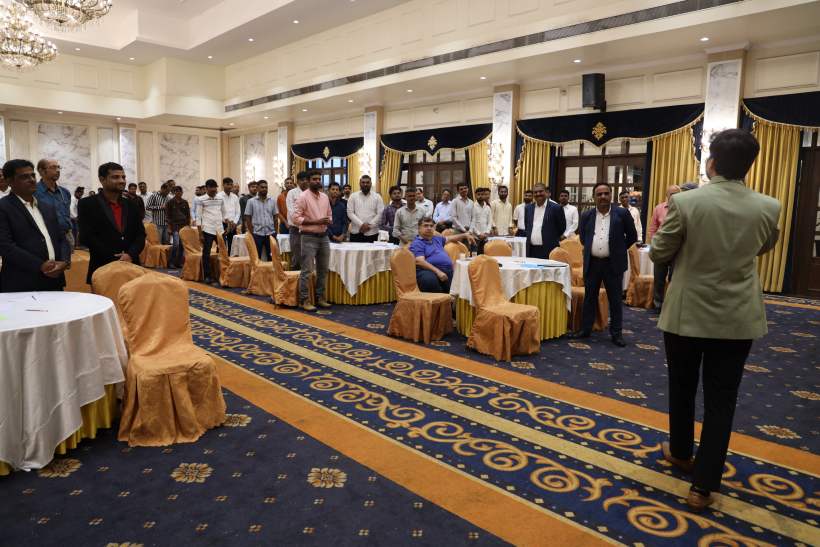
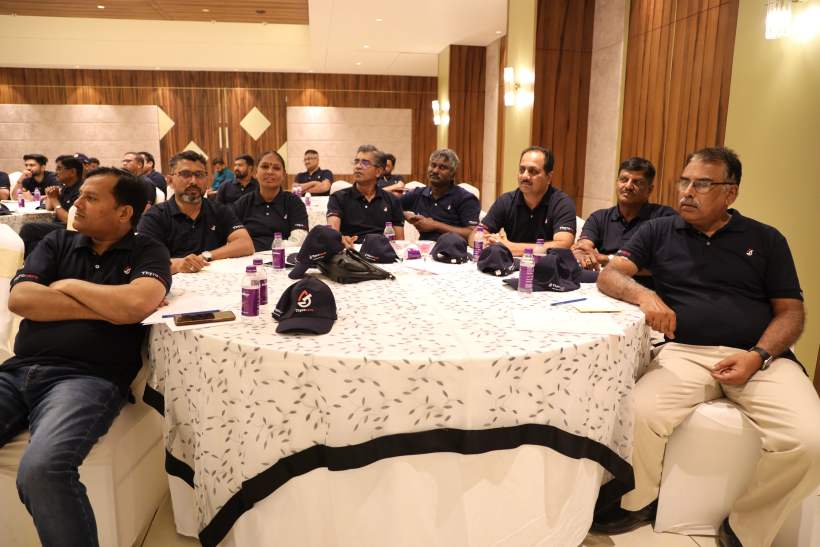
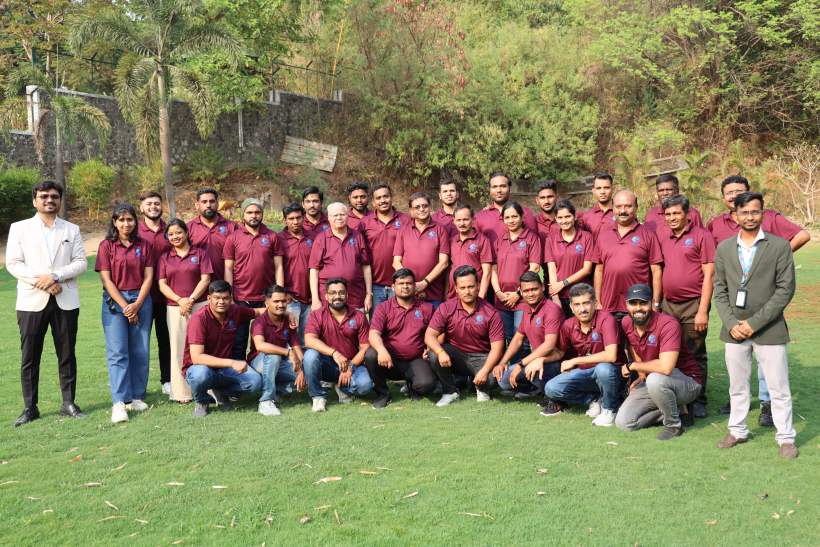
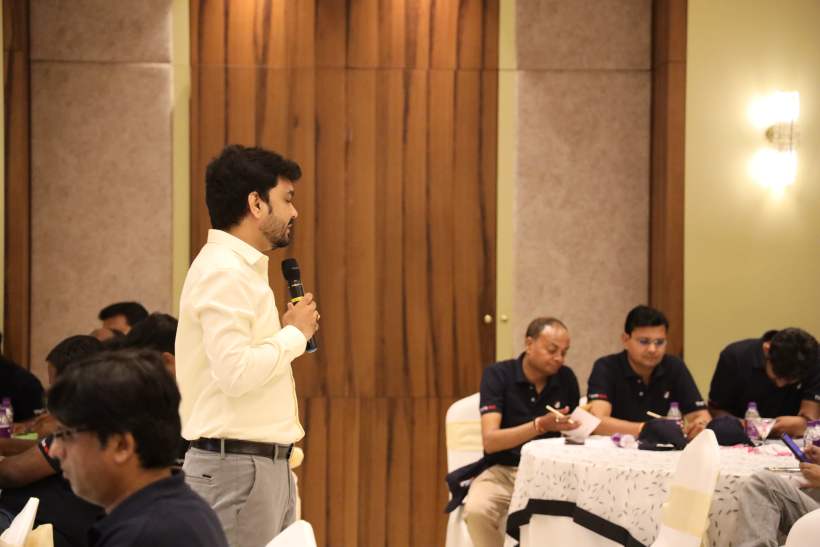
Inside the Room
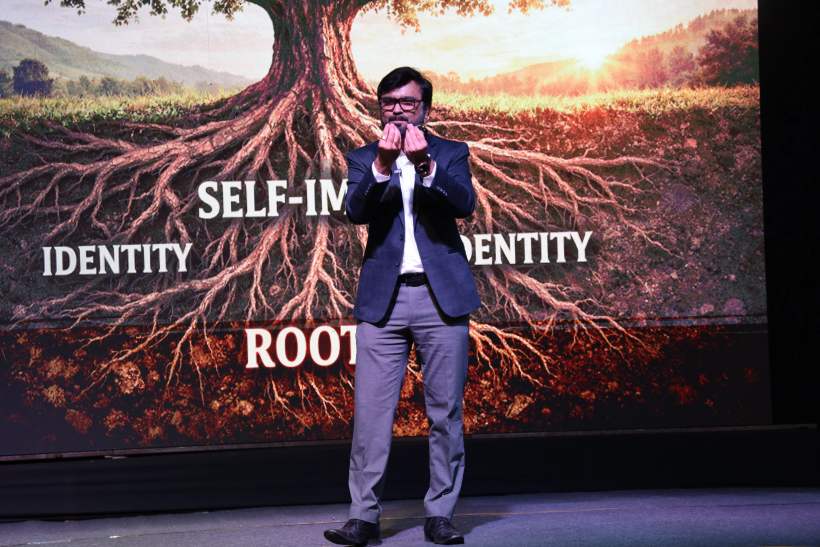
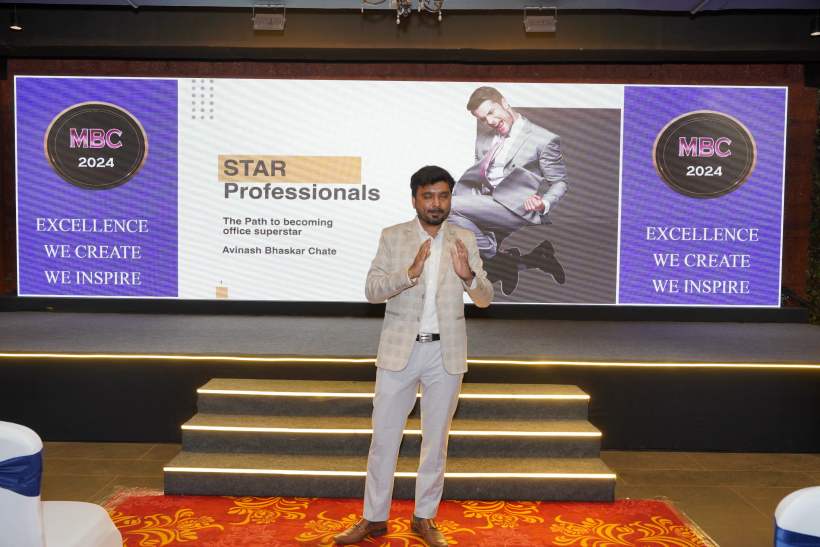

Why Avinash Chate
Avinash Chate is the owner of the personal speaking and training practice represented on this website, an entrepreneur, TEDx speaker and published author. He also owns and operates ABC Trainings and The Future Corporate & Business Coaching as separate businesses with their own brands and course catalogues. The programmes on this page are Avinash Chate's personal corporate-training offerings; through his personal practice, he has trained teams at 1,000-plus organisations and 15,000-plus professionals.
He teaches these skills not from a manual, but because he practises them himself — leading a 100-plus member team of his own. That is the difference working leaders feel in the room.
Emotional Intelligence at Work — FAQ
What is "Emotional Intelligence at Work"?
It is Avinash Chate's flagship signature programme on workplace emotional intelligence for every professional — not only leaders. It develops the four skills that decide whether smart, capable people rise or quietly derail: self-awareness, managing your own emotions under pressure, empathy and reading the room, and the social skill to build emotionally safe, high-trust teams. Unlike a generic soft-skills or wellbeing talk, it explains how emotion actually works in the brain and body, names the exact behaviours, shows each person where they stand, and rebuilds them through practice on real workplace moments — the feedback that stings, the pressure that spikes, the conversation that has been avoided.
How is this different from your Emotional Intelligence for Leaders programme?
They share the same science but serve different rooms. Emotional Intelligence for Leaders is focused on the leader's emotional impact on a team — self-regulation in front of your people, empathy as a leadership tool, and setting the emotional weather for others. Emotional Intelligence at Work is the broad, whole-workforce programme: it is for every professional, individual contributors and managers alike, and it centres on personal self-awareness, managing your own emotions, empathy with peers, and building trust across a team. If you want to lift a whole organisation's emotional maturity, this is the one; if you want to develop the emotional intelligence of senior leaders specifically, the leaders' programme goes deeper there.
Isn't emotional intelligence just a fixed personality trait you either have or don't?
No — and that is the single most important thing to understand about it. Emotional intelligence is not a fixed trait like height; it is a set of specific, nameable, trainable skills. Self-awareness can be built. The pause between a trigger and a reaction can be practised until it becomes automatic. Empathy can be developed as a discipline. The ability to hold a hard conversation without attacking or collapsing can be learned like any other skill. The whole programme is designed around this: it does not tell people to "be more mature" and hope — it shows them the mechanics and rebuilds the behaviours through practice.
Who should attend this programme?
Every professional benefits, which is the point. It is built for managers and team leaders, cross-functional and project teams, HR and people functions, trainers and facilitators, high performers at risk of burnout, and anyone in a high-stress or client-facing role. It is just as valuable for individual contributors as for leaders, because a person who cannot manage their emotions holds a team back regardless of title. It is at its most powerful run as an intact team, so a group builds a shared emotional language and keeps each other to it.
Why do smart, capable people still derail on emotion?
Because being good at the job and being good with emotion are two different skills — and only one of them is ever taught. We are hired, promoted and rewarded for what we know and can do, while emotions are treated as noise professional people should have already sorted out. So a brilliant person arrives in a team with no more emotional skill than they had at sixteen — no way to notice a trigger before it fires, no vocabulary for what they feel, no tool for the half-second before the reaction. Under pressure, their oldest wiring chooses the response for them. It is not a competence problem; it is an emotional-intelligence gap, and gaps close with the right practice.
What does the programme cover?
Eight connected modules: what emotional intelligence actually is and why it beats IQ at work; self-awareness and knowing your triggers; managing emotions and staying steady under pressure; empathy and reading the room; social skill and building genuine relationships; feedback and difficult conversations without the defensiveness; emotional energy, stress and boundaries; and building an emotionally safe, high-trust team. Every module pairs a short, usable model — the amygdala hijack, name-it-to-tame-it, pause-reflect-respond, empathic listening — with practice on real, disguised situations from your own organisation.
Is this just "let's all talk about our feelings"? Will it feel comfortable in a corporate room?
No. It is practical and skill-based, framed in the language of performance, collaboration and results — not therapy. The science is clear that emotional intelligence predicts workplace success, and the programme treats it as a hard professional skill, not a soft indulgence. The room is held carefully: psychological safety first, no forced disclosure, real growth over spectacle. People practise regulating under pressure and handling hard conversations — they are not made to bare their souls. It lands as credibly with sceptical engineers and shop-floor managers as with HR.
How is it delivered, and how long does it take?
It is highly interactive — self-assessment, role plays and real cases, with minimal lecture. The duration is flexible: a half-day or full-day EQ capsule, a two-day deep bootcamp, a spaced weekly series so each skill is practised with real teams between sessions, or an ongoing monthly rhythm for HR-led culture work. We shape the exact length and cadence with you. For 20 to 40 participants, sessions are organised into small batches so everyone practises and the emotional work stays candid and safe.
What do employers, HR and business owners get out of it?
One programme delivers four returns. The individual gains self-awareness and self-control that steadies their work and their life. The manager inherits a team that regulates itself, collaborates without constant refereeing, and takes feedback without drama. HR gets measurably better retention and morale, fewer people conflicts to firefight, and a healthier culture to point to. And the organisation gets what EQ has been shown to predict better than IQ — teams that trust each other, communicate cleanly, and perform under pressure instead of cracking under it.
Can it be delivered on-site, and in which languages?
Yes. Most engagements are across Maharashtra — Pune, Mumbai, Chhatrapati Sambhajinagar, Nashik, Nagpur and the surrounding MIDC industrial belts — and the programme is equally delivered pan-India and internationally on request. Delivery is available in English, Hindi and Marathi, or a natural mix, which matters especially for teams promoted from the floor and for mixed-seniority cohorts where the emotional work must land in the language people actually feel in.
Explore More
How to Bring This to Your Team
Every run of this programme is shaped around your people and your calendar — there is no off-the-shelf package. Getting started is simple.
Tell us the situation
Share who needs it — an intact team with friction, a manager group, a high-potential cohort, a stressed function — and what you want to change. A short enquiry is enough to begin.
A design call
We shape the objectives, the format and the cadence together — from a half-day EQ capsule to a monthly culture rhythm — and decide how deep to take the emotional work for your group, and how carefully the room needs to be held.
A proposal built for you
You get a clear, customised proposal — scope, format, investment and outcomes — for your specific team. No templated pricing; the programme scales to what you need.
Investment is scoped to the format, group size and cadence you choose, and shared in the proposal — from a single energising session to a year-long EQ journey. Email connect@avinashchate.com or call +91 87936 30001 to start.
Build emotionally intelligent teams that collaborate, trust and lead better
Give your people the one skill that beats IQ at work — self-awareness, managing emotions under pressure, empathy and high-trust teams — through Avinash Chate's signature Emotional Intelligence at Work programme. On-site across Maharashtra, pan-India and internationally, in English, Hindi or Marathi.
Request a Proposal →