Body Language & Non-Verbal Communication Training
You made the right argument and still lost the room. The content was solid; the signal was off.
You had the better case. The logic was clean, the numbers checked out, the recommendation was right — and you still watched the room drift to someone else. Somewhere in the delivery the signal contradicted the substance: a closed posture, a voice that wavered at the end of the sentence, eyes fixed on the slides instead of on the people, a handshake that said "unsure" before you had said anything at all. And it runs the other way too — you read the room wrong. The client had quietly decided ten minutes ago while you kept pitching. The dissent around the table was real, and nobody voiced it, and you missed it. On a video call it is harsher still: a flat face in a small rectangle, and no idea whether anyone is with you. Almost nobody was ever taught that the majority of what we communicate is not the words at all — it is posture, face, voice, eyes, space and timing. And all of it can be learned.
★ 5.0 client rating · Across Maharashtra, pan-India & internationally · English, Hindi & Marathi
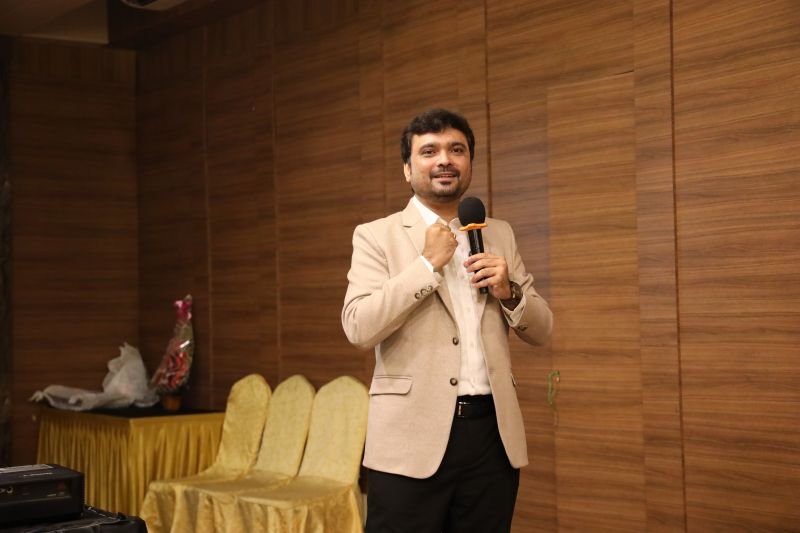
The Silent Half of Every Conversation No One Trained You For
We are drilled in the words. From school onward we learn grammar, vocabulary, structure and spelling — the visible, gradeable half of communication. Meanwhile the larger half runs completely untrained. No one sat you down and taught you what your face does when you disagree, what your feet reveal when you want to leave, how your voice tightens under pressure, or how close is too close in a Pune office versus a client's home. So it all runs on autopilot — and autopilot leaks. It contradicts you in interviews, undercuts you in negotiations, and betrays you in the exact moment you most want to look calm and in control.
The cost is quiet and constant. A capable person is passed over because they "don't seem confident," when the truth is a set of nervous habits nobody ever named for them. A deal is lost because the buyer's signals of doubt were missed and the seller talked straight past them. A manager wonders why the team goes silent in their meetings, never realising it is their own crossed arms and flat face doing the silencing. And the crossed wire compounds across a whole career — because the one thing that could have fixed it, being taught to read and send these signals on purpose, is the one thing almost no one ever gets.
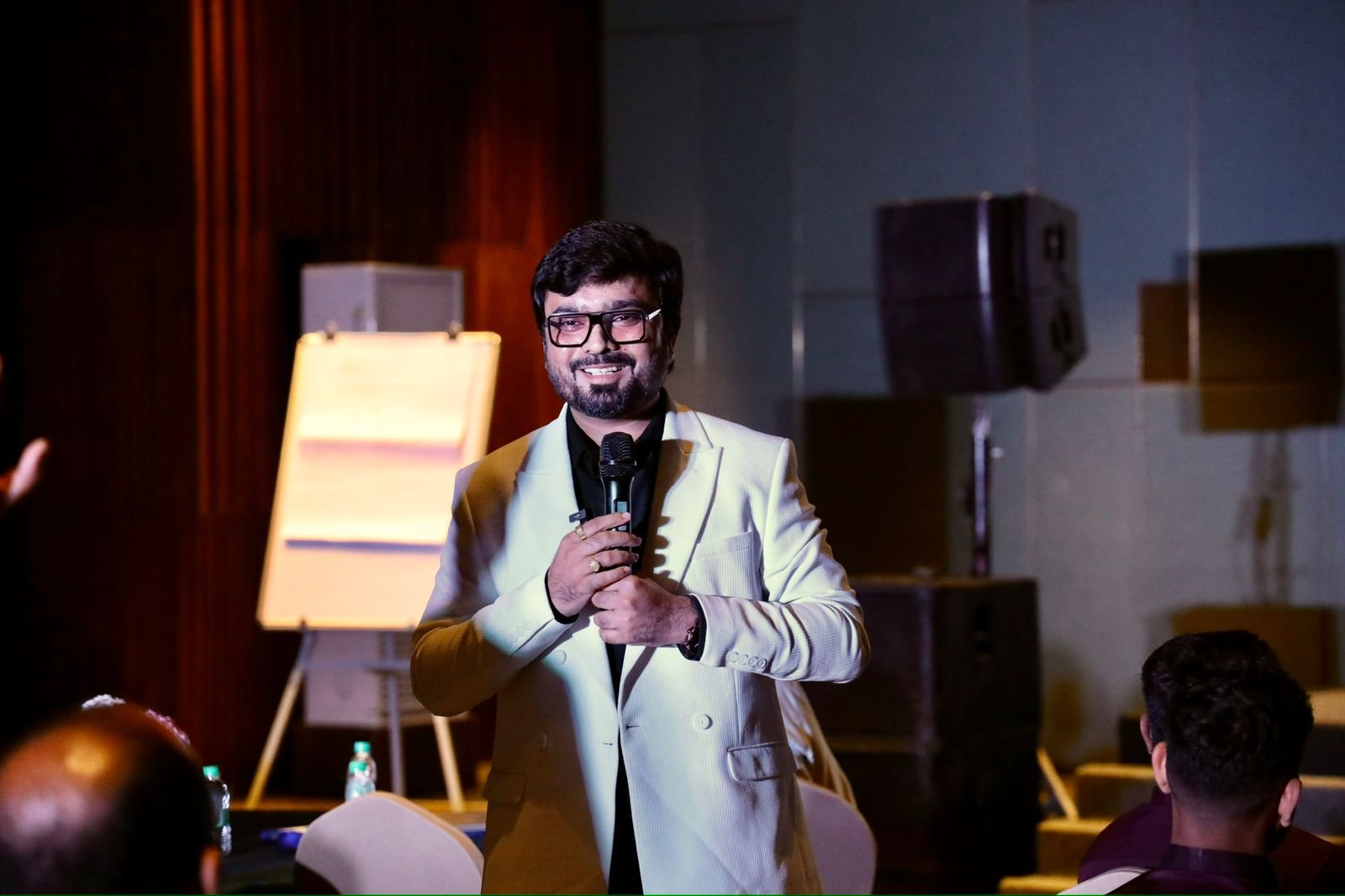
Why the Words Are Never Enough — And Why the Signals Are Learnable
Here is what makes this so slippery: when a person's words say one thing and their body says another, we believe the body, almost every time. It is older, faster and harder to fake than speech — a survival instinct that reads a face or a posture in a fraction of a second and quietly renders a verdict: trust this, or don't. That is why a brilliant argument delivered with a shrinking body loses to a thin one delivered with conviction. The room is not being unfair. It is reading the channel that has kept humans alive far longer than language has, and that channel is shouting over your careful words.
And every one of those signals is concrete, observable and trainable — which is exactly why interrogators, diplomats, top salespeople and the best negotiators study them deliberately. Posture, facial expression, eye behaviour, the voice, gesture, the use of space and the reading of clusters are not a personality you are born with; they are skills, and skills close the gap with the right awareness and the right practice. This programme gives your people that practice on purpose, in the room — so their signals finally line up behind their message, and they can read the signals coming back before it is too late to respond.
Does This Sound Familiar?
If your people are being read as less than they are, or keep missing what the room is telling them, it is almost never a content problem — it is the silent channel running unmanaged, and that channel is learnable. Here is what you are likely seeing, what it is quietly costing, and exactly which part of the programme fixes it.
| The symptom you see | What it is costing you | The real cause | How the programme fixes it |
|---|---|---|---|
| A capable person "just doesn't come across as confident" and can't say why | They are overlooked for roles and rooms their ability has clearly earned | Unmanaged nervous habits — closed posture, trailing voice, fidget — override the competence | The Posture & Presence and Voice modules — replacing the leaking signals |
| Deals and pitches stall because the buyer had checked out and no one noticed | Time and momentum wasted talking past a decision that was already made | No one learned to read the cluster of doubt, boredom or "no" the body sends first | The Reading People module — spotting agreement, doubt and dissent early |
| Words say one thing, the face and hands say another — and people trust the doubt | Sincere, accurate messages are quietly disbelieved; credibility erodes | Verbal and non-verbal channels are out of sync, so the message reads as false | The Congruence module — aligning every signal with the message |
| The team goes quiet and closed in a particular manager's meetings | Ideas, risks and bad news stop surfacing where they are needed most | The manager's own posture, expression and tone are unknowingly shutting the room | The Signals of Warmth & Authority module — opening a room deliberately |
| On video calls people read as flat, distant or disengaged | Trust and rapport that came easily in person fail to cross the screen | The signals that carry a room — eyes, energy, framing — collapse on camera untrained | The Non-Verbal Presence on Camera module |
| Awkward moments with clients or across cultures — standing too close, a misread gesture | Rapport is damaged before a relationship even begins, without anyone knowing why | Personal space, touch and gesture norms differ by person and culture and were never taught | The Space, Gesture & Culture module |
What Changes When Every Signal Finally Points the Same Way
Picture the same person walking into the meeting, and this time the room reads them exactly as they intend. They stand and sit like someone who belongs there. Their voice lands each sentence with a downward certainty instead of an anxious lift. They hold steady eye contact without staring, keep an open posture that quietly invites the room in, and offer a handshake that settles the first impression before a word is spoken. And they are reading, too — clocking the folded arms, the glance at the phone, the micro-flash of doubt — and adjusting in real time instead of ploughing on.
And underneath it, the shift that pays for the whole programme: your people stop being misread. The capable ones are finally seen as confident. The sellers catch the "no" while there is still time to change it, and the "yes" while there is still time to close it. Managers open rooms instead of shutting them. And on every screen, in every negotiation, in every first meeting, the signal and the substance say the same thing at last — so your people are believed, trusted and followed for exactly what they are.
What Your People Will Be Able to Do
- ✓ Understand why the majority of every message is non-verbal — and why a room believes the body over the words
- ✓ Manage their own posture, stance and movement to signal calm, open confidence instead of nerves
- ✓ Use the voice as a deliberate instrument — pace, pitch, pause and the falling tone that reads as certainty
- ✓ Hold natural, steady eye contact and an open, warm posture that draws people in rather than shutting them out
- ✓ Read other people accurately — spotting agreement, doubt, discomfort and unspoken dissent from clusters of signals
- ✓ Align their words and their body so the whole message is congruent, credible and believed
- ✓ Handle personal space, gesture, touch and the handshake well — across people, settings and cultures
- ✓ Carry genuine non-verbal presence onto video calls and camera, where most signals otherwise collapse
What the Programme Covers
Eight connected modules that take a person from leaking the wrong signals to sending the right ones on purpose — and from missing what a room is saying to reading it in real time. Every module pairs a short, practical input with real practice, much of it on camera, and ends with a concrete change in how the person lands and how accurately they read others.
These are building blocks, not a fixed-length course. A two-hour session goes deep on the two or three that matter most to you; a half or full day covers more; a multi-day intensive — or an ongoing monthly, quarterly or half-yearly rhythm — works through them all, with far more practice. We shape which ones, in what order and how deep, with you.
The Silent Channel — Why the Body Speaks Louder Than the Words
What we cover: Why so much of every message is carried non-verbally, and why, when word and body disagree, people believe the body. The survival wiring that reads a face or a posture in a fraction of a second and renders an instant verdict of trust or suspicion. The difference between the signals you send on purpose and the ones leaking without your knowing. An honest baseline for each person: where their body already helps them, and precisely where it betrays them.
What changes: The person stops treating delivery as an afterthought and understands, concretely, that the silent channel is where they are being judged — and that it can be managed.
Posture, Stance and Presence — What Your Body Says Before You Speak
What we cover: How you enter a room, stand, sit and hold your weight — and what each of those quietly announces. Open versus closed body language and what it does to the people watching. Grounding a stance so you read as steady rather than shifting and unsure. Stilling the nervous tells — the fidget, the self-touch, the retreat behind arms and objects. Taking up an appropriate amount of space with confidence but without dominance.
What changes: The person's body starts saying "calm, capable, here" the moment they walk in — so the room is already on their side before the first sentence.
The Voice as a Signal — Tone, Pace, Pause and Certainty
What we cover: The paralinguistics that decide how words are received — pace, pitch, volume, emphasis and, above all, the pause. The falling tone at the end of a sentence that reads as conviction, versus the upward lift that turns a statement into an unintended question. Cutting the fillers, the rushing and the trailing off that signal anxiety. Using silence on purpose. Warming and steadying the voice under pressure instead of letting it tighten and climb.
What changes: The person's voice carries authority and calm on purpose — so the same words land with weight instead of leaking nerves.
The Face and the Eyes — Expression, Gaze and Connection
What we cover: Why the face is both the most watched and the most misread part of the body, and how to make it work with you. Holding warm, natural eye contact that connects without staring or darting away. Managing the resting expression that others read as bored, cold or annoyed when you mean none of it. The genuine versus the forced smile, and why people can feel the difference. Reading fleeting expressions on other faces, and letting your own face show the openness you actually feel.
What changes: The person's face and eyes build connection and trust instead of quietly broadcasting the wrong emotion.
Reading Other People — Clusters, Comfort and the Unspoken "No"
What we cover: The discipline of reading signals in clusters rather than leaping on a single gesture — because one crossed arm means nothing and a pattern means everything. Spotting the comfort and discomfort that reveal agreement, doubt, interest or a decision already made. Catching the unvoiced dissent, the polite "yes" that means "no," and the moment a buyer or a boss has quietly switched off. The strict caution against mind-reading and stereotype — reading behaviour against a person's own baseline, in context, never as a party trick.
What changes: The person reads the room accurately and early — so they adjust while it still matters, instead of discovering the "no" after the meeting.
Congruence — Making Your Words and Body Say the Same Thing
What we cover: Why a mismatch between the verbal and the non-verbal is read as dishonesty, even when the person is completely sincere. Closing the gap between what you mean and what your body is broadcasting. Aligning voice, face, posture and gesture behind a single message so the whole signal is believed. The particular non-verbal demands of high-stakes moments — the interview, the negotiation, delivering hard news, standing your ground — where incongruence is most costly. Building signals of warmth and signals of authority, and choosing which the moment needs.
What changes: The person becomes congruent and therefore credible — their body backs their words, so people trust what they say.
Space, Gesture, Touch and the First Handshake
What we cover: Proxemics — the invisible bubble of personal space, how it shifts by relationship, setting and culture, and the cost of getting it wrong. Purposeful gesture that illustrates and emphasises rather than distracts or fidgets. The handshake and the greeting that set a first impression in seconds, and how they vary across a diverse, international room. Touch, its narrow and culturally sensitive place in professional settings, and how gestures that are friendly in one culture offend in another — vital across Maharashtra, pan-India and global teams.
What changes: The person navigates space, greeting and gesture with ease and cultural intelligence — building rapport from the first second instead of tripping an invisible wire.
Non-Verbal Presence on Camera — and Live Video Feedback
What we cover: Why the signals that carry a physical room — energy, eyes, posture, the read of the audience — collapse on a video call, and how to rebuild them for the lens. Looking at the camera to make "eye contact," and framing, lighting and background that keep you present rather than flat. Projecting warmth and engagement through a small rectangle. Then live, on-camera practice across it all: playback with precise, kind feedback on the exact signals — the posture, the pause, the gaze, the expression — using real situations from each person's own world, repeated until the new signals hold.
What changes: The person sees themselves as others see them, fixes it on camera, and carries real presence into both the meeting room and the video call — having already landed the hard moments once.
How It Is Delivered
This is not a lecture about the meaning of gestures or a chart of what crossed arms "mean." It is a workshop where people see and rebuild their own signals, and learn to read others accurately. Much of the time is spent on their feet and on camera — practising the entrance, the handshake, the pause, the steady gaze, the difficult conversation — with precise playback and feedback on the exact things a room reads. People work in pairs and small groups to read each other's real signals, cluster by cluster, so the skill is built on live behaviour, not a memorised list. The models are kept few and immediately usable; the change happens in the reps, watching the difference land back on screen.
The format flexes to your people and your calendar. It runs as a focused half-day, a full-day intensive, a multi-day programme for a cohort, or a series of shorter modules with practice between them so new signals have time to set — and it works especially well as an ongoing rhythm for a client-facing, sales or leadership pipeline. Because this work is personal and practised on camera, groups are kept small enough that every person gets real feedback and real reps, not just a seat. The exact depth, format and cadence are shaped with you in the design call.
Formats That Fit Your Calendar
Half-day or full-day intensive
A high-impact session to sharpen the non-verbal signals of a group quickly — ideal ahead of an appraisal season, a big client push, a campus-to-corporate intake or a wave of interviews.
Multi-day programme
Two or more days to go deep across posture, voice, face, reading people and camera presence — perfect for a sales team, a client-facing function or a leadership cohort.
Modular series with practice between
Shorter sessions spaced out, so people apply each set of signals in real meetings and calls and bring the results back — the way non-verbal habits actually change.
An ongoing communication rhythm
Run it as a recurring part of how you develop client-facing and leadership talent, so every cohort learns to send and read the silent signals, not just polish the words.
The Thinking Behind It
This programme is not a generic "what your gestures mean" deck. It draws on the best research and field experience on non-verbal behaviour — from FBI-level people-reading to the science of first impressions and the anthropology of space and time — distilled into a few models a person can use immediately, and then goes further, into the frameworks Avinash uses to build presence and read a room inside his own 100-plus member organisation.
Ideas & books we draw on
- What Every BODY Is Saying — Joe Navarro · the ex-FBI agent's field guide to speed-reading people through the honest signals of the feet, torso, hands and face
- The Definitive Book of Body Language — Allan & Barbara Pease · the international bestseller that catalogues the gestures and clusters behind what people really think and feel
- The Silent Language of Leaders — Carol Kinsey Goman · how a leader's posture, gesture and expression can help or quietly sabotage the way they are followed
- Louder Than Words — Joe Navarro · nonverbal intelligence turned to the workplace — reading comfort and discomfort in meetings, interviews and negotiations
- Captivate — Vanessa Van Edwards · the science of first impressions and connection — the signals that decide whether people warm to you in the first seconds
- Unmasking the Face — Paul Ekman & Wallace V. Friesen · the pioneering work on reading the universal facial expressions — the micro-signals that reveal what words try to hide
Models we use to read and send signals
- The comfort / discomfort model (Navarro) · read whether the body is at ease or under stress, rather than guessing at a single gesture
- Reading in clusters, against a baseline · one signal means little; a pattern read against a person's normal behaviour means everything
- Warmth + authority signals · the two things a room reads instantly — send both to be trusted and respected at once
- Proxemics — the space bubble (Hall) · intimate, personal, social and public distance, and how the right one shifts by setting and culture
- Vocal paralinguistics · pace, pitch, pause and the falling tone — the message the room hears before it hears the words
- Congruence over incongruence · align word and body, because a mismatch is read as dishonesty even when you are sincere
And Avinash's own frameworks — the part you won't find anywhere else
Beyond the established thinking, the programme is built on frameworks Avinash has created and written about himself — including his KITE leadership framework and the principles in his book The Winning Edge. These come from actually running a 100-plus member organisation and developing its people year after year, not from a textbook. It is the layer competitors cannot copy, and the one your people remember long after the session ends.
Who It Is For
Anyone whose success depends on being read correctly and reading others well — which is almost everyone. Salespeople and account managers who must catch a buyer's real signals and send trust across the table. Leaders and managers who unknowingly open or close a room with their own posture and tone. Client-facing, HR, front-office and negotiation teams for whom first impressions and rapport are the job. Capable professionals who keep being told they "don't come across as confident," and job-seekers walking into interviews. It is especially powerful run as a cohort for a sales floor, a client-services team or a leadership batch, and it is a natural fit for campus-to-corporate trainees learning to carry themselves in a professional room for the first time — across Maharashtra, pan-India and international, in-person and on camera.
Taught by Someone Who Reads and Holds Rooms for a Living
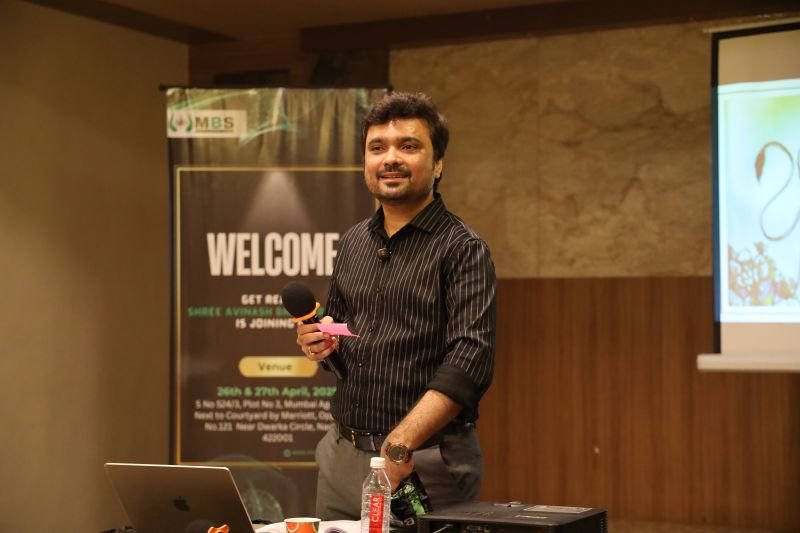
Avinash Chate does not teach this from a chart of gestures. He is a TEDx speaker who has held the attention of rooms from boardrooms to auditoriums, and an entrepreneur who runs a 100-plus member organisation — so reading a room, sending the right signals and staying congruent under pressure are things he has had to do himself, in front of real, sceptical, senior audiences, and every day with his own teams and clients. Programmes that build communication, presence and personal impact have been delivered across sectors — from manufacturing and engineering to IT, banking, sales and services — with the very people who need their signals to match their substance, whether across a negotiation table, a shop floor or a screen.

Why Avinash Chate
Avinash Chate is an entrepreneur and corporate trainer who runs ABC Trainings and The Future Corporate & Business Coaching, a TEDx speaker and published author. Over the last decade he has trained teams at 1,000-plus organisations and 15,000-plus professionals.
He teaches these skills not from a manual, but because he practises them himself — leading a 100-plus member team of his own. That is the difference working leaders feel in the room.
Body Language & Non-Verbal Communication Training — FAQ
What is Body Language and Non-Verbal Communication Training?
It is a practical development programme that teaches the silent half of communication most professionals were never trained in — the posture, facial expression, voice, eye contact, personal space, gesture and timing that carry the majority of every message. It works in two directions: sending your own signals on purpose so your body backs your words and you are believed, and reading other people accurately so you catch agreement, doubt, discomfort and unspoken dissent in real time. Unlike a "what gestures mean" seminar, it is built on live practice — much of it on camera — until the new signals hold.
Who should attend this training?
Almost anyone whose work depends on being read correctly and reading others well: salespeople and account managers, leaders and managers, HR, front-office and client-facing teams, negotiators, and capable professionals who keep being told they "don't come across as confident." It is also invaluable for job-seekers preparing for interviews and for campus-to-corporate trainees stepping into a professional room for the first time. It works powerfully as a cohort for a sales floor, a client-services team or a leadership batch, so a group builds a shared language of signals together.
Isn't body language just something you either have or you don't?
No — and that belief is exactly what keeps capable people stuck. Non-verbal communication feels innate because it runs on autopilot, but it is really a set of concrete, observable and trainable signals: how you hold a posture and a pause, whether your voice lands with certainty, what your face and eyes broadcast, how you use space. Every one of those can be seen, understood and rebuilt — which is precisely why interrogators, diplomats, top salespeople and negotiators study them deliberately. It is a skill, and this programme teaches it in the room.
How is this different from your Executive Presence programme?
They are complementary but distinct. Executive Presence is about gravitas and being seen as a leader — aimed largely at senior people who need to command a room. This programme is the underlying mechanics of body language and non-verbal signals for everyone, at every level — the how-to of posture, voice, face, eyes, space and timing, plus the skill of reading other people accurately. Many organisations run this as the broad foundation across client-facing and frontline teams, and Executive Presence for the leadership layer on top.
Does it teach how to read other people, or just how to present yourself?
Both, deliberately. Half the value is sending your own signals well so you are believed; the other half is reading the signals coming back so you catch the doubt, the boredom, the polite "no" and the decision that has already been made — while there is still time to respond. We teach reading in clusters and against a person's own baseline, in context, with a strong caution against mind-reading, stereotyping or treating it as a party trick. The goal is accurate, respectful awareness, not gimmicks.
Does it cover video calls and virtual communication?
Yes — a full module is dedicated to it, because the signals that carry a physical room largely collapse on camera. We work on looking at the lens to make "eye contact," on framing, lighting and background, and on projecting warmth and engagement through a small rectangle, then practise it live on camera with feedback. For hybrid and remote teams whose rapport has to cross a screen, this is often the part people find most immediately useful.
Is the programme customised to our organisation?
Yes. Before the first session, the practice scenarios are built around your context — your industry and the real moments your people face, from the sales table and the interview to the client meeting, the shop floor and the town hall. Generic body-language content is exactly what fails; the value is in each person working their own actual situations on camera and seeing the change land back on screen before they need it for real.
Can it be delivered on-site, and in which languages?
Yes. Most engagements are across Maharashtra — Pune, Mumbai, Chhatrapati Sambhajinagar, Nashik, Nagpur and the surrounding MIDC industrial belts — and the programme is equally delivered pan-India and internationally on request. Delivery is available in English, Hindi and Marathi, or a natural mix, which matters especially for non-verbal work — signals of space, gesture and greeting carry differently across languages and cultures, and we address that directly.
What outcomes can we expect?
People whose confidence finally shows, whose words are believed because their body agrees with them, and who read a room accurately enough to adjust in the moment — from their next meeting rather than after years of being misread. Sellers who catch the "no" in time to change it and the "yes" in time to close it; managers who open rooms instead of shutting them; and teams whose presence crosses the screen on every video call. Over time, a client-facing organisation whose signals consistently match its substance.
Why Avinash Chate for this programme?
Avinash Chate is an entrepreneur and corporate trainer who reads and holds rooms for a living — a TEDx speaker and author of The Winning Edge who runs a 100-plus member organisation — so he teaches non-verbal communication from having had to send the right signals and read the room himself, in front of demanding audiences and every day with his teams and clients. He is the creator of the KITE leadership framework and has trained teams at 1,000-plus organisations and over 15,000 professionals. That combination of real time in the room and his own frameworks is what people respond to.
Related Training Topics
Get your people believed for exactly what they are
Give your teams the silent half of communication — posture, voice, face, eyes, space and timing, plus the skill of reading a room — so the signal finally matches the substance, in person and on camera. On-site across Maharashtra, pan-India and internationally, in English, Hindi or Marathi.
Request a Proposal →