Mentoring Skills Training
Your most experienced people know more than any manual — and almost none of it is being passed on.
Somewhere in your organisation is a person who can look at a problem for ten seconds and see what took everyone else a week to miss. Thirty years of judgement, pattern recognition, the quiet feel for when a deal is about to go wrong or a design will not hold. It is your most valuable asset, and it lives entirely inside one head. Meanwhile your juniors are left to sink or swim — relearning, the slow and expensive way, lessons your seniors already paid for. It is not that your experts refuse to help. It is that knowing something and being able to grow that knowing in someone else are two completely different skills, and no one ever taught them the second. This programme teaches it — and turns your experts into mentors who multiply themselves.
★ 5.0 client rating · Across Maharashtra, pan-India & internationally · English, Hindi & Marathi
The Knowledge That Quietly Walks Out the Door
Every organisation has them and almost none of them are documented: the people who just know. The engineer who can hear a bad bearing before the sensor does. The relationship manager who knows which client will churn and why. The plant veteran who has seen this exact failure three times before and can tell you the fix in a sentence. That knowledge was earned over decades — through mistakes, near-misses and thousands of small judgement calls — and it has never once been written down, because the truth is it cannot be. It is felt, not filed.
And then the retirement date arrives. Or the resignation. Or simply the next reorganisation that scatters the team. The senior walks out with a farewell cake and a card, and their irreplaceable judgement walks out with them — unshared, un-transferred, gone. Behind them, a junior stares at the same problem the veteran would have solved in a glance, and starts, painfully, from zero. Multiply that by every experienced person you will lose in the next five years and you are watching your hardest-won capability leak away, one goodbye at a time.
Why Your Best Experts Are Rarely Your Best Developers of People
Here is the part no one says at the retirement dinner: being brilliant at the work and being able to develop someone else in it are not the same skill — and the first does not remotely guarantee the second. A true expert has forgotten how much they know. The judgement has become so automatic, so buried below conscious thought, that they genuinely cannot explain it — so they default to the only thing that feels natural: doing it themselves, or handing over the answer. Neither grows anyone. The junior gets a fish, never a way of fishing, and the expert quietly concludes that "you cannot teach this."
You can — but not by accident, and not by simply pairing a senior with a junior and hoping. Mentoring is a discrete, learnable set of skills: drawing out tacit knowledge, asking the question that makes someone think rather than supplying the answer, building enough trust that a junior will admit what they do not know, and giving feedback that develops instead of deflates. Your seniors were never taught any of this, so they mentor the way they were mentored — which is to say, barely. That is not a limit of their character; it is a gap in their training, and gaps in training close. This programme closes it deliberately, before the next farewell cake.
Does This Sound Familiar?
If knowledge transfer in your organisation feels slow, accidental or entirely dependent on a few good-natured seniors, it is almost never that your experts will not mentor. It is that no one taught them how. Here is what you are likely seeing, what it is quietly costing you, and exactly which part of the programme fixes it.
| The symptom you see | What it is costing you | The real cause | How the programme fixes it |
|---|---|---|---|
| Your senior experts help by taking over or handing out the answer, never developing the person | Juniors stay dependent, the expert becomes the permanent bottleneck, and nothing transfers | Knowing something and growing it in someone else are different skills — only the first was ever taught | The Listening & Asking module — developing through questions, not answers |
| Irreplaceable know-how leaves with every retirement and resignation | You relearn, at full price, lessons a departing veteran had already paid for | Tacit judgement was never drawn out and transferred while the expert was still there | The Transferring Judgement module — making the unwritten teachable |
| A junior will not admit what they do not know, so the real gaps stay hidden | Small misunderstandings compound into expensive mistakes no one saw coming | There is not enough trust in the relationship for honesty to feel safe | The Relationship & Trust module — the foundation everything else rests on |
| Your mentoring is really just advice-giving — well-meant, generic and rarely acted on | Seniors feel unheard and juniors feel lectured; both quietly disengage from it | No one distinguished mentoring from advising, sponsoring or simply telling | The What Mentoring Is module — beyond giving advice |
| You paired seniors with juniors months ago and nothing has actually happened | A well-intentioned initiative fizzles, and mentoring gets a reputation as a box-tick | There was no structure, rhythm, goal or way to tell whether it was working | The Structuring a Programme module — mentoring that runs and lasts |
What Changes When Your Experts Learn to Multiply Themselves
Picture your most experienced people no longer hoarding judgement in a single head, but deliberately growing it in others. A veteran who, instead of fixing the problem, asks the two questions that let a junior fix it themselves — and remember how. A senior who has learned to surface the tacit "how I actually decide," and pass it on before the retirement date, not lose it at the gate. Juniors who trust their mentor enough to say "I do not understand," and get better far faster than sink-or-swim ever allowed.
And underneath it, the shift that pays for the whole programme: your hardest-won knowledge stops depending on who happens to still be in the building. Each expert becomes a force multiplier, leaving behind not a gap but a bench of people who think the way they think. You stop losing capability at every goodbye — and start compounding it.
What Your Mentors Will Be Able to Do
- ✓ Understand what mentoring truly is — and how it differs from advising, coaching, sponsoring and simply telling
- ✓ Build a mentoring relationship grounded in enough trust that a mentee will be honest about what they do not know
- ✓ Develop people through questions and deep listening, instead of supplying every answer
- ✓ Draw out their own tacit judgement and hard-won pattern recognition, and make it teachable
- ✓ Give developmental feedback that grows a mentee rather than deflating or defending them
- ✓ Run a mentoring relationship with structure — clear goals, a working rhythm and a clean close
- ✓ Help design and sustain a mentoring programme that outlasts any single expert or resignation
What the Programme Covers
Seven connected modules that take an experienced expert from "I just do it myself" to a mentor who genuinely develops others. Every module pairs a short, practical input with real practice on the exact situations a mentor faces — and ends with a concrete change in how they pass on what they know.
These are building blocks, not a fixed-length course. A two-hour session goes deep on the two or three that matter most to you; a half or full day covers more; a multi-day intensive — or an ongoing monthly, quarterly or half-yearly rhythm — works through them all, with far more practice. We shape which ones, in what order and how deep, with you.
What Mentoring Is — and What It Is Not
What we cover: Why most "mentoring" is really just advice-giving in disguise, and why that rarely changes anyone. Separating mentoring from coaching, managing, advising and sponsoring — and knowing when each is the right tool. The mentor's true job: developing the person, not solving the problem for them. Why the goal is a mentee who can eventually do without you, not one who depends on you. Setting the expectation, on both sides, that mentoring is a partnership of learning rather than a download of answers.
What changes: The mentor stops equating helping with telling, and starts from the one idea everything else depends on — that the point is to grow the person, not to hand over the fish.
Building the Relationship and the Trust It Runs On
What we cover: Why nothing real gets transferred until a mentee trusts you enough to be honest. Starting a mentoring relationship well — the first conversation, expectations, confidentiality and boundaries. Reading and matching where a mentee actually is, rather than where you assume. Creating enough psychological safety that "I do not understand" and "I made a mistake" can be said out loud. Navigating differences of age, gender, level and background so the relationship feels genuinely safe.
What changes: The mentor builds a relationship in which honesty is possible — so the real gaps surface early, while they are still small and cheap to fix.
Listening and Asking, Not Just Telling
What we cover: Why the expert's instinct to jump in with the answer is the single biggest thing that stops a mentee growing. The discipline of listening to understand rather than to reply. Asking the question that makes someone think — open, curious, well-timed — instead of the leading question that just delivers your answer in disguise. Sitting with a productive silence long enough for the mentee to reach the insight themselves. Knowing the rare moments when telling directly genuinely is the right, faster thing to do.
What changes: The mentor learns to develop through questions and attention, so the mentee builds their own judgement instead of borrowing the mentor's for a day.
Transferring Judgement and Tacit Knowledge
What we cover: The heart of the programme: how to pass on the knowledge that was never written down because it cannot be. Surfacing your own tacit expertise — the "how I actually decide" that has become invisible even to you. Thinking aloud so a mentee can watch the reasoning, not just receive the conclusion. Using real stories, cases, near-misses and "here is what I would look at first" to make pattern recognition contagious. Deliberately capturing critical know-how before a retirement or a move, so capability stays when the person leaves.
What changes: The mentor makes their hard-won judgement teachable and transferable — so decades of expertise stop living in one head and start living in the team.
Giving Developmental Feedback
What we cover: Why feedback that only reassures develops no one, and feedback that only criticises defends everyone. Giving feedback that a mentee can actually hear, absorb and act on. Balancing genuine encouragement with honest challenge — feedforward as well as feedback, focused on what to do next rather than only on what went wrong. Handling the defensive, discouraged or over-confident reaction without either backing down or bruising the relationship. Making feedback a normal, ongoing part of the mentoring rhythm rather than a rare, dreaded event.
What changes: The mentor gives feedback that genuinely grows the mentee — challenging enough to stretch them, safe enough that they keep coming back for more.
Structuring an Effective Mentoring Programme
What we cover: Why simply pairing a senior with a junior and hoping is the most common reason mentoring quietly dies. Setting clear goals and a working rhythm for a mentoring relationship, and knowing what a good session looks like. Matching mentors and mentees thoughtfully rather than at random. Bringing a relationship to a clean, deliberate close instead of letting it drift. At the programme level: how to launch, support and sustain mentoring across an organisation, and how to tell whether it is actually working.
What changes: The mentor — and the organisation around them — runs mentoring as a real, structured practice that lasts, instead of a well-meant initiative that fizzles.
Practice — Real Mentoring Conversations
What we cover: Live practice on the conversations that define a mentor: the mentee who wants you to just give them the answer, the one who will not admit they are struggling, the moment you have to hold back the fix and ask instead, the piece of honest developmental feedback, the tacit "how I would approach this" made explicit out loud. Practised in the room, on real situations from your own organisation, with feedback and a second attempt so the new habit actually sticks.
What changes: The mentor walks out having already had the hard mentoring conversations once, in safety — so the real ones, with a real junior, feel natural instead of awkward.
How It Is Delivered
This is not a lecture about the theory of mentoring. It is a workshop in which experienced people practise the actual craft of developing others. They spend most of their time doing it — biting back the urge to give the answer, asking the question instead, thinking aloud so their judgement becomes visible, giving a real piece of developmental feedback — using situations drawn from your own organisation. The models are kept few and immediately usable; the practice, and the honest feedback on it, is where a good expert becomes a good mentor.
The format flexes to your needs. It runs as a focused half-day, a full-day workshop, a multi-day intensive for a mentor cohort, or a series of shorter modules spaced across the life of a mentoring programme — and it works especially well as an ongoing rhythm, refreshed each time a new group of seniors steps into a mentoring role. For 20 to 40 participants it is organised into small batches so every mentor practises, not just listens. The exact depth, duration and cadence are shaped with you in the design call.
Formats That Fit Your Calendar
Half-day or full-day workshop
A high-impact session to shift a group of seniors from advice-givers to genuine mentors — ideal as the kick-off for a new mentoring programme.
Multi-day intensive
Two or more days to go deep on drawing out tacit knowledge and running real mentoring conversations — perfect for a mentor cohort or a knowledge-transfer push before a wave of retirements.
Modular series across the programme
Shorter sessions spaced across the life of a mentoring initiative, so each skill lands just as mentors need it — building the relationship first, feedback later.
An ongoing mentor-development rhythm
Refreshed each time a new group of experts takes on mentoring, making mentor capability a permanent part of how you protect and pass on knowledge.
The Thinking Behind It
This programme is not a generic mentoring deck. It draws on the best writing and research on developing people through mentoring — distilled into a few models a mentor can use immediately — and then goes further, into the frameworks Avinash uses to develop mentors and pass on judgement inside his own 100-plus member organisation.
Ideas & books we draw on
- The Mentor's Guide — Lois J. Zachary · the definitive practitioner's map of the mentoring relationship, phase by phase — from first conversation to a clean close
- The Elements of Mentoring — W. Brad Johnson & Charles Ridley · the pithy, research-backed "Elements of Style" of mentoring — the concrete practices that separate master mentors from well-meaning seniors
- Managers as Mentors — Chip Bell & Marshall Goldsmith · mentoring reframed as a partnership of learning, not a download of answers — exactly the shift an expert has to make
- Bringing Out the Best in People — Alan Loy McGinnis · the enduring principles for motivating and growing others, so a mentee leaves each conversation more capable and more confident
- Multipliers — Liz Wiseman · why the best leaders make everyone around them smarter — the multiplier mindset a mentor turns their expertise into
- Mentoring 101 — John C. Maxwell · the no-nonsense starting point on whom to mentor, how to begin, and how to build a legacy that outlasts you
Models we teach mentors
- The GROW model · Goal, Reality, Options, Will — a simple structure that keeps a mentoring conversation developing the mentee rather than drifting into advice
- The stages of a mentoring relationship · preparing, negotiating, enabling growth and closing — knowing which phase you are in and what it needs
- Sponsorship vs mentorship · mentoring develops the person in the room; sponsorship advocates for them when they are not — a mentor should know the difference and do both
- Active listening · listening to understand rather than to reply, so the mentee reaches the insight instead of receiving it
- Feedforward · Marshall Goldsmith's shift from replaying what went wrong to co-creating what to do next — developmental feedback a mentee can actually use
And Avinash's own frameworks — the part you won't find anywhere else
Beyond the established thinking, the programme is built on frameworks Avinash has created and written about himself — including his KITE leadership framework and the principles in his book The Winning Edge. These come from actually running a 100-plus member organisation and developing its people year after year, not from a textbook. It is the layer competitors cannot copy, and the one your mentors remember long after the session ends.
Who It Is For
Your most experienced people — senior engineers and technical experts, plant and shop-floor veterans, long-tenured managers, relationship leaders and subject-matter specialists — anyone whose judgement you cannot afford to lose and cannot easily replace. It is especially valuable ahead of a wave of retirements, during a succession or knowledge-transfer push, or whenever you formalise a mentoring programme and want your seniors equipped to run it well rather than left to improvise. It works powerfully as a cohort, so a group of mentors builds a shared language and a peer group they can lean on — and it is the natural bridge in campus-to-corporate and shop-floor pipelines, where a veteran's tacit know-how is exactly what the next generation needs and rarely gets.
Taught by Someone Who Develops People Through Mentoring Every Day
Avinash Chate does not teach this from a textbook. He runs a 100-plus member organisation and develops his own people through mentoring — drawing out their judgement, asking rather than telling, and building the next layer of capability himself — so the skills taught here are the real thing, tested in his own business. Programmes that build mentoring, coaching and people-development capability have been delivered across sectors, from manufacturing plants where a retiring veteran's know-how has to be passed on before the gate, to IT, sales and services teams determined to stop losing their hardest-won knowledge one resignation at a time.
Why Avinash Chate
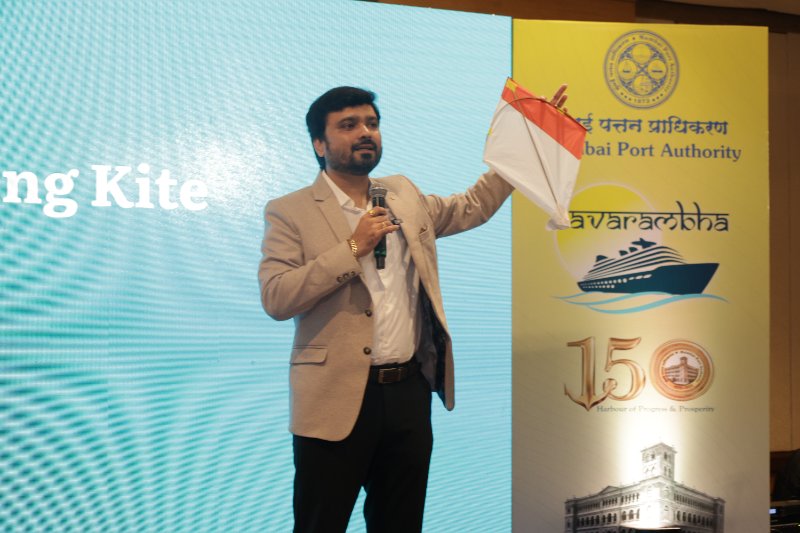
Avinash Chate is an entrepreneur and corporate trainer who runs ABC Trainings and The Future Corporate & Business Coaching, a TEDx speaker and published author. Over the last decade he has trained teams at 1,000-plus organisations and 15,000-plus professionals.
He teaches these skills not from a manual, but because he practises them himself — leading a 100-plus member team of his own. That is the difference working leaders feel in the room.
Mentoring Skills Training — FAQ
What is Mentoring Skills Training?
It is a practical development programme that equips your experienced people to actually develop others — not just to give advice. It builds the specific skills mentoring requires: understanding what mentoring truly is (and how it differs from coaching, advising and sponsoring), building a trusting mentoring relationship, listening and asking instead of only telling, drawing out and transferring tacit judgement, giving developmental feedback, and running a mentoring relationship or programme that lasts. Unlike generic theory, it is built around the real mentoring conversations your seniors face, practised in the room until they feel natural.
Who should attend this training?
Your most experienced and hardest-to-replace people — senior engineers and technical experts, plant and shop-floor veterans, long-tenured managers, and subject-matter specialists whose judgement you cannot afford to lose. It is at its most powerful run as a cohort, so a group of mentors learns together and forms a peer group, and it is especially valuable ahead of retirements, during a succession push, or when you are launching or relaunching a formal mentoring programme.
Why are our best experts often not good at developing other people?
Because being brilliant at the work and being able to grow that ability in someone else are two different skills. A true expert has forgotten how much they know — their judgement has become so automatic they cannot easily explain it, so they default to doing it themselves or handing over the answer. Neither develops anyone. Mentoring is a discrete, learnable set of skills — surfacing tacit knowledge, asking rather than telling, building trust, giving developmental feedback — and almost no one is ever taught them. It is a skills gap, not a character flaw, and this programme closes it.
How is this different from coaching?
They overlap, and the programme uses coaching skills — listening, questioning, feedback — but the purpose differs. Coaching is usually about drawing out someone's own answers to a present challenge; mentoring adds the deliberate transfer of a more experienced person's hard-won judgement, know-how and perspective, often over a longer relationship. A good mentor knows when to coach with a question and when to share their own experience, and this programme teaches both — and when each is right.
What does the programme cover?
Seven connected modules: what mentoring really is (and is not); building the relationship and the trust it runs on; listening and asking instead of telling; transferring judgement and tacit knowledge; giving developmental feedback; structuring an effective mentoring programme; and extensive practice on real mentoring conversations. Every module pairs a short, usable model with practice on situations drawn from your own organisation.
Can it help us capture knowledge before senior people retire?
Yes — that is one of its most valuable uses. A dedicated module focuses on surfacing tacit judgement and pattern recognition, thinking aloud so a mentee can watch the reasoning, and deliberately capturing critical know-how before a retirement or a move. Run ahead of a wave of departures, it turns a looming loss of capability into a structured, deliberate transfer, so the expertise stays in the team when the person leaves.
How is the training delivered — and how long does it take?
It is highly interactive — real mentoring conversations and cases, with minimal lecture. The duration is flexible: the same programme runs as a half-day, a full day, a multi-day intensive for a mentor cohort, or a series of shorter modules spaced across the life of a mentoring programme, and it works well as an ongoing rhythm refreshed for each new group of mentors. We shape the exact length and cadence with you. For 20 to 40 participants, sessions are organised into small batches so everyone practises.
Is the programme customised to our organisation?
Yes. Before the first session, the examples and practice scenarios are built around your context — your industry, the kind of tacit knowledge your experts hold, and the real situations your mentors and mentees face, from the plant floor to the project room. Generic mentoring training is exactly what fails; the value is in practising the actual conversations your seniors will have with your juniors next week.
Can it be delivered on-site, and in which languages?
Yes. Most engagements are across Maharashtra — Pune, Mumbai, Chhatrapati Sambhajinagar, Nashik, Nagpur and the surrounding MIDC industrial belts — and the programme is equally delivered pan-India and internationally on request. Delivery is available in English, Hindi and Marathi, or a natural mix, which matters especially when the experts being developed as mentors have come up from the shop floor.
Why Avinash Chate for this programme?
Avinash Chate is an entrepreneur and corporate trainer who runs a 100-plus member organisation and develops his own people through mentoring — so he teaches the craft from lived experience, not theory. He is a TEDx speaker and author of The Winning Edge, creator of the KITE leadership framework, and has trained teams at 1,000-plus organisations and more than 15,000 professionals across sectors. That combination of real operating experience — actually growing capability in his own business — and his own frameworks is what working experts respond to when they learn to become mentors.
Related Training Topics
Turn your experts into mentors who multiply themselves
Give your most experienced people the skills no one taught them — building trust, asking instead of telling, transferring hard-won judgement and giving developmental feedback — so their knowledge stays and compounds instead of walking out the door. On-site across Maharashtra, pan-India and internationally, in English, Hindi or Marathi.
Request a Proposal →