Channel Partner Management Training
Your biggest growth engine is run by people who don't work for you — and carry your competitor too.
Look closely at where your revenue actually comes from and an uncomfortable fact surfaces: a huge share of it flows through people who are not on your payroll. Distributors who stock you. Dealers who close in your name. Resellers and channel partners whose showrooms and vans and relationships are the last mile between your product and the customer. They are your growth — and most companies treat them like an inbox to push targets into, or a margin line to grind down at every review. So the partner does the rational thing back: keeps you at arm's length, gives your competitor the same shelf, and stays loyal only until a better scheme lands. This programme is about the other way to run a channel — where the partner relationship is managed as a long-term asset, and loyalty is earned rather than assumed.
★ 5.0 client rating · Across Maharashtra, pan-India & internationally · English, Hindi & Marathi
The Growth You Don't Own — and Barely Manage
Here is how the channel usually gets treated inside a company. The partner is a name in a target sheet. Head office notices them at exactly two moments: when the primary sale needs to be booked, and when the quarter needs to be closed. In between there is silence, or there is pressure — a fresh scheme, a stock-up push, a "why is your number soft" call. The relationship has one temperature, and it is transactional. The distributor learns quickly that you show up when you need something and vanish when they do.
And the cost of that arrangement hides in plain sight. A partner treated as a vendor to squeeze has no reason to fight for you. They carry three brands on the same shelf and give the best position to whoever paid the most attention this month. Your field team burns its energy chasing collections and dumping stock instead of building the partner's business. When a rival walks in with a slightly sweeter margin, the partner switches without a second thought — because there was never anything there to switch away from. You did not lose a customer. You lost a channel you never actually built.
Why the Channel Stays Shallow — and How That Changes
The root of it is a category error most companies never notice they are making. They treat the partner as either a customer to sell to or a vendor to negotiate down — two roles that both point the relationship in the wrong direction. A partner you sell to is someone you extract an order from. A vendor you squeeze is someone you win margin off. Neither of those is a partnership; both are one-way. And a channel run entirely on one-way pressure will always be thin, because you are asking for loyalty while giving a partner every reason to keep their options open.
The companies that dominate the channel do something different, and it is learnable. They manage the partner relationship as a mutual, long-term asset — they understand the partner's economics, plan the business jointly, invest in making the partner better at selling, and design the deal so both sides genuinely profit. That is not softness; it is the harder, more durable route to a channel that chooses you. None of it is instinctive, and almost no channel team is ever taught it. This programme teaches it — the specific, practical skill of turning a transactional channel into a partnered one.
Does This Sound Familiar?
If your channel is underperforming, it is rarely because you picked bad partners. It is usually because the relationship was managed as a transaction rather than built as a partnership. Here is what that looks like on the ground, what it is quietly costing you, and exactly which part of the programme addresses it.
| The symptom you see | What it is costing you | The real cause | How the programme fixes it |
|---|---|---|---|
| Your partners carry competitors just as happily as they carry you | You are one of three brands on the shelf, winning none of the partner's real push | Nothing about the relationship makes you worth prioritising over the next brand | The shift from transacting to partnering — becoming the brand they choose |
| Partner loyalty evaporates the moment a rival offers a better scheme | Churn, constant re-recruiting, and a channel you can never quite rely on | The relationship was built on margin alone, so it competes on margin alone | Joint business planning and mutual goals that make you hard to leave |
| Your field team spends its time chasing stock and collections, not building the partner | Partners stay small, dependent and passive; growth stalls where the last mile begins | No one taught the team to grow a partner's business rather than just service it | Enabling partners to sell you — tools, training and motivation |
| You keep signing partners who look good and underdeliver | Wasted onboarding, dead territories, and capital tied up in the wrong hands | Partners are selected on gut and availability, not on fit and real capability | Recruiting and selecting the right partners on the right criteria |
| Price wars, territory clashes and online leakage keep poisoning the channel | Partners undercut each other, trust erodes, and your best ones feel cheated | Channel conflict is left to fester because no one is equipped to manage it | Managing channel conflict and difficult partners head-on |
What Changes When You Manage the Channel as a Partnership
Picture a channel where your partners actively choose you. Where the distributor gives your line the best position because your team is the one that helped grow their business, not just chase their payment. Where a rival's sweeter margin no longer works, because the partner has a joint plan with you, a genuine stake in your success, and a reason to stay that a competitor cannot quickly buy. Where your field managers walk into a partner's office as a trusted advisor on how to sell more — and leave with commitment, not just an order.
And underneath it, the shift that changes the economics: the channel stops being a cost you push against and becomes an asset that compounds. Loyal partners cost less to keep, sell more of your range, defend your shelf, and grow year on year. You stop endlessly re-recruiting a leaky channel and start deepening one that gets stronger — the difference between renting distribution and owning a partnership nobody can easily take from you.
What Your Channel Team Will Be Able to Do
- ✓ Make the shift from transacting with partners to genuinely partnering with them
- ✓ Read a partner's business and economics — and use that to grow both sides
- ✓ Recruit and select partners on real fit and capability, not gut and availability
- ✓ Enable partners to sell more of you, through the right training, tools and motivation
- ✓ Run joint business planning that ties the partner's growth to yours
- ✓ Manage channel conflict, price wars and difficult partners without losing the relationship
- ✓ Build partner loyalty deep enough that a better margin elsewhere no longer wins
What the Programme Covers
Seven connected modules that take a channel team from pushing targets at partners to building partnerships that grow. Every module pairs a short, practical input with real work on your own channel — your partners, your economics, your conflicts — and ends with a concrete change in how the relationship is managed.
These are building blocks, not a fixed-length course. A two-hour session goes deep on the two or three that matter most to you; a half or full day covers more; a multi-day intensive — or an ongoing monthly, quarterly or half-yearly rhythm — works through them all, with far more practice. We shape which ones, in what order and how deep, with you.
From Transacting to Partnering — Rethinking the Channel
What we cover: Why treating a partner as a customer to sell to or a vendor to squeeze quietly caps your growth. The difference between renting distribution and building a channel that chooses you. What a partner actually wants from a principal beyond price — attention, predictability, growth and respect. Seeing the partner relationship as a long-term asset to be developed rather than a monthly number to be extracted.
What changes: The team stops managing partners as accounts to pressure and starts building them as partners to grow — the mindset the whole programme rests on.
Inside the Partner's Business — Economics and Motivation
What we cover: How a distributor or dealer actually makes money — margins, rotation, return on investment, working capital and the real cost of carrying your stock. Why a partner's incentives are often different from yours, and how to align them. Reading the partner's own P&L pressures, their other brands, and where you sit in their priorities. Learning to argue your case in the partner's numbers, not just your own.
What changes: The team can see the channel through the partner's eyes and the partner's economics — the foundation for every conversation that follows.
Recruiting and Selecting the Right Partners
What we cover: Why the wrong partner is more expensive than an empty territory. Defining the profile of a partner who can actually grow your business — reach, financial strength, market credibility, hunger and cultural fit. Sourcing and evaluating candidates beyond who is simply available. Structuring the appointment and onboarding so a new partner starts productive instead of confused. Knowing when not to sign.
What changes: The team builds the channel on partners who fit and can deliver, instead of filling territories with names that disappoint.
Enabling Partners to Sell You — Training, Tools and Motivation
What we cover: Why a partner who does not know how to sell your product simply sells someone else's. Equipping the partner's own people with product knowledge, selling skills and confidence. The tools, schemes and support that actually move a partner's effort versus the ones that just cost you margin. Motivating a partner and their team without buying loyalty you cannot sustain. Turning your field visits from stock-and-collect into genuine business development.
What changes: Partners become genuinely better at selling you — so your share of their shelf, their effort and their customer grows.
Joint Business Planning and Mutual Goals
What we cover: Moving from pushing your target onto the partner to building a plan the partner owns with you. Setting shared growth goals, agreeing who does what, and reviewing against it like partners rather than adversaries. The "what's in it for we" conversation — designing the deal so both sides genuinely win. Structured business reviews that build the relationship instead of turning into a monthly interrogation.
What changes: The partner has a real stake in a plan you built together — which is exactly what makes a competitor's better margin stop working.
Managing Channel Conflict and Difficult Partners
What we cover: The predictable flashpoints — territory overlap, price undercutting, online-versus-offline leakage, and partners who feel someone else got a better deal. Managing conflict early and fairly before it poisons trust. Handling the underperforming partner, the entitled large partner, and the one who has quietly stopped growing. Having the hard conversation — including exit — with firmness and respect intact.
What changes: Conflict gets managed rather than avoided, so the channel stays healthy and your best partners never feel cheated.
Practice — Build a Real Partner Growth Plan
What we cover: A working session where each participant builds a concrete growth plan for a real partner from their own territory — reading that partner's economics, defining shared goals, designing the enablement and the mutual win, and pre-empting the likely conflicts. Peer challenge on the plan, plus role plays on the toughest live conversations: the price-war partner, the loyalty pitch, the joint-plan negotiation.
What changes: The team leaves with a real, usable partner growth plan in hand and the hardest conversations already rehearsed — not a set of notes to forget.
How It Is Delivered
This is not a lecture on channel theory. It is a working programme built on your own channel — your partners, their economics, your real conflicts and your actual growth ambitions. Participants spend most of the time applying: reading a partner's numbers, negotiating a joint plan, working through a live channel conflict, and building an actual growth plan for a real partner they manage. The frameworks are kept sharp and practical; the value is in doing the work on situations from your own market.
The format flexes to your needs. It runs as a focused half-day, a full-day workshop, a multi-day intensive for a channel-sales cohort, or a modular series spread across a quarter so each skill lands and gets used between sessions — and it works well as an ongoing rhythm tied to your review and planning cycles. For a full field force it is organised into small batches so every person practises on their own partners, not just listens. The exact depth, duration and cadence are shaped with you in the design call.
Formats That Fit Your Calendar
Half-day or full-day workshop
A high-impact session to reset how a channel team manages partners — ideal before a planning cycle or a distributor conference.
Multi-day intensive
Two or more days to go deep across the full partner lifecycle — perfect for a regional channel-sales cohort or a new distributor-management team.
Modular series across a quarter
Shorter sessions spaced across the review cycle, so each skill is applied on real partners between sessions and reinforced with results.
An ongoing channel-capability rhythm
Run it in step with your business-review and joint-planning cadence, making partner development a permanent part of how the channel is run.
The Thinking Behind It
This programme is not a generic sales deck bent towards distributors. It draws on the best writing and research on channels, partnering and hidden-champion strategy — distilled into a few models a channel team can use immediately — and then goes further, into the frameworks Avinash uses to build partner relationships inside his own 100-plus member organisation.
Ideas & books we draw on
- The Channel Advantage — Lawrence G. Friedman & Timothy R. Furey · the foundational text on designing and managing channels for growth rather than mere coverage
- Partnering with the Frenemy — Sandy Jap · the honest playbook for partners who cooperate and compete at once — exactly the channel's reality
- Vested — Kate Vitasek · the "what's-in-it-for-we" model for deals where both sides win instead of one squeezing the other
- Hidden Champions of the Twenty-First Century — Hermann Simon · how quiet market leaders build deep, durable partner and distribution relationships that outlast rivals
- The Challenger Customer — Brent Adamson, Matthew Dixon, Pat Spenner & Nick Toman · mobilising the partner-side stakeholders who actually decide whether you win the shelf
- Getting Naked — Patrick Lencioni · the vulnerability-based trust that turns a supplier into a partner a channel refuses to leave
Models we use to manage channel partners
- The Vested "what's-in-it-for-we" model · structuring the relationship so both principal and partner genuinely profit
- Partner segmentation and tiering · investing your attention where the partner's potential and fit actually justify it
- Joint business planning (JBP) · a plan the partner owns with you, not a target pushed onto them
- Channel-conflict management · naming and resolving territory, price and online conflicts before they erode trust
- The partner lifecycle · recruit, onboard, enable, grow — managing a partner deliberately at every stage
And Avinash's own frameworks — the part you won't find anywhere else
Beyond the established thinking, the programme is built on frameworks Avinash has created and written about himself — including his KITE leadership framework and the principles in his book The Winning Edge. These come from actually running a 100-plus member organisation and developing its people year after year, not from a textbook. It is the layer competitors cannot copy, and the one your channel teams remember long after the session ends.
Who It Is For
Anyone who owns the relationship with distributors, dealers, resellers or channel partners — channel and distribution sales managers, area and regional sales managers, key-account managers on the trade side, and the field officers who sit in front of partners every week. It is equally relevant to the sales leaders who design channel strategy and schemes, and to teams launching into a new region or partner network. Run as a cohort, it gives a whole field force a shared language for partnering — which is what makes the change stick across a territory rather than in one enthusiastic manager.
Taught by Someone Who Builds Partnerships, Not Just Teaches Them
Avinash Chate does not teach the channel from a slide deck. He runs a 100-plus member organisation and builds his own network of partners and collaborators — so the partnering, joint planning and difficult-conversation skills taught here are the real thing, tested in his own business rather than borrowed from a textbook. Programmes that build sales and channel capability have been delivered across sectors — manufacturing, FMCG-style distribution, industrial and B2B trade, IT and services — to teams whose growth, like most companies', runs straight through partners they do not employ.
Why Avinash Chate
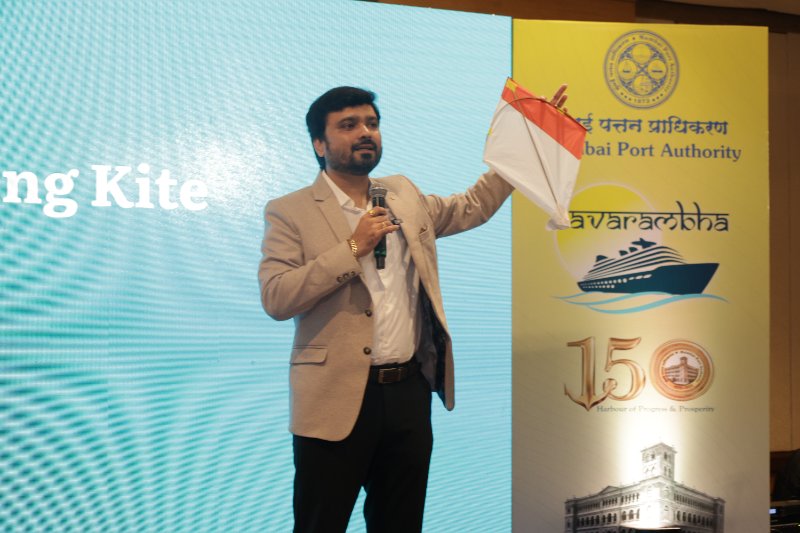
Avinash Chate is an entrepreneur and corporate trainer who runs ABC Trainings and The Future Corporate & Business Coaching, a TEDx speaker and published author. Over the last decade he has trained teams at 1,000-plus organisations and 15,000-plus professionals.
He teaches these skills not from a manual, but because he practises them himself — leading a 100-plus member team of his own. That is the difference working leaders feel in the room.
Channel Partner Management Training — FAQ
What is Channel Partner Management Training?
It is a practical programme for the people who manage a company's distributors, dealers, resellers and channel partners. It builds the specific skills that turn a transactional channel into a partnered one — understanding a partner's business and economics, recruiting and selecting the right partners, enabling them to sell you, running joint business planning, and managing channel conflict and difficult partners. Unlike generic sales training, it is built entirely around the real dynamics of managing growth that runs through people who do not work for you.
Who should attend this training?
Channel and distribution sales managers, area and regional sales managers, trade key-account managers, and the field officers who meet partners every week — plus the sales leaders who design channel strategy and schemes. It is at its most powerful run as a cohort, so an entire field force builds a shared way of partnering rather than one manager doing it well in isolation. It also suits teams entering a new region or standing up a new partner network.
We already have a sales team — why do we need channel-specific training?
Because selling to a customer and building a channel partner are different jobs. A customer buys and uses your product; a partner resells it, carries your competitors, and has their own economics, incentives and pressures. Managing a partner means reading their P&L, planning their growth jointly, enabling their people to sell you, and handling channel conflict — none of which a standard sales course teaches. This programme fills exactly that gap: the skill of managing growth you do not directly own.
Why do partners stay loyal only until a better margin comes along?
Because if the relationship was built on margin alone, it will always compete on margin alone. When a partner is treated as a vendor to squeeze, the only thing holding them is the number — so a rival with a better number simply takes them. The companies that keep partners build something margin cannot easily buy: a joint plan the partner owns, real help growing their business, mutual profit, and trust. This programme teaches how to build that depth, so a sweeter scheme elsewhere stops being enough to move your partner.
What does the programme cover?
Seven connected modules: the shift from transacting to partnering; understanding the partner's business and economics; recruiting and selecting the right partners; enabling partners to sell you through training, tools and motivation; joint business planning and mutual goals; managing channel conflict and difficult partners; and a practice module where each participant builds a real growth plan for a partner they manage. Every module pairs a usable model with work on your own channel.
How is the training delivered — and how long does it take?
It is highly applied — reading real partner economics, negotiating joint plans, working live conflicts, and building actual partner growth plans, with minimal lecture. The duration is flexible: the same programme runs as a half-day, a full day, a multi-day intensive for a channel cohort, or a modular series spread across a quarter so skills get used between sessions, and it works well as an ongoing rhythm tied to your review cycle. We shape the exact length and cadence with you, and organise a full field force into small batches so everyone practises.
Can the programme be built around our own channel and partners?
Yes — and it should be. Before the first session, the cases, economics and role-play scenarios are built around your context: your product, your partner types, your margins and schemes, and the real conflicts your team faces. Participants work on their own live partners, not hypothetical ones. Generic channel training is exactly what fails; the value is in applying the skills to the actual partners and decisions your people are managing right now.
Can it be delivered on-site, and in which languages?
Yes. Most engagements are across Maharashtra — Pune, Mumbai, Chhatrapati Sambhajinagar, Nashik, Nagpur and the surrounding MIDC industrial and distribution belts — and the programme is equally delivered pan-India and internationally on request. Delivery is available in English, Hindi and Marathi, or a natural mix, which matters especially for field teams and partners working in regional markets.
What outcomes can we expect?
Channel teams that grow partners instead of merely servicing them, partners that give your line real priority rather than equal shelf with rivals, and loyalty that holds when a competitor waves a better margin. Fewer dead territories and less constant re-recruiting, because partners are selected on fit and developed deliberately. Over time, a channel that compounds — deeper relationships, higher share of each partner's business, and growth you can actually rely on rather than chase.
Why Avinash Chate for this programme?
Avinash Chate is an entrepreneur and corporate trainer who runs a 100-plus member organisation and builds his own partner relationships — so he teaches channel partnering from lived experience, not theory. He is a TEDx speaker and author of The Winning Edge, creator of the KITE leadership framework, and has trained teams at 1,000-plus organisations including RBI, JSW Steel, BARC, the Indian Army and Ferrero, having worked with more than 15,000 professionals. That mix of real operating experience and his own frameworks is what channel and sales teams respond to.
Related Training Topics
Turn your distributors and dealers into partners who choose you
Give your channel team the skill to build partnerships that grow — partner economics, joint planning, enablement and channel-conflict management — so loyalty holds and the channel compounds. On-site across Maharashtra, pan-India and internationally, in English, Hindi or Marathi.
Request a Proposal →