Master Your Triggers, Master Your Environment
Your environment shapes your behaviour more than willpower does. Here is how to map your triggers, anticipate them and master your responses as a leader.
I have spent more than two decades in corporate training rooms across Maharashtra, and the question that comes up in almost every session is some version of this: "Avinash sir, I know exactly what I should do — so why do I keep doing the wrong thing?" The honest answer is uncomfortable: it is rarely a knowledge gap. It is almost always a trigger gap. Your environment is constantly generating stimuli that pull your behaviour in directions your best intentions never planned for. I explore this idea in depth in my book The Winning Edge, The Champion Mindset, and it is one of the most liberating concepts I share in my workshops — because once you understand triggers, you stop blaming yourself and start redesigning your world.
Management thinker Marshall Goldsmith, whose work I deeply respect, wrote an entire book called Triggers built on a single uncomfortable observation: good people, people with strong values and genuine intentions, repeatedly fail at one bad behaviour — not because they lack character, but because the environment around them manufactures the conditions for that failure. The cue fires, the routine kicks in and the reward follows — whether we like it or not. Charles Duhigg mapped this as the habit loop: cue, routine, reward. Together, these two frameworks changed how I coach leaders.
In this article I want to walk you through the real stories, the framework and the practical steps I use with leadership teams across Pune, Mumbai and all of India. By the end, you will have a clear map of your own trigger landscape — and a plan to master it.
What Is a Trigger, Really?
A trigger is any stimulus — a person, a place, a time of day, a word, a smell, a tone of voice — that causes a behavioural response. Notice I said causes, not influences. That is how powerful triggers are. We like to believe we are rational actors who choose our responses. We are not. We are pattern-matching machines running largely on autopilot, and our environment is a trigger-generating machine running 24 hours a day.
Goldsmith puts it plainly: our mission in life should be to make a positive difference, not to prove how smart or right we are. Yet under the grip of a trigger, we abandon that mission and do exactly the opposite — we fight to be right, we snap, we withdraw, we play politics. The trigger hijacks the agenda.
"We are superior planners and inferior doers — not because we lack willpower, but because we underestimate the power of the environment to pull us off course."
— From The Winning Edge, The Champion Mindset
The Bhandardara Story: When Good People Fight
Let me tell you about an experience that crystallised this idea for me more vividly than any textbook ever could.
I once participated in a three-week wellness camp at Bhandardara — a beautiful retreat in the Sahyadri hills, designed to reset the mind and body. The participants were calm, reflective, spiritually inclined people. Nobody there was a hothead. And yet, by the second week, the same group of calm people had gotten into heated arguments — not once, not twice, but five times — all over one thing: the queue at the provision store.
Why? Because the storekeeper was unreliable. Supplies arrived at odd hours. Scarcity crept in. Bodies were tired from the programme schedule. The combination of an unpredictable external resource, physical fatigue and the primal human fear of missing out created the perfect trigger cocktail. People who meditated every morning were snapping at each other by afternoon. The trigger was not their character. The trigger was the environment.
This is the lesson I carry into every boardroom: do not judge a person's character solely by a moment of poor behaviour. Study the environment that produced that moment.
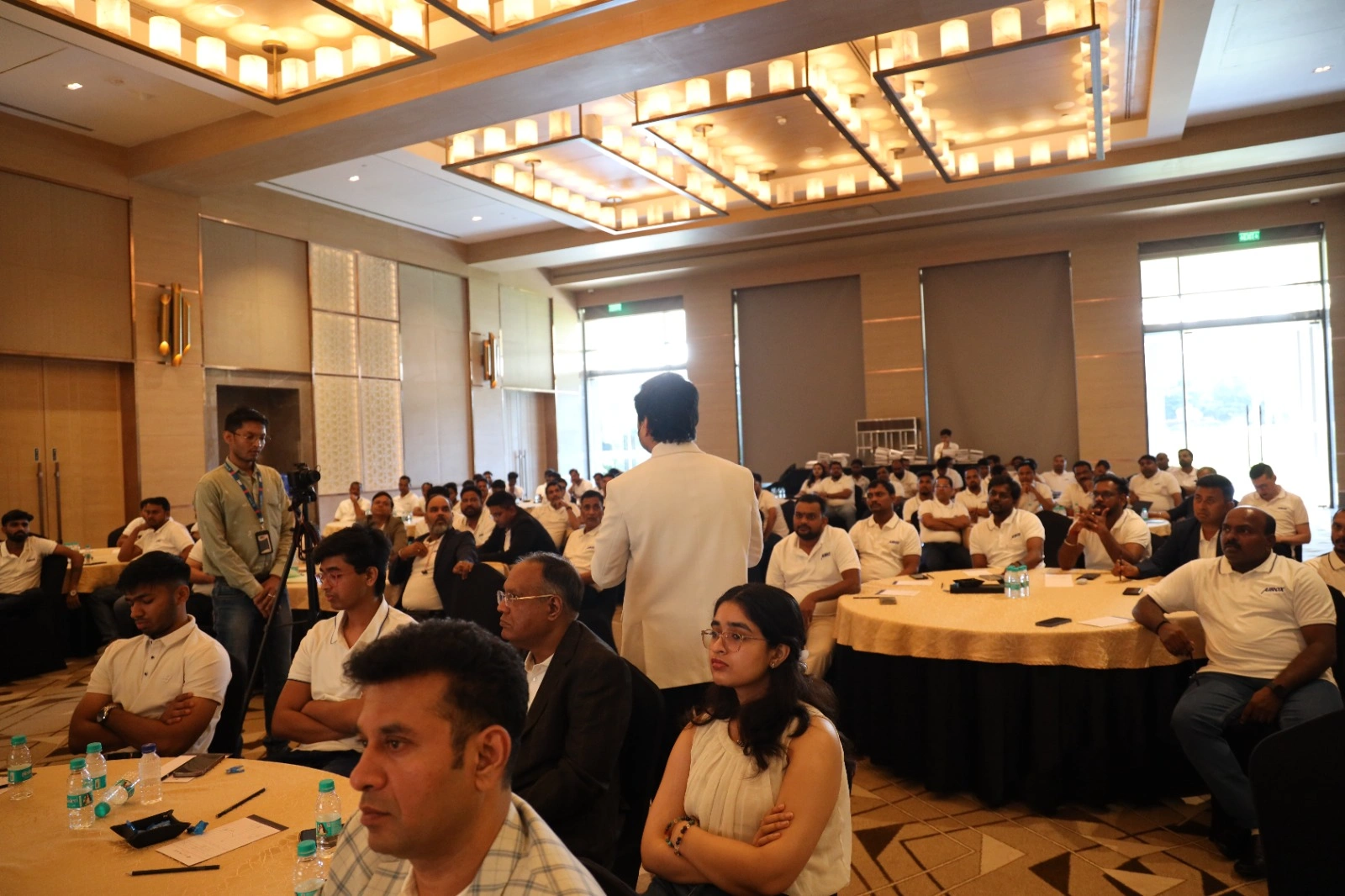
A training session where participants map their personal trigger landscapes — one of the most powerful exercises in my workshops.Real People, Real Triggers: Two Portraits from the Workplace
Over my years of coaching, two case studies stay with me as perfect illustrations of how triggers operate in professional settings.
Kavita: The Warm Leader Who Became a Rage Machine in Meetings
Kavita was a coordinator at a playschool in Bangalore. Outside of formal meetings she was genuinely warm — empathetic with parents, patient with children, encouraging with her small team. But the moment anyone disagreed with her in a structured meeting, something shifted. She would escalate quickly, her voice would rise and the room would go cold. Her team had high attrition. Good people kept leaving. She was puzzled and hurt by this.
When we mapped her triggers together, the pattern became obvious. Meetings were her trigger environment. The formal structure activated a deep fear of being seen as incompetent. Any pushback, even a mild question, fired a threat response. Her routine was defensiveness that looked like aggression. The reward was the momentary feeling of control. She was not a difficult person — she was a person with an unmanaged trigger that her environment reliably detonated.
Rakesh: The Insecurity That Wore a Mask of Superiority
Rakesh had a diploma in interior design, working in a firm surrounded by degree-holding architects. On paper, his work was good. In rooms with architects, he became a different person — dismissive, name-dropping, quick to belittle others' ideas. His colleagues found him insufferable. His managers were frustrated.
The trigger here was the credential gap. Every interaction with an architect activated Rakesh's insecurity about his educational background. His routine was to act superior as a defence mechanism. The reward was a temporary suppression of the insecurity. Again: not a bad person — an unmanaged trigger producing bad behaviour consistently.
"Triggers do not reveal who you are at your worst. They reveal what your environment has been allowed to do to you without your awareness."
— From The Winning Edge, The Champion Mindset
The Habit Loop and Why Willpower Is Overrated
Charles Duhigg's habit loop — cue, routine, reward — is the mechanical explanation for why triggers are so powerful. Once a cue fires enough times and the reward is pleasurable enough (even a reward as intangible as "feeling in control"), the routine becomes automatic. Willpower does not get a vote.
I know this from personal experience. I had planned to read for thirty minutes every night before bed. It was a good plan. It was a smart plan. The problem? My bedroom television was right there. And the news was on. The moment I sat down, the visual cue of the screen triggered a decade-old routine of switching it on. My reading plan evaporated night after night. I was not lazy. I was simply outgunned by a trigger I had not redesigned my environment to remove.
- Cue: the television in my eyeline as I sat down
- Routine: switch it on, start watching
- Reward: the familiar comfort of the news anchor's voice, the sense of being informed
The solution was not stronger willpower. The solution was to move the television out of the bedroom — or at minimum, to put my book on top of the remote. Change the environment; change the behaviour.
The Goldsmith Exercise: Mapping Your Trigger Landscape
Marshall Goldsmith offers a structured exercise that I have adapted for my corporate training programmes. Here is how I walk teams through it:
Step 1: Name Three Behavioural Goals
Pick three specific behaviours you genuinely want to improve. Not vague aspirations like "be more positive" — concrete behaviours like "listen without interrupting," "give feedback without defensiveness," or "stay calm when my team misses a deadline."
Step 2: Map Where You Succeed and Where You Fail
For each goal, list the specific people and situations where you consistently manage the behaviour well — and the specific people and situations where you consistently fail. Be ruthlessly honest. The patterns will surprise you.
Step 3: Chart Your Triggers
Goldsmith's framework plots triggers on two axes:
- Encouraging vs Discouraging: Does this trigger help you move toward your goal or away from it?
- Productive vs Counterproductive: Does responding to this trigger create value, or does it waste time and damage relationships?
A trigger that is both discouraging and counterproductive is your highest-priority target. That is the trigger costing you the most — in relationships, in reputation, in results.
Step 4: Forecast and Plan — Anticipate, Avoid, Adjust
Once you have your trigger map, the next step is environmental forecasting. Before you walk into a high-risk situation, run three questions:
- Anticipate: What triggers am I likely to encounter in this meeting, this conversation, this environment?
- Avoid: Which of these triggers can I simply remove or sidestep? (Like moving the television out of the bedroom.)
- Adjust: For triggers I cannot avoid, what environmental adjustment can I make to weaken the trigger or insert a pause between stimulus and response?
Practical Steps to Redesign Your Trigger Environment
Understanding triggers intellectually is step one. The real work is environmental redesign. Here are the practical moves I coach leaders to make:
Audit Your High-Risk Environments
Where do you consistently behave in ways you regret? Identify the physical and social environments — the weekly review meeting, the one-on-one with a specific colleague, the drive home in traffic — and treat them as design problems, not character flaws.
Insert Structural Pauses
A trigger operates fastest when there is no gap between stimulus and response. The simplest intervention is a structural pause: a glass of water before you reply, a breath count before you speak in a meeting, an agreed twenty-four-hour rule before sending an emotionally charged email. The pause breaks the automaticity of the loop.
Change the Physical Environment Where Possible
Kavita and I worked on a specific change: she restructured her team meetings to start with each person sharing one win before any agenda item was discussed. This shifted the emotional register of the room before the trigger-rich debate portion began. Small structural shift, significant behavioural result.
Use Daily Active Questions
Goldsmith recommends ending each day with a set of active questions — not "Did I do my best?" (passive) but "Did I do my best to listen without interrupting today?" (active). This daily self-assessment keeps trigger awareness alive rather than letting it fade after a workshop high.
Build Accountability into Your Plan
Carolyn Spring reminds us that awareness without action is just sophisticated self-deception. Pairing your trigger-management plan with an accountability partner — a coach, a trusted peer, a mentor — dramatically increases follow-through. Nanette Mathews similarly notes that we manage what we measure; your behavioural goals are no different from a sales target. Track them.
"Our mission is to make a positive difference — not to prove how smart or right we are."
— Peter Drucker
What This Means for Leaders and Teams
If you lead a team, your triggers do not just affect you — they set the emotional climate for everyone around you. A leader who is triggered into defensiveness creates a team that stops sharing bad news. A leader triggered into public criticism creates a team that stops taking risks. A leader triggered into micromanagement creates a team that stops thinking independently.
As Peter Drucker observed, our mission is to make a positive difference — not to prove how smart or right we are. But under the grip of a trigger, most leaders default to proving rather than improving. The highest-leverage leadership development work I do is not teaching strategy or communication frameworks — it is helping leaders identify and redesign the environmental triggers that silently undermine their best intentions every single day.
When organisations invest in this kind of behavioural awareness training, the results show up where it matters: in reduced attrition, better cross-functional collaboration, healthier feedback cultures and, ultimately, stronger business outcomes. The environment is always working on your people. The question is whether you are working on the environment.
Bring this to your team. I run trigger mastery and behavioural change-focused corporate training and keynotes for companies across Pune, Mumbai and all of Maharashtra.
Book a session · Explore corporate training programs
Frequently Asked Questions
What is a behavioural trigger and why does it matter for professionals?
A behavioural trigger is any stimulus — a person, a place, a word, a tone or a situation — that causes an automatic behavioural response. For professionals and leaders, unmanaged triggers are among the most common causes of poor decisions, damaged relationships and stalled careers. Understanding your triggers is the first step to consistently behaving in line with your values and goals, regardless of the environment you find yourself in.
How does the environment shape our behaviour at work?
The environment is a constant trigger-generating machine. Scarcity, time pressure, certain colleagues, physical fatigue, hierarchical dynamics — all of these generate cues that activate ingrained routines. Even calm, well-intentioned people behave badly when the environment creates the right combination of triggers, as the Bhandardara camp story illustrates. Redesigning your environment — removing avoidable triggers and building structural pauses for unavoidable ones — is more effective than relying on willpower alone.
What is the Marshall Goldsmith trigger exercise and how can I use it?
Marshall Goldsmith recommends a four-step process: (1) choose three specific behavioural goals; (2) map the people and situations where you succeed and where you fail at each goal; (3) chart your triggers as encouraging or discouraging, productive or counterproductive; and (4) forecast upcoming environments using the Anticipate, Avoid, Adjust framework. This gives you a concrete action plan rather than vague self-improvement intentions. I use an adapted version of this exercise in my corporate training workshops across India.
Can a corporate training programme really change long-standing behavioural patterns?
Yes — but only if it goes beyond awareness to environmental redesign and sustained accountability. A single workshop can create insight; lasting change requires follow-through structures such as daily active questions, accountability partnerships and periodic coaching. My programmes are designed with this in mind: participants leave not just with knowledge of their triggers but with a personalised environmental redesign plan and tools to track their progress over the following weeks.
If this resonates with you, I would love to bring this conversation into your organisation. Reach out via the contact page, explore my corporate training programmes, or learn more about my approach on the behavioural training page. The environment around your team is already shaping their behaviour every day — let us make sure it is shaping them toward their best.
This article is adapted from my book The Winning Edge, The Champion Mindset.Related Articles by Avinash Chate
- Why Manufacturing Industry is Difficult to Start in India: 5 Key Challenges
- Ajit Agarkar's 21-Ball ODI Fifty Against Zimbabwe: The Silent Performer's Career Blueprint
- Clive Lloyd's 1975 World Cup Final Leadership: How Bold Captaincy Wins Under Pressure
| AC | Avinash ChateIndia's Leading Corporate Trainer | TEDx Speaker | Author With 80+ organizations trained including RBI, JSW Steels, and Ferrero, Avinash Chate delivers high-impact corporate training across India. Creator of the KITE Leadership Framework and bestselling author of "The Winning Edge." Website YouTube |
Avinash Chate services
Corporate Trainer in Maharashtra · Top Corporate Trainers in Maharashtra · Leadership Trainer in Maharashtra · Top Leadership Trainers in Maharashtra · Team Building Trainer in Maharashtra · Top Team Building Trainers in Maharashtra · Motivational Speaker in Maharashtra · Top Motivational Speakers in Maharashtra · All service locations
← Back to all articles · Book Avinash Chate
By Avinash Chate — Maharashtra’s #1 Corporate Trainer & Motivational Speaker. .