My Biggest Event Disaster, and the Checklist That Would Have Saved It
The night my Aurangabad event fell apart taught me a lesson no training did: most failures are not ignorance, they are simple errors a one-page checklist would have caught.
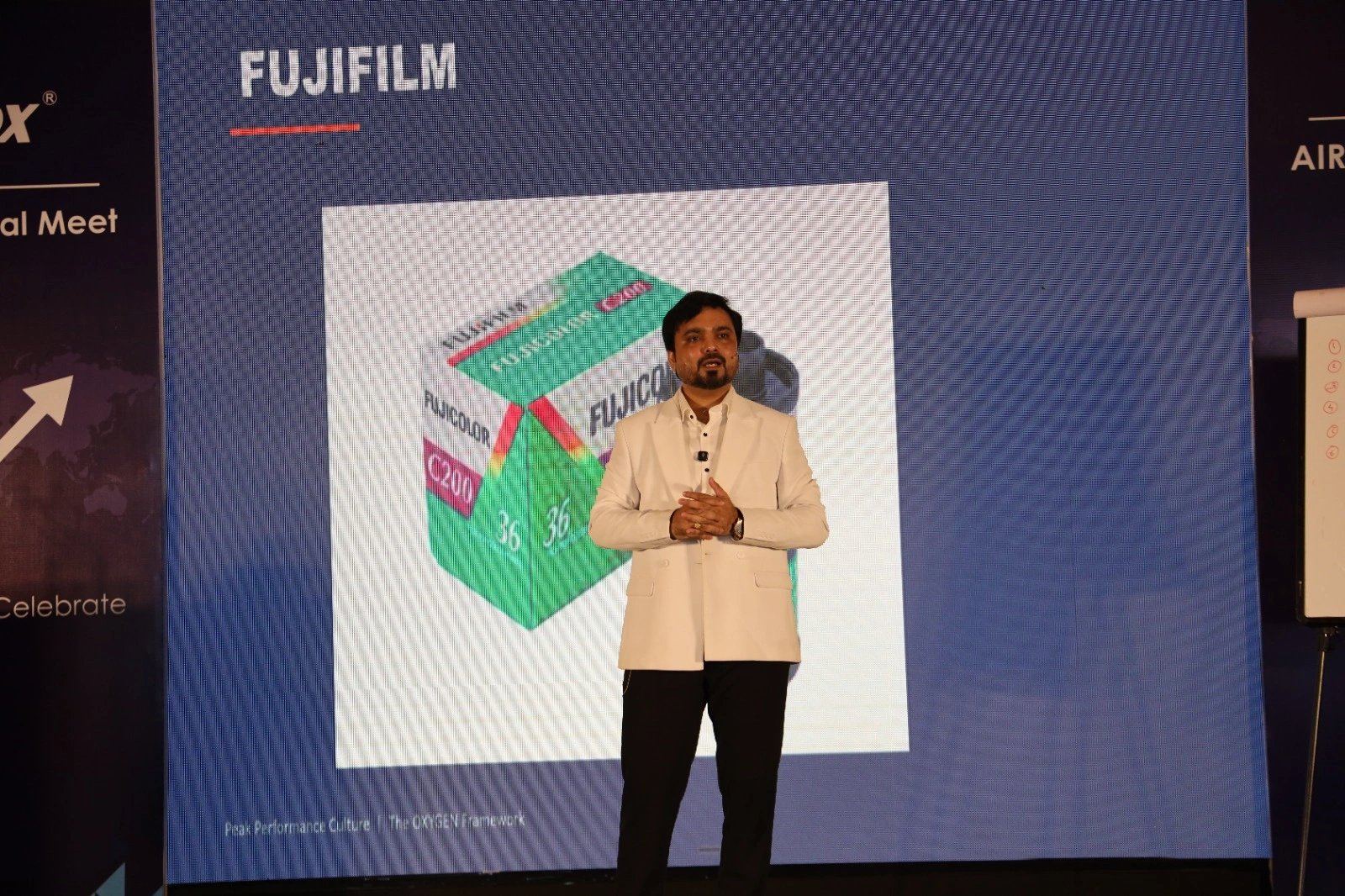
Let me take you back to an evening in 2018 that I still replay in my mind. I was managing a felicitation event in Aurangabad, the kind of programme where one mistake is visible to every single person in the hall. By the end of that night, I had learned a lesson that no leadership course had ever taught me, and I wrote about it in my book The Winning Edge, The Champion Mindset.
The lesson was humbling. The disaster did not happen because I lacked knowledge or experience. It happened because, in the heat of the moment, I failed to apply what I already knew. That single distinction has shaped the way I run corporate training and keynotes today.
This article is about that night, and about the most underrated tool I now teach to entrepreneurs and event teams across Maharashtra: the humble checklist.
The Night Everything Went Wrong in Aurangabad
It was a felicitation event. Our chief guest was the Managing Director, Mr Selvan, an important man with an even more important constraint: he had to leave by 9:30 sharp to catch a flight. Every piece of communication that evening was funnelling through me. I was the central node, and that should have been my warning sign.
Then the one thing you can never fully control in India happened. A traffic jam delayed the start. The schedule that looked so neat on paper began to collapse. Minutes bled away. The window to felicitate Mr Selvan before 9:30 kept shrinking, and the chaos kept growing.
When you are the single point of failure
With everything routed through me, I was answering one fire while three others started. I was running on memory, on instinct, on adrenaline. And memory, instinct and adrenaline are exactly what fail you when the pressure is highest.
After it was over, a project manager on my team asked me a simple question that landed like a slap: "Did you use the checklist? You should have." I had not. I knew about checklists. I had used them before. But that night, when it mattered most, I trusted my head instead of a single page of paper.
The failure was not ignorance. It was ineptitude, the failure to apply what I already knew.
Why Smart, Experienced People Still Fail
This question haunted me, so I went looking for answers. The philosophers Gorovitz and MacIntyre offered the clearest one I have found. They argue that human failure comes in two forms. The first is genuine ignorance, where the knowledge simply does not exist yet. The second, and far more common in modern work, is ineptitude, where the knowledge exists but we fail to apply it correctly.
In a complex, multitasking, deadline-driven world, almost all of our failures are the second kind. We are not stupid. We are overloaded.
The real causes of most errors
- Memory faults: we simply forget a step under pressure.
- Distraction: one urgent problem makes us drop another.
- Multitasking: doing five things means doing none of them fully.
- Jugaad shortcuts: the quick fix that skips the step that mattered.
Every one of those was present in my Aurangabad night. None of them was about a lack of talent. This is where Daniel Kahneman's framework helped me make sense of it. He describes System 1, our fast, automatic, intuitive thinking, and System 2, our slow, deliberate, effortful thinking. Under stress we default to System 1, and System 1 cuts corners. A checklist is a way of forcing System 2 discipline onto a System 1 moment.
Teaching teams that discipline, not just talent, is what holds up under pressure.The Boeing Story That Changed How I Think
If you think a checklist is too simple a tool for serious professionals, let me tell you the story I share in every workshop on execution.
On 30 October 1935, at Wright Field in Dayton, the US Army was testing a revolutionary new aircraft, the Boeing Model 299, which would later become the famous B-17. It was the most advanced plane of its time. At the controls was one of the most experienced test pilots in the country, Major Ployer Hill. Moments after takeoff, the prototype stalled, crashed and burst into flames. Major Hill was killed.
The newspapers concluded it was "too much airplane for one man to fly." The aircraft was simply too complex. The obvious answer would have been more training for even better pilots.
The fix was not more training
But the test pilots did something far smarter. They did not demand more training. They sat down and created a simple pilot's checklist, short enough to fit on an index card, listing the critical steps for takeoff, flight and landing. The steps were not difficult. They were the things any expert pilot already knew, the very things that get forgotten in a busy cockpit.
With that index card, pilots went on to fly the Model 299 a total of 1.8 million miles without a single accident of that kind. The Army ordered around 13,000 of the planes. A piece of paper did what more training could not.
The problem had become too complex for memory alone. The checklist gave memory a backup.
This is the heart of Atul Gawande's book The Checklist Manifesto, which I recommend to every leader I train. Gawande, a surgeon, helped develop the World Health Organization's 19-point surgical safety checklist, built around three pause points. It is used in operating theatres worldwide and has saved countless lives, not by teaching surgeons new medicine, but by stopping them from skipping the basics.
The Three Things a Good Checklist Actually Does
When I rebuilt my own approach after Aurangabad, I distilled the power of the checklist into three clear benefits. These are the three lessons I now teach.
- Checklists handle complexity. When a task has too many moving parts for one mind to hold, the list holds them for you. Think of a construction project running on MS Project, Primavera and a RACI matrix, or a busy Mumbai restaurant kitchen during the dinner rush. None of them run on memory. They run on checklists.
- Checklists reduce errors. They catch the simple, silly, expensive mistakes before they reach your customer or your chief guest.
- Checklists instil discipline. They turn good intentions into a repeatable habit, every time, regardless of mood, pressure or who is on duty.
The two kinds of checklist
Not all checklists work the same way. In my training I teach two types:
- Read-Do: you read each item and then do it, like a recipe. Best for unfamiliar or rarely performed tasks.
- Do-Confirm: you do the work from memory and expertise, then pause at set points to confirm nothing was missed. Best for experienced teams who need a safety net, not a script.
The rules of a checklist that people actually use
A bad checklist is worse than none, because people stop trusting it. So I hold mine to strict rules:
- Keep it to between 5 and 9 items. The mind handles this range comfortably.
- Fit it on one page. If it needs two pages, it will not get used.
- Be precise. Vague items get ignored.
- Be practical and easy. It must help in the real world, not impress in a meeting.
When my team applied this thinking to an employee-engagement project, we built a 15-point checklist with 4 pause points. Two of those checks were the kind everyone assumes will take care of itself, and never does: uncommunicated leaves, and whether each employee had a good friend at work. Those were our critical checks, the items most likely to be skipped and most damaging when they were.
Building one-page checklists with teams, so the right steps survive the pressure of the moment.How I Would Run That Aurangabad Night Today
If I could go back to that hall in Aurangabad, I would not arrive with more confidence or a longer rehearsal. I would arrive with a single page.
A Do-Confirm checklist for a high-stakes event
- Confirm the chief guest's hard time constraint and brief everyone on it, in writing.
- Set pause points: arrival, 30 minutes before the guest's deadline, and just before felicitation.
- Name one backup decision-maker, so I am not the only node.
- Pre-plan the contingency if the start is delayed, before the delay happens.
- Keep the critical check, felicitate Mr Selvan, at the very top, not buried in the flow.
That is five or six items. One page. It would have caught the exact failure that traffic, distraction and a single point of contact created. The checklist would not have stopped the traffic jam. It would have stopped the traffic jam from becoming a disaster.
A checklist does not make you less of an expert. It makes your expertise reliable.
Bring this to your team. I run execution-and-checklist-focused corporate training and keynotes for companies across Pune, Mumbai and all of Maharashtra.
Book a session · Explore corporate training programs
Frequently Asked Questions
Why do experienced people still make simple mistakes?
Because most failures are not about ignorance but about ineptitude, failing to apply knowledge you already have. Under pressure we rely on fast, intuitive thinking, and memory faults, distraction, multitasking and Jugaad shortcuts cause simple, avoidable errors. A checklist gives your memory and attention a reliable backup.
What makes a checklist actually effective?
A good checklist has between 5 and 9 items, fits on one page, and is precise, practical and easy to use. It should focus on the critical checks that are most likely to be skipped and most costly when missed, not list every obvious step.
What is the difference between Read-Do and Do-Confirm checklists?
With a Read-Do checklist you read each item and then perform it, like a recipe, which suits unfamiliar tasks. With a Do-Confirm checklist you work from your own expertise and then pause at set points to confirm nothing was missed, which suits experienced teams who need a safety net rather than a script.
Can checklists really help corporate and event teams in India?
Yes. The same discipline that lets construction projects run on MS Project, Primavera and RACI, and keeps a busy Mumbai restaurant kitchen on track, applies directly to corporate events and operations. In my workshops I help teams build one-page checklists tailored to their highest-stakes moments.
I learned the hard way that talent and experience are not enough on the night that matters. If you want your team to execute with that kind of reliability, I would love to help, so do get in touch, explore my corporate training programs, or read more about my signature programs. This article is adapted from my book The Winning Edge, The Champion Mindset.
Related Articles by Avinash Chate
- Why Manufacturing Industry is Difficult to Start in India: 5 Key Challenges
- Ajit Agarkar's 21-Ball ODI Fifty Against Zimbabwe: The Silent Performer's Career Blueprint
- Clive Lloyd's 1975 World Cup Final Leadership: How Bold Captaincy Wins Under Pressure
| AC | Avinash ChateIndia's Leading Corporate Trainer | TEDx Speaker | Author With 80+ organizations trained including RBI, JSW Steels, and Ferrero, Avinash Chate delivers high-impact corporate training across India. Creator of the KITE Leadership Framework and bestselling author of "The Winning Edge." Website YouTube |
Avinash Chate services
Corporate Trainer in Chhatrapati Sambhajinagar (Aurangabad) · Top Corporate Trainers in Maharashtra · Leadership Trainer in Chhatrapati Sambhajinagar (Aurangabad) · Top Leadership Trainers in Maharashtra · Motivational Speaker in Chhatrapati Sambhajinagar (Aurangabad) · Top Motivational Speakers in Maharashtra · All service locations
← Back to all articles · Book Avinash Chate
By Avinash Chate — Maharashtra’s #1 Corporate Trainer & Motivational Speaker. .