Own Your Mistakes: Accountability Lessons from USA T20 World Cup 2024
In the 2024 T20 World Cup, USA's team accepted a run penalty for field obstruction and owned it without excuses. That moment holds the accountability lesson every Indian corporate leader needs in 2026.
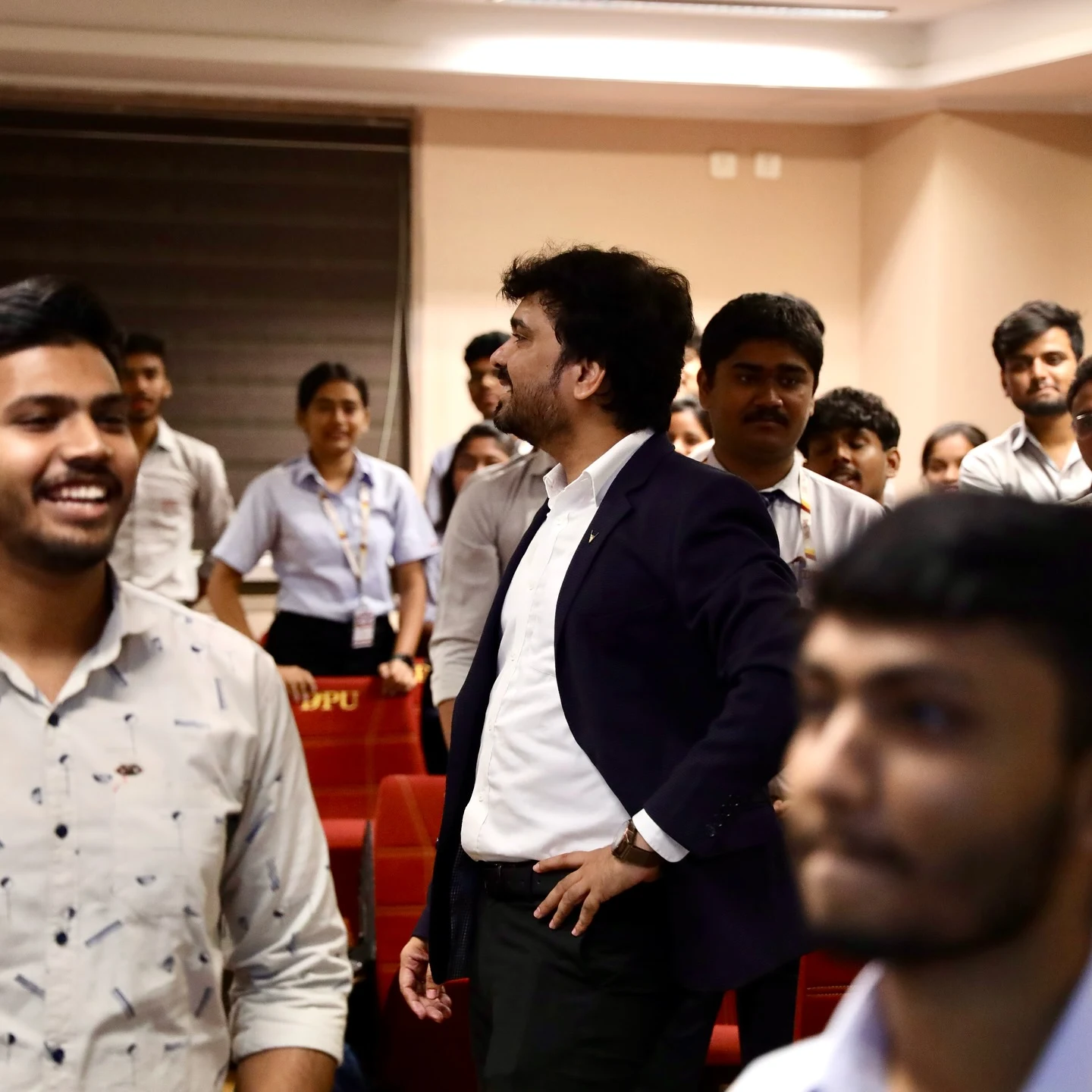
In the 2024 T20 World Cup, USA's cricket team accepted a run penalty for field obstruction — and owned it on the spot, no excuses, no blame shifting. LinkedIn India's 2026 report lists accountability as the #1 leadership skill gap in Indian organizations. After training teams at Bajaj Auto, Tata Tech, and JSW, I've seen first-hand: the single fastest way to build team trust is to own your mistakes before anyone else points them out.
TL;DR- USA's team accepted a run penalty in the 2024 T20 World Cup with zero excuses — a masterclass in real accountability
- Most Indian teams default to blame-shifting when things go wrong, which destroys trust and delays problem-solving
- Accountability isn't about punishment — it's about ownership: claiming your actions and their consequences
- Leaders who own their mistakes first give their teams permission to do the same — this single habit transforms culture
- High-accountability teams resolve issues 3x faster and retain top talent longer than low-accountability cultures
What Happened in the USA T20 World Cup 2024 Penalty — and Why It Matters
During the 2024 ICC T20 World Cup, USA's cricket team was playing an important group stage match. In one incident, a fielder intentionally obstructed a batsman's run — the umpires signaled a penalty run to the batting side. What happened next is what caught my attention: the USA team captain accepted the decision without arguing, without making excuses, without blaming the fielder publicly. They acknowledged the infraction and moved on. In the grand scale of cricket, it was a small moment. But the leadership lesson it contained is enormous. Accountability — real accountability — means accepting the consequences of your actions immediately, without waiting for someone to force the issue. Most individuals and teams wait to see if they can get away with it first. USA's team didn't. That's the difference between high-accountability and low-accountability cultures.
The Accountability Deficit: Why Indian Teams Struggle to Own Their Mistakes
I've trained over a lakh professionals across India — at Infosys, TCS, L&T, KPIT, RBI, and BARC — and the single most common leadership gap I encounter is accountability. Not the absence of competence. Not even the absence of effort. But the absence of ownership. When something goes wrong in a low-accountability team, the energy immediately goes into figuring out who to blame. The project missed its deadline because of the client. The quality failed because of the vendor. The revenue dropped because of the market. There's always an external reason. And here's the thing — sometimes those reasons are even partially true. But high-accountability leaders don't lead with the external reason. They lead with what they could have done differently. That's the distinction that separates great leaders from average ones.
Blame Culture vs Ownership Culture: The Corporate Parallel of Cricket Accountability
Let me be direct about what blame culture costs Indian organizations. When teams default to blame, three things happen simultaneously: first, trust erodes — nobody wants to work closely with someone who will throw them under the bus when things go wrong. Second, problem-solving slows dramatically — instead of immediately moving to solutions, teams spend time and energy constructing defensible narratives about why it wasn't their fault. Third, learning stops — you can't learn from a mistake you've publicly denied making. McKinsey's India research shows that teams with high blame cultures take on average 2.4 times longer to recover from setbacks than teams with ownership cultures. That's not a soft metric — that's 2.4x slower response to every crisis, every quarter, every year. The compounding effect on competitive performance is brutal.
| Behavior | Low-Accountability Team | High-Accountability Team |
|---|---|---|
| Response to failure | Blame external factors first | Own the outcome, then solve |
| Post-mortem focus | Who's at fault? | What systemic fix prevents recurrence? |
| Language used | Passive: "the deadline slipped" | Active: "I missed the deadline" |
| Problem escalation | Leaders hear from clients before their own team | Team flags issues proactively, early |
| Trust level | Low; people protect their reputation | High; mistakes shared, learning accelerated |
| Recovery speed from setbacks | 2.4x slower (McKinsey India data) | Fast; energy goes into solutions |
| Talent retention | Top performers quietly leave high-failure projects | High performers stay; culture is growth-oriented |
5 Signs Your Team Has an Accountability Problem and Doesn't Know It
Here are five warning signs your team has an accountability problem: (1) Post-mortem meetings spend more time assigning blame than identifying systemic fixes. (2) People use passive voice to describe failures: "the deadline slipped" rather than "I missed the deadline." (3) Leaders hear about problems from customers or senior management before they hear from their own team. (4) Top performers quietly transfer out of high-failure projects to protect their reputations. (5) The team has an unspoken rule that the person who raises a problem is expected to fix it alone — which teaches everyone to keep quiet. If three or more of these resonate, your team's accountability culture needs deliberate attention, not just a motivational speech.
How High-Accountability Leaders Build Trust Faster in Indian Organizations
The good news is that high-accountability cultures can be built, and they build faster than most leaders expect. The single most powerful lever is this: leaders must own their mistakes publicly and first. When a senior leader says in a team meeting — without being asked and without being cornered — "I made a wrong call on that project plan, here's what I should have done differently," three things happen immediately. Trust spikes. People feel psychologically safer to own their own mistakes. And the unspoken permission to be human in a professional setting gets granted. At Ferrero and Siemens client sites, within 60 days of leadership accountability coaching, team members were proactively flagging their own misses in weekly updates — before being asked. The behavior cascades when leaders go first.
The Accountability Framework: What I Teach at Bajaj Auto, Tata Tech and JSW
Here's the accountability framework I use in my corporate training sessions at organizations like Bajaj Auto, Tata Tech, and JSW. I call it the OAR — Ownership, Action, Recovery. Ownership: claim the outcome, regardless of contributing factors. "I was responsible for this and it didn't go as planned." Action: immediately pivot to what you're doing to fix it. "Here's my plan to address it." Recovery: commit to a specific timeline and learning. "I'll have this resolved by Friday, and I've already adjusted my process to prevent recurrence." This three-step framework takes under 30 seconds to deliver and has more trust-building power than any performance management system I've seen. It works in one-on-one conversations, team meetings, and even client-facing situations. The good news is: it's learnable. I've seen engineers, analysts, and senior managers transform their accountability behaviors in two training sessions.
Individual vs Team Accountability: Getting Both Right in Indian Organizations 2026
Individual accountability and team accountability are related but distinct — and most organizations confuse them. Individual accountability is about each person owning their specific commitments and mistakes. Team accountability is about the collective taking ownership of outcomes that no single person created alone. In India's project-driven organizations, the gap is usually in team accountability — when a cross-functional project fails, no single person feels the outcome was their responsibility. "I did my part" becomes the default defense, even as the whole system breaks down. High-performing teams I've worked with — including Indian Army units and ISRO-adjacent project teams — have one thing in common: they set shared success metrics and shared failure accountability. Nobody wins individually when the team loses. That shared ownership mindset is built deliberately by leaders, through explicit team contracts and consistent modeling.
Book Avinash Chate for Your Next Event
TEDx speaker. 11+ yrs training Army, BRO, RBI, BARC, JSW. Available for keynotes, leadership training, team building & manager development at your office or event venue.
✅ Thanks! Avinash team will reach out within 24 hours.'}).catch(function(e){f.outerHTML='Something went wrong. WhatsApp +91 8793630001
'});return false;">Select ServiceKeynote / Motivational SpeakingLeadership Development TrainingTeam Building WorkshopManager DevelopmentEmployee TrainingOutbound TrainingBook Avinash Now →Or WhatsApp directly: +91 87936 30001
Related Articles by Avinash Chate
- Wanting vs Doing: How to Close the Ambition-Action Gap in India 2026
- Build a Culture of Learning: Corporate Training That Goes Beyond Basics India
- From Failure to Victory: Afghanistan Cricket's Comeback Lesson for Indian Teams
Avinash Chate TEDx Speaker · Founder, The Future Corporate · 11+ yrs experience Avinash has trained Indian Army, BRO, RBI, BARC, JSW Steel and 1000+ corporate leaders across India. His work focuses on leadership development, communication skills, and behavioural training rooted in Indian values and modern business needs. |
Frequently Asked Questions
What does accountability really mean in a corporate leadership context in India?
Accountability in a corporate context means taking full ownership of your commitments, decisions, and outcomes — including the consequences when things go wrong. It's not about punishment or blame. It's about being the kind of person and leader who says "I was responsible for this" before anyone has to ask. In India's corporate culture, accountability is often confused with blame — which is why many people avoid it. True accountability is actually the opposite of blame: it's about taking responsibility proactively so that energy can shift immediately to solutions. Leaders who model this behavior build trust faster than any team-building exercise, policy, or performance incentive can achieve.
How does blame culture slow down Indian organizations and what are the costs?
Blame culture has three specific costs that are measurable and significant. First, it slows problem-solving: teams that spend energy constructing defensible narratives about why something wasn't their fault take 2.4 times longer to recover from setbacks, according to McKinsey India research. Second, it erodes trust: nobody collaborates openly with someone who will shift blame onto them when things go wrong — so people become defensive, information gets hoarded, and silos form. Third, it stops organizational learning: you can't extract lessons from a mistake your team has publicly denied making. In competitive Indian markets, these three costs compound every quarter and create a significant disadvantage against high-accountability competitors.
How can leaders build an accountability culture in their team without seeming punitive?
The key to building accountability without triggering fear is to separate accountability from punishment. Start by making it explicitly safe to own mistakes early: publicly thank anyone who comes forward with a problem before being caught. Model the behavior yourself — share your own mistakes in team meetings before anyone has to point them out. Use the OAR framework: Ownership ("I was responsible"), Action ("here's my plan to fix it"), Recovery ("I'll resolve this by Friday and have adjusted my process"). Apply this framework yourself consistently for 30 days. Teams take their cues from their leaders — when they see that owning a mistake leads to appreciation rather than punishment, the accountability culture builds itself.
What is the difference between individual accountability and team accountability?
Individual accountability is about each person owning their specific commitments and mistakes — "I said I'd deliver this by Thursday and I didn't." Team accountability is about the collective owning shared outcomes — "We as a team failed to meet this client expectation, and all of us are responsible for fixing it." Both are necessary, and they reinforce each other. In India's project-driven organizations, the gap is typically in team accountability — cross-functional project failures often leave no individual feeling fully responsible, with everyone pointing to someone else's contribution gap. High-performing teams I've worked with — at JSW, Mahindra, and Indian Army units — establish explicit shared success metrics: nobody wins individually when the team loses. Building that shared ownership mindset is one of the most powerful things a leader can do.
Avinash Chate services
Corporate Trainer in Maharashtra · Top Corporate Trainers in Maharashtra · Leadership Trainer in Maharashtra · Top Leadership Trainers in Maharashtra · Team Building Trainer in Maharashtra · Top Team Building Trainers in Maharashtra · Motivational Speaker in Maharashtra · Top Motivational Speakers in Maharashtra · All service locations
← Back to all articles · Book Avinash Chate
By Avinash Chate — Maharashtra’s #1 Corporate Trainer & Motivational Speaker. .