Stop Blaming, Start Owning: Bangladesh Cricket's Corporate Lesson 2026
Bangladesh cricket's habit of blame-shifting after defeats mirrors a toxic pattern found in Indian corporate teams. Here's how to move from a blame culture to an ownership culture — and why it changes everything in 2026.
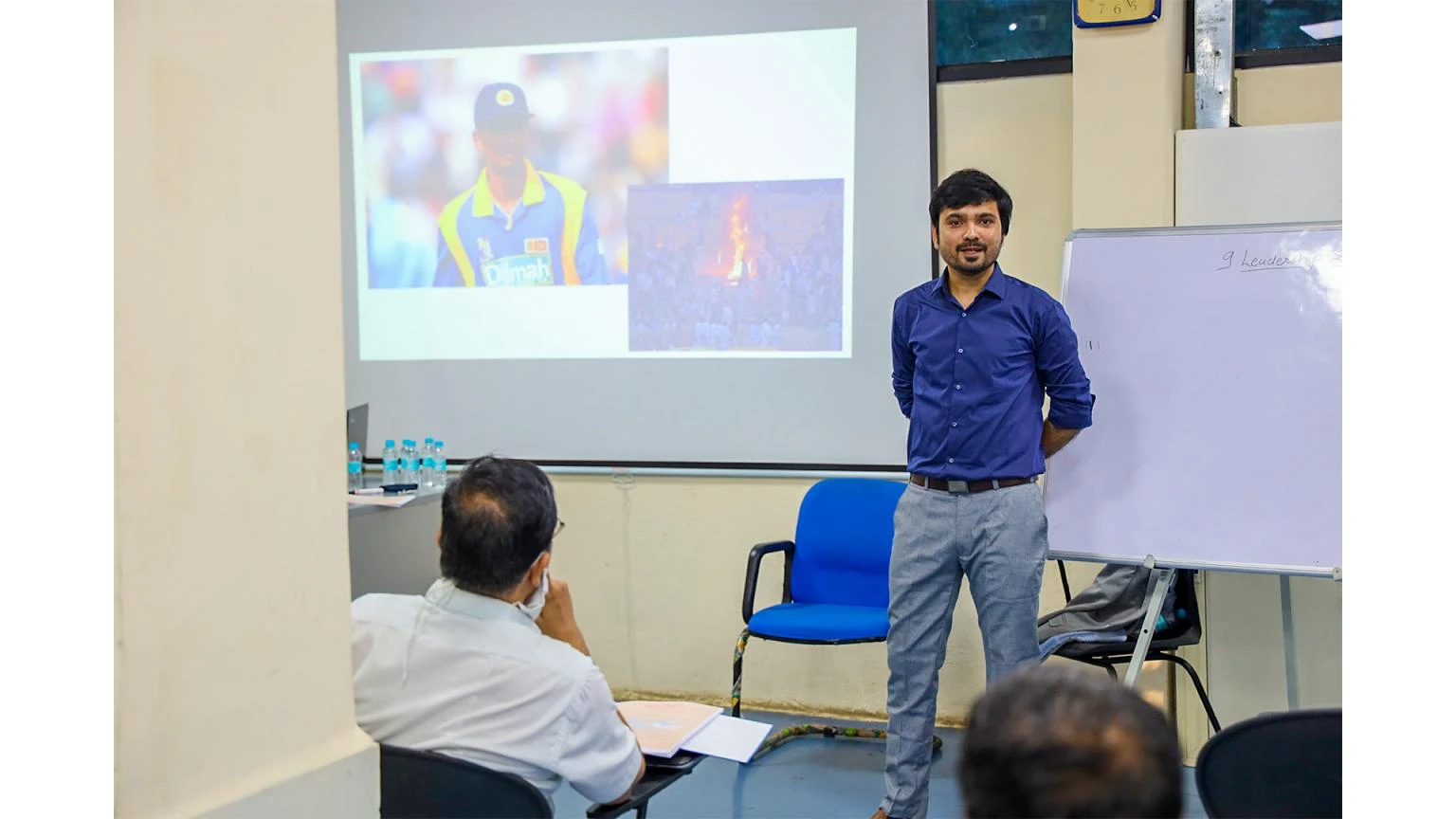
Here's what Bangladesh cricket and struggling Indian corporate teams have in common: when things go wrong, the first instinct is to find someone to blame — the pitch, the umpire, the selectors, the captain, the system. LinkedIn India's 2026 data names accountability as the #1 leadership skill gap in Indian organizations. I've trained over a lakh professionals at L&T, Bosch, and JSW, and the single pattern that separates high-performing teams from struggling ones isn't talent — it's whether they blame or own. Blame is energy spent backward. Ownership is energy spent forward.
TL;DR- Bangladesh cricket's pattern of blame after defeats is a mirror for India's corporate blame cultures — the causes and costs are identical
- Blame culture is not a personality flaw — it's a learned organizational response to environments where accountability leads to punishment
- The shift from blame to ownership begins with leaders who model radical personal responsibility before asking it of their teams
- Blame wastes 2.4x more recovery time than ownership cultures — measurable, costly, and preventable
- Five practical steps to break your team's blame habit and build an ownership culture that drives real results
The Bangladesh Cricket Blame Pattern — and Its Corporate Mirror in India
Bangladesh cricket has produced some genuinely talented players over the years — Shakib Al Hasan, Tamim Iqbal, Mushfiqur Rahim are world-class performers. Yet the team has a recurring pattern that any honest cricket analyst will recognize: after significant defeats, the post-match narrative often shifts toward external blame — the pitch conditions, the opposition quality, bad luck, umpiring decisions. The systemic issues — preparation gaps, mental conditioning, tactical rigidity — get under-examined. I'm not singling out Bangladesh; this pattern exists across cricket and sport. What makes it relevant to us today is this: the exact same pattern plays out in Indian corporate teams every week. When a project fails, the narrative immediately looks outward. "The client changed the requirements." "The vendor let us down." "The market shifted." The external factors may be real — but they're not the whole story, and treating them as the whole story is how teams stop growing.
Why Blame Culture Forms in the First Place in Indian Organizations
Blame culture doesn't form because people are cowardly or dishonest. It forms because, in most organizations, owning a mistake leads to negative consequences — a critical annual review, a missed bonus, a damaged reputation. When the system punishes honesty, the rational response is to find external explanations for bad outcomes. People learn quickly: the person who says "I made a mistake" suffers more than the person who says "the market was difficult." Over years, this learned behavior becomes an organizational reflex. The culture becomes blame-first, not as a conscious choice, but as a survival mechanism. I've seen this in IT companies in Pune, manufacturing plants in Nashik, and financial institutions in Mumbai. The organizations are different; the underlying dynamic is identical. And the first step to changing it is understanding that it's a system problem, not a character problem.
The Hidden Costs of Blame: What Your Team is Paying Without Knowing It
Here's what blame culture actually costs, in numbers most leadership teams haven't calculated. First, recovery time: McKinsey India data shows teams with blame cultures take 2.4 times longer to recover from setbacks than ownership-culture teams — because energy goes into narrative management instead of problem-solving. Second, talent loss: top performers consistently leave blame cultures faster than average performers, because they have options. The talent who stays is increasingly the talent who's comfortable shifting blame — exactly the people you don't want retained. Third, innovation death: nobody proposes new ideas in a culture where proposing something that fails leads to blame. The most expensive thing about a blame culture isn't what goes wrong — it's all the things that never get tried because the risk isn't worth it.
5 Specific Signs Your Team is Stuck in a Blame Loop
Here are five signs your team is stuck in a blame loop: (1) Post-mortem meetings spend more time on "who caused this" than "what systemic fix prevents recurrence." (2) People describe failures in passive voice — "the deadline slipped" — never in active voice — "I missed the deadline." (3) You hear about team problems from clients or senior leadership before you hear from your own team. (4) When you ask "what happened?", team members immediately mention what others did before they mention what they themselves could have done differently. (5) Proposing a new idea in your team is seen as a career risk, not an opportunity. If three or more of these resonate with your current environment, your team's blame culture is already costing you more than you realize.
| Behavior Pattern | Blame Culture Team | Ownership Culture Team |
|---|---|---|
| Response to project failure | "The client/vendor/market caused this" | "Here's what I could have done differently" |
| Post-mortem meetings | Focused on fault attribution | Focused on systemic prevention |
| Problem escalation | Leader hears from clients before own team | Team flags risks proactively before crises |
| Recovery speed from setbacks | 2.4x slower (McKinsey India) | Fast — energy immediately goes to solutions |
| Innovation rate | Low — proposing ideas is a career risk | High — ideas welcomed, failures treated as data |
| Talent retention | Top performers leave fastest | Top performers stay, culture self-reinforces |
| Leadership modeling | Leaders deflect their own mistakes | Leaders own mistakes publicly, first |
How to Shift from Blame Culture to Ownership Culture in 90 Days
Shifting from blame to ownership doesn't happen with a single training session or a motivational speech. It happens through a consistent sequence of leader behaviors over 90 days. Here's the framework I use: Week 1–2: The leader publicly owns a recent mistake — in a team meeting, unprompted. "I made a wrong decision on the resource allocation for last quarter's project. I should have escalated the risk two weeks earlier. Here's what I'm doing differently." This single act is the most powerful cultural signal available to any leader. Weeks 3–4: The leader introduces a weekly "lessons learned" agenda item where the team collectively examines what could have gone better — without blame attribution. Month 2: The leader starts recognizing team members who own their mistakes and propose solutions — publicly, specifically. Month 3: The team begins surfacing risks proactively before they become failures. This is the ownership culture signal: problems are raised by the people responsible, before they're discovered by others.
The Leader's Role: Why Ownership Must Start at the Top
The leader's role in culture transformation is non-negotiable. You cannot build an ownership culture by asking your team to own their mistakes while you deflect yours. That inconsistency is immediately visible — and it teaches the team that ownership is for others, not for leaders. At L&T, Bosch, and JSW client engagements, the most powerful transformation I've observed happens when the senior leader — the plant head, the VP, the department director — stands in front of their team and says something like: "I've been thinking about how I contributed to last quarter's project overrun. I didn't escalate the resource gap quickly enough, and I should have pushed for the milestone review two weeks earlier. Here's what I'm doing differently." Within 60 days of that kind of leader modeling, team-level ownership behaviors multiply dramatically.
Building a No-Blame, High-Accountability Team: What I Do at L&T, Bosch and JSW
Here's what a no-blame, high-accountability team actually looks like in practice — because this is achievable, not aspirational. At a manufacturing client in Pune (500-person plant), after 18 months of systematic ownership culture work, the plant manager reported three specific changes: First, problems were being surfaced to him on average 4.2 days earlier than before — meaning earlier, cheaper interventions. Second, the proportion of crisis-mode escalations dropped from 40% to 12% of all issues raised. Third, annual attrition dropped from 24% to 14%, saving over ₹1.2 crore in recruitment and training costs. The team didn't change. The systems didn't change. The culture changed — because the leader changed first, and the team followed. This is the consistent story I see at every organization where ownership culture work is done with real commitment from the top.
Book Avinash Chate for Your Next Event
TEDx speaker. 11+ yrs training Army, BRO, RBI, BARC, JSW. Available for keynotes, leadership training, team building & manager development at your office or event venue.
✅ Thanks! Avinash team will reach out within 24 hours.'}).catch(function(e){f.outerHTML='Something went wrong. WhatsApp +91 8793630001
'});return false;">Select ServiceKeynote / Motivational SpeakingLeadership Development TrainingTeam Building WorkshopManager DevelopmentEmployee TrainingOutbound TrainingBook Avinash Now →Or WhatsApp directly: +91 87936 30001
Related Articles by Avinash Chate
- Wanting vs Doing: How to Close the Ambition-Action Gap in India 2026
- Build a Culture of Learning: Corporate Training That Goes Beyond Basics India
- From Failure to Victory: Afghanistan Cricket's Comeback Lesson for Indian Teams
Avinash Chate TEDx Speaker · Founder, The Future Corporate · 11+ yrs experience Avinash has trained Indian Army, BRO, RBI, BARC, JSW Steel and 1000+ corporate leaders across India. His work focuses on leadership development, communication skills, and behavioural training rooted in Indian values and modern business needs. |
Frequently Asked Questions
What is blame culture in the workplace and why is it so common in Indian organizations?
Blame culture is an organizational pattern where the first response to failure is to identify who is responsible for the mistake, rather than what systemic issues caused it or how to prevent recurrence. It's common in Indian organizations for a specific reason: historically, in hierarchical structures where performance is evaluated subjectively and career advancement depends on reputation management, owning a mistake publicly carries real career risk. The rational response, when accountability leads to punishment, is to find plausible external explanations. Over time this becomes a reflex — blame culture isn't a character flaw, it's a rational adaptation to an irrational incentive system. The fix isn't to demand more honesty — it's to change the incentive system so that owning a mistake early is safer than hiding it until it explodes.
How does a blame culture specifically harm team performance and business results?
Blame culture harms team performance through three specific, measurable mechanisms. First: speed of recovery. Teams that spend energy on blame attribution recover from setbacks 2.4 times slower, according to McKinsey India data — because energy is directed at narrative management rather than problem-solving. Second: talent retention. High performers consistently leave blame cultures faster than average performers — they have more options and less tolerance for environments where their contributions don't matter as much as their political positioning. Third: innovation suppression. In blame cultures, nobody proposes new ideas because proposing something that fails leads to blame. Over time, the organization stops innovating and starts defending — which is a terminal competitive strategy in any fast-moving industry.
What is the single most powerful first step to shift from blame culture to ownership culture?
The single most powerful first step is for the most senior leader in the room to publicly own a recent mistake — in a team meeting, without being asked, and without minimizing. Something specific: "I made a wrong decision on the resource allocation for last quarter's project. I should have escalated the risk two weeks earlier. Here's what I'm doing differently." This act communicates three things simultaneously: first, that owning mistakes is valued here, not punished; second, that the leader applies the same standard to themselves that they're asking of the team; third, that the culture is changing. One authentic act of leadership accountability, done consistently over 30 days, does more to shift culture than any policy, training program, or motivational initiative.
How long does it take to change a blame culture and what should leaders expect?
Meaningful culture shift takes 90 days of consistent leader behavior to become visible, and 6–12 months to become self-sustaining. Leaders should expect three phases: Phase 1 (weeks 1–4): Skepticism. The team has seen initiatives before — they'll watch to see if leader accountability is real or performative. Consistency is critical here. Phase 2 (weeks 5–8): Early adopters. A few team members start modeling ownership behaviors, especially after they see a colleague own a mistake without negative consequences. Phase 3 (weeks 9–12): Cascade. The behavior becomes a norm — teams start surfacing problems proactively, post-mortems become genuinely useful learning sessions, and the energy previously spent on blame is redirected to improvement. The leaders who give up at phase 1, mistaking skepticism for failure, never experience phase 3.
Avinash Chate services
Corporate Trainer in Maharashtra · Top Corporate Trainers in Maharashtra · Leadership Trainer in Maharashtra · Top Leadership Trainers in Maharashtra · Team Building Trainer in Maharashtra · Top Team Building Trainers in Maharashtra · Motivational Speaker in Maharashtra · Top Motivational Speakers in Maharashtra · All service locations
← Back to all articles · Book Avinash Chate
By Avinash Chate — Maharashtra’s #1 Corporate Trainer & Motivational Speaker. .