The Consequence Model: Making Quick Decisions With Lasting Impact in Indian Corporate Life
The Consequence Model transforms your decision-making process — allowing rapid yet informed choices by mapping potential consequences before you commit. Here's how Indian leaders can master it in 2026.
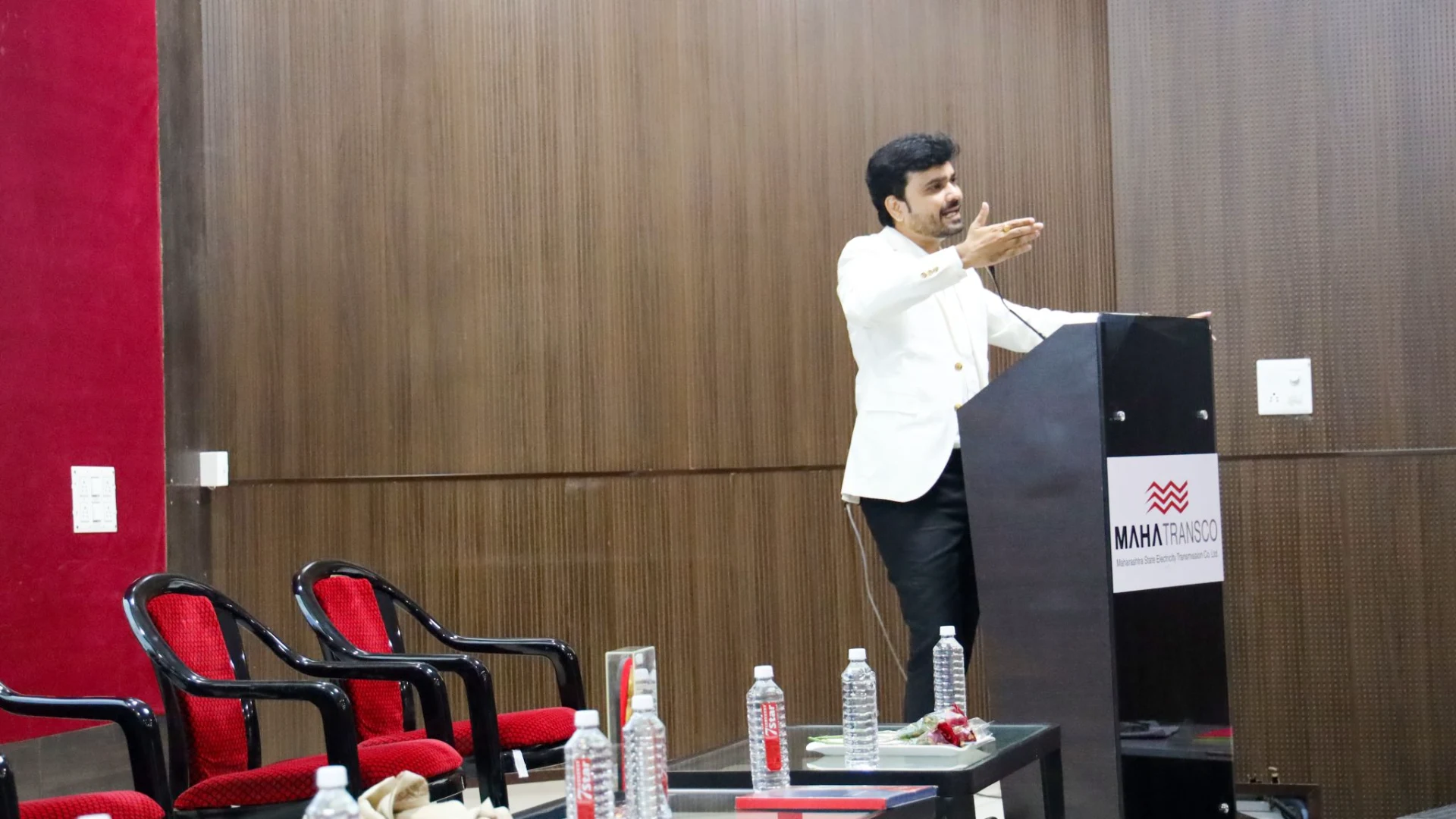
McKinsey research confirms Indian managers spend 21 hours per week in meetings — 35% more than their US counterparts — yet most of those hours are spent circling decisions rather than making them. The Consequence Model is a proven decision-making framework that transforms how leaders navigate choices: not by slowing down to gather every possible data point, but by rapidly mapping the potential consequences of each option and choosing confidently. Don't let indecision slow you down — here's how to master this model and act promptly and effectively.
TL;DR- The Consequence Model maps the potential outcomes of each decision option — most likely, best case, worst case — enabling quick yet fully informed choices
- Indian managers spend 21 hrs/wk in meetings; most of that time is indecision in disguise — the Consequence Model breaks this costly pattern in 15 minutes
- Four steps: define the decision in one sentence, list three realistic options, map consequence branches, assign probability and impact scores — then decide
- Building the Consequence Model habit requires three weeks of deliberate practice; after that, your team reaches decisions in under 20 minutes
What Is the Consequence Model and Why Does It Transform Corporate Decision-Making?
The Consequence Model is a structured decision-making framework designed precisely for the situation most Indian corporate leaders face: multiple options, compressed timelines, and significant pressure to choose correctly without the luxury of extended deliberation. The model does not tell you to slow down and gather every possible data point. It does the opposite — it provides a structured way to rapidly map the potential consequences of each viable option, assign rough probability and impact scores, and identify the branch with the best risk-reward profile for your specific context. The outcome: quick decisions that are genuinely informed rather than merely fast, and confident enough to be communicated and owned.
Why Indian Managers Get Stuck in Decision Paralysis and What It Actually Costs
McKinsey research reveals Indian managers spend 21 hours per week in meetings — 35 percent more than their US counterparts. What is most of that time actually spent on? Not execution, not strategy. It is spent in the grey zone between awareness of a decision that needs to be made and the actual moment of committing to one. Decision paralysis is costing Indian organizations enormous amounts of time, money, and competitive advantage every quarter. Leaders who cannot decide quickly enough watch the best market opportunities close, the best candidates choose competitors, and the best projects stall permanently at the approval stage. The Consequence Model eliminates this grey zone entirely by making every decision's cost-of-delay visible.
The Four-Step Consequence Model Process for Rapid Yet Informed Decisions
Four steps to applying the Consequence Model to any significant business decision. Step one: write the decision you need to make in one precise sentence — vagueness here is the root cause of most decision paralysis, because you cannot map consequences for a decision you have not clearly defined. Step two: list your three most realistic options only — not every possible option, just the three most viable ones. Step three: for each option, map the most likely consequence, the best-case consequence, and the worst-case consequence in a simple 3x3 grid. Step four: assign each consequence a probability (high, medium, low) and an impact score (significant, moderate, minimal). The option whose most-likely consequence combines the highest probability with the most positive impact is your decision. Total time: 15 minutes.
Consequence Model vs Traditional Decision-Making: The Critical Differences
Traditional corporate decision-making in India typically collapses into one of two failure modes. The first is the committee trap: a decision is referred to a group, full consensus is required, and the result is either the safest possible choice — which is never the best one — or a permanent postponement disguised as "the matter needs further study." The second is the gut-check trap: a senior leader decides based on instinct with no structured consequence mapping, producing defensible but frequently regrettable choices. The Consequence Model eliminates both failure modes simultaneously. It is structured enough to be rigorous, fast enough to be practical, and explicit enough that decisions can be explained and owned with full confidence.
| Decision Factor | Traditional Approach | Consequence Model |
|---|---|---|
| Time to Reach Decision | Days or weeks in committee | 15 minutes with clear structure |
| Risk Visibility | Implicit, often ignored | Explicitly mapped before deciding |
| Decision Ownership | Diffused across committee | Clear owner with documented rationale |
| Quality Under Pressure | Degrades as deadline approaches | Consistent regardless of time pressure |
| Cost of Indecision | Invisible until damage is visible | Made explicit at Step 1 — drives urgency |
How I Teach the Consequence Model at Bosch, Siemens, and Infosys
When I run the Consequence Model workshop at Bosch and Siemens, I give leadership teams a real organizational decision that has been sitting unmade for weeks or months. We run the four-step process together on a whiteboard, and without a single exception across dozens of workshops, every team reaches a clear, committal decision within 20 minutes. Then I ask them: "Why has this decision been sitting unresolved for three weeks?" The answers are always a variation of the same truth: no one had a structured method for surfacing the consequence branches, so every discussion cycled through the same concerns without ever reaching resolution. The Consequence Model does not make hard decisions easy — it makes them decidable, which is the actual gap in most Indian leadership teams.
Applying the Consequence Model to India's Three Most Common Business Decisions
Three decisions Indian corporate managers face most often — and how the Consequence Model resolves each in under 15 minutes. First: whether to hire a high-cost senior leader when the team budget is already stretched. Consequence branches: the hire delivers within 90 days, the hire underdelivers and must be managed out at significant cost, or the role remains vacant and current team absorbs the workload. Map each against your quarter's priorities and your organization's risk tolerance. Second: whether to escalate a critical client issue to senior management immediately. Third: whether to push back on an unrealistic project deadline from a senior stakeholder. The model transforms each of these from 3-day email threads into 15-minute leadership decisions.
How to Build the Consequence Model Habit Across Your Leadership Team
Building the Consequence Model habit across your team requires three weeks of deliberate and incremental practice. Week one: each team member applies the model independently to one low-stakes personal decision per day — which meeting to deprioritize, which communication format to adopt for a specific situation. Week two: introduce the model for one medium-stakes team decision per weekly meeting — run the four steps together on a whiteboard and commit to the result. Week three: mandate a consequence map for every significant decision entering your team from above or below. After three weeks of consistent application, your team will reach consensus-ready decisions in under 20 minutes on matters that previously consumed hours of inconclusive discussion. A whiteboard and a pen are the only tools required.
Book Avinash Chate for Your Next Event
TEDx speaker. 11+ yrs training Army, BRO, RBI, BARC, JSW. Available for keynotes, leadership training, team building & manager development at your office or event venue.
✅ Thanks! Avinash team will reach out within 24 hours.'}).catch(function(e){f.outerHTML='Something went wrong. WhatsApp +91 8793630001
'});return false;">Select ServiceKeynote / Motivational SpeakingLeadership Development TrainingTeam Building WorkshopManager DevelopmentEmployee TrainingOutbound TrainingBook Avinash Now →Or WhatsApp directly: +91 87936 30001
Related Articles by Avinash Chate
- Emotional Intelligence Training: How EI Transforms Leadership, Communication, and Teamwork in India
- Mahalaxmi Business Conference 2024: Automobile Industry Growth Strategies From the Keynote Stage
- Marathi Leadership Keynote: Language and Leadership Combined at Maruti Nexa Arena
Avinash Chate TEDx Speaker · Founder, The Future Corporate · 11+ yrs experience Avinash has trained Indian Army, BRO, RBI, BARC, JSW Steel and 1000+ corporate leaders across India. His work focuses on leadership development, communication skills, and behavioural training rooted in Indian values and modern business needs. |
Frequently Asked Questions
What is the Consequence Model and how does it work for corporate decision-making in India?
The Consequence Model is a four-step decision-making framework that enables rapid yet informed choices. Step one: define the decision precisely in one sentence. Step two: identify three realistic options. Step three: for each option, map the most likely consequence, best-case consequence, and worst-case consequence. Step four: assign probability and impact scores to each consequence branch. The option whose most-likely consequence has the best probability-impact combination becomes your decision. The entire process takes 15 minutes and produces a decision with a clear documented rationale — which eliminates both paralysis and defenseless gut-feeling choices.
Why do Indian managers struggle with quick decision-making and how does the Consequence Model help?
Indian managers face three specific barriers to quick decision-making: hierarchical cultures that attach personal blame to wrong decisions, limited structured experience with calculated risk assessment, and meeting cultures that mistake discussion for progress. The Consequence Model addresses all three barriers simultaneously. It provides a structured framework that distributes risk visibility across the team rather than concentrating blame on one person, it makes consequence assessment a standard process rather than an instinct-based gamble, and it converts open-ended meetings into time-bounded 15-minute decision sessions with clear outputs.
How do I apply the Consequence Model to everyday business decisions in my Indian organization?
Start with low-stakes practice: apply the four-step Consequence Model to one personal work decision per day for a week — which meeting to attend, which communication to prioritize. In Week 2, bring it to your team meeting for one medium-stakes decision together. In Week 3, make it mandatory for every significant decision entering your team. Use a whiteboard for the consequence grid — no special software needed. For India's three most common decision types — hiring senior talent, client escalation, and deadline negotiation — the model consistently produces a committed decision in under 15 minutes from groups that previously spent days in email chains.
How is the Consequence Model different from traditional decision-making frameworks used in Indian companies?
Traditional Indian corporate decision-making typically falls into two failure modes: the committee trap (consensus required, result is either the safest option or perpetual postponement) and the gut-check trap (senior leader decides on instinct without structured consequence mapping). The Consequence Model eliminates both by being structured enough to surface genuine risk analysis but fast enough to be used under real business time pressure. Unlike complex decision matrices or lengthy risk frameworks, the Consequence Model requires no special training or software — just a clear problem statement, three realistic options, and 15 minutes of structured consequence mapping.
Avinash Chate services
Corporate Trainer in Maharashtra · Top Corporate Trainers in Maharashtra · Leadership Trainer in Maharashtra · Top Leadership Trainers in Maharashtra · Team Building Trainer in Maharashtra · Top Team Building Trainers in Maharashtra · Motivational Speaker in Maharashtra · Top Motivational Speakers in Maharashtra · All service locations
← Back to all articles · Book Avinash Chate
By Avinash Chate — Maharashtra’s #1 Corporate Trainer & Motivational Speaker. .