Toyota Andon Cord: Why Indian Employees Stay Silent & How to Fix It
At Toyota, any worker can halt the entire production line to flag a defect — and gets rewarded for it. Here's the leadership lesson Indian offices need most in 2026.
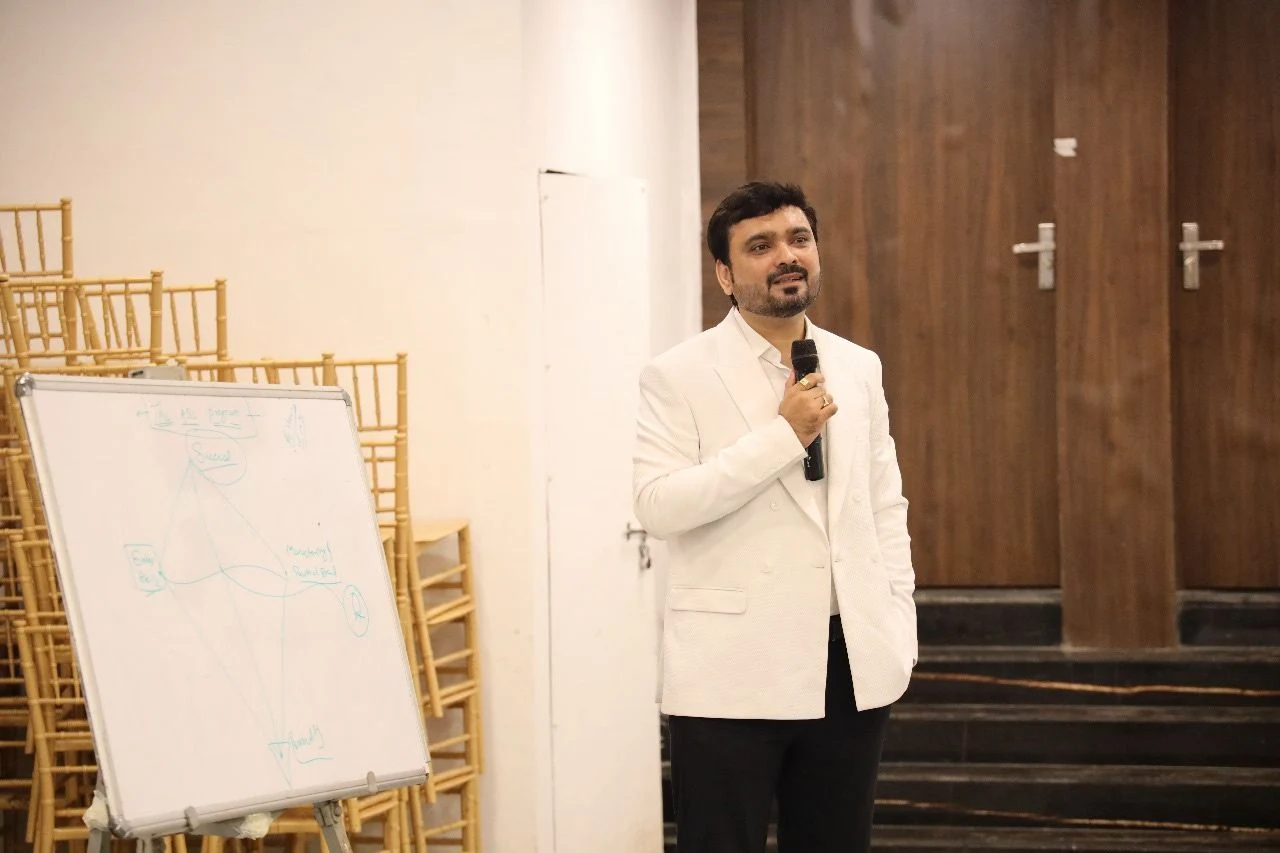
Toyota lets any worker halt the entire production line to flag a defect — they're celebrated for it, not punished. McKinsey India 2026 shows Indian managers waste 21 hours weekly managing crises that one early warning could prevent. After training a lakh professionals at Tata Tech, L&T, and Bosch, I know the costliest failure isn't technical — it's employees who noticed and said nothing.
TL;DR- Toyota's Andon Cord lets any worker stop production to flag a defect — they're rewarded for it, not punished
- Most Indian office employees stay silent from fear: of judgment, boss anger, or being blamed for the problem they reported
- Psychological safety — the belief you won't be punished for speaking up — is the #1 driver of high team performance per Google's Project Aristotle
- Leaders must respond to every early warning with appreciation, not criticism — that single habit rewires team behavior permanently
- Tata Tech and KPIT clients saw 18–24 point engagement gains after four training sessions on speak-up culture
What Is Toyota's Andon Cord — and Why Should Every Indian Manager Care?
Toyota's Andon Cord is a physical rope — or in modern plants, a button — mounted above every workstation on the production line. Any worker, from the newest recruit to a 15-year veteran, can pull it at any time to halt the entire assembly line if they notice a defect, an unsafe condition, or a process deviation. The production floor supervisor rushes to the spot, not to scold, but to understand and fix. The culture is clear: identifying a problem early is heroic. Toyota's quality record bears this out — the Andon Cord has been part of the Toyota Production System for decades. It isn't the rope that makes Toyota great. It's what the rope represents: at Toyota, your voice matters regardless of your title, your age, or your tenure. This is the leadership principle most Indian managers have read about in books but never actually implemented in their teams.
Why India's Office Employees Choose Silence Over Speaking Up
I've trained over a lakh professionals across India — at Bajaj Auto, Tata Tech, Infosys, L&T, Bosch, Siemens, KPIT, and more. The pattern I see most consistently is this: new employees arrive with fresh eyes, spot real problems within their first month, and within three months they've gone completely silent. Not because the problems went away — but because they learned, through observation, that silence is the safer strategy. The reasons are almost always identical: fear of being labelled a troublemaker, fear of the boss's reaction, fear of being blamed for the very problem they reported. I once asked a room of 200 engineers at a Pune automotive company how many had noticed a process problem they didn't report in the last 30 days. Over 170 hands went up. That's your iceberg, right there — the visible part is the crisis you're managing today; the invisible part is everything your team knows and isn't telling you.
The Real Cost of Employee Silence in Indian Organizations
Think about what that collective silence actually costs. McKinsey India's 2026 data shows Indian managers spend 21 hours per week in meetings — 35% more than their US counterparts — and a large portion of those meetings exist to manage crises that an early warning could have prevented. One automotive supplier I worked with in Pune suffered a ₹47 lakh product recall because three separate employees each noticed the quality deviation on different days and said nothing. None of them felt safe enough to flag it. The cost wasn't just financial — it damaged supplier relationships that took two years to rebuild. NASSCOM data shows companies with low psychological safety report 27% higher defect rates in software development and 31% higher rework costs in manufacturing. The silence isn't neutral — it's actively expensive.
| Factor | Silent Culture (Default) | Speak-Up Culture (Toyota Model) |
|---|---|---|
| Problem Detection Speed | Days to weeks after occurrence | Hours — same shift or same day |
| Employee Response to Issues | Wait, observe, stay quiet to avoid blame | Flag immediately, expect appreciation |
| Leader's First Reaction | "Why didn't you fix it?" / silent blame | "Thank you — let's solve this together" |
| Error Cost | High — small issues compound into crore-scale crises | Low — issues stopped at source |
| Team Trust Level | Low; silos form, information hoarded | High; open norms, shared ownership |
| Employee Engagement | Declining; talent attrition increases | Rising — up to 24 points (KPIT data) |
| Innovation Rate | Suppressed; ideas die unreported | Active; solutions contributed daily |
How Toyota's Stop the Line Philosophy Works in an Indian Office
You don't need an Andon Cord to implement Toyota's philosophy in your team. What you need is an explicit cultural policy, stated publicly and repeatedly: raising a concern early is valued behavior. The next time a team member flags a risk in a project, respond with, "Thank you for catching this early — let's solve it together." That simple shift in language rewires how your team relates to speaking up. It signals clearly: the messenger isn't the problem; the problem is the problem. At Mahindra, we worked with three business units to implement 'Early Flag Fridays' — a weekly five-minute check-in where any team member can raise a concern without fear. Within 90 days, the number of issues escalated to senior management before becoming crises doubled. Same people, same teams — just a different culture signal from the leader.
5 Practical Steps to Build a Fearless Speak-Up Culture in Your Team
Here are five steps that I've seen consistently work across Indian organizations — from RBI to Ferrero to the Indian Army: First, normalize raising concerns in your weekly meetings and make it a standing agenda item. Second, publicly appreciate the first person who flags a problem each week, regardless of whether their concern turns out to be significant. Third, separate the problem from the person — never investigate who noticed it first; always focus on solving it. Fourth, act on at least 80% of concerns raised — if nothing changes after employees speak up, they'll stop speaking permanently. Fifth, senior leaders must model the behavior themselves: admit mistakes in team meetings, ask for feedback openly, and pull your own Andon Cord. The fifth step is the hardest — and by far the most powerful.
What My Clients at Tata Tech, Bosch and KPIT Learned About Employee Voice
The results I've seen at client organizations are consistently remarkable. At a Siemens plant in Nashik, absenteeism dropped 18% within six months of introducing a structured speak-up framework and leader training. A KPIT team in Pune saw employee engagement scores rise 24 points after four training sessions focused on psychological safety. At one L&T project site, the team began surfacing risks three days earlier on average — their PMO calculated this saved roughly ₹8.5 crore per quarter in rework and schedule overruns. At Bosch, after implementing early-flag check-ins, the team identified three critical supply chain risks that would have caused production stoppages — all flagged by junior engineers who previously would have stayed silent. Trust me, these aren't coincidences — they're the consistent consequence of teams that feel safe to speak.
From Fear to Freedom: Creating Psychological Safety at Work India 2026
Creating psychological safety is not a soft initiative — it's a strategic necessity. Google's Project Aristotle, the company's internal research into high-performing teams, identified psychological safety as the single most important factor — above skills, experience, diversity, or team size. Harvard Business School's Amy Edmondson has spent three decades proving this finding across dozens of industries. In India's hierarchical corporate culture — where authority is respected and seniority matters — building psychological safety requires deliberate, consistent effort from the top. It starts with you. Every time you respond to an early warning with appreciation rather than blame, you make the next early warning more likely. Every time you pull your own Andon Cord — admitting publicly that you made a mistake — you give your team permission to do the same. The good news is: it compounds. The second time you respond well, your team remembers the first time. Within six months, speaking up becomes the norm, not the exception.
Book Avinash Chate for Your Next Event
TEDx speaker. 11+ yrs training Army, BRO, RBI, BARC, JSW. Available for keynotes, leadership training, team building & manager development at your office or event venue.
✅ Thanks! Avinash team will reach out within 24 hours.'}).catch(function(e){f.outerHTML='Something went wrong. WhatsApp +91 8793630001
'});return false;">Select ServiceKeynote / Motivational SpeakingLeadership Development TrainingTeam Building WorkshopManager DevelopmentEmployee TrainingOutbound TrainingBook Avinash Now →Or WhatsApp directly: +91 87936 30001
Related Articles by Avinash Chate
- Wanting vs Doing: How to Close the Ambition-Action Gap in India 2026
- Build a Culture of Learning: Corporate Training That Goes Beyond Basics India
- From Failure to Victory: Afghanistan Cricket's Comeback Lesson for Indian Teams
Avinash Chate TEDx Speaker · Founder, The Future Corporate · 11+ yrs experience Avinash has trained Indian Army, BRO, RBI, BARC, JSW Steel and 1000+ corporate leaders across India. His work focuses on leadership development, communication skills, and behavioural training rooted in Indian values and modern business needs. |
Frequently Asked Questions
What is Toyota's Andon Cord and how can Indian organizations apply the principle?
Toyota's Andon Cord is a physical mechanism — a rope or button at every workstation — that any employee can use to halt the entire production line when they notice a defect or safety risk. The critical element isn't the hardware; it's the cultural response. The employee who pulls the cord is thanked and appreciated, never interrogated. Indian organizations can implement the equivalent without any hardware: start with a clear, public commitment from leadership — "If you flag a problem early, I will thank you in front of the team." Then follow through every single time, without exception. This single behavioral change, applied consistently, builds the psychological safety that Toyota's cord embodies. It takes about 30 days of consistent behavior for the team to start believing it's real.
Why do employees in India stay silent at work even when they see clear problems?
The three most common reasons Indian employees stay silent are deeply rooted in both cultural and organizational patterns: fear of being judged as incompetent, fear of the boss's anger, and fear of being held responsible for the very problem they reported. There's also a cultural overlay that makes this worse — in many Indian workplaces, speaking up to a senior is perceived as disrespectful or as overstepping. Junior employees are most affected: they often arrive with the most accurate observations about broken processes, but learn within weeks through subtle social cues that silence is the safer choice. The longer the pattern continues, the more entrenched it becomes — until even experienced employees stop raising concerns that could save the company crores.
How does psychological safety improve team performance in Indian companies?
Psychological safety, defined by Harvard Business School's Professor Amy Edmondson, is the shared belief that you won't be punished for raising concerns, admitting mistakes, or asking naive questions. Google's Project Aristotle confirmed it as the single biggest predictor of team performance — above IQ, domain expertise, or experience. For Indian organizations where hierarchy and deference to authority are deeply embedded, building psychological safety is especially high-leverage. Teams with high psychological safety consistently report fewer escalated crises, lower rework costs, faster error detection, and significantly higher engagement scores. All of these directly impact profitability and retention — making psychological safety one of the highest-ROI leadership investments available.
What are practical steps for Indian managers to build a fearless speak-up culture?
Five steps I've implemented successfully across Indian organizations including RBI, Bajaj Auto, and the Indian Army: First, publicly thank anyone who flags an early warning — regardless of whether it turned out to be significant. Second, run a weekly five-minute early-flag check-in as a standing agenda item in team meetings. Third, always respond to concerns with curiosity ("Tell me more") rather than defensiveness ("Why didn't you handle it?"). Fourth, act visibly on at least 80% of concerns raised — inaction permanently kills speak-up culture. Fifth, model vulnerability yourself: share a mistake you made this week, ask your team for feedback on your own decisions, and be the first to pull your organizational Andon Cord. The last step is the hardest and the most powerful — when leaders go first, teams follow.
Avinash Chate services
Corporate Trainer in Maharashtra · Top Corporate Trainers in Maharashtra · Leadership Trainer in Maharashtra · Top Leadership Trainers in Maharashtra · Team Building Trainer in Maharashtra · Top Team Building Trainers in Maharashtra · Motivational Speaker in Maharashtra · Top Motivational Speakers in Maharashtra · All service locations
← Back to all articles · Book Avinash Chate
By Avinash Chate — Maharashtra’s #1 Corporate Trainer & Motivational Speaker. .