What's the Ideal Team Size for Accountability? The 150-Person Rule
The ideal team size for accountability? W.L. Gore's 150-person rule shows why big teams quietly lose ownership — and how splitting into pods of 4-8 fixes it fast.
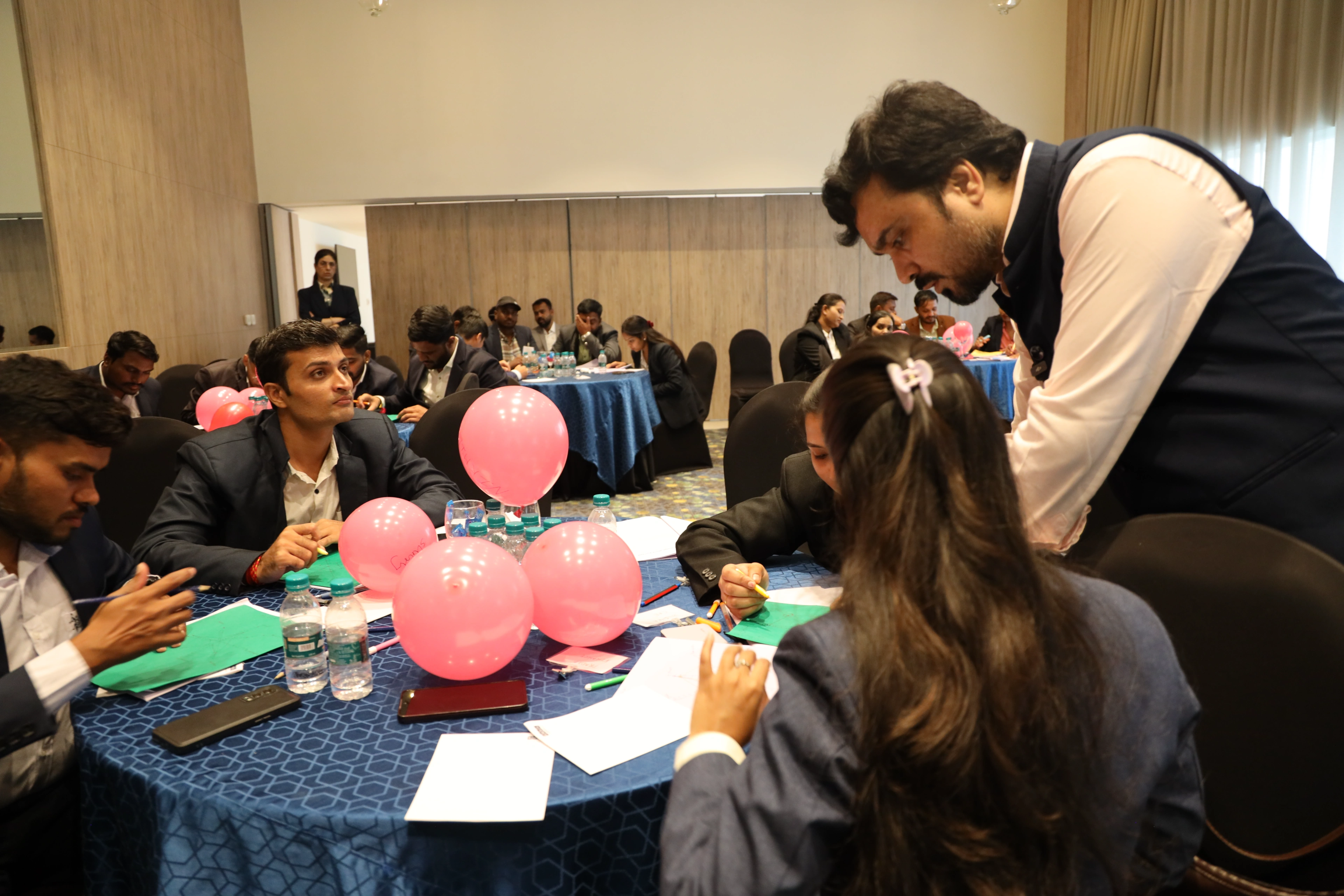
The ideal team size for accountability is roughly 4-8 people — once a group crosses about 150, ownership quietly disappears. W.L. Gore, the company behind Gore-Tex, discovered this decades ago and never expanded a factory past that number. McKinsey finds Indian managers already lose 21 hours a week to meetings — bloated teams make that worse.
TL;DR- Ownership fades once a team crosses roughly 150 people — it's a size effect, not a character flaw
- W.L. Gore builds a new factory instead of expanding one every time headcount crosses 150, and keeps every unit small
- Break large teams into pods of 4-8 with one clear, named owner to bring accountability back
- Indian managers already lose ~21 hrs/week to meetings — oversized teams add coordination drag, not less
- Small, visible units make "who owns this" obvious again without a status meeting
Why Do Employees Stop Taking Ownership as Teams Grow?
In a small team, everyone can see who did what — so people say "we decided" and mean it. Once headcount climbs past a point, that visibility disappears and it quietly becomes "they decided." Bill Gore, founder of the company behind Gore-Tex, noticed exactly this pattern decades before "accountability" became a buzzword in corporate training. It isn't that people in big teams care less — it's that a big group hides who's actually responsible for what, and hiding is where ownership goes to die.
The W.L. Gore 150-Person Rule, Explained
Gore's fix wasn't a training program — it was a hard rule. Every time a factory's headcount crosses roughly 150 people, Gore doesn't expand it; it builds a new one next door. There are no job titles either — everyone across 10,000+ employees is simply an "associate." The number isn't arbitrary: it sits close to what anthropologists call Dunbar's number, the rough limit on how many people we can hold stable, trust-based relationships with at once. Past that limit, an org chart replaces trust — and trust is what accountability actually runs on.
| Team Size | What Typically Happens to Ownership | What To Do |
|---|---|---|
| 1-8 | Everyone visible — "I own this" is automatic | Keep the structure as is |
| 9-25 | Ownership still works, but only with a named owner per task | Assign explicit pod owners |
| 26-75 | Ownership blurs unless leads actively track it | Split into pods of 6-8 |
| 76-150 | "We decided" quietly becomes "they decided" | Restructure before it breaks further |
| 150+ | W.L. Gore's threshold — the point it builds a new unit | Apply the 150-person rule: split, don't expand |
What Dunbar's Number Tells Us About Team Size and Trust
Dunbar's number is usually cited around 150 stable relationships, but the accountability threshold inside a work team is far lower — closer to 8-12 people, the size where you can still track who owns what without a spreadsheet. Beyond that, coordination overhead eats the hours that should go to actual ownership. This lines up with what leadership training in Pune sessions surface again and again: managers aren't lazy about follow-up, their teams are simply too large to follow up on.
The Pod Model: Restructuring Teams of 4-8 for Ownership
The practical fix is pods, not policies. Split a 30-person department into four pods of 6-8, each with one named owner accountable for a specific outcome — not a title, an outcome. Keep reporting lines short enough that a pod owner can name every person's current task from memory. This is the same logic behind team-building activities that deliberately keep groups small — size isn't a side detail, it's the variable that decides whether the exercise builds real ownership or just a nice afternoon.
Signs Your Team Has Outgrown Its Accountability
Watch for these signs: decisions take a "let me check with someone" detour instead of a direct answer; two people each assume the other closed a task; status updates read as "we" even when only one person actually did the work. None of these are performance problems — they're structural ones. A performance review won't fix a team that's simply too big to see itself clearly. Restructuring it will.
Applying the 150-Person Rule in Indian Companies
Indian mid-size companies often cross this threshold quietly — a 40-person function grows to 90 over two years without anyone redesigning how it's led. The result matches what McKinsey has flagged about Indian workplaces: managers spend an average of 21 hours a week in meetings, many spent manually recreating the visibility that smaller pods would have given them for free. Fixing team size fixes half the meeting problem before it starts.
What This Kind of Leadership Training Costs and How to Book It
Bringing in a structured session on team design and ownership typically falls within the usual range for a half-day to full-day corporate workshop in India — the exact fee depends on group size, format, and city. Rather than quote a number here, it's more useful to get a quote for your team's specific situation. Avinash Chate has run this exact conversation — ownership, team size, and the Gore model — with groups from IT, manufacturing, and BFSI backgrounds.
Book Avinash Chate for Your Next Event
TEDx speaker. 11+ yrs training Army, BRO, RBI, BARC, JSW. Available for keynotes, leadership training, team building & manager development at your office or event venue.
✅ Thanks! Avinash team will reach out within 24 hours.'}).catch(function(e){f.outerHTML='Something went wrong. WhatsApp +91 8793630001
'});return false;">Select ServiceKeynote / Motivational SpeakingLeadership Development TrainingTeam Building WorkshopManager DevelopmentEmployee TrainingOutbound TrainingBook Avinash Now →Or WhatsApp directly: +91 87936 30001
Related Articles by Avinash Chate
- How to Control Emotions at Work During Feedback
- Apollo 8 – एका फोटोने संपूर्ण जगाचा दृष्टीकोन कसा बदलला ?
- Why some people get promoted faster at work?
Work with Avinash Chate
- Best Motivational Speaker in Pune →
- Best Motivational Speaker in Maharashtra →
- Best Motivational Speaker in Mumbai →
Avinash Chate TEDx Speaker · Founder, The Future Corporate · 11+ yrs experience Avinash has trained Indian Army, BRO, RBI, BARC, JSW Steel and 1000+ corporate leaders across India. His work focuses on leadership development, communication skills, and behavioural training rooted in Indian values and modern business needs. |
Frequently Asked Questions
What is the ideal team size for accountability?
Most teams hold real accountability up to about 8-12 people — small enough that everyone can see who owns what without a status meeting. Beyond that, ownership starts to blur unless you deliberately split into smaller pods.
What is W.L. Gore's 150-person rule?
W.L. Gore, the company behind Gore-Tex, never lets a single factory grow past roughly 150 people. Instead of expanding an existing site, it builds a new one next door — keeping every unit small enough that people say "we decided" instead of "they decided."
How do I split a large team into smaller pods without disrupting work?
Group people by the outcome they're actually responsible for, not by existing reporting lines. Give each pod of 6-8 one named owner, keep that owner's reporting scope small enough to track from memory, and let the pods run in parallel rather than merging back into one large group.
Does team-size training actually change behavior, or is it just theory?
It changes behavior because it changes the structure people work inside — you're not asking anyone to "be more accountable," you're shrinking the group until accountability is the only option that fits. That's structural, not motivational, which is why it holds up over time.
Avinash Chate services
Corporate Trainer in Maharashtra · Top Corporate Trainers in Maharashtra · Leadership Trainer in Maharashtra · Top Leadership Trainers in Maharashtra · Team Building Trainer in Maharashtra · Top Team Building Trainers in Maharashtra · Motivational Speaker in Maharashtra · Top Motivational Speakers in Maharashtra · All service locations
← Back to all articles · Book Avinash Chate
By Avinash Chate — Maharashtra’s #1 Corporate Trainer & Motivational Speaker. .