Lilavati Hospital Scandal: Uncle-Nephew Ego Cost ₹1300 Cr
Lilavati Hospital Scandal: Uncle-Nephew Ego Cost ₹1300 Cr This true story of Lilavati Hospital will shock you. An uncle and nep...
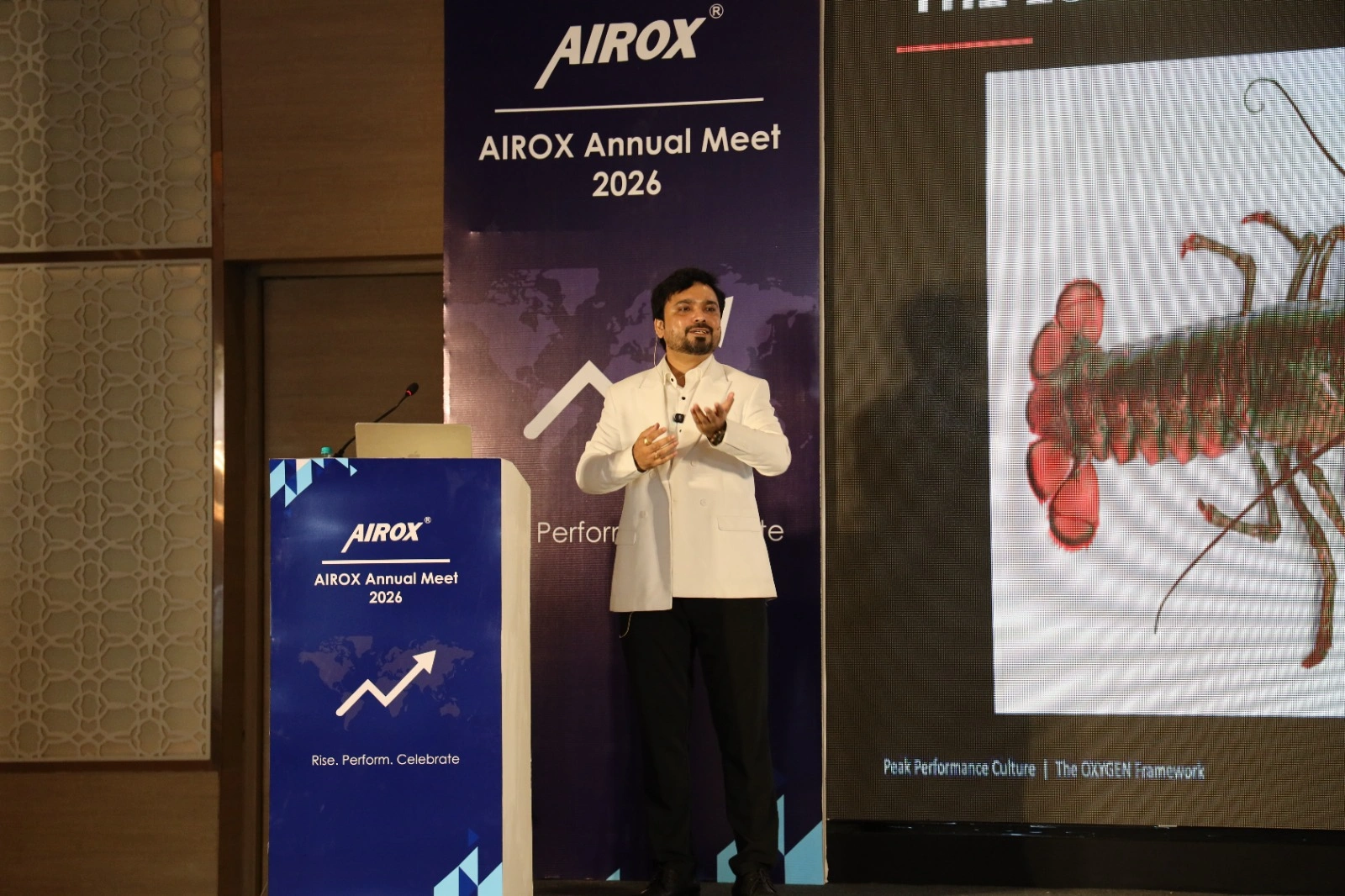
Avinash Chate - Top Motivational Speaker - Corporate Training Session at Airox Technologies
When Leadership Ego at the Top Destroys Trust, Teams, and PerformanceI have seen this pattern too many times in my journey as a corporate trainer. A conflict begins at the top. Two powerful people stop listening to each other. Their disagreement becomes personal. Their ego becomes bigger than the institution. And slowly, people across the organization start paying the price.
Key takeaway: when leaders fight for control instead of aligning for purpose, teams lose clarity, trust weakens, and performance suffers silently before the damage becomes visible.
The widely discussed Lilavati Hospital dispute is not just a sensational story. For me, it is a powerful leadership lesson. It reminds us that when relationships at the top break down, the cost is never limited to the individuals involved. The real cost is paid by employees, managers, stakeholders, and the culture of the organization itself.
As Avinash Chate, a TEDx speaker and author of The Winning Edge, I have worked with leaders across 80+ organizations, and one truth stands out clearly: confusion at the top creates stress in the middle and disengagement at the bottom. This is why leadership is not just about authority. It is about emotional maturity, alignment, and responsibility.
Why top-level conflict hurts everyone below
Many people assume leadership conflict is a private matter. It is not. The moment senior leaders stop communicating effectively, the entire organization feels the impact. Priorities become unclear. Decision-making slows down. People begin choosing sides. Meetings become tense. Trust starts disappearing.
In such environments, middle managers suffer the most. They are expected to deliver results, but they do not know whose direction to follow. They are forced to manage politics instead of performance. They spend more time interpreting moods than executing plans.
I often tell leaders in my sessions that employees can tolerate pressure, but they struggle with uncertainty. Pressure can motivate. Uncertainty drains. When the top team sends mixed signals, even capable employees begin to doubt themselves. Their confidence falls. Their initiative reduces. Their emotional energy gets consumed by survival.
This is why mature leadership matters so much. A leader may be brilliant, experienced, and influential, but if ego drives behavior, that leader can still damage the organization deeply.
The hidden cost of ego in leadership
Ego in leadership does not always look loud. Sometimes it appears as refusal to listen. Sometimes it appears as public contradiction. Sometimes it appears as holding on to power, resisting feedback, or treating disagreement as disrespect.
When ego enters leadership relationships, three things usually happen.
- Communication becomes selective.
- Intentions are questioned.
- Organizational purpose gets replaced by personal positioning.
This is where the real decline begins. People stop asking what is right for the institution and start asking who will win. That shift is dangerous.
In my work, I have seen highly capable teams underperform not because they lacked talent, but because they lacked emotional safety. They were working under leaders who were more interested in proving themselves right than building collective progress.
Avinash Chate believes that leadership without self-awareness becomes authority without wisdom. Titles can create compliance, but only character creates trust. If leaders do not manage their ego, their teams will eventually manage the consequences.
A divided leadership team creates a divided workplace. And a divided workplace can never deliver its best energy.
What middle managers and teams experience during leadership clashes
Let us talk about the human side, because that is where the deepest damage happens.
When senior leaders are in conflict, employees begin facing invisible emotional burdens. They become cautious in conversations. They overthink simple decisions. They avoid taking initiative because they fear stepping into political territory. Their focus shifts from contribution to protection.
This is not a small issue. Over time, it affects morale, productivity, and ownership.
I have met professionals who told me, “Sir, the work is not the problem. The confusion is the problem.” That one line captures the reality of many organizations. People are willing to work hard. But they need consistency, fairness, and direction.
In one of my leadership interventions, I noticed that the team was not lacking skill at all. The real issue was mixed messaging from senior leadership. Once we addressed alignment and communication expectations, the team’s energy changed dramatically. This is why I always say that culture is not built by posters on walls. It is built by behavior at the top.
If you want to understand how coordination and trust shape outcomes, I recommend reading The Cemex Case Study Every Leader Must Know to Improve Coordination and Customer Trust. The lesson is simple and timeless: when alignment improves, execution improves.
How leaders can prevent personal conflict from becoming organizational damage
The good news is this: leadership conflict does not have to destroy the organization. Differences are natural. Strong opinions are natural. Debate is healthy. The danger begins only when leaders stop respecting the larger purpose.
Here are the practices I strongly recommend.
- Separate the issue from the individual.
- Discuss disagreements in private, not through signals and camps.
- Align on non-negotiables such as values, priorities, and communication norms.
- Protect the team from emotional spillover.
- Focus on institutional success over personal victory.
In my leadership workshops, I often use principles from the KITE Leadership Framework to help leaders develop clarity, influence, trust, and execution discipline. What I have found is that many conflicts do not become dangerous because of the disagreement itself. They become dangerous because leaders do not have the maturity to handle disagreement constructively.
This is where coaching, reflection, and structured leadership development become essential. Even accomplished leaders need spaces where they can examine their blind spots honestly.
I have seen this in organizations like JSW Steel, where sustained performance is never just about targets. It is also about alignment, discipline, and people capability. Strong organizations understand that leadership behavior is not a private matter. It directly affects business outcomes.
What organizations must do to protect culture and performance
If you are a business owner, senior leader, or HR professional, do not wait for conflict to become a crisis. Build systems of human accountability early. I am not talking about processes or technical structures. I am talking about leadership habits, communication discipline, and people development.
Organizations must actively create a culture where:
- Leaders are trained to disagree respectfully.
- Middle managers receive clarity and support.
- Communication is consistent across levels.
- Personal ego is not rewarded over team contribution.
- Trust is treated as a business asset.
This is why leadership development and employee engagement cannot be treated as optional. They are strategic investments in organizational health. If you want to strengthen your people culture, I also suggest reading 10 Ways to Enhance Employee Engagement Through Corporate Training in Kolhapur and 10 Actionable Strategies for Enhancing Team Collaboration in the Workplace. Both highlight a truth I strongly stand for: engaged teams and aligned leaders create sustainable success.
Avinash Chate has always believed that people do not leave organizations only because of workload. Very often, they leave because of unresolved tension, poor communication, and leadership inconsistency. If the top becomes emotionally unstable, the culture below becomes professionally unstable.
The leadership lesson I want every professional to remember
The Lilavati Hospital story is dramatic, but the underlying lesson is common. In many workplaces, there may not be a public scandal, but there is still silent damage caused by ego, insecurity, and poor communication at the top.
My message is simple. If you are in leadership, your emotions are not yours alone. Your behavior shapes the environment in which others work. Your conflict style becomes part of the culture. Your maturity becomes the team’s confidence. Your ego can either stay under control or spread confusion across the organization.
As Avinash Chate, I want leaders to remember that real leadership is not winning over people. It is winning trust, alignment, and commitment. It is not about proving authority. It is about protecting purpose.
If you want your team to perform better, start by asking a difficult question: are your people working in clarity, or are they working in the shadow of leadership conflict?
The answer to that question can change the future of your organization.
If you are ready to build stronger leadership, better communication, and healthier team culture, book a corporate training session with me.
Frequently Asked Questions
How does leadership ego affect employee performance?
Leadership ego creates confusion, weakens trust, and reduces psychological safety. Employees become more cautious, less collaborative, and less willing to take initiative, which directly affects performance.
Why do middle managers suffer the most during top-level conflicts?
Middle managers are expected to execute strategy while managing teams, but leadership conflict gives them mixed signals. They often face pressure from multiple sides without enough clarity or support.
Can disagreements between leaders ever be healthy?
Yes, healthy disagreement is essential for better decisions. The problem begins when disagreement becomes personal, ego-driven, or publicly divisive, harming team trust and organizational focus.
What is the first step to reducing leadership conflict?
The first step is honest alignment on shared purpose, communication norms, and expected behavior. Leaders must separate personal emotions from organizational priorities.
How can corporate training help prevent these issues?
Corporate training helps leaders build self-awareness, communication skills, conflict management ability, and team alignment. It creates a common language for trust, accountability, and collaboration.
Related Articles by Avinash Chate
- The Mirroring Technique That Helps You Build Trust and Close More Deals
- Motivational Speaker for Pune BPO and KPO Night-Shift Teams — Combating Burnout and Boosting Engagement
- Micro Management vs Ownership: Lessons for Maharashtra's Corporate Leaders
About the Author
Avinash Chate is a TEDx speaker, published author of The Winning Edge and The Unanswered, and founder of The Future Corporate & Business Coaching. With over 15 years of experience training 80+ organizations including Kiran Gems, Institute of Company Secretaries of India, Veritas Engineering & Erectors, Nestle, Avinash is recognized as Maharashtra's leading corporate trainer. He created the KITE Leadership Framework and the 25-Star Competency Framework™, delivering high-impact programs across leadership, team building, sales transformation, and emotional intelligence.
📞 +91 8793630001 | ✉️ connect@avinashchate.com | 🌐 avinashchate.com
Book Avinash Chate for Your Next Event
Maharashtra's #1 Corporate Trainer · India's leading Motivational Speaker & Team Building Expert · 2x TEDx · Available across India in English, Hindi & Marathi.
✅ Thanks! Avinash team will reach out within 24 hours.'}).catch(function(e){f.outerHTML='Something went wrong. WhatsApp +91 8793630001
'});return false;"> Select Service Motivational Speaking / Keynote Team Building Workshop Corporate Training / Leadership Development Manager Development Employee Training Outbound Training Book Avinash Now →Or WhatsApp directly: +91 87936 30001
Avinash Chate services
Corporate Trainer in Maharashtra · Top Corporate Trainers in Maharashtra · Leadership Trainer in Maharashtra · Top Leadership Trainers in Maharashtra · Team Building Trainer in Maharashtra · Top Team Building Trainers in Maharashtra · Motivational Speaker in Maharashtra · Top Motivational Speakers in Maharashtra · All service locations
← Back to all articles · Book Avinash Chate
By Avinash Chate — Maharashtra’s #1 Corporate Trainer & Motivational Speaker. .