Office मधला हा Blind Spot सगळं बिघडवतो
अनेक कार्यस्थळांवर कामगिरी कमी होण्यामागे कौशल्याचा अभाव नसतो, तर स्वतःच्या त्रुटी न दिसणे हे मुख्य कारण असते. आजूबाजूचे सर्वजण समस्या ओळखतात, पण संबंधित व्यक्त...
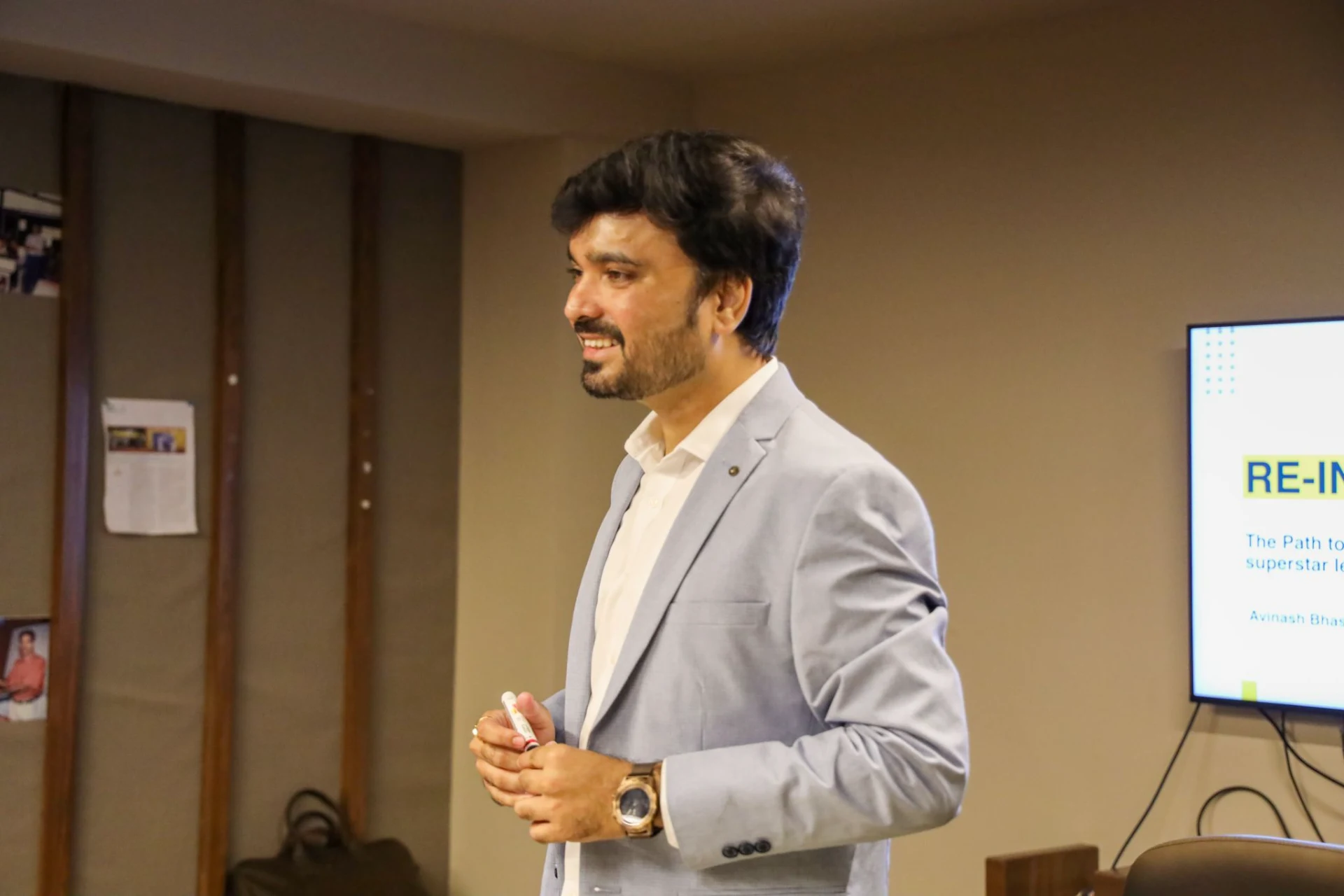
Avinash Chate - Best Corporate Trainer conducting leadership session
The Workplace Blind Spot That Quietly Damages PerformanceIn many organizations, the biggest problem is not lack of skill. It is lack of self-awareness. I have seen highly capable people underperform, not because they were unqualified, but because they could not see the habits, assumptions, and behaviors that were limiting them.
Key takeaway: When a person cannot identify their own blind spot, performance drops, trust weakens, and teamwork becomes harder than it should be.
This insight came alive during a powerful employee motivation and team building session where I spoke about self-awareness, preparation, confidence, and the role of calm understanding in collaboration.
As Avinash Chate, a TEDx speaker and author of The Winning Edge, I have worked with leaders and teams across 80+ organizations, and one pattern appears again and again: people are often judged less by what they know and more by what they fail to notice about themselves.
What exactly is a workplace blind spot?
A blind spot is a weakness, behavior, or limitation that is visible to others but invisible to the person displaying it. That is what makes it dangerous. If I know I have a weakness, I can work on it. But if I do not know it exists, I keep repeating it.
In the workplace, blind spots show up in simple but costly ways. A manager believes they are being clear, while the team feels confused. An employee thinks they are confident, while others experience them as unprepared. A team member assumes silence means agreement, while frustration quietly builds around them.
The real issue is not intention. Most people do not mean to create problems. The issue is lack of awareness. And in professional life, lack of awareness creates avoidable damage.
I often say that growth begins where defensiveness ends. The moment I become willing to ask, What am I not seeing?, I create the possibility of improvement.
Why confidence without preparation fails
One of the most misunderstood ideas in professional development is confidence. Many people think confidence alone can carry them. It cannot. Confidence may help you begin, but preparation helps you sustain performance.
I have met professionals who speak boldly in meetings but do not do the homework. They rely on style instead of substance. For a while, this may impress people. But eventually, reality catches up. Teams notice. Leaders notice. Results expose the gap.
That is why I remind participants in my sessions that confidence without preparation is fragile. It looks strong until pressure arrives. Then it collapses.
True confidence is built on competence. Competence is built on preparation. And preparation begins with humility. If I assume I already know enough, I stop learning. If I accept that I may be missing something, I become sharper.
This is one reason self-awareness is central in my KITE Leadership Framework. Leaders and professionals must keep evaluating not only what they are doing, but how they are doing it, how others are experiencing it, and what patterns need correction.
How blind spots hurt teams more than individuals
Many people think their blind spot is a personal issue. It is not. In a workplace, every blind spot has a ripple effect. When one person lacks awareness, the team pays the price.
If a leader does not realize they interrupt people, the team stops sharing ideas. If a colleague does not see that they react emotionally under pressure, others begin avoiding difficult conversations. If an employee does not recognize that they miss deadlines after overcommitting, the entire workflow suffers.
This is why team building is not just about energy, games, or motivation. It is about helping people see how their behavior affects others. Real teamwork improves when people develop the maturity to listen, reflect, and adjust.
In one corporate engagement, I saw this shift happen beautifully with teams from Matchwell Engineering. The breakthrough did not come from teaching a complicated theory. It came from helping people notice the gap between intention and impact. Once that gap became visible, collaboration improved quickly.
Most workplace friction is not caused by bad people. It is caused by unseen habits, unspoken assumptions, and unexamined behavior.
That is why calmness matters so much in teams. When people are constantly reactive, they defend themselves instead of understanding each other. But when they stay calm, they can process feedback without turning every conversation into a conflict.
How to identify your own blind spot before it becomes costly
The hardest part about a blind spot is that you cannot spot it alone all the time. You need reflection, feedback, and honest observation. Over the years, Avinash Chate has encouraged professionals to build simple habits that increase self-awareness without making the process complicated.
Ask for specific feedback instead of general praise. Do not ask, How am I doing? Ask, What is one thing I do that reduces my effectiveness?
Observe repeated patterns. If the same tension appears in different situations, the common factor may be you.
Notice emotional triggers. The places where you become defensive often hide important lessons.
Review outcomes, not just effort. Hard work matters, but results reveal whether your approach is actually working.
Create space for reflection. A few quiet minutes after a meeting can teach more than hours of rushed activity.
Self-awareness is not self-criticism. It is self-correction. The goal is not to feel bad about yourself. The goal is to become more effective, more balanced, and more valuable to your team.
If you want to strengthen your leadership perspective further, I recommend reading 10 Essential Leadership Traits for a Post-Pandemic Business Landscape. It complements this conversation well because awareness and adaptability are deeply connected.
Why silence, patience, and understanding matter in teamwork
Some people assume strong teams are always loud, fast, and highly expressive. I disagree. Strong teams are not defined by noise. They are defined by clarity, trust, and emotional steadiness.
In many workplaces, people speak quickly but listen poorly. They react instantly but understand slowly. This creates confusion, ego clashes, and unnecessary tension. A team does not become stronger just because everyone is active. It becomes stronger when people know when to speak, when to pause, and how to understand one another.
I have seen teams transform when they learn one simple discipline: do not rush to defend, rush to understand. That shift alone reduces conflict and improves decision-making.
When people are calm, they can receive feedback. When they are patient, they can understand context. When they are thoughtful, they can collaborate without turning every disagreement into a personal battle.
This is especially relevant in modern workplaces where communication is often fragmented. If your systems are unclear and your conversations are scattered, blind spots multiply. That is why I also encourage professionals to read Your Business Runs on WhatsApp Groups — Here's Why That's Killing Your Growth. Many organizational blind spots are reinforced by poor communication structures.
What high-performing professionals do differently
The best professionals are not those who never make mistakes. They are the ones who notice faster, learn faster, and adjust faster. They do not protect their ego at the cost of their growth.
They prepare before important conversations. They ask questions before making assumptions. They seek clarity before taking action. And most importantly, they remain teachable even after success.
This is one principle I emphasize consistently in my work as Avinash Chate. Long-term performance is never built on talent alone. It is built on awareness, discipline, and the willingness to improve what others can already see.
For learning and development teams, this is becoming even more relevant. The future of workplace capability is not only technical training. It is behavioral sharpness, communication maturity, and leadership readiness. That is why this article aligns closely with Best Corporate Training Topics for 2026 in Maharashtra — What L&D Teams Are Prioritizing.
If you are serious about improving team performance, begin with a simple question: what are we not seeing? That question can unlock better conversations, stronger execution, and healthier workplace relationships.
The real shift begins with humility
The workplace blind spot is dangerous because it hides in familiarity. We assume our way is fine because it is our way. But growth demands a higher standard. It asks us to examine not only our strengths, but also our unseen limitations.
I believe the most powerful professionals are not the loudest or the most self-assured. They are the most aware. They know that every role, every team, and every success story can be improved by deeper reflection.
As Avinash Chate, TEDx speaker and author of The Winning Edge, I have seen one truth repeatedly: the moment people become willing to see themselves clearly, their performance begins to change.
If you want your team to improve motivation, self-awareness, collaboration, and execution, book a corporate training session here.
Frequently Asked Questions
What is a blind spot in the workplace?
A workplace blind spot is a behavior, weakness, or limitation that others can see but the individual does not recognize in themselves. It often affects communication, performance, and teamwork.
Why is self-awareness important for employees?
Self-awareness helps employees understand how their actions affect outcomes and colleagues. It improves decision-making, communication, accountability, and professional growth.
Can confidence become a problem at work?
Yes, confidence becomes a problem when it is not supported by preparation and competence. Confidence without substance may create a strong first impression, but it usually fails under pressure.
How can teams reduce blind spots?
Teams can reduce blind spots by encouraging honest feedback, improving communication, reflecting on recurring issues, and creating a culture where learning matters more than ego.
How can I book Avinash Chate for a corporate training session?
You can book Avinash Chate for a corporate training session by visiting the official website at https://avinashchate.com.
About the Author
Avinash Chate is a TEDx speaker, published author of The Winning Edge and The Unanswered, and founder of The Future Corporate & Business Coaching. With over 15 years of experience training 80+ organizations including JSW Steel, Ellora Natural Seed Pvt Ltd, Navsahyadri Education Society's Group of Institutions, Atlantis Group, Avinash is recognized as Maharashtra's leading corporate trainer. He created the KITE Leadership Framework and the 25-Star Competency Framework™, delivering high-impact programs across leadership, team building, sales transformation, and emotional intelligence.
📞 +91 8793630001 | ✉️ connect@avinashchate.com | 🌐 avinashchate.com
Book Avinash Chate for Your Next Event
Maharashtra's #1 Corporate Trainer · India's leading Motivational Speaker & Team Building Expert · 2x TEDx · Available across India in English, Hindi & Marathi.
✅ Thanks! Avinash team will reach out within 24 hours.'}).catch(function(e){f.outerHTML='Something went wrong. WhatsApp +91 8793630001
'});return false;"> Select Service Motivational Speaking / Keynote Team Building Workshop Corporate Training / Leadership Development Manager Development Employee Training Outbound Training Book Avinash Now →Or WhatsApp directly: +91 87936 30001
Related Articles by Avinash Chate
- Sustainability Training for Employees: Why Mindset Beats Labels
- Bapu Nadkarni's 131 Balls Without a Run: What Unwavering Focus Teaches Indian Professionals
- Own Your Mistakes: Accountability Lessons from USA T20 World Cup 2024
Work with Avinash Chate
- Best Motivational Speaker in Maharashtra →
- Motivational Speaking for Corporate Events →
- Best Motivational Speaker in Mumbai →
Avinash Chate services
Corporate Trainer in Maharashtra · Top Corporate Trainers in Maharashtra · Leadership Trainer in Maharashtra · Top Leadership Trainers in Maharashtra · Team Building Trainer in Maharashtra · Top Team Building Trainers in Maharashtra · Motivational Speaker in Maharashtra · Top Motivational Speakers in Maharashtra · All service locations
← Back to all articles · Book Avinash Chate
By Avinash Chate — Maharashtra’s #1 Corporate Trainer & Motivational Speaker. .