Sales Trainer in Mumbai for B2B and BFSI Teams | Avinash Chate
Mumbai sales doesn't fail at product knowledge — it fails at qualification, pricing conversations and stalled second meetings. Avinash Chate, TEDx speaker and author of The Winning Edge, runs the Sales & Marketing Transformation program for Mumbai BFSI relationship teams, Powai SaaS AEs, Lower Parel media planners and Andheri channel sellers. The program rebuilds a Mumbai seller's discovery, value-articulation and negotiation muscle for buyers who have already short-listed three vendors before the first call. With clients including RBI, Mumbai Port Authority, Hitachi and Ferrero, the curriculum is calibrated for both regulator-facing BFSI conversations and consumer-led FMCG distributor reviews. Outcomes are tracked on pipeline velocity, win-rate on top-3 logos and average deal size — not seat-time.
English, Hindi and Marathi
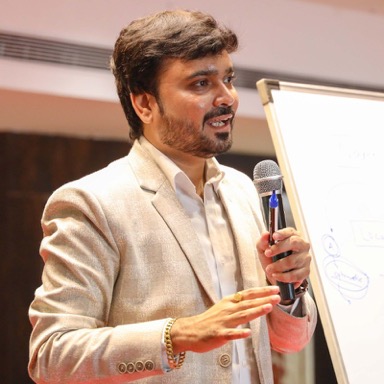
Built for Mumbai BFSI, SaaS and FMCG Channel Sales
Mumbai is India's BFSI capital and a media-FMCG headquarters. We adapt scripts for branch banking in Fort, wealth conversations in BKC, SaaS demos in Powai and distributor town-halls across Vasai-Virar.
The Winning Kite Framework for Sellers
KITE — EQ, RQ, PQ and Success — reframes selling: EQ to read a CFO's hesitation, RQ to expand inside the buying committee, PQ to forecast honestly, Success to commit to a quarter outcome rather than a meeting outcome.
Where We Train in Mumbai
Sessions delivered at BKC, Lower Parel, Powai, Andheri MIDC, Vikhroli and Thane-Belapur. Channel-partner roadshows extended to Bhiwandi and Vashi.
Format and Languages
Sales kick-off keynotes, 2-day workshops, 6-week field-coaching cohorts and channel-partner empowerment camps in English, Hindi and Marathi.
Recent Sales Engagement in Mumbai
A BFSI relationship-management cohort headquartered in BKC recently ran the program with 36 senior RMs spread across wealth, corporate banking and treasury sales. The brief was sharp — the team was losing top-3 logo conversations to nimbler boutique competitors, and discount conversations were starting too early in the cycle. We anchored the engagement in the KITE framework. EQ drills exposed how RMs were missing CFO hesitation signals during pricing discussions; RQ rebuilding shifted them from single-threaded contacts to mapping the full buying committee across treasury, finance and procurement. PQ sessions reset forecast honesty, replacing wishful "commit" with evidence-backed pipeline. The 6-week field-coaching layer included live call shadowing across BKC and Lower Parel, paired with a parallel track for Powai SaaS AEs and Andheri SEEPZ media planners. Ninety-day reinforcement check-ins tracked pipeline velocity, win-rate and average deal size. By the 90-day mark, the team's win-rate on contested top-3 logos had improved measurably and early-cycle discounting had dropped — the kind of compounded outcome only the structured KITE + 90-day reinforcement format delivers.
Design the session around the fast local
Attendance in this city is a railway question before it is an engagement question. Teams live along the Western, Central and Harbour lines. A 9 am start in BKC is a 6 am alarm in Virar or Dombivli, and a session that runs past six begins dissolving as people quietly calculate their train. Mumbai buys tight formats for good reason: crisp half-days, one-day programmes that start at 9:30 and land by 5:30, and staggered batches so a branch network or a trading floor is never empty.
Venue logic follows the same arithmetic. A training room inside the office beats a hotel two line-changes away. For quarter-end teams the honest design is often two short runs rather than one long day, because pulling forty revenue-carrying people off a floor for eight hours is a real cost and everyone in the room knows it.
The room turns honest after the senior-most person leaves
There is a moment on a BKC banking floor that decides whether a session works, and it arrives when the senior-most person in the room walks out. Until then the answers are correct, brief and useless. Everyone is aligned. Escalation works well and feedback is given regularly. Nobody in that room is lying. They are doing the arithmetic every employee in every company does, and weighing one honest sentence against a career gives an answer that is entirely sensible.
So the design has to buy that candour rather than hope for it. Sometimes it is as simple as the sponsor opening the session, saying plainly why the programme exists and then going back to work. Sometimes it is splitting a mixed-grade room into two runs, so that nobody has to practise a difficult conversation while their own boss watches. Sometimes it is working on paper before anybody speaks, because a written answer is easier to give than a spoken one when the room is ranked.
None of this is unique to Mumbai. It is a hierarchy problem, and this city simply carries more hierarchy per square foot than most. Seniority in the room changes what gets said, and every floor here has seniority in the room. A trainer who fails to clear that hurdle in the first hour earns a polite, well-rated session and changes nobody's behaviour on Monday.
Three languages in one training room
English carries Mumbai's boardrooms. Hindi is the floor's lingua franca. Marathi is the register of the public sector, the docks and much of the front-line workforce. A single session for a branch network or an operations team can move through all three inside an hour, and the trainer has to move with it rather than parking in English and losing the back half of the room. Avinash delivers in all three and switches as the room requires, which is exactly what this city's mixed floors need.
Switching register in the middle of a room is a distinct skill, and it is not the same thing as translating. It means noticing inside the first fifteen minutes that a point is landing with the front three rows and sliding off the back four. The fix is almost never to repeat it more slowly. The fix is to change who the example belongs to, so the same idea arrives carried by a story from a branch counter rather than a boardroom, in the language that counter actually runs on. Then say so out loud. A room told the switch is deliberate settles; a room that suspects the trainer is improvising does not.
Register matters as much as language. A regulator's floor, the port's operational hierarchy and a private bank's sales floor each carry a formality of their own. A session pitched at the wrong one is dismissed inside the first few minutes. Reading that register early, in the diagnostic rather than in the room, is part of the craft.
Three hours up the expressway, not a flight away
Every Mumbai engagement follows the same arc: a diagnostic conversation with the sponsor about what is actually breaking, the session, structured practice, and follow-through at thirty, sixty and ninety days, with the KITE framework and the EQ, PQ and RQ lens doing the structural work. The arc is standard. What Mumbai changes is the logistics discipline wrapped around it.
The base is Pune, which for Mumbai work is an advantage rather than a compromise. Follow-through is where most training quietly dies, because the trainer who flew in cannot keep flying back. From Pune, the ninety-day tail of a Mumbai programme is an expressway drive, so the second and third visits actually happen, cohorts get reviewed in person, and sponsors are not left holding a binder and a memory.
Quarter-end is where that tail gets tested. In a city built on numbers, the closing fortnight belongs entirely to the number, and the habits a cohort committed to are the first things surrendered: the one-to-one is postponed, the coaching conversation compresses into an instruction, the review slot is handed to a client. A programme that treats this as indiscipline has misread its own buyer. The workable design plans around it instead. Two habits, chosen by the cohort, small enough to survive the worst week. A light checkpoint on the far side of the crunch rather than inside it. Work that comes through one quarter-end intact usually comes through the rest of the year.
On the record: real work connected to Mumbai
These are specific, verifiable engagements — named organisations and what was actually delivered — not a generic client wall.
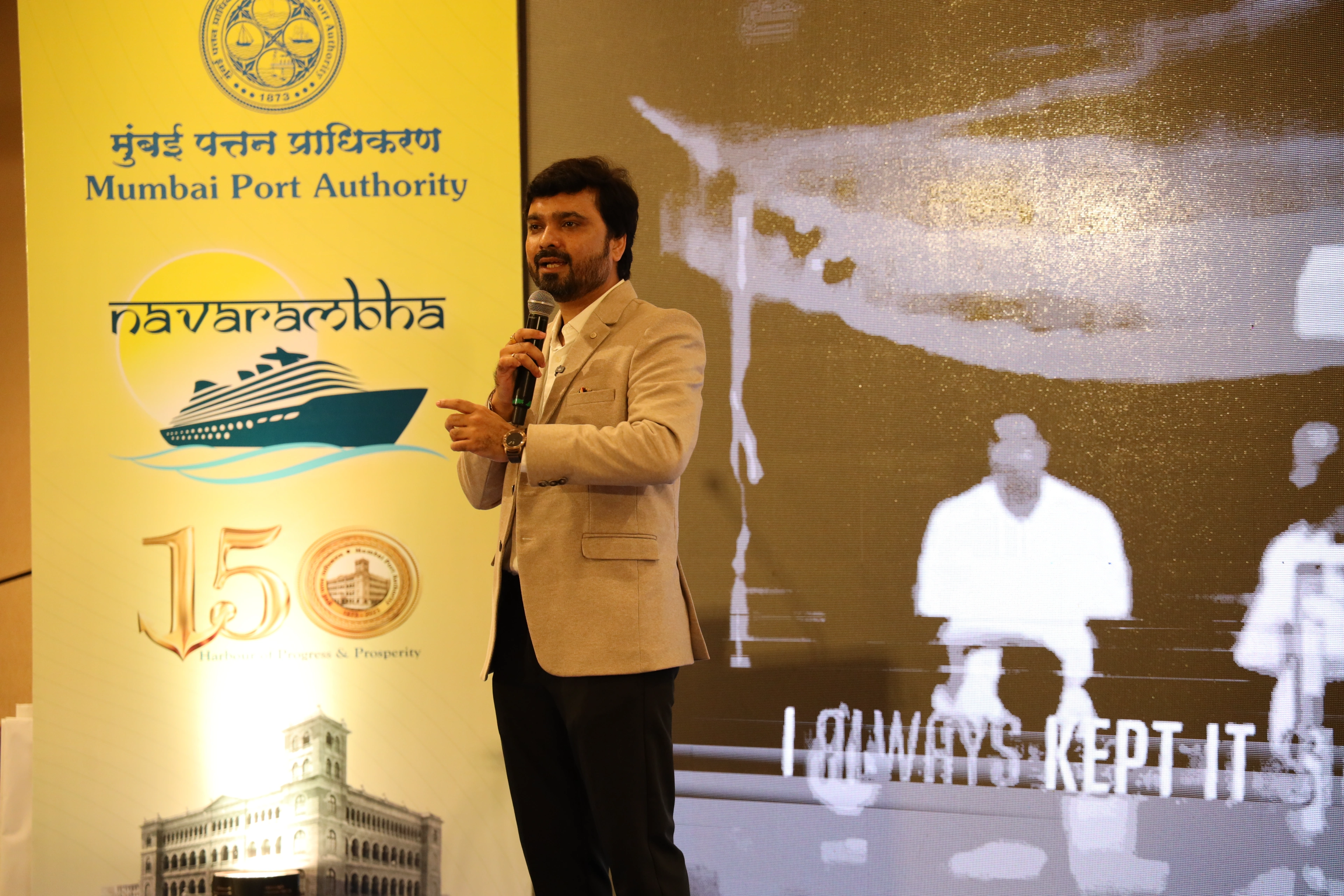
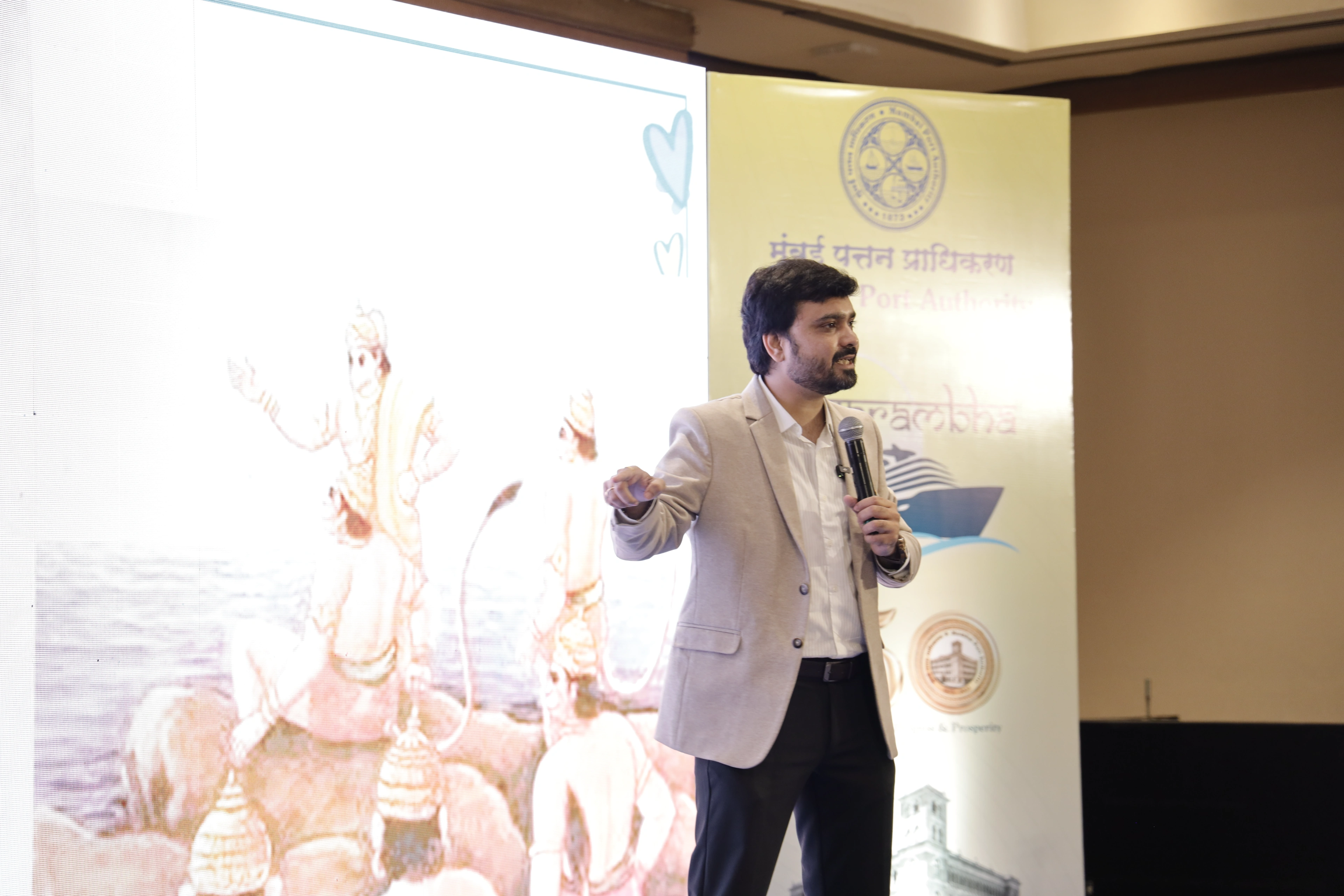
Mumbai Port Authority
Navarambh induction programme for newly recruited officers
Held at Taj President, Cuffe Parade in November 2025 for the authority’s young officers; published as a first-party case study (published record).
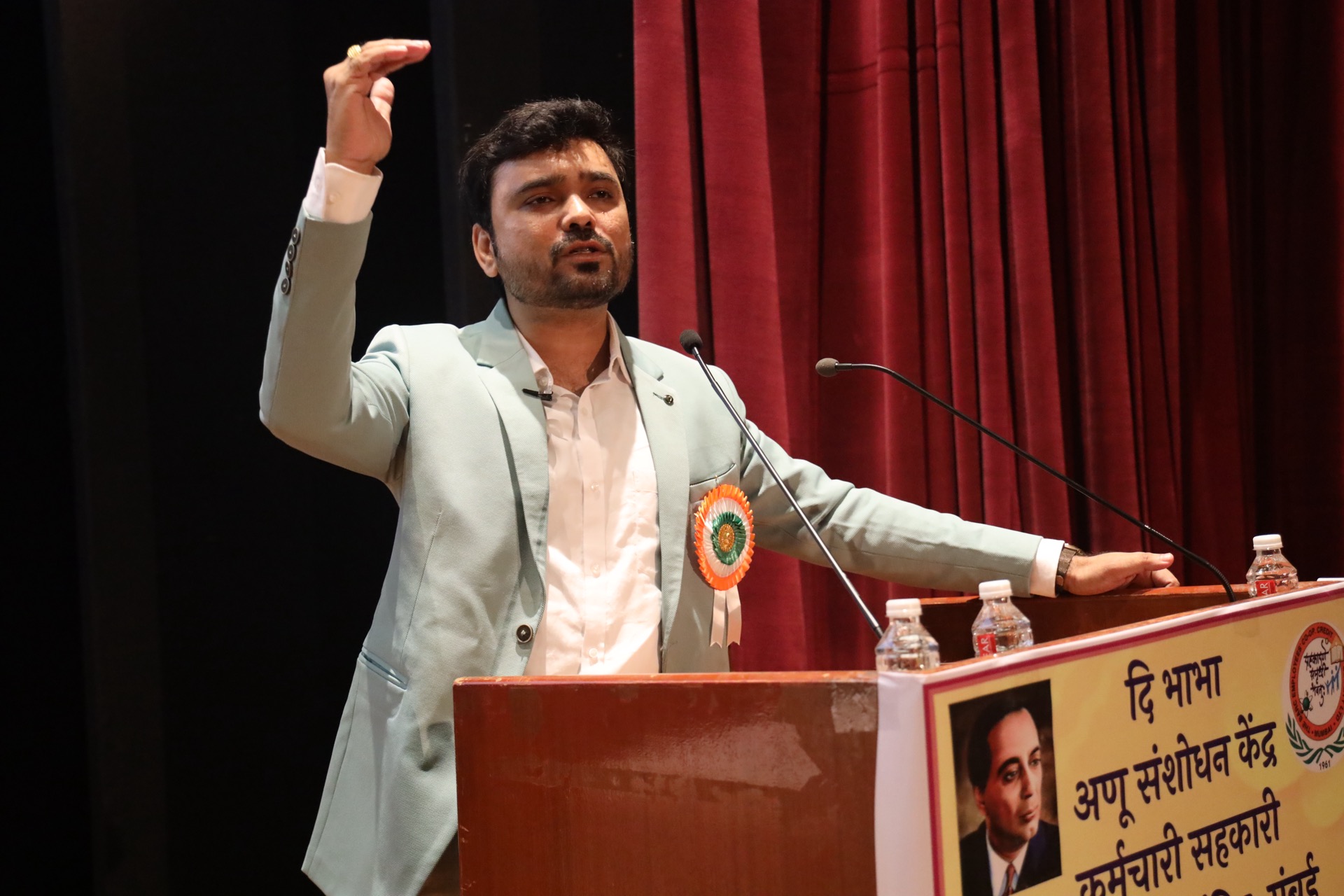
Bhabha Atomic Research Centre
Employee motivation and leadership session
Session for the BARC employees’ co-operative credit society in Mumbai, January 2025.
Thyrocare Technologies Ltd.
Business-growth coaching for the dealer network
Mumbai-headquartered diagnostics company; dealer coaching programme delivered in April 2024.
Gadharva Finchart Enterprises LLP
Training for financial advisors and sales consultants
Mumbai financial-services firm; two-day programme held in Mumbai in September 2025.
Daspati Maratha Charitable Trust
Chief-guest address
Community event at Shivaji Mandir, Dadar in November 2025.
From real sessions
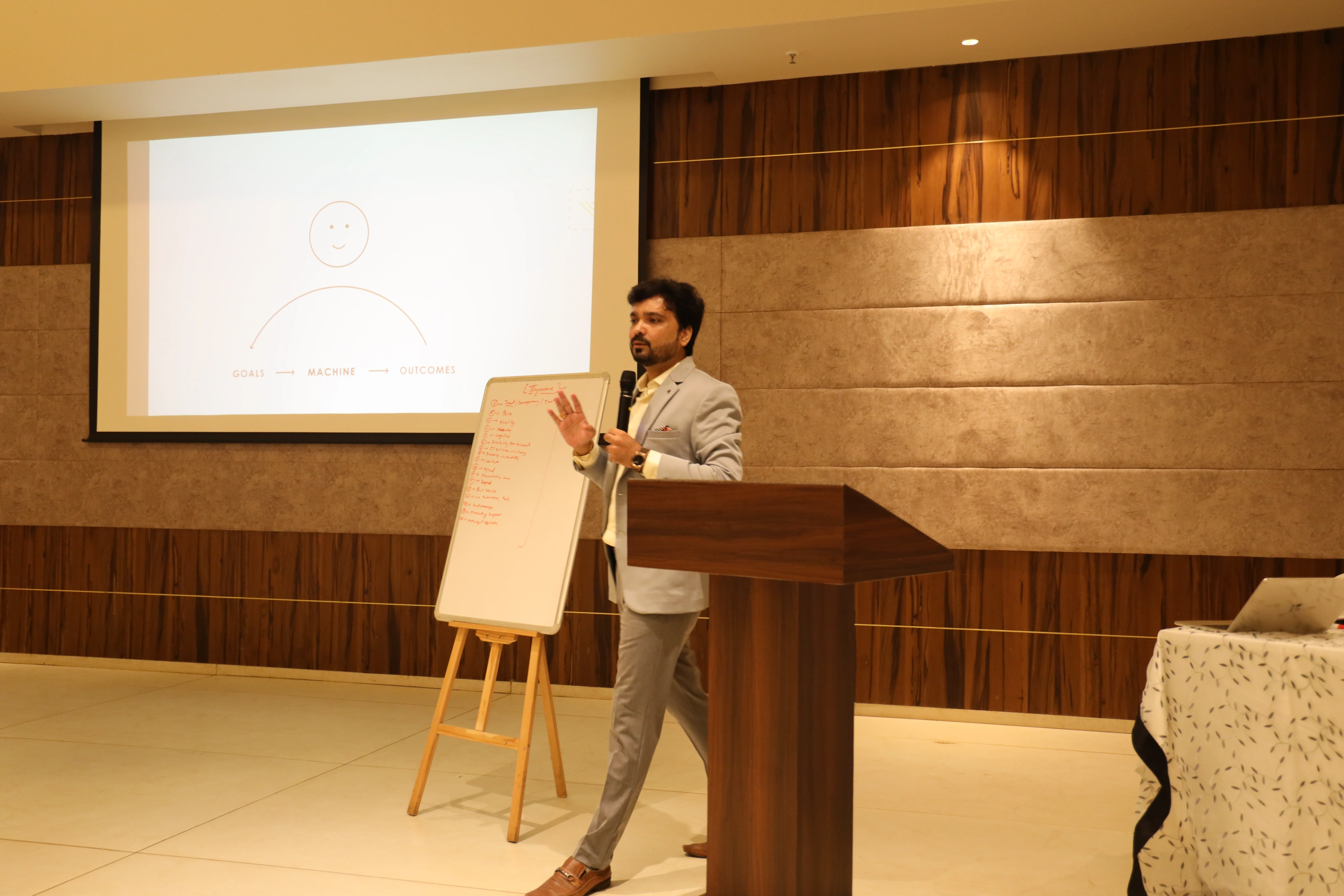
Real rooms, real teams — photographs from delivered sessions, not stock imagery.
Who He Has Trained
Sales Training FAQ — Mumbai
How long is a typical sales training program?
Mumbai cohorts typically pick between a 2-day intensive workshop, a 6-week field-coaching cohort, or a 90-day reinforced program with KITE check-ins at 30 and 60 days. BKC BFSI relationship teams often choose the 90-day format to align with regulator-paced sales cycles, while Powai SaaS AEs and Lower Parel media planners prefer the 2-day plus 6-week format to match their quarterly cadence.
Can the program be delivered in Marathi or Hindi?
Yes. Sessions run in English, Hindi and Marathi, or a blended format mid-session. BKC and Lower Parel BFSI cohorts typically prefer English-led delivery, while Andheri MIDC channel sellers, Vasai-Virar distributor teams and Thane-Belapur shop-floor BD groups absorb the content faster in Hindi-Marathi mixed delivery. Language is locked during the design call, not improvised on the workshop day.
Do you train both inside-sales and field-sales teams?
Yes. The program runs two parallel tracks — inside-sales gets discovery scripting, demo structuring and pipeline-velocity drills designed for screen-based selling, while field-sales gets account planning, branch-visit choreography and multi-stakeholder buying-committee navigation. Mumbai cohorts that mix both often use a shared opening day and split tracks from day two.
How is sales training success measured?
Every Mumbai engagement closes with a 90-day pipeline scorecard signed by the participant and their sales manager. We track pipeline velocity, win-rate on top-3 logos and average deal size against pre-program baselines — not seat-time or smile sheets. Outcomes are reviewed against the KITE pillars — EQ, RQ, PQ and Success — at the 30-day and 90-day check-ins.
Have you worked with Mumbai organisations, or is Mumbai new ground for the practice?
Sessions have been delivered for the Reserve Bank of India and the Mumbai Port Authority, and the wider national roster spans JSW Steel, Hitachi Astemo, Ferrero, BARC and the Indian Army. Mumbai sits inside the home belt: the largest share of work across 80-plus organisations has been delivered in the Pune–Mumbai corridor.
Can our sales teams be trained without losing selling hours at quarter-end?
Yes. Mumbai programmes are routinely built as crisp half-days, staggered batches or early-morning blocks so a branch or floor is never empty, and follow-through is scheduled outside the results window. The design conversation with your sponsor settles this before any dates are proposed.
Plan your Mumbai sales training program
Sales & Marketing Transformation — in English, Hindi and Marathi.
Request a Proposal →Planning this for your team?
Share your name and WhatsApp number and you will get a reply within one business day — usually the same day. Tell us the audience, the objective and rough dates and you get a specific proposal.
Prefer to talk now? ☎ +91 87936 30001 · WhatsApp · Email