Leadership Trainer in Mumbai for Corporate Teams | Avinash Chate
Mumbai's pace rewards leaders who can switch between BKC boardrooms, Powai engineering reviews and Lower Parel client pitches without losing their team. Avinash Chate, TEDx speaker and author of The Winning Edge, runs the Leadership Development Program for Mumbai-based BFSI, IT, manufacturing and port-logistics organisations including the Mumbai Port Authority. Each cohort is calibrated for matrix structures, multi-shift floors and cross-cultural teams typical of South Bombay HQs and suburban delivery centres. Participants leave with a working operating system for one-on-ones, decision-making, feedback and stakeholder influence — not slide-deck theory. With 25,541+ professionals and 80+ organisations trained, the program has become a steady choice for Mumbai HR and L&D heads who need measurable behaviour change in 8-12 weeks.
English, Hindi and Marathi
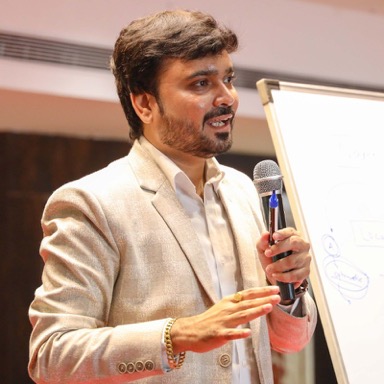
Built for Mumbai BFSI, Tech and Port-Logistics Teams
Mumbai leaders run the country's largest BFSI corridor, Powai-Vikhroli tech campuses and the JNPT-MbPA logistics network. The program codes for compliance pressure, regulator-facing reviews, and high-stakes client conversations across Andheri, Thane and Navi Mumbai sites.
The Winning Kite Framework for Leaders
The KITE framework — Emotional Quotient, Relationship Quotient, Performance Quotient and Success — is taught as four levers a Mumbai leader actually pulls during quarter-end. EQ steadies you in escalations; RQ wins board and union rooms; PQ converts plans into shipped numbers; Success defines what "done" looks like at every level.
Where We Train in Mumbai
On-site delivery across BKC, Lower Parel, Powai, Andheri East, Vikhroli LBS corridor and Thane-Belapur. Residential cohorts arranged at Lonavala and Karjat for Mumbai HQs.
Format and Languages
Keynotes (60-90 min), 1-day workshops, 3-day intensives and 8-week residential cohorts in English, Hindi and Marathi.
Recent Leadership Engagement in Mumbai
A BFSI organisation headquartered in BKC recently ran a 10-week leadership cohort for 28 newly-promoted mid-managers spread across operations in Lower Parel, a Powai analytics pod and a Navi Mumbai vendor-management team. The brief was sharp — first-time managers were defaulting to escalation rather than decision-making during quarter-end client reviews, and cross-tower hand-offs between Powai and Vashi were costing them three to four working days per cycle. We anchored the engagement in the KITE framework, opening with EQ modules that surfaced unspoken anxieties around regulator-facing reviews, then ran RQ rebuilding through BKC-Powai-Navi Mumbai cross-pod paired challenges. PQ converted those insights into a weekly one-on-one cadence, a shared escalation matrix and a Friday cross-tower retrospective. The cohort closed with a 90-day action plan signed by each manager and their reporting director, with structured 30-day and 90-day check-ins. Cycle-time on cross-tower hand-offs narrowed meaningfully through the next quarter.
Reading the city by its office districts
Mumbai's training briefs sort themselves by postcode. Bandra Kurla Complex holds the financial spine: the National Stock Exchange at Exchange Plaza, SEBI's headquarters, the towers of large banks and consulting firms, and the diamond trade concentrated in the Bharat Diamond Bourse. Nariman Point and Fort keep the legacy institutions, the Reserve Bank of India's headquarters among them. Those are floors where hierarchy is older and communication runs formal by default.
Lower Parel's converted mill compounds are the media and advertising district, where television networks, agencies and digital studios run on pitch cycles and late nights. Andheri East carries the SEEPZ zone's gems, jewellery and electronics exporters alongside dense corporate parks. Powai adds Hiranandani's office towers, L&T's large campus and a startup layer around IIT Bombay. Down the eastern seafront sit the docks, the Mumbai Port Authority's estate, and the freight and shipping offices that keep cargo moving through the night. Four districts, four working cultures. The enquiry email that arrives from each of them reads almost identically.
Two of this city's institutions are already on the client list
Avinash has delivered sessions for the Reserve Bank of India and for the Mumbai Port Authority. Those two institutions anchor opposite ends of Mumbai's working identity: the regulator's measured, precedent-heavy floors and the port's round-the-clock operational grind. A trainer who has stood in front of both knows the distance between those rooms, and how differently the same idea has to be argued in each.
The rest of the roster is national work: JSW Steel, Hitachi Astemo, Ferrero, BARC, the Indian Army, the Border Roads Organisation, the Government of Maharashtra. A Mumbai buyer will notice that some of those organisations, JSW Steel and BARC among them, are themselves headquartered in this city. The point is not the logos. It is that the practice is comfortable inside the formality and scrutiny that institutions of that weight bring with them.
The BFSI floor and the agency floor ask different questions
Banking and financial services generate Mumbai's steadiest briefs: relationship managers and branch teams carrying quarter targets, team leaders inheriting reportees older and longer-tenured than themselves, and floors where compliance has taught everyone to write emails instead of having conversations. Around results season the friction is predictable: targets against capacity, credit against sales. What keeps it professional is a manager who can hold a straight conversation, and that is a smaller population than any org chart suggests.
The Lower Parel economy asks for something else. Agencies and media houses mint managers young, run them through pitch cycles and lose them fast. The brief is usually about leading creative people without flattening them, and about a twenty-nine-year-old suddenly running a team of six. Pharma headquarters ask for field-force effectiveness and first-line manager development. The port and logistics companies on the eastern side ask for supervisor communication, shift discipline and safety conversations that actually land.
Across all of them runs Mumbai's version of the national problem: the first-time manager. The city promotes fast, teams are lean, and the step from top performer to team leader arrives without notice. Whether the floor is a dealing room, a newsroom or a container yard, the failure pattern is identical. Feedback avoided. Delegation hoarded. Escalations sent upward instead of conversations held downward. And it responds to the same disciplined work on communication and emotional intelligence.
Design the session around the fast local
Attendance in this city is a railway question before it is an engagement question. Teams live along the Western, Central and Harbour lines. A 9 am start in BKC is a 6 am alarm in Virar or Dombivli, and a session that runs past six begins dissolving as people quietly calculate their train. Mumbai buys tight formats for good reason: crisp half-days, one-day programmes that start at 9:30 and land by 5:30, and staggered batches so a branch network or a trading floor is never empty.
Venue logic follows the same arithmetic. A training room inside the office beats a hotel two line-changes away. For quarter-end teams the honest design is often two short runs rather than one long day, because pulling forty revenue-carrying people off a floor for eight hours is a real cost and everyone in the room knows it.
On the record: real work connected to Mumbai
These are specific, verifiable engagements — named organisations and what was actually delivered — not a generic client wall.
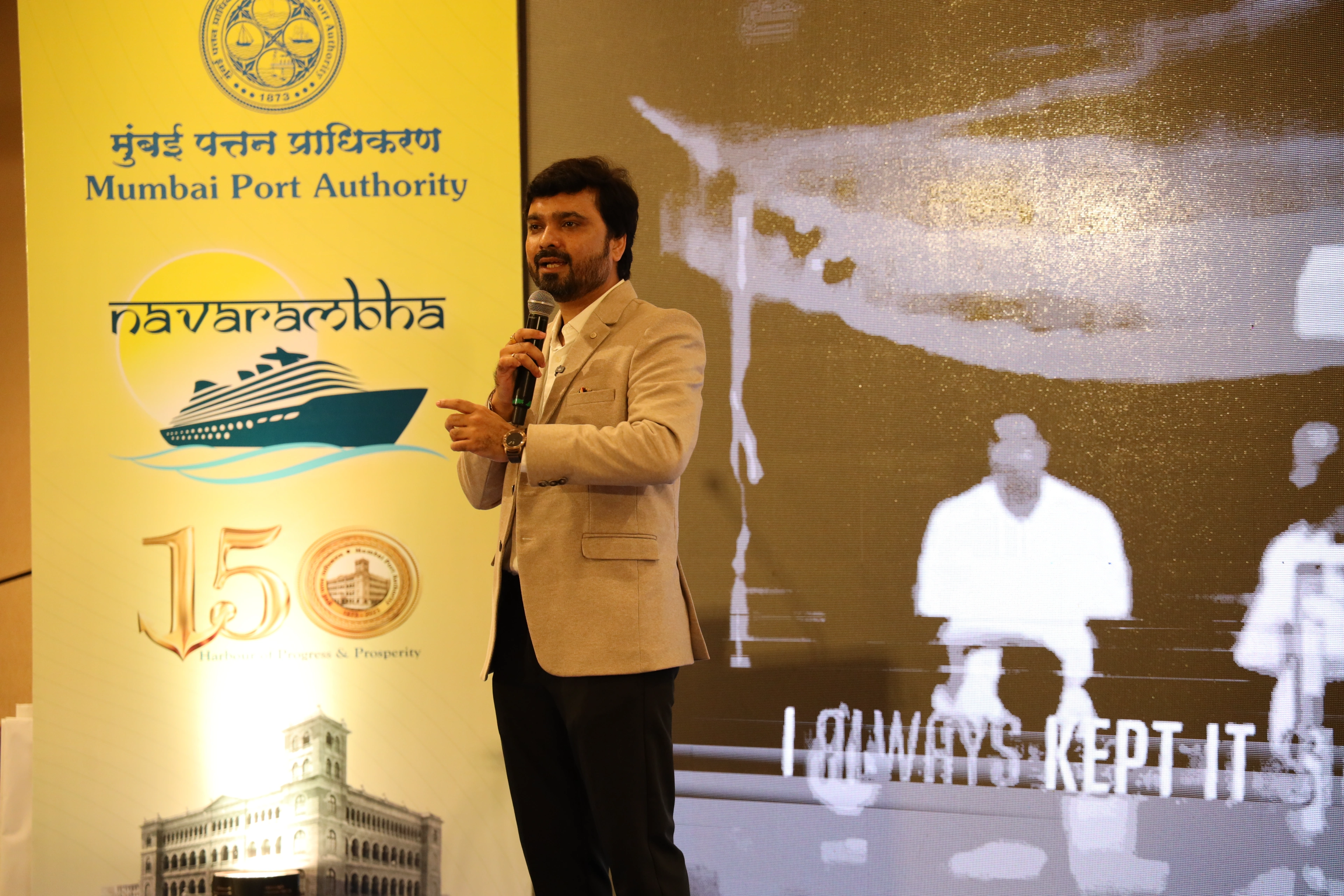
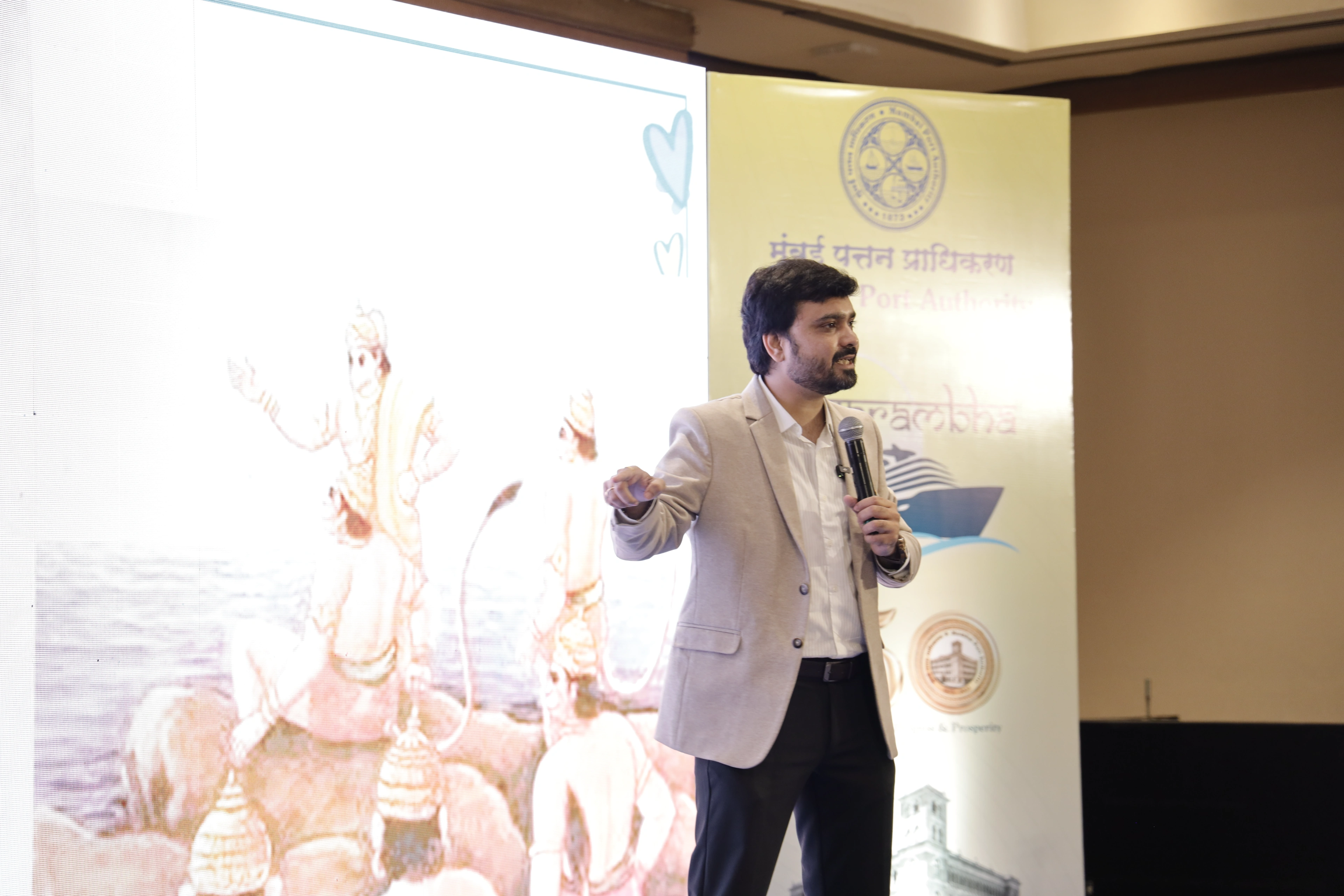
Mumbai Port Authority
Navarambh induction programme for newly recruited officers
Held at Taj President, Cuffe Parade in November 2025 for the authority’s young officers; published as a first-party case study (published record).
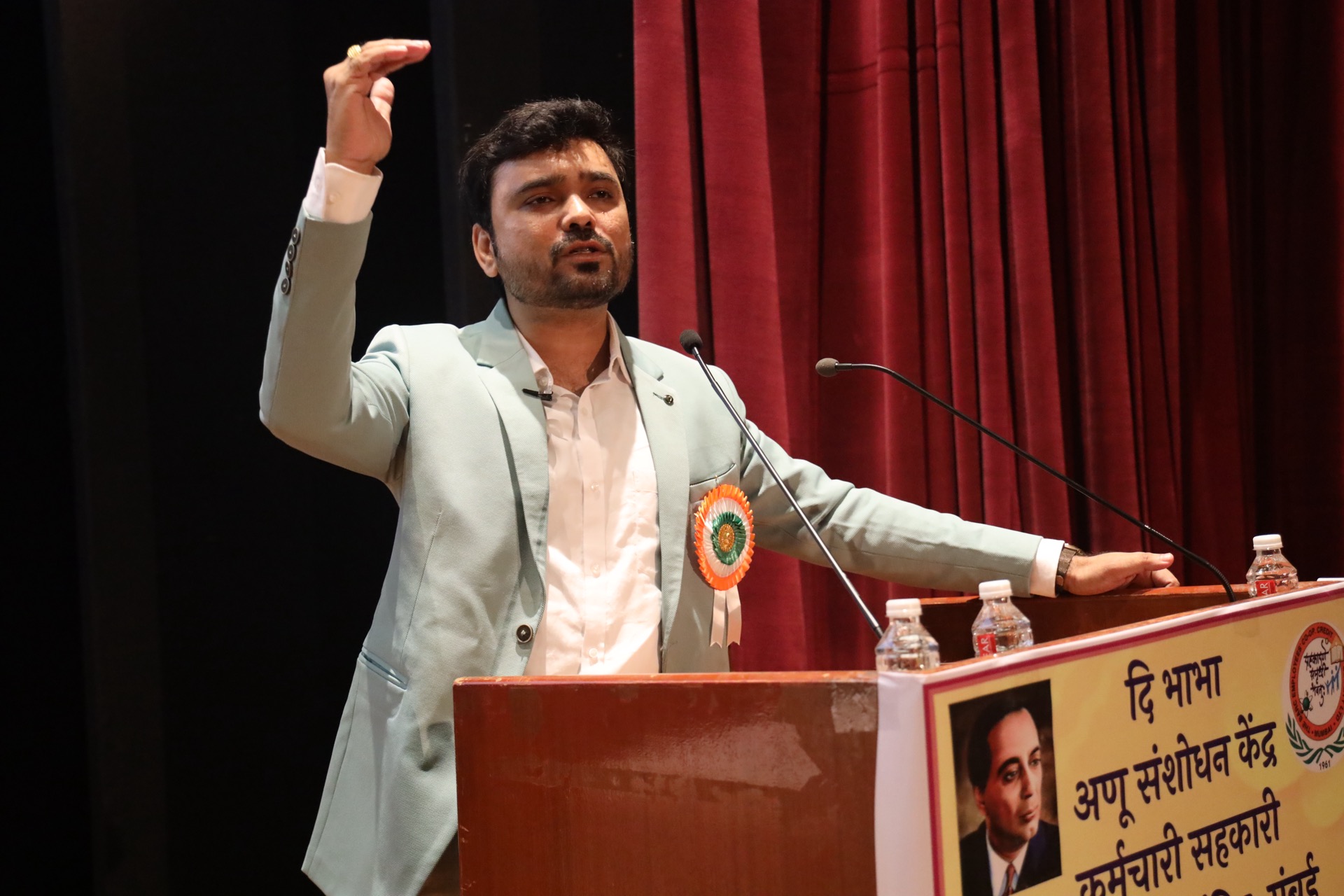
Bhabha Atomic Research Centre
Employee motivation and leadership session
Session for the BARC employees’ co-operative credit society in Mumbai, January 2025.
Thyrocare Technologies Ltd.
Business-growth coaching for the dealer network
Mumbai-headquartered diagnostics company; dealer coaching programme delivered in April 2024.
Gadharva Finchart Enterprises LLP
Training for financial advisors and sales consultants
Mumbai financial-services firm; two-day programme held in Mumbai in September 2025.
Daspati Maratha Charitable Trust
Chief-guest address
Community event at Shivaji Mandir, Dadar in November 2025.
From real sessions
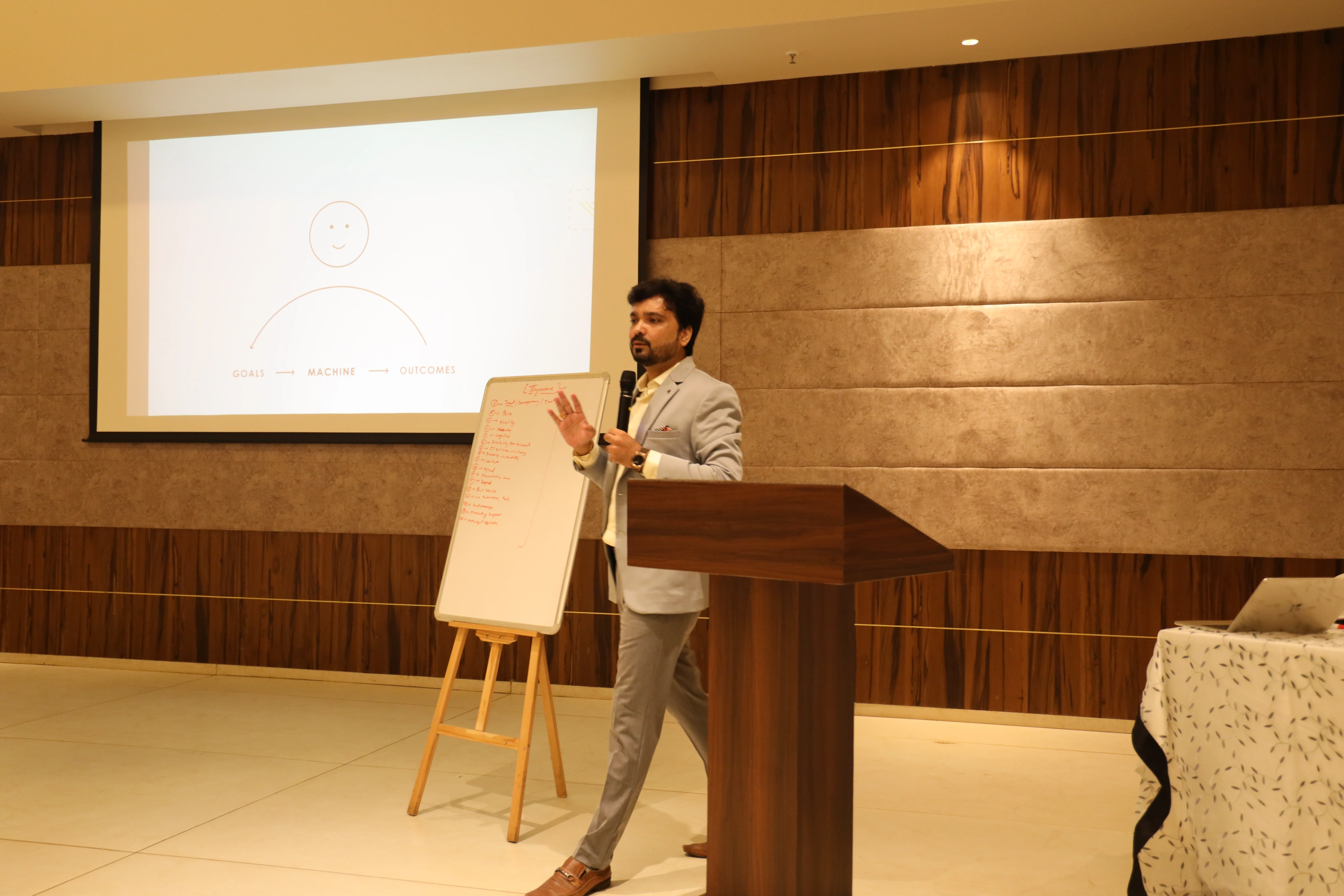
Real rooms, real teams — photographs from delivered sessions, not stock imagery.
Who He Has Trained
Leadership Training FAQ — Mumbai
Who is the program designed for — first-time managers or senior leaders?
Both. Mumbai cohorts typically split into two tracks — first-time managers in Powai engineering pods or BKC client-facing teams stepping up from individual-contributor roles, and seasoned function-heads from Lower Parel BFSI HQs or Navi Mumbai operations preparing for cross-vertical roles. The KITE framework adapts depth and pace, so a tier-1 team-lead and a regional VP can sit in adjacent cohorts without either being under or over-served.
How long is a typical leadership development program?
Most Mumbai engagements run as 8–12 week cohorts — three 1-day in-person modules at the client site (BKC, Powai or Andheri East), spaced three to four weeks apart, with structured practice and manager check-ins between modules. For quarter-pressed BFSI cohorts, a 3-day residential at Lonavala or Karjat compresses the same outcomes into a single working week.
Can sessions be delivered in Marathi or Hindi?
Yes. Mumbai cohorts spanning BKC English-led BFSI teams, Vikhroli-Thane shop-floor leaders and Navi Mumbai logistics supervisors are routinely delivered in an English-Hindi-Marathi mix. English-led is standard for BFSI and Powai tech, while Hindi-Marathi mixed delivery is the default for Thane-Belapur manufacturing and port-logistics cohorts. Language is locked in the design call, not on session day.
Do you provide post-program reinforcement and coaching?
Every Mumbai engagement closes with a signed 90-day action plan tracked against KITE pillars and reviewed jointly by the participant and their reporting manager. Reinforcement includes 30-day and 90-day check-ins, optional 1:1 coaching for HR-identified high-potentials, and a closing review with the L&D sponsor. Outcomes are measured against committed leadership behaviours, not classroom satisfaction scores.
Have you worked with Mumbai organisations, or is Mumbai new ground for the practice?
Sessions have been delivered for the Reserve Bank of India and the Mumbai Port Authority, and the wider national roster spans JSW Steel, Hitachi Astemo, Ferrero, BARC and the Indian Army. Mumbai sits inside the home belt: the largest share of work across 80-plus organisations has been delivered in the Pune–Mumbai corridor.
Can our sales teams be trained without losing selling hours at quarter-end?
Yes. Mumbai programmes are routinely built as crisp half-days, staggered batches or early-morning blocks so a branch or floor is never empty, and follow-through is scheduled outside the results window. The design conversation with your sponsor settles this before any dates are proposed.
Plan your Mumbai leadership program
Leadership development for BFSI, tech and port-logistics teams — in English, Hindi and Marathi.
Request a Proposal →Planning this for your team?
Share your name and WhatsApp number and you will get a reply within one business day — usually the same day. Tell us the audience, the objective and rough dates and you get a specific proposal.
Prefer to talk now? ☎ +91 87936 30001 · WhatsApp · Email