How Networking Helped Build a ₹170 CR Tech Empire — India 2026
Mr. Gandhi, founder of M-Tech Innovations Ltd., grew a ₹170 crore tech empire not just on capital but on the power of strategic networking. Here's the playbook India's entrepreneurs and managers need right now.
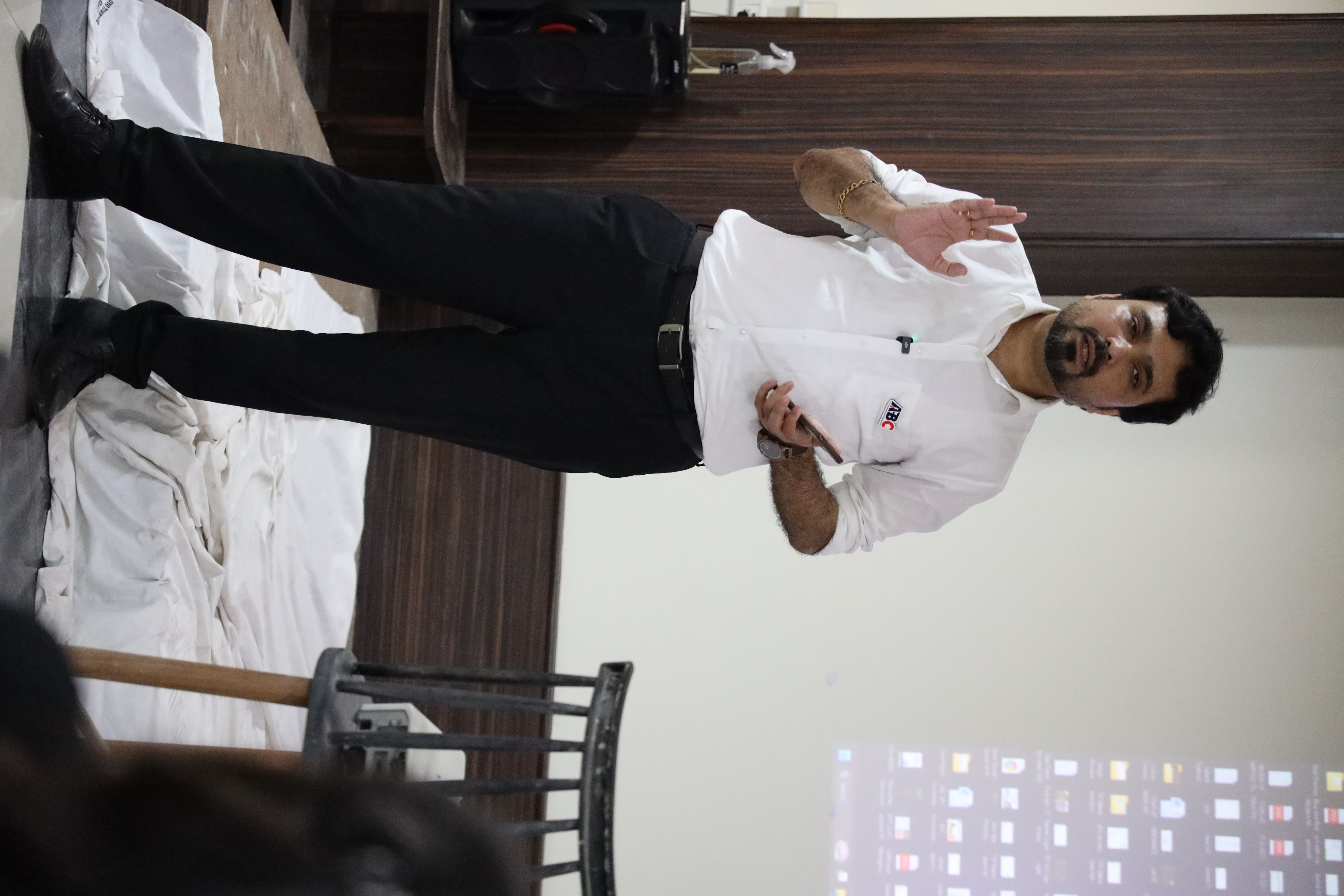
India has 250+ unicorns, and most of them didn't begin with a ₹100 crore funding round—they began with the right conversations. Mr. Gandhi, founder of M-Tech Innovations Ltd., built a ₹170 crore tech empire on exactly this principle: in Indian business, connections matter more than capital, and the right relationship opens doors that money simply cannot buy.
TL;DR- Mr. Gandhi grew M-Tech Innovations to ₹170 CR using strategic networking as the primary growth lever—not just capital
- Connections compound: every relationship generates introductions, which generate opportunities, which generate revenue
- The right networking approach is value-first: share expertise and useful insights before you ask for anything
- Networking mistakes—transactional intent, narrow industry circle—are the fastest ways to kill relationship potential
- Employees, not just entrepreneurs, can double their internal career growth by intentionally building cross-functional relationships
How Mr. Gandhi's Networking Built M-Tech Innovations Into a ₹170 CR Empire
Mr. Gandhi didn't start M-Tech Innovations with a ₹170 crore budget. He started with relationships. The founding and scaling story of M-Tech is a masterclass in how networked thinking compounds over time—each connection unlocking a door that capital alone couldn't open. Banking partnerships for card manufacturing, government contracts for FASTag and PAN card production, collaborations with international payment networks—none of these arrived through cold proposals or pitch decks. They arrived through introductions, conversations, and the compound trust built across years of showing up consistently at the right tables. The ₹170 crore revenue is the financial outcome. The real asset of M-Tech Innovations is the network that made that outcome structurally inevitable.
Why Connections Matter More Than Capital in Indian Business Growth
Here's the thing about capital: it depletes. A ₹10 crore funding round has a finite runway. A well-built professional network, on the other hand, is a renewable resource that appreciates the more carefully you invest in it. Every relationship you deepen generates introductions, which generate opportunities, which generate revenue and strategic advantage. Mr. Gandhi's core insight—validated by M-Tech Innovations' consistent growth across multiple industry verticals—is that Indian entrepreneurs systematically undervalue this compound effect. India's 250+ unicorn founders didn't all begin with institutional backing. Many began with a founder who knew the right five people and understood how to add value to them first. That is not luck. That is disciplined, intentional social capital management.
| Networking Approach | Transactional Networking | Strategic Networking (M-Tech Model) |
|---|---|---|
| Primary Goal | Immediate gain: job, client, or referral | Long-term value creation and trust-building |
| First Move | Ask for something immediately after introduction | Offer something genuinely useful with no strings |
| Network Breadth | Narrow: same industry, same seniority level | Broad: cross-industry, cross-function, varied levels |
| Relationship Longevity | Short: fades when immediate need is met | Long: survives competition and market changes |
| Business Outcome | One-off transactions, limited compounding | ₹170 CR+ empire built on compounding introductions |
| Capital Required | Often capital-dependent to attract relationships | Relationship-first: connections precede capital |
The Right Way to Build Business Relationships That Actually Open Doors
What most people don't realize is that professional networking has nothing to do with collecting business cards at a conference or adding connections on LinkedIn. Mr. Gandhi's model is simpler and more demanding: add genuine value before you ask for anything. When he entered a new industry segment—whether automotive RFID or event crowd management—he led with expertise, sharing what M-Tech had learned about security manufacturing and offering insights without an invoice attached. Relationships built on this foundation are far stickier than any contract. They survive competition, market downturns, and personnel changes. The right way to build business relationships in India is not to think about what you need from the other person. It is to make it impossible for them not to think about what value you uniquely bring.
Networking Mistakes Most Indian Entrepreneurs and Managers Make
I've watched professionals network incorrectly my entire career, and the patterns are consistent. Mistake one: approaching networking as a transaction—'I need a job,' 'I need a client,' 'I need an introduction.' Trust me, smart people on the other side of that handshake read the transactional intent within the first two minutes. The relationship dies before it begins. Mistake two: networking exclusively within your current industry circle, speaking only to people who do exactly what you do. Mr. Gandhi's cross-industry expansion—from banking security to automotive to religious event management to government infrastructure—happened because he maintained active, curious relationships well outside his immediate competitive space. Narrow networks produce narrow opportunities. Broad networks create the asymmetric, unexpected opportunities that transform companies.
From Cold Introduction to Strategic Partnership: The M-Tech Playbook
M-Tech Innovations' partnership development follows a repeatable pattern worth studying. Cold introductions are converted to warm relationships through one targeted first move: sharing something genuinely useful—a relevant research finding, an introduction to a third party who can help them, a specific observation about an opportunity they might be missing. This small act of calculated generosity immediately positions Mr. Gandhi and his team as people who give before they take. From warm relationship to strategic partnership, the bridge is consistent follow-through: remembering exact commitments made, delivering on small promises before anyone has to follow up, and showing up reliably when it is inconvenient. India's BFSI sector—which runs almost entirely on relationship-earned trust—is the direct proof. M-Tech's government contracts are the evidence in the balance sheet.
How Employees Can Use Networking to Accelerate Growth—Not Just Entrepreneurs
The biggest myth about networking is that it is exclusively a skill for entrepreneurs and senior leaders. I disagree completely, and I have the results to prove it. I've trained young engineers at Tata Tech and KPIT and Infosys who doubled their internal career trajectory in under 18 months simply by intentionally building cross-functional relationships within their own organizations. Know the product team if you are in sales. Know the finance team if you are in operations. Know the people your key customers interact with daily. Internal networking creates organizational visibility that no appraisal score can manufacture, and it costs nothing except a genuine curiosity about other people's work and challenges. Mr. Gandhi's ₹170 crore lesson scales perfectly to a ₹6 lakh annual salary. The principle doesn't change with the number of zeros.
Avinash Chate's Framework: Turn Your Network Into a Compounding Strategic Asset
McKinsey data shows that Indian managers spend 21 hours per week in meetings—35% more than their US counterparts. What if just five of those hours were redirected from status updates to intentional relationship-building conversations? That is my practical challenge to every leader and manager I work with. Your network is not a contact list that sits dormant in your phone. It is a strategic asset that requires systematic, deliberate maintenance. Here is my three-step framework: schedule one meaningful reconnection per week with someone you haven't spoken to recently. Send one introduction per month that connects two people from your network who should know each other but don't. Share one insight per quarter that makes a key relationship genuinely smarter or better informed about something that matters to them. Mr. Gandhi built ₹170 crore not through a single viral moment or a single big-ticket event, but through disciplined, consistent relationship investment across years. That discipline is the actual teachable skill.
Book Avinash Chate for Your Next Event
TEDx speaker. 11+ yrs training Army, BRO, RBI, BARC, JSW. Available for keynotes, leadership training, team building & manager development at your office or event venue.
✅ Thanks! Avinash team will reach out within 24 hours.'}).catch(function(e){f.outerHTML='Something went wrong. WhatsApp +91 8793630001
'});return false;">Select ServiceKeynote / Motivational SpeakingLeadership Development TrainingTeam Building WorkshopManager DevelopmentEmployee TrainingOutbound TrainingBook Avinash Now →Or WhatsApp directly: +91 87936 30001
Related Articles by Avinash Chate
- How Strong Information Systems Built a ₹250 CR Manufacturing Empire
- Corporate Training Goa: Thyrocare & PharmEasy Team Empowerment 2026
- How Chips, RFID & Encryption Protect Your ATM Card — India 2026
Avinash Chate TEDx Speaker · Founder, The Future Corporate · 11+ yrs experience Avinash has trained Indian Army, BRO, RBI, BARC, JSW Steel and 1000+ corporate leaders across India. His work focuses on leadership development, communication skills, and behavioural training rooted in Indian values and modern business needs. |
Frequently Asked Questions
How did networking help Mr. Gandhi build M-Tech Innovations into a ₹170 CR tech company?
Mr. Gandhi, founder of M-Tech Innovations Ltd., built his company's growth by prioritizing relationship-building over transactional deal-seeking. Key contracts in banking, government RFID infrastructure, and international payment networks came not through cold pitches but through warm introductions generated by a carefully cultivated professional network. His approach—sharing expertise freely, following through on every commitment, and building relationships across industry verticals—created a compounding trust asset that opened doors no amount of capital alone could unlock. The ₹170 crore revenue is the measurable output of years of strategic relationship investment.
Why do connections matter more than capital for Indian business growth?
Capital is a finite resource with a finite runway—a funding round eventually runs out. A well-built network, by contrast, is a renewable, compounding asset: every relationship generates introductions, which generate opportunities, which generate revenue and strategic options. In India, where business decisions are deeply relationship-driven—especially in BFSI, government, and manufacturing sectors—trust earned through personal connection carries more weight than a polished pitch deck. India's 250+ unicorns reflect this reality: many were built on the founder's network long before institutional capital arrived to scale what the relationships had already started.
What are the most common networking mistakes Indian professionals and entrepreneurs make?
The two most damaging mistakes are: first, approaching networking transactionally—leading with what you need rather than what you can offer—which signals intent immediately and kills relationship potential before it begins. Second, networking exclusively within your own industry and seniority level, which creates echo-chamber connections with limited reach. Mr. Gandhi's cross-industry expansion across banking, automotive, government, and events was only possible because he maintained active, curious relationships outside his immediate competitive space. Narrow networks produce narrow opportunities. The most valuable introductions almost always come from people who work in entirely different domains.
How can employees (not just entrepreneurs) use networking to accelerate career growth in India?
Employees at any level can accelerate their growth by building intentional cross-functional relationships within their own organization. If you are in sales, get to know the product and engineering teams deeply. If you are in operations, build relationships with finance, HR, and customer-facing teams. These internal networks create visibility that no appraisal metric captures—and they generate the informal sponsorship that drives promotion decisions. Avinash Chate has trained engineers at Tata Tech and KPIT who doubled their internal career velocity in 18 months through this approach alone. The principle behind Mr. Gandhi's ₹170 CR success scales to every career level: value-first, broad, consistent relationship investment always compounds.
Avinash Chate services
Corporate Trainer in Maharashtra · Top Corporate Trainers in Maharashtra · Leadership Trainer in Maharashtra · Top Leadership Trainers in Maharashtra · Team Building Trainer in Maharashtra · Top Team Building Trainers in Maharashtra · Motivational Speaker in Maharashtra · Top Motivational Speakers in Maharashtra · All service locations
← Back to all articles · Book Avinash Chate
By Avinash Chate — Maharashtra’s #1 Corporate Trainer & Motivational Speaker. .