Corporate Training Goa: Thyrocare & PharmEasy Team Empowerment 2026
Highlights from Avinash Chate's corporate training sessions in Goa for Thyrocare and PharmEasy—empowering employees and partners with actionable strategies for team performance, leadership, and sustainable business growth.
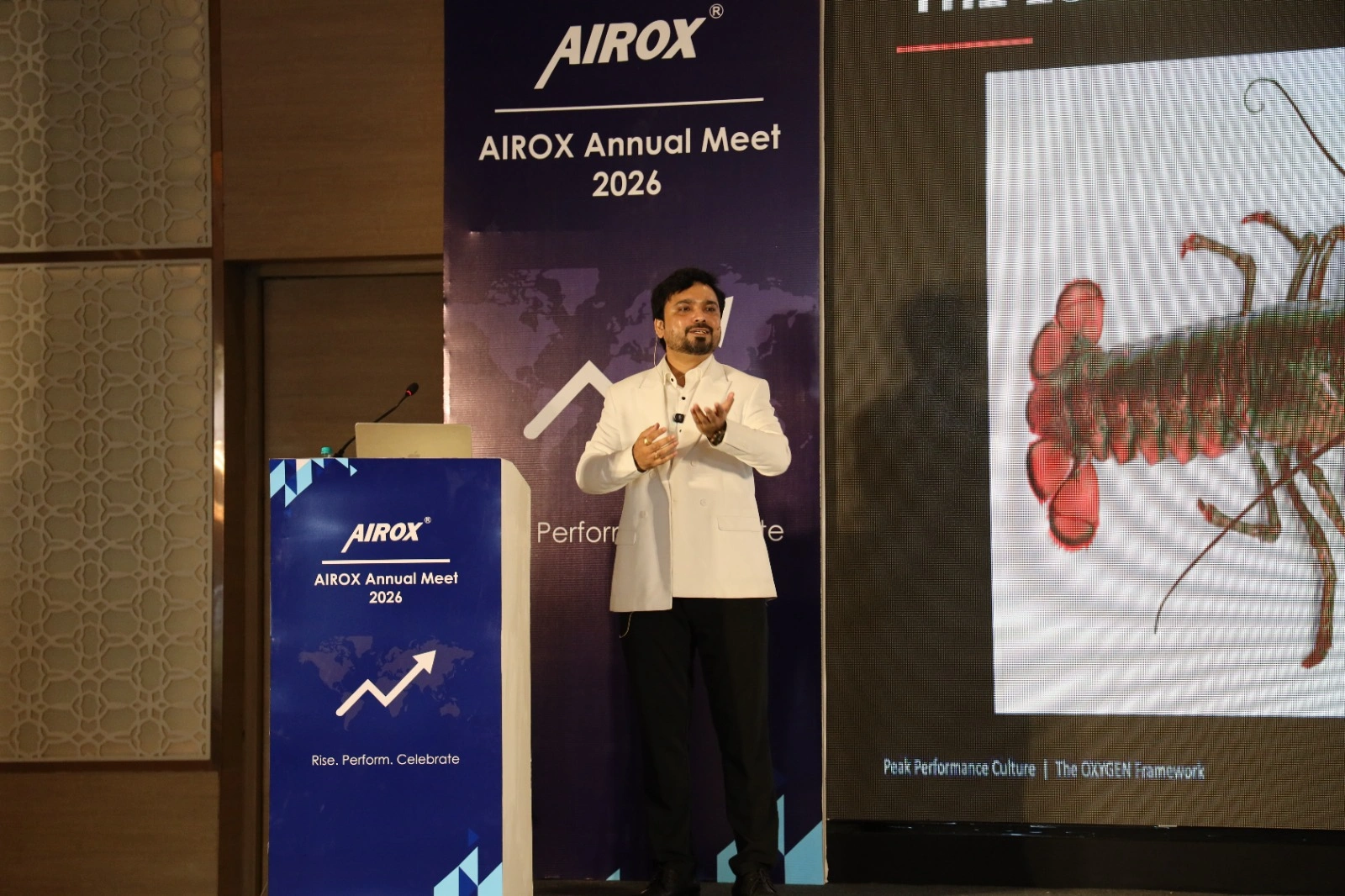
India's ₹1.5 trillion L&D market is increasingly shifting from generic workshops to industry-specific, partner-inclusive training—and the Thyrocare and PharmEasy sessions in Goa are a strong example of that shift. I had the opportunity to run tailored corporate training for their employees and partners, delivering actionable strategies that boosted team performance, sharpened leadership, and built the communication foundations for sustainable growth in one of India's fastest-moving healthcare sectors.
TL;DR- Thyrocare and PharmEasy's Goa training included both employees and external channel partners—a partner-inclusive design most companies miss
- Interactive sessions covered communication at operational handoff points, collaboration, and real-world exercises specific to healthcare distribution
- Leadership was framed as an operational daily skill—decision-making speed and clarity under pressure—not a hierarchy concept
- Proven operational efficiency tools introduced: Two-Minute Clarity Rule, Weekly Win Check-In, and Partner Pulse feedback loop
- Sustainable results require a 90-day follow-through structure installed before the training day ends—not after participants return home
Why Thyrocare and PharmEasy Included Channel Partners in Their Goa Corporate Training
What Thyrocare and PharmEasy got right before the first session even started: they didn't limit the training to internal employees. They included their external channel partners—franchise operators, distribution leads, and key field collaborators who are just as critical to business performance as the people on the direct payroll. This is a design decision that most Indian companies miss entirely. When you train internally but not your channel, you create a growing performance gap at the exact boundary where your business touches the market. Thyrocare and PharmEasy closed that gap deliberately by bringing the entire performance ecosystem into the same room in Goa—and the quality of insight and energy that emerged from that combined session is something most purely internal trainings never achieve.
Designing Training for a Mixed Audience of Employees and External Partners
Training a mixed room of internal employees and external channel partners requires a fundamentally different approach than a standard corporate session. The challenge is specific and real: internal employees have access to systems, authority structures, and proprietary information that external partners don't. External partners have frontline market visibility and customer relationship depth that internal teams often lack. Generic content satisfies neither group. What I designed for the Goa sessions addressed this directly: every exercise required internal-external collaboration to complete, every real-world case study was drawn from the healthcare distribution and diagnostics sector, and every framework was tested against 'can you use this in your actual role tomorrow?' Both groups left with tools they could immediately apply—not inspiration that would evaporate by the time they landed back in their home city.
Communication at the Handoff Point: Where Healthcare Teams Lose and Win Revenue
Every corporate training I facilitate starts with the same diagnostic question: where is communication breaking down, and what is it costing the business in delayed decisions, duplicate effort, or missed customer expectations? For the Thyrocare and PharmEasy sessions, the answers pointed clearly to handoff points—the specific moments where information moves between internal operations and external partner networks. Miscommunication at these boundaries is where most operational losses accumulate. The Goa sessions focused on three specific communication competencies: clarity in written SOP and instruction handoffs, active listening in partner escalation calls, and structured conflict resolution when operational targets don't match field realities. These are not soft skills. These are revenue-protecting, customer-retention competencies that directly affect the bottom line of any healthcare distribution business.
| Training Element | Generic Workshop Approach | Thyrocare / PharmEasy Goa Model |
|---|---|---|
| Audience | Internal employees only | Employees + channel partners together |
| Content Design | Generic soft-skill modules | Healthcare-distribution-specific real cases |
| Communication Focus | General presentation skills | Handoff-point clarity and escalation protocols |
| Leadership Frame | Inspirational / hierarchy-based | Operational decision-making speed under pressure |
| Efficiency Tools | Frameworks rarely applied post-event | Two-Minute Clarity Rule, Win Check-In, Partner Pulse |
| Follow-Through | None—results fade in 2 weeks | 90-day behavior installation plan pre-designed |
Leadership Development in Healthcare Distribution: What Actually Works
Leadership in healthcare distribution is distinctly different from leadership in manufacturing or IT services. Thyrocare and PharmEasy field teams operate in environments where urgency is constant, stakeholder complexity is high, and operational errors can have downstream consequences for patient experience and diagnostic accuracy. Leadership here is not primarily about inspiring speeches or vision articulation—it is about operational clarity and the speed of sound decisions under competing pressures. In the Goa sessions, I introduced a simplified decision-priority framework: in any field situation with conflicting demands, identify the single decision that simultaneously protects the customer outcome and maintains team morale. For most participants, this was the first time leadership had been presented as a daily operational skill rather than a title-based authority—and the shift in how they described their own roles was immediate and visible.
Three Operational Efficiency Tools Thyrocare and PharmEasy Teams Took Home
The operational efficiency tools I introduced in the Goa sessions were field-tested, not theoretical. Drawing from what I have seen work at Bajaj Auto, L&T, Mahindra, and Bosch—adapted for the pace and partner complexity of healthcare distribution—three tools generated the strongest participant response. The Two-Minute Clarity Rule: before any task handoff, state the goal, the timeline, and the single most critical constraint in two minutes or less—no email threads, no assumption that context has been shared. The Weekly Win Check-In: a 15-minute team review focused exclusively on what worked and the specific reason it worked—building a repeatable success pattern. The Partner Pulse: a structured monthly feedback loop from channel partners to internal teams. None of these tools require investment. All three generate measurable operational improvement when practiced consistently over 90 days.
Why One-Day Training Events Fail Without a 90-Day Follow-Through Plan
The hardest truth in corporate training is one that most HR professionals know but resist saying aloud: a single well-run training day generates high energy, strong insights, and real motivation—and then 80% of that evaporates within two weeks of return to routine. Not because the training was poor. Because behavioral change requires repetition in context, not exposure in a hotel conference room. The good news is that sustainable results are achievable with one structural addition: a 90-day follow-through plan designed and communicated before the training day ends. Choose the single highest-leverage behavioral shift from the session—not ten. Assign explicit ownership for tracking it. Build it into the next three team meeting agendas. One behavior installed and practiced is worth more than ten insights recorded in a notebook that never reopens. I design this follow-through architecture into every training I deliver, because energy without structure is the most expensive investment any organization makes.
The Goa Model: A Blueprint for HR Professionals in Healthcare and Distribution
The Thyrocare and PharmEasy Goa model—partner-inclusive, sector-specific, behavior-focused with a structured follow-through plan—is directly applicable to any HR professional in healthcare, BFSI, logistics, or distribution who is frustrated by training investments that don't show up in performance metrics. Here is the blueprint in three steps. First: map who actually drives your business outcomes—include channel partners, key vendors, and front-line collaborators in your training cohort, not just direct employees. Second: design sessions around your industry's specific operational gaps, not around generic communication or leadership frameworks. Third: build your 90-day behavior installation plan before the training day, not in the debrief afterward. NASSCOM-Deloitte data confirms India needs 1.25 million AI-ready professionals by 2027—but readiness is built through structured behavioral practice, not one-time exposure. If your organization is ready to move from training events to training results, reach out and let's design something that actually changes behavior.
Book Avinash Chate for Your Next Event
TEDx speaker. 11+ yrs training Army, BRO, RBI, BARC, JSW. Available for keynotes, leadership training, team building & manager development at your office or event venue.
✅ Thanks! Avinash team will reach out within 24 hours.'}).catch(function(e){f.outerHTML='Something went wrong. WhatsApp +91 8793630001
'});return false;">Select ServiceKeynote / Motivational SpeakingLeadership Development TrainingTeam Building WorkshopManager DevelopmentEmployee TrainingOutbound TrainingBook Avinash Now →Or WhatsApp directly: +91 87936 30001
Related Articles by Avinash Chate
- Best Motivational Speaker for Viman Nagar Kalyani Nagar Pune Teams
- How Networking Helped Build a ₹170 CR Tech Empire — India 2026
- The 1,50,000 Lives Duty: How Trivikrama Mahadeva Redefines True Professionalism
Avinash Chate TEDx Speaker · Founder, The Future Corporate · 11+ yrs experience Avinash has trained Indian Army, BRO, RBI, BARC, JSW Steel and 1000+ corporate leaders across India. His work focuses on leadership development, communication skills, and behavioural training rooted in Indian values and modern business needs. |
Frequently Asked Questions
What did Avinash Chate's corporate training for Thyrocare and PharmEasy in Goa cover?
The Goa training sessions for Thyrocare and PharmEasy covered three core areas: communication at operational handoff points (where information moves between internal teams and external partners), leadership development reframed as daily decision-making speed rather than hierarchy-based authority, and operational efficiency tools applicable immediately in the field. Both employees and external channel partners attended the same sessions, which created a unique shared-language outcome—both groups left with the same frameworks, vocabulary, and problem-solving tools, reducing the internal-external communication gap that drives most operational inefficiency in healthcare distribution businesses.
How do you design effective corporate training that includes both employees and channel partners?
Effective partner-inclusive corporate training requires three design decisions made before the session. First: every exercise and case study must be drawn from your specific industry and business model—no generic examples. Second: design exercises that require internal employees and external partners to collaborate to complete—this forces both groups to experience each other's constraints and strengths in a safe, low-stakes environment. Third: test every framework against the question 'can a participant use this tomorrow in their actual role?' If the answer is no for either group, redesign the content. The Goa model worked because both Thyrocare employees and PharmEasy partners left with tools they could immediately apply—not inspiration that would fade on the flight home.
What communication and leadership skills matter most for healthcare distribution teams in India?
For healthcare distribution and diagnostics companies in India, the communication skills that most directly protect revenue and customer experience are: clarity in written SOP and task handoffs (most errors happen in the grey zone between instructions given and instructions understood), active listening in partner escalation calls (reading the emotional subtext and operational constraint behind the complaint, not just the surface request), and structured conflict resolution when field realities contradict operational targets. Leadership in this sector is specifically about decision-making speed and operational priority-setting under time pressure—not vision articulation or team inspiration, which matter far less in real-time field situations.
How can HR managers ensure corporate training results last beyond the event day?
Sustainable training results require a 90-day behavioral follow-through plan that is designed and communicated before participants leave the training venue. The structure is simple: choose one behavioral change—not ten—from the training content. Assign explicit ownership for tracking that behavior. Build a review of that specific behavior into the next three team meeting agendas. Avinash Chate designs this follow-through architecture into every corporate training session he delivers, because energy without structure evaporates within two weeks of return to routine. One behavior installed and practiced consistently over 90 days generates more measurable business impact than ten insights that remain in training notes.
Avinash Chate services
Corporate Trainer in Goa · Top Corporate Trainers in Goa · Leadership Trainer in Goa · Top Leadership Trainers in Goa · Team Building Trainer in Goa · Top Team Building Trainers in Goa · Motivational Speaker in Goa · Top Motivational Speakers in Goa · All service locations
← Back to all articles · Book Avinash Chate
By Avinash Chate — Maharashtra’s #1 Corporate Trainer & Motivational Speaker. .