The 1,50,000 Lives Duty: How Trivikrama Mahadeva Redefines True Professionalism
Trivikrama Mahadeva gave dignified last rites to over 1,50,000 unclaimed bodies—not for pay, not for fame, but because duty demanded it. Here's the professionalism lesson India's workplaces desperately need in 2026.
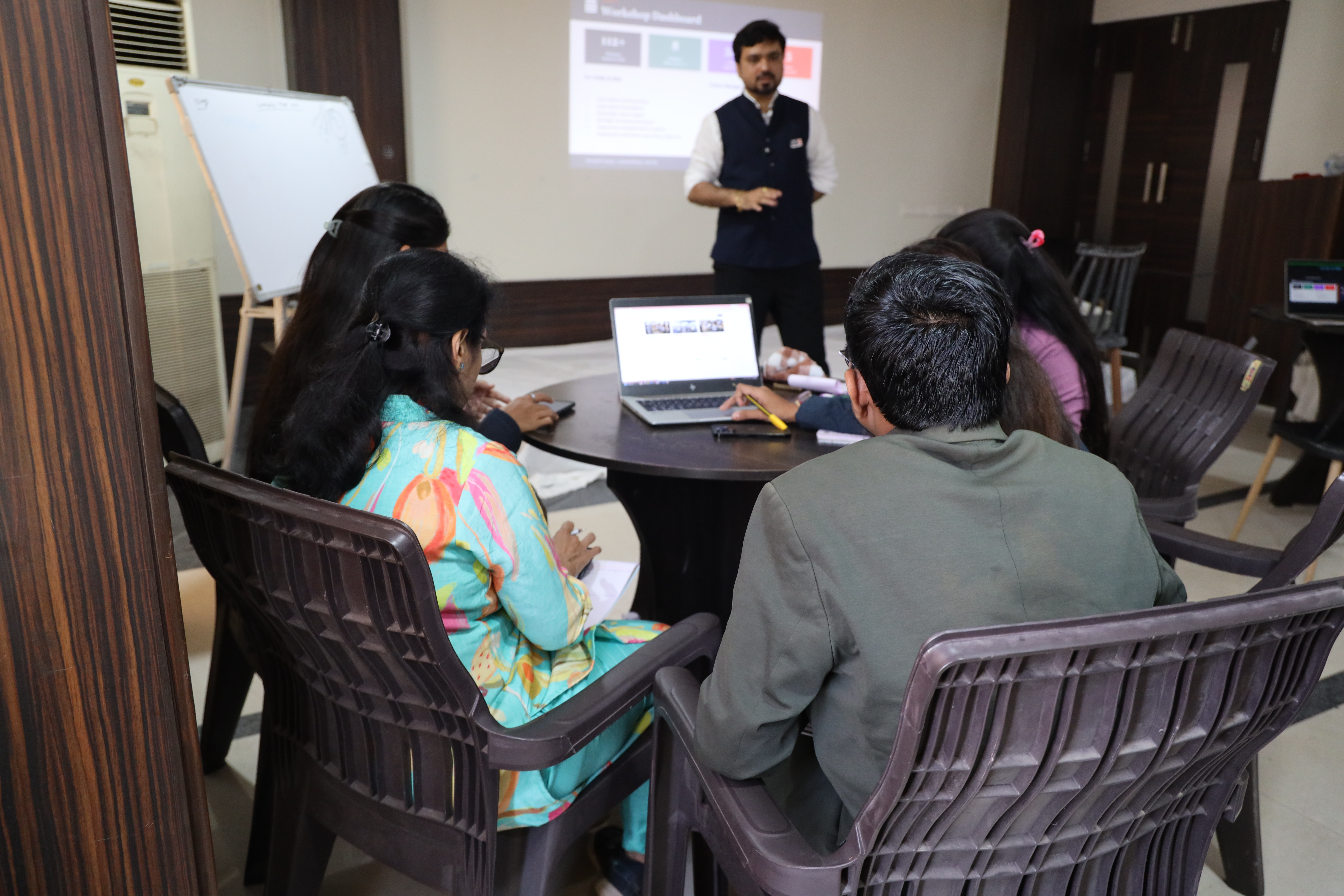
India's ₹1.5 trillion L&D market trains professionals on dressing, English fluency, and persona—but Trivikrama Mahadeva, who gave dignified last rites to over 1,50,000 unclaimed bodies, never attended a single workshop. His life teaches what no classroom can: professionalism is doing your duty with absolute sincerity even when nobody is watching.
TL;DR- Trivikrama Mahadeva conducted last rites for 1,50,000+ unclaimed bodies—not for pay or recognition, but out of pure duty
- True professionalism is responsibility and commitment, not polished dressing or fluent English
- Witnessing Krishnappa's kindness transformed a grieving child into India's most selfless professional
- Indian corporate culture rewards image over action—Trivikrama's story is the essential reset
- One person's sincere duty, sustained over a lifetime, creates impact larger than any leadership program
What Drove Trivikrama Mahadeva to Serve 1,50,000 Unclaimed Bodies?
Trivikrama Mahadeva didn't set out to change history. After losing his mother at a young age, he understood viscerally what it meant to be forgotten by the world. When he encountered Krishnappa—a man who showed pure humanity to a grieving child—something shifted permanently inside him. He made a quiet, unremarkable decision: if society would not claim these bodies, he would. Not for a salary. Not for a news headline. Not for a LinkedIn post. Because duty demanded it. Over his lifetime, he gave dignified last rites to more than 1,50,000 unclaimed bodies. That is not a job description. That is professionalism distilled to its purest, most uncompromising form. It is the kind of commitment most corporate training programs never teach because it cannot be measured on a KPI dashboard.
The Krishnappa Effect: How One Act of Humanity Shaped a Life of Duty
Here's the thing—Krishnappa never stood in a leadership seminar. He never read a book on emotional intelligence or completed a soft-skills module. He simply saw a child in pain and responded with genuine kindness. That single moment became the seed of Trivikrama Mahadeva's entire life mission. Trust me, I've trained over a thousand managers at Bajaj Auto, L&T, Mahindra, and the Indian Army—and this pattern repeats without exception. The best leaders don't create followers through authority or job titles. They create followers through moments of genuine humanity. What Krishnappa did in five minutes reverberated across 1,50,000 lives and generations of impact. That is the compound interest of authentic, everyday leadership. No workshop required.
Why Indian Professionals Confuse Image With Real Professionalism
I've been in boardrooms where a manager's PowerPoint font choice receives more discussion than his quarterly output. India has developed a peculiar and ultimately costly definition of professionalism—it's the cut of your suit, the smoothness of your English accent, the authority of your walk into a room. What most people don't realize is that this is theater. McKinsey data shows Indian managers spend 21 hours per week in meetings—35% more than their US counterparts—and yet significant output and accountability gaps persist. The problem isn't skill. It's the internalized belief that professionalism is a performance for an audience. Trivikrama Mahadeva had no audience. He had 1,50,000 reasons to show up anyway. That is the difference between performance and professionalism.
| Dimension | Image-Based Professionalism | Duty-Based Professionalism (Trivikrama Model) |
|---|---|---|
| Core Definition | Looking polished, speaking fluently, impressive presence | Responsibility, commitment, sincerity with zero audience |
| Motivation Source | External validation, appraisal scores, peer approval | Internal sense of duty and personal integrity |
| Consistency Test | High when boss is watching; drops when unobserved | Unchanged whether watched or completely alone |
| India L&D Investment | ₹1.5 trillion market; majority on soft-skill optics | Behavioral change that is measurable and character-driven |
| Trivikrama Result | Zero—no brand, no title, no recognition sought | 1,50,000+ lives served with absolute sincerity |
| Corporate Impact | Strong during reviews; accountability gaps persist | Self-driven teams; culture shifts within 90 days |
The Brutal Test: Would You Do It If Nobody Was Watching?
Real professionalism has exactly one brutal test: would you do it if absolutely no one was watching? Most Indian professionals I meet would ace their appraisal if the boss was in the room—and quietly cut corners the moment he leaves. I don't say this to judge; it is a systemic failure of how we have designed accountability in Indian organizations. But Trivikrama Mahadeva worked in conditions where no boss existed, no KRA tracked his output, no annual review assessed his quality, and no LinkedIn audience celebrated his milestones. He showed up anyway. He showed up 1,50,000 times. In my KITE Leadership Framework, the T stands for Trust—and this is precisely what it means: trusting your own sense of duty so completely that external validation becomes irrelevant.
What Tata, Mahindra and Infosys Can Learn From Trivikrama's Work Ethics
What can Tata Tech, Mahindra, Siemens, Infosys, or KPIT learn from a man who never worked in a corporate office? Everything that matters. The most expensive talent problem in Indian companies today is not a skill gap—it is the 'not my job' mindset that spreads through teams like a slow toxin. When I ran a leadership workshop for KPIT engineers, I posed a single question to the group: who would clean up the mess if everyone assumed it was someone else's responsibility? The silence in that room was absolute. Then I told them about Trivikrama Mahadeva. That silence transformed into something rarer and more valuable than any team exercise: genuine, uncomfortable reflection. Professionalism, I told them, is choosing to act even in the complete vacuum of accountability—especially then.
How to Build Trivikrama-Level Ownership in Your Corporate Team
You don't build Trivikrama-level ownership by running a one-day team workshop. You build it by making invisible effort visible, every single day. Here is where to start: in your next team meeting, publicly name the person who showed ownership when no one was watching. Not the best presenter. Not the loudest voice. The one who quietly fixed what was broken at 7 PM on a Friday. At Bosch and Ferrero, I've seen this single practice shift team culture within 90 days. The second step: eliminate your blame culture completely. When people know that honesty is safer than hiding mistakes, they stop waiting to be supervised and start self-managing. Recognition of unseen effort is the fastest, cheapest driver of a professionalism culture in any Indian organization.
The KITE Framework: Professionalism as Internal Duty, Not External Performance
KITE stands for Knowledge, Implementation, Trust, and Excellence—the four pillars of sustained professional behavior I've built and tested across 11+ years of training Indian Army officers, RBI teams, BARC scientists, JSW Steel managers, and corporate leaders from 65% of India's top firms. The T—Trust—is what Trivikrama Mahadeva embodied without ever having a name for it. Not trust in an employer, not trust in a paycheck, but an unshakeable trust in his own moral compass. When professionals ask me how to accelerate their career, my answer surprises them: stop performing professionalism and start practicing it. The NASSCOM-Deloitte report confirms India needs 1.25 million AI professionals by 2027—but AI-powered technical skills without professional accountability produce expensive, unreliable, and ultimately untrustworthy systems. The next frontier of Indian corporate excellence will be won by those who work like Trivikrama: quietly, consistently, with zero audience required.
Professionalism vs. Performance: Why India's Workplaces Need This Distinction Now
India's 65% of firms now invest in soft-skill training, and the national L&D budget has crossed ₹1.5 trillion. The good news is that awareness is rising. The uncomfortable truth is that most of this investment targets professionalism as performance—how you look, how you speak, how you present in a meeting. What Trivikrama Mahadeva's story forces us to confront is a simpler, harder question: what do you do when there is no meeting, no audience, no performance review, no career consequence attached to your choice? That is the gap between professionals who are impressive and professionals who are trustworthy. India's next decade of economic growth—powered by ₹250+ trillion in projected GDP output—needs the second kind. It needs Trivikrama-level professionals who make their commitments not because someone is watching, but because they have internalized that their work is an expression of who they are.
Book Avinash Chate for Your Next Event
TEDx speaker. 11+ yrs training Army, BRO, RBI, BARC, JSW. Available for keynotes, leadership training, team building & manager development at your office or event venue.
✅ Thanks! Avinash team will reach out within 24 hours.'}).catch(function(e){f.outerHTML='Something went wrong. WhatsApp +91 8793630001
'});return false;">Select ServiceKeynote / Motivational SpeakingLeadership Development TrainingTeam Building WorkshopManager DevelopmentEmployee TrainingOutbound TrainingBook Avinash Now →Or WhatsApp directly: +91 87936 30001
Related Articles by Avinash Chate
- Why Indian Employees Quit After Feedback: The Emotional Bond Gap 2026
- Hiring Right in India 2026: Skills vs Attitude From a ₹250 CR VP
- Best Motivational Speaker for Viman Nagar Kalyani Nagar Pune Teams
Avinash Chate TEDx Speaker · Founder, The Future Corporate · 11+ yrs experience Avinash has trained Indian Army, BRO, RBI, BARC, JSW Steel and 1000+ corporate leaders across India. His work focuses on leadership development, communication skills, and behavioural training rooted in Indian values and modern business needs. |
Frequently Asked Questions
What is the story of Trivikrama Mahadeva and why is it relevant to corporate professionals?
Trivikrama Mahadeva was a man who dedicated his entire life to performing last rites for over 1,50,000 unclaimed bodies—people whom society had abandoned and forgotten. His story is deeply relevant to corporate professionals because it strips professionalism down to its irreducible core: responsibility, commitment, and the willingness to do what is right even when no recognition awaits. He had no job title, no performance review, no KRA, and no LinkedIn audience. He simply chose duty, day after day. In Indian workplaces that are increasingly obsessed with appearance and optics, Trivikrama's story is a necessary and powerful reset that no leadership workshop can replicate.
How does Avinash Chate define true professionalism for Indian workplaces?
Avinash Chate defines true professionalism as the capacity to honor your commitments and act with integrity regardless of whether anyone is watching or measuring the outcome. It is not about attire, accent, or annual appraisal scores. It is about the internal standard you hold yourself to when the external pressure is absent. This distinction matters enormously in India today, where the ₹1.5 trillion L&D market spends massively on appearance-focused training. The real ROI—in reduced attrition, stronger team trust, and faster execution—comes when professionals internalize that their work is an expression of their character, not their audience.
What is the KITE Leadership Framework and how does it address professional responsibility?
The KITE Leadership Framework is Avinash Chate's model for sustained professional excellence built over 11+ years of training Indian Army officers, RBI teams, BARC scientists, and corporate leaders. KITE stands for: Knowledge (deep mastery of your domain), Implementation (consistent execution without excuses or audience dependency), Trust (in your own moral compass and your team's processes), and Excellence (the daily habit of exceeding minimum expectations). The T—Trust—directly mirrors what Trivikrama Mahadeva demonstrated throughout his life: an absolute trust in one's own duty that makes external supervision unnecessary and ultimately irrelevant.
How can HR managers build a duty-driven culture of accountability in Indian companies?
Building a duty-driven accountability culture requires three concrete steps. First, make invisible effort visible: in every team meeting, publicly recognize the person who took ownership when nobody asked. Second, remove blame from failure conversations entirely—focus on what was learned and what changes. Third, redesign your recognition systems so that consistent, quiet ownership is rewarded as much as high-visibility performance. Avinash Chate has seen this approach transform culture at Bosch, Ferrero, and KPIT within 90 days. When team members experience that responsibility is celebrated rather than exploited, they stop waiting to be watched and begin leading authentically from within their own sense of duty.
Avinash Chate services
Corporate Trainer in Maharashtra · Top Corporate Trainers in Maharashtra · Leadership Trainer in Maharashtra · Top Leadership Trainers in Maharashtra · Team Building Trainer in Maharashtra · Top Team Building Trainers in Maharashtra · Motivational Speaker in Maharashtra · Top Motivational Speakers in Maharashtra · All service locations
← Back to all articles · Book Avinash Chate
By Avinash Chate — Maharashtra’s #1 Corporate Trainer & Motivational Speaker. .