Sudhir Mehta Helicopter Story आणि Employee Reality
प्रत्येक प्रोफेशनलच्या करिअरमध्ये असा एक क्षण येतो, जिथे सगळे लोक एकाच अडचणीत अडकतात, पण प्रतिक्रिया वेगवेगळी असते. काही लोक निराश होतात, तर काही लोक शांतपणे पु...
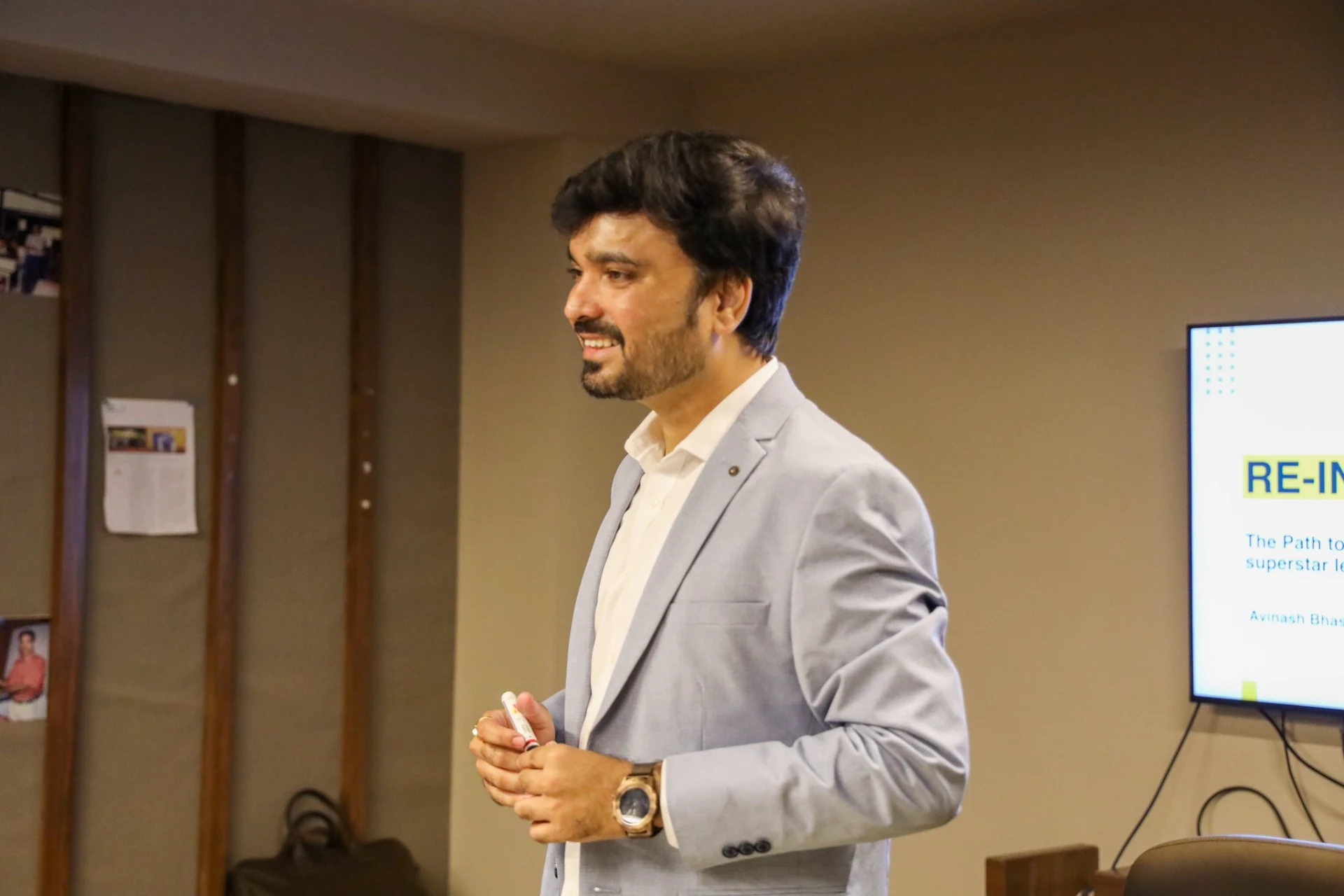
Avinash Chate - Best Corporate Trainer conducting leadership session
The Real Lesson Behind the Helicopter Story: Why Option Advantage Shapes Employee GrowthEvery professional reaches a moment when everyone around them faces the same obstacle, but their responses are completely different. Some freeze. Some complain. Some wait for rescue. And a few move ahead calmly because they have spent years building alternatives.
That is the real power of option advantage. It is not about luxury. It is about readiness.
When the helicopter story involving Sudhir Mehta sparked discussion, many people looked at it only from the lens of money or privilege. I see a deeper lesson for employees, managers, and business leaders. The real question is this: when life blocks your main route, what options have you built for yourself?
As Avinash Chate, a TEDx speaker and author of The Winning Edge, I have worked with professionals across 80+ organizations, and I have noticed one pattern repeatedly. Careers do not get stuck only because of external problems. Careers get stuck because people have not invested enough in creating options before the crisis arrives.
This is why I want to use this story as a mirror for employee reality. The strongest professionals are rarely the ones with the loudest confidence. They are the ones with deeper capability, stronger systems, and better decision-making reserves.
Option Advantage Is Not About Wealth. It Is About Preparedness.
Let me make this simple. If one road closes and you have no other route, you feel helpless. If one road closes and you have three alternatives, you remain calm. The difference is not only resources. The difference is preparation.
In the workplace, option advantage means you have built enough strength in your career that a single setback does not define your future. If your manager changes, your performance remains strong. If your role changes, you adapt. If your industry shifts, you stay relevant. If one opportunity disappears, another one becomes available.
That kind of professional stability does not happen by accident. It is built through skills, systems, relationships, credibility, and disciplined learning.
Many employees tell me they want growth, recognition, and better opportunities. But when I look closely, I often find that they are depending on one boss, one skill, one company, or one comfort zone. That is not growth security. That is career fragility.
When your success depends on only one route, stress increases. When you build multiple routes, confidence becomes natural.
Avinash Chate believes that professionals must stop confusing hope with strategy. Hope says, “Things will work out.” Strategy says, “Even if one path fails, I am ready with another.”
How Employees Lose Momentum Without Realizing It
Most career stagnation is silent. It does not begin with failure. It begins with overdependence.
An employee may become overdependent on a familiar process. Another may rely too much on the reputation of the company brand. Someone else may think years of experience automatically guarantee future relevance. But in reality, the market rewards people who keep expanding their option base.
I have seen this in training rooms again and again, including sessions with the Institute of Company Secretaries of India. The professionals who grow consistently are not always the most brilliant at the start. They are the ones who keep adding layers to their professional value.
They learn communication. They improve execution. They understand business. They build trust. They become solution-oriented. They observe leaders. They increase decision quality. Over time, they become difficult to ignore because they are useful in more than one situation.
On the other hand, some employees unknowingly trap themselves. They say things like, “This is not my job,” “I am waiting for the right opportunity,” or “Once I get support, I will perform better.” These statements sound harmless, but they reveal a mindset that waits for conditions instead of creating options.
If you want long-term career resilience, you cannot build your future on convenience alone.
The Four Investments That Create Option Advantage
Whenever I speak on professional growth, I tell people that option advantage comes from four types of investment.
1. Skill Investment
Your first option is always your capability. Can you solve problems? Can you communicate clearly? Can you lead without authority? Can you handle pressure? Can you learn faster than others? These are not decorative skills. These are career multipliers.
The more capable you become, the more choices you create.
2. System Investment
High performers do not rely only on motivation. They create systems. They manage time better. They document better. They prepare better. They follow up better. Their consistency gives them an edge because systems reduce dependency on mood and chaos.
If your work quality changes every day, you have not built option advantage yet.
3. Experience Investment
Experience is not just time served. It is exposure earned. Have you handled difficult clients? Have you worked across teams? Have you solved unexpected problems? Have you led initiatives beyond your job description? These experiences expand your internal confidence and external credibility.
Professionals who avoid stretch assignments often avoid future options too.
4. Decision Investment
The quality of your career depends on the quality of your decisions. What do you say yes to? What do you say no to? What are you learning this year? Who are you learning from? What habits are you strengthening? Strong decisions made repeatedly create powerful alternatives later.
This is why I say option advantage is earned long before it becomes visible.
What Leaders Must Understand About Employee Reality
If you are a business leader or manager, this lesson is equally important for you. Teams do not become future-ready by accident. They become future-ready when leaders intentionally build environments where people can grow beyond immediate task completion.
This is where the KITE Leadership Framework becomes highly relevant. Leaders must help teams develop knowledge, implementation strength, trust, and execution discipline. When these elements improve, employees stop behaving like task followers and start thinking like value creators.
That shift is powerful. It changes how people respond under pressure. It changes how they solve problems. It changes how they see responsibility. And most importantly, it changes how many options they can create for themselves and for the organization.
If organizations only focus on output and ignore capability building, they create employees who perform in stable conditions but struggle in uncertain ones. That is risky for both the individual and the business.
For leaders who want to strengthen this culture, I recommend reading How to Build a Learning Culture in Your Organization in Pune — India Guide. A learning culture is one of the strongest foundations for option advantage at scale.
I also encourage leaders to reflect on whether they are developing managers the right way. This article offers an important perspective: From Good to Great Manager in Pune — What Indian Companies Get Wrong About Leadership.
How Professionals Can Start Building Their Options Today
You do not need a dramatic life event to start preparing better. You can begin now, with practical steps.
Identify the one area where you are too dependent on external support.
Build one new skill that increases your professional flexibility.
Take ownership of one problem that is currently outside your comfort zone.
Create personal systems for learning, planning, and follow-through.
Seek feedback from people who will challenge your blind spots honestly.
Study professionals who stay calm under pressure and understand why.
These actions may look small, but over time they compound. One new skill becomes a new responsibility. One new responsibility becomes visibility. Visibility becomes trust. Trust becomes opportunity. Opportunity becomes leverage.
That is how option advantage grows in real careers.
As Avinash Chate, I often remind professionals that confidence should not be borrowed from titles, salaries, or company names. Real confidence comes from knowing that wherever you go, your value travels with you.
And if your organization is serious about building that kind of strength internally, you may also want to explore Why Hire an External Corporate Trainer Instead of Internal Training in Pune. Sometimes an outside perspective helps teams see the gaps they have normalized.
The Career Question That Matters Most
The helicopter story became memorable because it was dramatic. But employee reality is shaped by quieter moments. A missed promotion. A restructuring. A difficult boss. A new technology shift. A business slowdown. A role change. These moments reveal whether you have built options or only expectations.
So the question is not whether someone else had access to a faster solution. The real question is: what have you been building for yourself all these years?
If your answer is deeper skills, stronger habits, better judgment, broader exposure, and greater adaptability, then you are already moving in the right direction.
If not, this is your moment to begin.
Avinash Chate has spent 15+ years helping professionals and organizations unlock practical growth, leadership capability, and performance excellence. My message is simple: do not wait for pressure to teach you what preparation could have taught you earlier.
Build your options before you desperately need them.
If you want to strengthen your team’s mindset, leadership capability, and execution culture, book a corporate training session here.
Frequently Asked Questions
What does option advantage mean in a career context?
Option advantage means building enough skills, systems, experience, and decision-making ability so that one setback does not leave you stuck. It gives you multiple ways to move forward professionally.
Is option advantage only for senior leaders or wealthy professionals?
No. Option advantage is relevant for every employee. It is not about wealth alone. It is about preparedness, capability, and the discipline to create alternatives before a crisis appears.
How can employees start building option advantage immediately?
Employees can begin by learning one new skill, improving work systems, taking ownership beyond their role, seeking quality feedback, and making better long-term career decisions consistently.
Why should organizations care about option advantage?
Organizations benefit when employees become adaptable, solution-oriented, and resilient. Teams with stronger option advantage respond better to change, uncertainty, and business pressure.
How can corporate training help build option advantage?
Corporate training helps professionals improve communication, leadership, execution, mindset, and decision-making. It creates structured growth that strengthens both individual careers and organizational performance.
Related Articles by Avinash Chate
- The Untold Truth Behind UPSC and MPSC Failure: What 99% of Aspirants Are Never Told
- Motivational Speaker for Mumbai's Hybrid Work Challenges — Bridging the Office-WFH Divide in India's Corporate Capital
- Best Motivational Speaker in Maharashtra — Top 10 Trainers 2026
About the Author
Avinash Chate is a TEDx speaker, published author of The Winning Edge and The Unanswered, and founder of The Future Corporate & Business Coaching. With over 15 years of experience training 80+ organizations including Kaeser Compressors India, Coriolis Corp, Kiran Gems, Ferrero Rocher, Avinash is recognized as Maharashtra's leading corporate trainer. He created the KITE Leadership Framework and the 25-Star Competency Framework™, delivering high-impact programs across leadership, team building, sales transformation, and emotional intelligence.
📞 +91 8793630001 | ✉️ connect@avinashchate.com | 🌐 avinashchate.com
Book Avinash Chate for Your Next Event
Maharashtra's #1 Corporate Trainer · India's leading Motivational Speaker & Team Building Expert · 2x TEDx · Available across India in English, Hindi & Marathi.
✅ Thanks! Avinash team will reach out within 24 hours.'}).catch(function(e){f.outerHTML='Something went wrong. WhatsApp +91 8793630001
'});return false;"> Select Service Motivational Speaking / Keynote Team Building Workshop Corporate Training / Leadership Development Manager Development Employee Training Outbound Training Book Avinash Now →Or WhatsApp directly: +91 87936 30001
Avinash Chate services
Corporate Trainer in Maharashtra · Top Corporate Trainers in Maharashtra · Leadership Trainer in Maharashtra · Top Leadership Trainers in Maharashtra · Team Building Trainer in Maharashtra · Top Team Building Trainers in Maharashtra · Motivational Speaker in Maharashtra · Top Motivational Speakers in Maharashtra · All service locations
← Back to all articles · Book Avinash Chate
By Avinash Chate — Maharashtra’s #1 Corporate Trainer & Motivational Speaker. .