Subroto Bagchi's Test: Are You Actually a Professional or Just an Employed Person?
Subroto Bagchi's two-test definition from The Professional reveals the real gap between career-builders and people who merely hold jobs — and what to do about it.
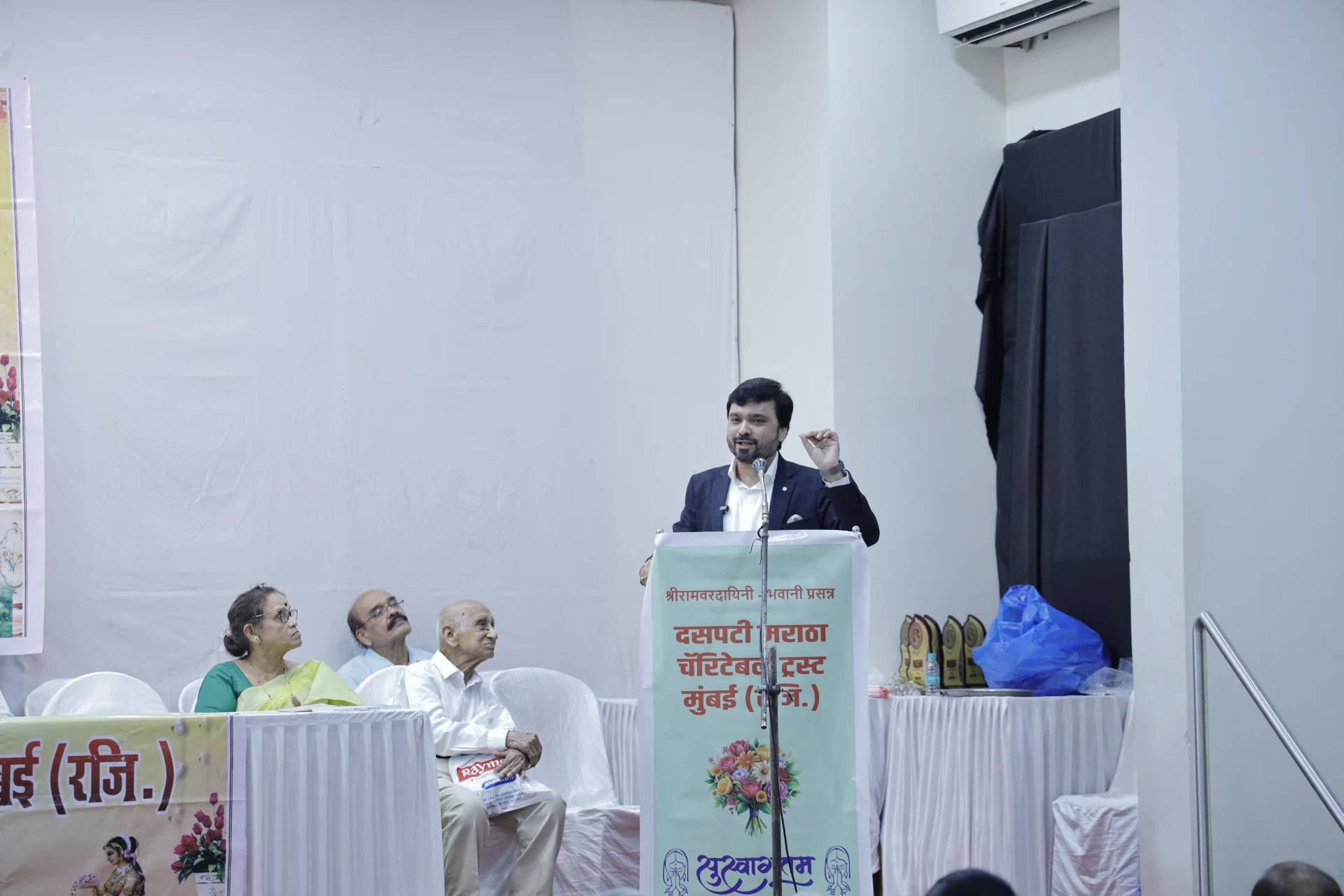
Let me ask you a direct question. If your manager disappeared for a month — no calls, no check-ins, no follow-up emails — would your output change? Most people pause before answering that question honestly, and that pause tells you everything.
This is the essence of what Subroto Bagchi, co-founder of Mindtree and one of India's most respected business thinkers, wrote in his landmark book The Professional. I recommend it in Chapter 13 of my own book, The Winning Edge, The Champion Mindset, as one of the essential reads for every Indian professional who is serious about building a career and not just a payslip. Bagchi's two-test definition changed the way I think about professionalism, and it has since become the spine of the transformation I work to create in every corporate training engagement I run across Pune, Mumbai, and Maharashtra.
In this article I want to walk you through both tests, explain why most professionals in India fail at least one of them, and give you a practical framework for crossing to the other side — from merely employed to genuinely professional.
The Two-Test Definition That Changes Everything
Bagchi's definition is deceptively simple. He writes that a professional is someone who can do two things that most employees cannot:
- Deliver without being supervised.
- Be accountable for their own performance.
Read those again slowly. Notice what is not in the definition. There is no mention of your designation, your salary bracket, your MBA college, your years of experience, or the size of your team. A junior executive who passes both tests is more of a professional than a senior vice president who fails either one.
"A professional is one who can work without being supervised and one who is accountable for his own performance." — Subroto Bagchi, The Professional
This definition is uncomfortable for a reason. It removes every excuse and every credential and reduces the question to behaviour. It asks: what do you actually do when the conditions are not perfect?
Why These Two Tests Are the Right Tests
Most organisations in India — and globally — are built on a silent assumption: that people need to be watched to work. That is why we have attendance systems, daily reporting formats, weekly review meetings, and micro-managing managers. The entire infrastructure of corporate life is designed to compensate for the absence of genuine professionalism.
When an individual can be trusted to work at full capacity without that infrastructure, they become extraordinarily valuable. They free their manager. They unblock teams. They create space for growth. And when something goes wrong — because something always goes wrong — they own it, fix it, and learn from it instead of pointing fingers or going quiet.
That is the professional. That is what every organisation is actually searching for, even when they advertise for domain skills and experience.
Test One: Can You Deliver Without Someone Watching?
In my workshops I often ask participants to think about their last week at work and identify moments when no one would have known if they had cut a corner. Then I ask: did you cut it?
The honest answers are instructive. The deeper question is not about honesty in some abstract moral sense. It is about the internal standard you hold yourself to. Stephen Covey called this the private victory — doing the right thing when no one is watching. Bagchi's first test is essentially a measure of your private victories at work.
The Employee Mindset vs the Professional Mindset
This distinction between the employee mindset and the professional mindset is the core transformation I target in every corporate training programme I design. Here is how the two look in practice:
- Employee mindset: "I will work at the pace the system demands." | Professional mindset: "I will work at the pace the outcome demands."
- Employee mindset: "I will do what I am asked to do." | Professional mindset: "I will do what needs to be done."
- Employee mindset: "If no one notices, it does not matter." | Professional mindset: "It matters because I notice."
- Employee mindset: "My manager's presence is my motivation." | Professional mindset: "My commitment to the outcome is my motivation."
The shift from one column to the other is not a skill upgrade. It is an identity upgrade. And that is why it requires deliberate work — the kind of work that I walk teams through in structured corporate training sessions.
Howard Gardner's Ethical Mind
The psychologist Howard Gardner, in his book Five Minds for the Future, identified what he called the ethical mind as one of the five cognitive capacities every professional will need in the coming decades. The ethical mind is the capacity to behave honestly and be trustworthy even when unsupervised, even when no rule forces you to.
Gardner's ethical mind and Bagchi's first test are describing the same thing from different angles. Both are pointing to the same foundational quality: the internal compass that does not need an external enforcer. In my book The Winning Edge, I describe this as the championship trait that separates people who have careers from people who merely have jobs.
A workshop moment — the shift from employee mindset to professional mindset begins with honest self-examination.Test Two: When Things Go Wrong, Do You Own It?
The second test is even harder for most people, because it cuts against one of the most deeply wired human tendencies: self-protection.
When a project misses its deadline, when a client escalates, when a product ships with a defect, when a sale falls through — the natural reflex is to locate the cause outside yourself. The vendor was late. The brief was unclear. The budget was cut. The market shifted. All of these things may be true. But the professional asks a different question first: what could I have done differently?
Accountability Is Not Blame
There is a crucial distinction I make in my training programmes between accountability and blame. Blame is backward-looking and punitive — it assigns guilt and stops there. Accountability is forward-looking and constructive — it acknowledges the gap between what happened and what was intended, and it commits to closing that gap.
When Bagchi says a professional is accountable for their own performance, he is not saying they must flagellate themselves every time something goes wrong. He is saying they must resist the comfortable story that someone else is always responsible for their outcomes. The professional holds the outcome as their own, regardless of the contributing factors.
"Accountability means holding the outcome as yours — not as a punishment, but as a commitment to the work and the people depending on you." — from my workshops at The Future Corporate
What Accountability Looks Like in Daily Work
In practical terms, accountability shows up in small moments, not just in big crises:
- Sending a proactive update when a task is running behind, before anyone asks.
- Saying "I got that wrong and here is how I am fixing it" instead of "the system had an error."
- Closing loops that are technically someone else's to close, because the outcome matters to you.
- Raising a concern in the meeting, not in the corridor after the decision is already made.
- Delivering feedback upward, not just receiving it downward.
None of these behaviours require a special title or a large budget. They require a decision about identity — a decision to be the kind of person who owns their work.
Why India's Workplace Culture Makes Both Tests Harder
I work with professionals across industries in Pune, Mumbai, and the rest of Maharashtra, and I see a consistent pattern. Our workplace culture has historically been hierarchical in a way that actively discourages both tests.
On the first test: we have been socialised to wait for instructions. The manager decides, the team executes, and initiative outside of assigned scope is often perceived as overstepping. This creates a workforce that is technically competent but professionally passive.
On the second test: accountability has been conflated with punishment for so long that owning a mistake feels like volunteering for consequences. So people get very good at protective ambiguity — at language that distributes responsibility so thinly that no one is clearly accountable for anything.
The organisations that are winning in India today — and the professionals within them who are rising fastest — are the ones actively working to reverse both of these patterns. That is not a coincidence.
The Manager's Role in Creating a Professional Culture
Professionalism is partly an individual choice, but it is also partly a cultural product. If a manager punishes every mistake, their team learns to hide mistakes. If a manager micro-manages, their team loses the muscle for autonomous decision-making. The responsibility for building a professional culture sits on both sides of the reporting line.
In my corporate training programmes for leadership teams, one of the key modules I run is on creating psychological safety — the condition in which people feel safe enough to take ownership, raise problems, and deliver without supervision, because they trust that the environment will respond constructively. Without that safety, the two tests become nearly impossible to pass, regardless of individual intent.
"The best managers I have worked with across Maharashtra do not create dependence — they create professionals. There is a big difference." — Avinash Chate, The Winning Edge, The Champion Mindset
The Winning Edge Connection: What the Champion Mindset Adds
In The Winning Edge, The Champion Mindset, I make the case that the separation between people who achieve at the highest level and people who plateau is almost never about talent. It is almost always about the quality of their inner operating system — the beliefs, habits, and standards they hold themselves to when no external force is compelling them.
Bagchi's two tests are a professional-context expression of exactly that principle. The champion athlete who trains hard in the off-season when no coach is watching, and who reviews game film honestly to identify their own errors rather than the referee's decisions — that is the same internal operating system that produces the professional who delivers without supervision and owns their outcomes.
The two books are in conversation with each other, which is why I list The Professional in my recommended reading list in Chapter 13 of The Winning Edge. Both books are essentially arguing that external achievement is downstream of internal standards.
A Practical Self-Audit: Where Do You Stand?
Here is a self-audit I use in my workshops. Answer each question honestly — not as you would like to answer it, but as the evidence from your last 90 days actually supports.
On Unsupervised Delivery
- In the last month, did you complete a significant task at the same standard whether or not your manager was likely to check the details?
- Have you ever proactively gone beyond the brief because you could see the outcome needed it, without being asked?
- Do you set your own pace and priorities, or do they fluctuate with the presence or absence of your manager?
On Accountability
- When a project you were involved in underperformed, what was the first thought you had — who else was responsible, or what you could have done differently?
- In the last quarter, did you raise a concern about a risk or problem before it became a crisis, or after?
- Can you name a specific mistake you made in the last six months, what you learned from it, and what you changed as a result?
If you found yourself uncomfortable with any of these questions, that discomfort is useful information. It tells you exactly where the development work needs to happen.
The self-audit is the starting point — honest self-examination is the first act of a genuine professional.Bring this to your team. I run professional mindset and accountability-focused corporate training and keynotes for companies across Pune, Mumbai and all of Maharashtra.
Book a session · Explore corporate training programs
Frequently Asked Questions
What is Subroto Bagchi's definition of a professional?
Subroto Bagchi, co-founder of Mindtree and author of The Professional, defines a professional as someone who can do two things: work without being supervised, and be fully accountable for their own performance. This two-test definition is notable because it is entirely behaviour-based — it has nothing to do with designation, salary, or academic qualification.
What is the difference between an employee mindset and a professional mindset?
An employee mindset ties motivation and work quality to external supervision and instruction. A professional mindset ties both to an internal standard and a personal commitment to the outcome. In my corporate training programmes, shifting teams from the employee mindset to the professional mindset is one of the central transformations I work to create, because it directly impacts productivity, initiative, and accountability culture.
How can Indian professionals develop accountability at the workplace?
Accountability begins with separating accountability from blame. It means proactively communicating when things are off track, asking "what could I have done differently" before asking "who else was responsible," and holding the outcome as your own regardless of contributing factors. Organisations also have a role — managers must create psychological safety so that owning a mistake does not feel like volunteering for punishment.
Is "The Professional" by Subroto Bagchi relevant for Indian professionals in 2026?
Absolutely. The two tests Bagchi defines — unsupervised delivery and personal accountability — are arguably more relevant now than when the book was first published. In a hybrid and remote work environment, the ability to deliver without supervision is no longer a nice-to-have; it is a baseline requirement. I recommend The Professional in Chapter 13 of my book The Winning Edge, The Champion Mindset as essential reading for every career-serious Indian professional.
Bagchi's two tests and the champion mindset framework I teach in The Winning Edge are ultimately pointing at the same truth: your career will rise or stall in direct proportion to the internal standards you hold yourself to when no one else is enforcing them. If you want to take this work deeper — for yourself or for your team — I invite you to connect at the contact page, explore corporate training programmes, or learn more about the signature programmes I run across India.
This article is adapted from my book The Winning Edge, The Champion Mindset.Related Articles by Avinash Chate
- Talent Is a Myth: The Deliberate Practice Secret of Champions
- The Ray Dalio 5-Step Model to Achieve Any Goal
- The 5 Steps of Deliberate Practice to Master Any Skill
| AC | Avinash ChateIndia's Leading Corporate Trainer | TEDx Speaker | Author With 80+ organizations trained including RBI, JSW Steels, and Ferrero, Avinash Chate delivers high-impact corporate training across India. Creator of the KITE Leadership Framework and bestselling author of "The Winning Edge." Website YouTube |
Avinash Chate services
Corporate Trainer in Maharashtra · Top Corporate Trainers in Maharashtra · Leadership Trainer in Maharashtra · Top Leadership Trainers in Maharashtra · Motivational Speaker in Maharashtra · Top Motivational Speakers in Maharashtra · All service locations
← Back to all articles · Book Avinash Chate
By Avinash Chate — Maharashtra’s #1 Corporate Trainer & Motivational Speaker. .