Ranveer Singh Kantara Controversy: Boundary Crossed
Have you ever seen someone crack a joke at work that completely backfired? Actor Ranveer Singh recently faced massive backlash after making a joke about the dei...
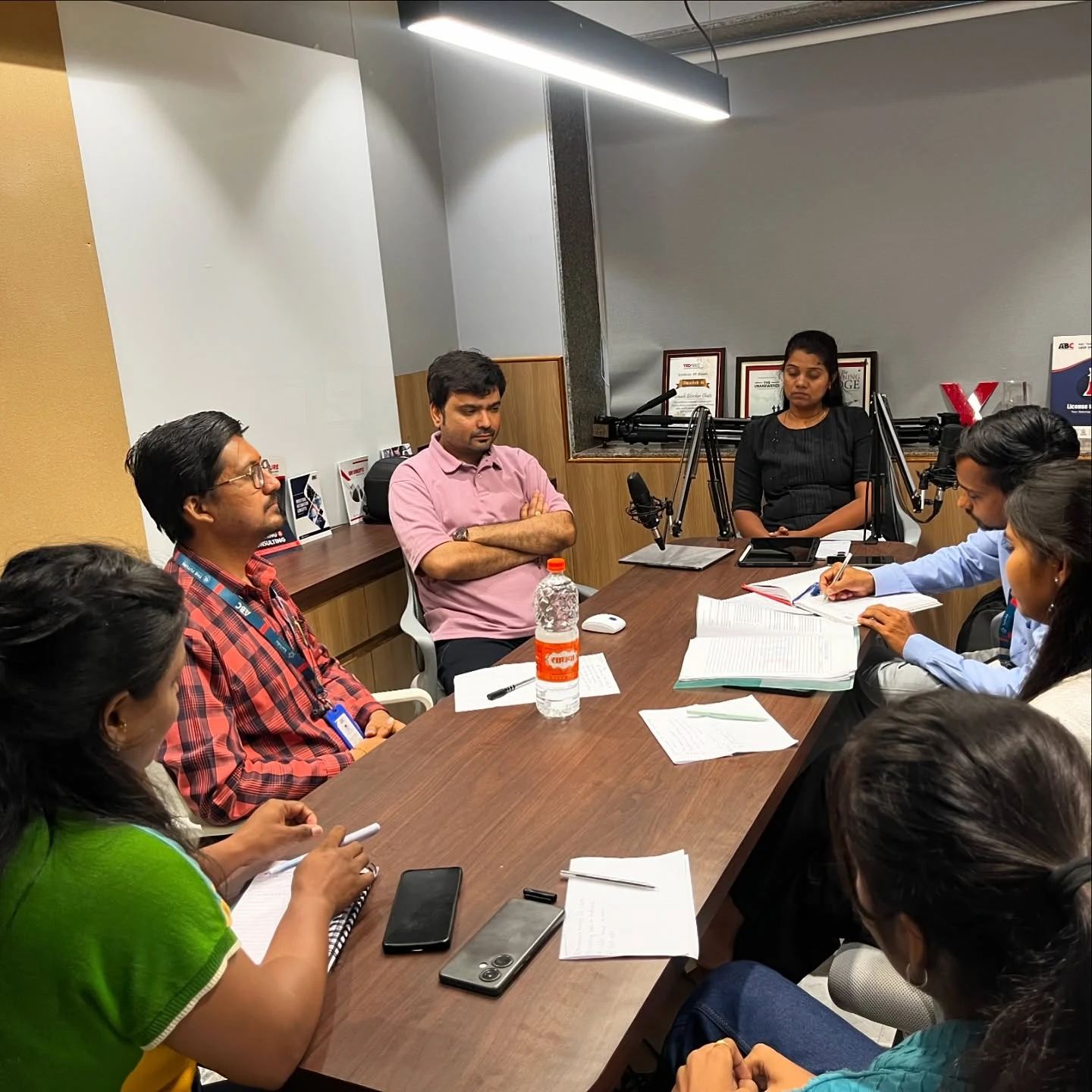
Avinash Chate - Leadership Development Expert training management team
When a Joke Crosses the Line: What the Ranveer Singh Kantara Controversy Teaches Us About Respect at WorkIn every workplace, I have seen one pattern repeat itself: people do not usually remember every presentation, every meeting, or every target discussion, but they always remember how someone made them feel. A joke may last a few seconds, but its emotional impact can stay for years.
Key takeaway: Humour is powerful only when it creates connection. The moment it touches someone’s faith, identity, dignity, or deeply held values, it stops being humour and becomes a boundary breach.
The recent controversy around Ranveer Singh’s joke related to the deity from Kantara triggered outrage because it was not seen as harmless entertainment. It was seen as disrespect. The Tulu community felt deeply hurt, an FIR was filed, and even a public apology could not fully reverse the emotional damage. This is not just a celebrity issue. It is a leadership, communication, and workplace lesson for all of us.
As Avinash Chate, I often tell leaders, managers, and teams that communication is not judged only by intention. It is judged by impact. You may mean to be funny, casual, or spontaneous, but if the result is hurt, alienation, or loss of trust, then the communication has failed.
This is exactly why respectful communication is not a “nice to have” soft skill. It is a business-critical capability.
Why Humour Becomes Dangerous When It Ignores Boundaries
Humour has a place in leadership and team culture. It can reduce stress, increase bonding, and make difficult conversations lighter. But humour without awareness is risky. The problem begins when someone assumes that because they did not intend harm, no harm was done.
That assumption is dangerous.
In professional environments, people come from different regions, languages, beliefs, traditions, and emotional histories. What feels casual to one person may feel insulting to another. What sounds witty in one circle may sound offensive in another.
I call this a sacred boundary breach. It happens when words casually step into spaces that people consider deeply meaningful. These spaces may include faith, family, culture, community identity, personal struggle, or self-respect.
Once that line is crossed, the issue is no longer about comedy. It becomes about trust, maturity, and emotional intelligence.
As a TEDx speaker and author of The Winning Edge, I have repeatedly emphasized that strong communication is not about speaking freely at any cost. It is about speaking responsibly with awareness of consequences.
The Workplace Version of the Same Mistake
Many professionals think controversies like this belong only to film stars, public figures, or politicians. I disagree. The same pattern plays out in offices every day, only on a smaller stage.
A manager jokes about someone’s accent.
A team member mocks a festival tradition.
A salesperson makes a “light” comment about a community stereotype.
A senior leader laughs at a belief that matters deeply to an employee.
In that moment, people may smile outwardly and stay silent. But internally, something changes. Respect drops. Safety weakens. Openness reduces. The team may continue working together, but the emotional connection is damaged.
This is why communication training is not just about presentation skills or public speaking. It is also about judgment, sensitivity, and self-regulation.
At Avinash Chate programs, I remind participants that every sentence carries three questions: Is it true? Is it necessary? Is it respectful? If one of these is missing, the sentence may create more damage than value.
This principle has helped leaders across 80+ organizations build stronger people practices and healthier team cultures.
Intent Does Not Erase Impact
One of the biggest myths in communication is this: “I was only joking.”
That statement may explain intention, but it does not erase impact.
If someone feels humiliated, insulted, or emotionally attacked, your explanation may sound defensive rather than sincere. This is why many apologies fail. They come too late, or they focus too much on what the speaker meant instead of what the listener experienced.
Real maturity begins when we stop asking, “Why are they overreacting?” and start asking, “What did I fail to understand?”
That shift is the foundation of emotional intelligence.
In the KITE Leadership Framework, one essential leadership quality is the ability to read context before reacting. Great leaders do not only ask, “Can I say this?” They ask, “Should I say this here, to these people, in this setting, at this moment?”
That single pause can save relationships, reputations, and team morale.
I have seen this lesson become transformational in training rooms. At organizations such as Global-Tech India Pvt Ltd, leaders and teams benefit most when they understand that respectful communication is not weakness. It is strength with wisdom.
How to Build Boundary Awareness Before You Speak
So how do we prevent a sacred boundary breach in professional life?
First, develop awareness of sensitive zones. Faith, culture, language, appearance, family background, and personal identity are not casual material for humour. If you are unsure whether a joke is safe, it is better not to say it.
Second, study the room. A comment that works among close friends may fail completely in a formal workplace setting. Context changes meaning.
Third, do not perform for approval. Many people make risky jokes because they want attention, validation, or quick laughter. But short-term applause is never worth long-term damage.
Fourth, learn to replace sarcasm with warmth. You do not need to be edgy to be engaging. You can be memorable without being hurtful.
Fifth, practice reflective restraint. Silence is often more intelligent than impulsive humour.
As Avinash Chate, I believe one of the highest forms of professionalism is not just knowing what to say, but knowing what not to say.
- Pause before humour when the topic touches identity or belief.
- Observe reactions instead of assuming everyone is comfortable.
- Acknowledge hurt quickly if your words create discomfort.
- Apologize with accountability rather than justification.
- Learn from the incident so the mistake is not repeated.
Respect Is Not Censorship, It Is Leadership
Some people worry that being careful with words means becoming artificial or overly restricted. I do not see it that way. Respectful communication is not censorship. It is conscious leadership.
When you choose words responsibly, you are not losing freedom. You are gaining credibility.
People trust those who are emotionally safe to work with. Teams perform better under leaders who can create openness without crossing lines. Sales professionals build stronger relationships when clients feel respected. Managers inspire more loyalty when employees know their dignity will be protected.
This is why leadership today is less about authority and more about awareness.
If you want to understand how strong leaders stay relevant during change, I also recommend reflecting on The Fuji Film Transformation Every Leader Should Study to Stay Relevant. The lesson is clear: relevance is sustained not only by strategy, but by mindset and maturity.
Similarly, growth in any field requires uncomfortable truth. That is why many readers also connect with The Untold Truth Behind UPSC and MPSC Failure: What 99% of Aspirants Are Never Told, because success often depends on self-awareness more than excuses.
What Leaders and Teams Must Do Next
If there is one lesson I want every professional to take from this controversy, it is this: your words are part of your character. They reveal your awareness, your discipline, and your respect for others.
Before speaking, ask yourself:
- Does this comment build trust or break it?
- Am I trying to connect or just impress?
- Could this hurt someone’s identity, belief, or dignity?
- If this statement is repeated publicly, will I still stand by it?
These questions are simple, but they can prevent serious damage.
Avinash Chate believes that the future belongs to professionals who combine confidence with sensitivity. The most admired leaders are not the loudest people in the room. They are the ones who create strength without causing hurt.
If your organization wants to build stronger workplace communication, respectful leadership, emotional intelligence, and team maturity, this is the right time to invest in people development. You may also find value in reading Corporate Training Budget Planning for Indian Companies 2026 in Mumbai to think more strategically about learning investments.
And if you are ready to strengthen your team’s communication culture, book a corporate training session here.
Frequently Asked Questions
Why is humour risky in the workplace?
Humour becomes risky when it touches sensitive areas such as faith, identity, culture, appearance, or personal dignity. Even if the intention is light, the impact can damage trust and team relationships.
What is a sacred boundary breach?
A sacred boundary breach happens when someone’s words cross into an area that others consider deeply meaningful, such as religious belief, cultural identity, or personal values, and cause emotional hurt.
Is saying sorry enough after an offensive joke?
An apology matters, but it does not always erase the damage. A meaningful apology must include accountability, empathy, and a visible commitment not to repeat the mistake.
How can leaders avoid crossing communication boundaries?
Leaders can avoid crossing boundaries by pausing before speaking, reading the room, understanding team diversity, and choosing respect over impulsive humour or sarcasm.
How can corporate training help teams communicate better?
Corporate training helps teams build emotional intelligence, respectful communication habits, conflict awareness, and leadership maturity so that trust and collaboration improve across the workplace.
Related Articles by Avinash Chate
- The Mirroring Technique That Helps You Build Trust and Close More Deals
- Motivational Speaker for Pune BPO and KPO Night-Shift Teams — Combating Burnout and Boosting Engagement
- Micro Management vs Ownership: Lessons for Maharashtra's Corporate Leaders
About the Author
Avinash Chate is a TEDx speaker, published author of The Winning Edge and The Unanswered, and founder of The Future Corporate & Business Coaching. With over 15 years of experience training 80+ organizations including Ellora Natural Seed Pvt Ltd, Morbull Solutions, Perfexan Chem Pvt. Ltd, CIE Aluminium casting India Ltd, Avinash is recognized as Maharashtra's leading corporate trainer. He created the KITE Leadership Framework and the 25-Star Competency Framework™, delivering high-impact programs across leadership, team building, sales transformation, and emotional intelligence.
📞 +91 8793630001 | ✉️ connect@avinashchate.com | 🌐 avinashchate.com
Book Avinash Chate for Your Next Event
Maharashtra's #1 Corporate Trainer · India's leading Motivational Speaker & Team Building Expert · 2x TEDx · Available across India in English, Hindi & Marathi.
✅ Thanks! Avinash team will reach out within 24 hours.'}).catch(function(e){f.outerHTML='Something went wrong. WhatsApp +91 8793630001
'});return false;"> Select Service Motivational Speaking / Keynote Team Building Workshop Corporate Training / Leadership Development Manager Development Employee Training Outbound Training Book Avinash Now →Or WhatsApp directly: +91 87936 30001
Avinash Chate services
Corporate Trainer in Maharashtra · Top Corporate Trainers in Maharashtra · Leadership Trainer in Maharashtra · Top Leadership Trainers in Maharashtra · Team Building Trainer in Maharashtra · Top Team Building Trainers in Maharashtra · Motivational Speaker in Maharashtra · Top Motivational Speakers in Maharashtra · All service locations
← Back to all articles · Book Avinash Chate
By Avinash Chate — Maharashtra’s #1 Corporate Trainer & Motivational Speaker. .