Sales Training in Malaysia
The distributor sat through the whole presentation, said the range was right for his market, said the margin worked and asked for the price list in writing. Eleven weeks later he had ordered nothing and your competitor's stock was on his shelf. Nobody in that meeting lied to anyone. Avinash Chate runs sales training in Malaysia for B2B teams, distributor and dealer networks, and regional account managers selling out of Kuala Lumpur across ASEAN, delivered in English.
Malaysia · B2B, distributor and regional-account teams · India-based, travels for engagements

Why the Distributor Agreed and the Order Never Came
Read the call report and nothing is wrong with it. Product fit confirmed. Margin structure accepted. Two objections raised and answered in the room. Next step agreed. The opportunity went into the pipeline at seventy per cent and stayed there through two forecast calls, and the only thing that ever moved was the expected close date. The account manager was not careless and the distributor was not dishonest. What went wrong is that the seller counted agreement, and agreement was the cheapest thing in that meeting.
A commitment and a courtesy sound identical when nobody wants a scene. Research on national work culture places Malaysia at the top of Hofstede's power-distance index, at a score of one hundred. That is a finding about a country's work norms, not about the person across the table from you. Used as a description of character it is a stereotype. Used as a constraint on how a sales conversation is designed, it earns its place. Where the most senior person present has already signalled which way a meeting is going, open disagreement in front of a visiting seller is less likely than it would be in a flatter setting. It moves to an internal conversation you were never in. What comes back to you is politeness with no date attached. A seller trained to read agreement as a buying signal will forecast that meeting.
The channel doubles the problem, because there are two buyers and you only meet one. A large part of Malaysian B2B revenue moves through distributors, dealers and appointed agents, which means the person who signs your agreement is not the person who has to sell your product to the end customer. A distributor can agree with you completely and still allocate his working capital, his shelf and his best salesman to a different principal, and none of that shows up in your CRM as an objection. So the conversation that works here is not a stronger pitch. It is a conversation about what his sell-out actually looks like, which of his own people will carry the line, and what he personally loses if the range underperforms in his territory.
A desk in Kuala Lumpur usually carries more than one market. Malaysia has become a regional commercial base: GBS Malaysia counts 749 global business services companies in the country by mid-2025, up from 449 in 2021, employing more than 250,000 people, and eighty-seven per cent of the new entrants over that period set up in Selangor or Kuala Lumpur. A team in a building like that carries accounts across several countries at once. The same account manager runs a procurement meeting in one market and a differently paced one in the next, and both get logged in the same CRM field with the same word. What has to be trained is the ability to test whether a yes has weight behind it, not a checklist per country, because the territory will be redrawn next year anyway.
And the sales manager is usually the last person the programme reaches, which is why so much of it evaporates. Most commercial teams promote the strongest individual seller and then ask that person to run deal reviews, which is a different job with a different question set. A manager who reviews a pipeline by asking whether the seller feels good about the deal gets the same optimistic answer the buyer gave the seller, one layer up. Optimism, laundered twice. What works is giving the whole commercial line one structure for testing a commitment, so the word a seller uses in Kuala Lumpur means the same thing when the country manager repeats it on the regional forecast call. The broader behavioural picture across a Malaysian mandate sits on the corporate training in Malaysia page; the India-wide version of this curriculum is set out under sales training.
What the Programme Covers
Every programme is cut to the outcome you name in the brief, and the role-plays are written from your own live opportunities rather than from generic case studies. These are the modules that do the most work with Malaysian commercial teams, drawn from the full training topic library.
Consultative Discovery in a Room That Agrees Early
How to build a question set a polite buyer cannot answer politely: the cost of the current state in the buyer's own numbers, who inside their organisation loses if this changes, and what has to be true for a decision to happen by a date. Sellers practise until they can hear the difference between interest and commitment. Built on consultative selling.
The KITE Leadership Framework
The spine of the programme. The KITE Leadership Framework gives a seller and a sales manager one structure for emotional, relational and performance capability, so the vocabulary from the workshop survives into the fourth month of deal reviews instead of dissolving into good intentions.
Selling Through a Distributor, Not At One
Sell-in is not sell-out. Working a channel partner's own economics, getting his salespeople to carry your line, running a joint business plan that survives a bad quarter, and having the margin conversation without a discount. Built on channel partner management, with the annual meet handled under dealer and distributor meets.
Key Accounts Across a Long Regional Cycle
Multi-threading a deal so it does not die when one contact changes role, mapping the people who can say no without ever meeting you, and running an account plan that survives a territory reshuffle. This is key account management, extended with cross-cultural communication where the desk carries accounts in several ASEAN markets.
Negotiation Without the Direct Close
Holding price when the buyer will not argue about it in front of you, trading rather than discounting, and asking for a decision in a form a room that avoids confrontation can actually give. Built on negotiation skills and difficult conversations.
Coaching the Sales Manager, Not Only the Seller
The module that decides whether the rest of it lasts. Running a deal review that produces evidence instead of optimism, giving a seller a correction they will act on, and holding one standard across a team spread over several markets. Built on coaching and feedback and influence without authority.
Formats
A 90-minute keynote inside your regional sales kickoff, annual conference or dealer meet, which is the cheapest format per head and buys shared language rather than practised skill — the brief for that sits under sales kickoff speaking. A one-day workshop, which is what most commercial calendars can protect outside quarter-end, and which maps cleanly onto the full-day definition in HRD Corp's allowable cost matrix if you are claiming. A two-day behavioural programme when you want a seller to have run the new conversation badly and then well in front of peers, usually split across cohorts of twelve to twenty-five. A modular programme running one day a month across a quarter, with virtual deal clinics between blocks tied to live opportunities, which costs more in calendar time and is the format most likely to show up in a forecast. And a train-the-trainer track so your own sales managers carry the review discipline forward after the engagement ends. All of it is in-company and built to your brief; there is no public calendar to buy a seat on, which is also the format the overseas-provider route in the cost matrix is written for. The flagship structure is Sales and Marketing Transformation, with Channel Partner Empowerment as the usual companion where the market is sold through appointed distributors.
What HRD Corp Allows, and What It Does Not
Search for sales training in Malaysia and most of page one carries “HRD Corp claimable” in the title, which tells you what the buyer is usually doing: spending a levy before it disappears rather than shopping for a trainer. Under the Pembangunan Sumber Manusia Berhad Act 2001, an employer with ten or more Malaysian employees must register with HRD Corp and pays a monthly levy of one per cent of wages; employers with five to nine may register at half that rate. HRD Corp collected a record RM2.3 billion in levy in 2024. Unutilised levy is forfeited after two years, revised down from five with effect from 1 January 2020 under Employers' Circular 7/2019. So the pressure in the room is not usually budget. It is a balance with an expiry date on it.
The question those pages rarely answer is whether that balance can pay a foreign trainer. Often it can, and the two documents to read are the HRD Corp Allowable Cost Matrix guidebook and the FAQ on HRD Corp Claimable Courses, both published on hrdcorp.gov.my. HRD Corp's Allowable Cost Matrix sets out claimable costs for an overseas trainer delivering in-house, and employers do fund closed programmes this way, submitting the trainer's profile and a written justification alongside the grant application. The FAQ on Claimable Courses, version 5, separately states that a registered provider may use foreign-based trainers without a TTT exemption or certificate, where the trainer comes to Malaysia solely to conduct the training and their credentials are submitted with the application. What this page will not do is tell you the approval is automatic. It is HRD Corp's to give, the conditions attached to an in-house course are not the ones attached to a public course, and the guidebook is revised.
The ceilings are the client's headroom, not a price. The guidebook caps a customised in-house course at RM10,500 per day per group, and the current version on hrdcorp.gov.my is the only place worth reading the rest of the ceilings, because they are revised. Two lines in the matrix matter here. Food, accommodation and land transportation for an external or overseas trainer are allowable for the duration of the programme, and overseas trainers are permitted to claim airfare. Read together, that means the flight, the hotel, the ground transport and the meals of a visiting facilitator can sit as claimable line items alongside a day fee that stays inside the ceiling. A serious sales programme can land entirely within a levy balance the employer was otherwise going to lose.
Now the half that usually gets left out. He is not on HRD Corp's accredited-trainer register, and HRD Corp's own trainer page states that only accredited trainers are qualified to train employees contributing to HRD Corp — a line written for the registered-provider side of the system, and it sits in real tension with the overseas carve-out in the cost matrix. Both documents are public and both are named here so you can read them rather than take a claim on trust. He cannot register a claimable course himself, because only registered providers can. He cannot sell a public open-enrolment course in Malaysia without a local partner or a Training Market Department approval. Confirm the route with your HRD Corp officer. HRD Corp's own guidance attaches a condition worth knowing before you apply: an overseas trainer is for where the expertise is not available locally, so the justification your officer wants is about the specific expertise rather than about the trainer. Treat every figure here as a claim ceiling to check with your HRD Corp officer, not as an approval. before the grant application, in writing. This page will not pretend the question is simpler than it is.
You are hiring one named facilitator. Many of the pages that rank for this search sell a course catalogue and a funding badge, and a course catalogue is a reasonable thing to buy. Ask the next question instead, of every provider on your shortlist: who personally stands in front of the sellers, is that the same person who writes the outline, is it the same person again for the follow-through session in the fourth month, and is that name written into the proposal? Here the answer is one name. He is a TEDxBEC speaker, the author of The Winning Edge and The Unanswered, the creator of the KITE Leadership Framework, with 80-plus organisations and 25,541-plus professionals behind him and 202 Google reviews at 4.9 stars.
And the honest boundary. Avinash Chate is based in Maharashtra and travels for engagements. There is no Malaysian office, no Malaysian entity, no SSM registration, no local number, no past delivery here and no Malaysian client named on this page, because none of that exists yet. On entry and passes the page is deliberately procedural rather than declarative: a Professional Visit Pass is applied for by the Malaysian host company through the Immigration Department's Expatriate Services Division, not by the trainer, the company has to be registered on the ESD portal before anything starts, and requirements for Indian nationals change often enough that the current position is confirmed with the Immigration Department before every trip. What does exist is a documented Indian record — the Reserve Bank of India, JSW Steel, BARC, Ferrero, Hitachi, Mumbai Port Authority, the Indian Army and the Border Roads Organisation — and a regional sales director can judge for themselves whether a central bank and an atomic research centre are easier rooms than a quota-carrying team in a bad quarter.
All of that is checkable before you call. Start with the source library, the training evidence, the reviews, the client work and the India-based speaker page for international events, which sets out the travel and contracting position in full.
From the room
Real sessions, photographed as they ran.
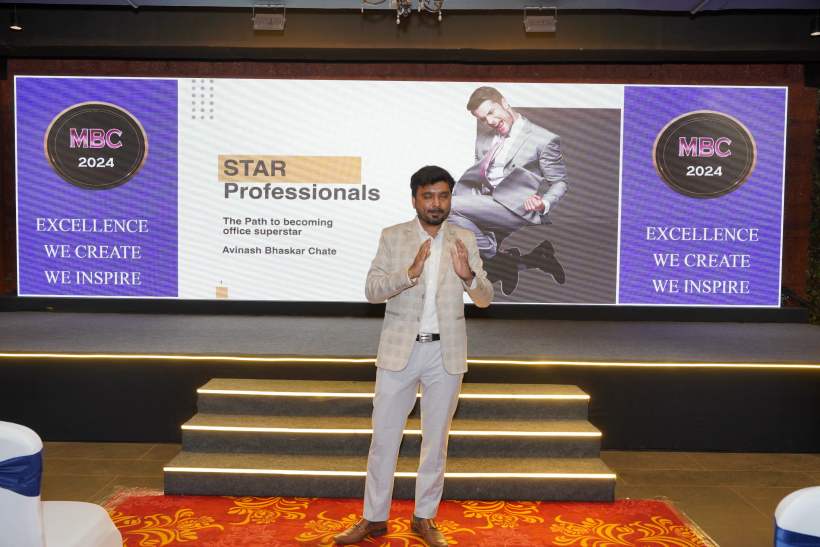
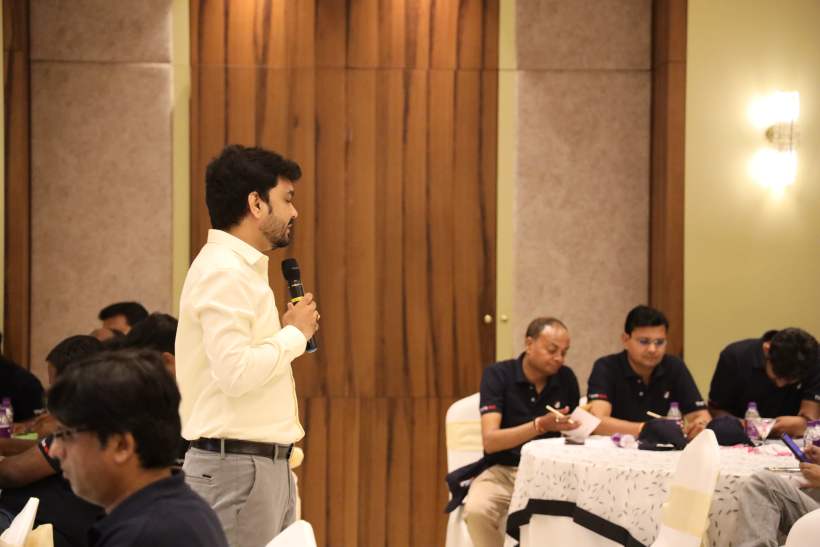
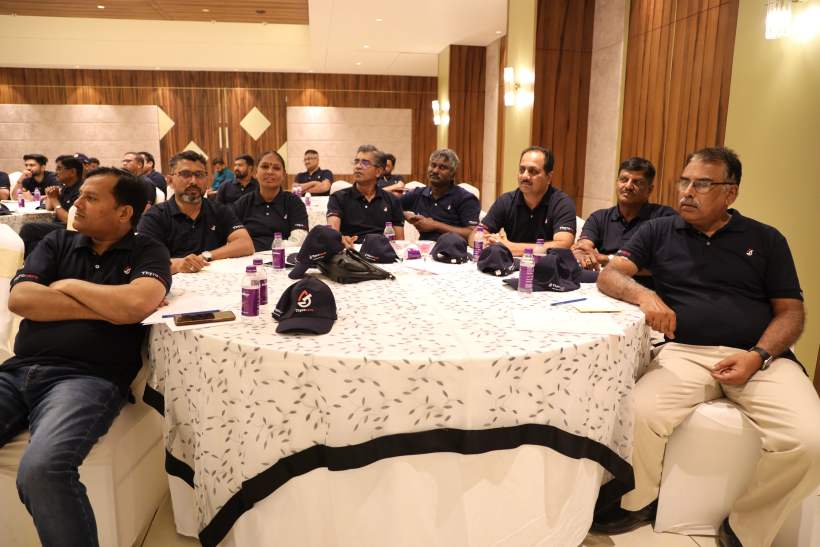


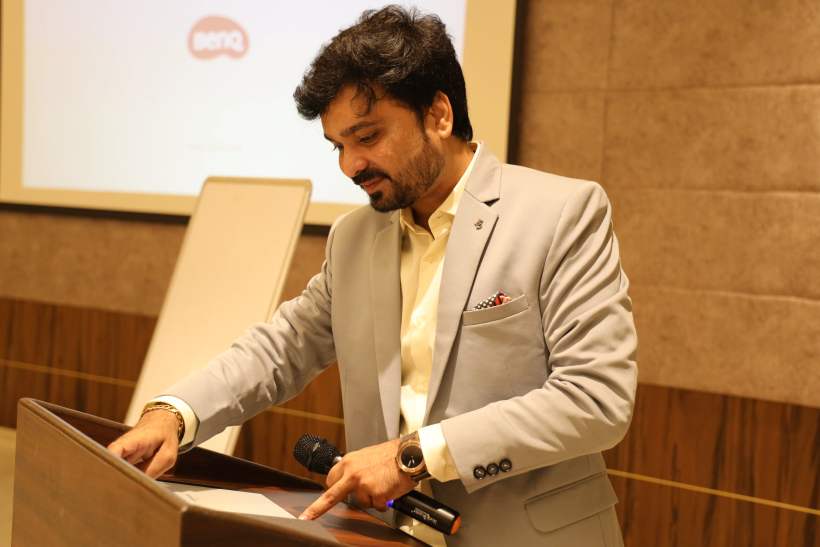
Photographs from Avinash Chate's own sessions in India. Sessions in this market are delivered by the same facilitator, in the same format.
Planning a sales training programme in Malaysia?
Share your name and WhatsApp number and you will get a reply within one business day — usually the same day. Include the dates, the markets your team sells into and whether you are claiming against your HRD Corp levy. Most briefs are scoped on a first call.
Prefer to talk now? ☎ +91 87936 30001 · WhatsApp · Email
Sectors Served in Malaysia
Regional commercial hubs first, because the fit is cleanest: GBS Malaysia counts 749 global business services companies in the country by mid-2025, employing more than 250,000 people, with eighty-seven per cent of the new entrants since 2021 setting up in Selangor or Kuala Lumpur, and the commercial teams inside them carry quota across several markets. Industrial and technical distribution second, where the selling problem is credibility in front of an engineering buyer — recognisably the same problem as selling into a JSW Steel or a Hitachi. Electronics and semiconductor supply chains in Penang third: InvestPenang records RM358.1 billion in electrical and electronics exports from the state, around sixty per cent of the national total, and a supplier selling into Bayan Lepas is selling to a procurement function that has seen every pitch. Manufacturing in Johor fourth, where the Johor–Singapore Special Economic Zone signed on 7 January 2025 is standing up new plants and new commercial layers, with Singapore approving RM28.5 billion of investment into Johor in the first nine months of 2025. Banking and financial services next — Bank Negara Malaysia's list of licensed financial institutions runs to twenty-four commercial banks, sixteen Islamic banks and ten investment banks — where the sale is a relationship held over years and the risk is a relationship manager who confuses access with commitment. Plantation and agri-input suppliers selling to estates, and FMCG and building-material principals selling through appointed dealers, buy this work too. Government procurement is the honest exception: it buys through tendered and registered channels, so it is the weakest fit here and not a sector this page chases.
Frequently Asked Questions
How is an India-based sales trainer actually engaged for a Malaysian programme?
The clean route is a direct engagement by your own L&D, HR or commercial function to train your own sellers, on your own premises, under your organisation's contract. Avinash Chate is engaged as the named facilitator, flies in for the dates, delivers the programme and flies out. There is no Malaysian office, no Malaysian entity, no SSM registration and no local licence in the picture. Whether your own legal or procurement function wants one in the chain is their call, and the engagement is structured to whatever they specify. If your procurement prefers to contract through a locally registered training provider instead, that also works, with him named as the facilitator rather than left as a line item. The second route is also the one HRD Corp expects for a public open-enrolment course, which is not what this page sells.
Can our HRD Corp levy pay for a trainer who is not registered in Malaysia?
Often it can, and the honest answer is that it depends on the route your own HRD Corp officer approves. HRD Corp's Allowable Cost Matrix sets out claimable costs for an overseas trainer delivering in-house, and employers do fund closed programmes this way, submitting the trainer's profile and a written justification alongside the grant application. The FAQ on HRD Corp Claimable Courses, version 5, separately states that foreign-based trainers may deliver for a registered provider without a TTT exemption or certificate, where the trainer collaborates with a local provider and comes to Malaysia solely to conduct the training. Both documents are published on hrdcorp.gov.my. What this page will not tell you is that the approval is a formality. It is HRD Corp's to give, the conditions are not the same for an in-house course as for a public one, and the guidebook is revised. Read it with your officer and settle the route in writing before the dates are held.
Is Avinash Chate an HRD Corp accredited trainer, and can he register a claimable course?
No to both, and the page will not pretend otherwise. He is not on HRD Corp's accredited-trainer register, holds no TTT certificate or exemption, and cannot register a claimable course himself — the FAQ on Claimable Courses is explicit that only HRD Corp registered training providers can register courses. He also cannot sell a public open-enrolment course in Malaysia without either a locally registered partner or a one-off approval from the Training Market Department. What he can be is the named overseas facilitator on an employer's own in-house programme, which is the route described above and the only route this page argues for. There is a real tension between HRD Corp's trainer page and the Allowable Cost Matrix carve-out, both are linked from the section above, and your HRD Corp officer is the person who settles it for your application.
What is needed for him to enter Malaysia and deliver, and who applies for it?
Entry requirements for Indian nationals change, so nothing here is stated as settled: the current position is confirmed against the Immigration Department of Malaysia before every trip, and your HR or immigration team should confirm it on their side too. On the pass itself, the structure matters more than the paperwork. A Professional Visit Pass is granted to a foreign professional providing services to a Malaysian company on behalf of an overseas company on a temporary basis, for no longer than twelve months per issuance, and it is applied for by the Malaysian host company through the Immigration Department's Expatriate Services Division — not by the trainer, who must be outside Malaysia when the application is made. The real lead-time driver is that your company has to be registered on the ESD portal before anything else can start. Whether a short in-company workshop needs that route or is handled differently is a judgement your immigration or HR team makes, and the dates are built around whatever they specify.
How much lead time do you need for a Malaysian sales programme?
Four to six weeks is comfortable. That covers the discovery call, time with two or three of your sellers so the role-plays use your live opportunities rather than generic cases, the written outline, your approval of the content, the HRD Corp grant application if you are claiming, and the flights. Two to three weeks is possible when the brief is clear and the dates are held. Two calendar points are worth naming early. Most of the country works Monday to Friday, but Kelantan, Terengganu and Kedah observe a Friday to Saturday weekend, and Johor reverted to a Saturday to Sunday weekend from 1 January 2025 — so a Thursday and Friday workshop in Kota Bharu is a weekend collision and the same pair in Johor Bahru is not. And Ramadan, expected to begin in February 2027 with Hari Raya Aidilfitri expected in March, restructures a training day rather than cancelling it; the dates are confirmed only after moon-sighting by the religious authorities, so they can shift.
What is the right group size for a sales programme?
Twelve to twenty-five is where this work lands hardest, because every seller has to run a live conversation in front of the room and be seen doing it. Up to about forty still works for a workshop built on structured sub-groups. Beyond that the format has to change to a kickoff keynote, which shifts the outcome from practised skill to shared language across the region. Splitting a regional team across three or four cycles usually beats one large room, particularly where the group mixes country managers with new sellers. HRD Corp's allowable cost matrix funds small in-house cohorts rather than setting a large minimum, so a specialist group of a dozen sellers is not a funding problem on the claimable side; your officer will confirm the current threshold.
Which language is the programme delivered in?
English. It is the working language of a Malaysian commercial team and it stays the working language for the whole programme — the difficulty in these rooms is never English. The EF English Proficiency Index for 2025 puts Malaysia first in Asia and twenty-fourth globally, in the high-proficiency band, with Kuala Lumpur scoring above the national figure. Hindi and Marathi are an additional capability, and they matter only on a multi-site programme where the same content also has to land with a team in an Indian plant or distributor network. For Malaysian delivery they are not part of the offer, and no other language is claimed here.
Can the programme run online instead of in person?
Yes, and a team covering several ASEAN markets often has no choice. Deal reviews, objection drills and coaching clinics run well as virtual blocks on Malaysian time, which sits two and a half hours ahead of India. What does not travel well online is the first day, where a seller has to be recorded getting a discovery conversation wrong in front of peers and then run it again. The common pattern is one in-person block in Kuala Lumpur or at the plant for the whole team, followed by shorter virtual reinforcement sessions tied to live opportunities across the next quarter. If you are claiming against the levy, check the format against the current allowable cost matrix, because the ceilings differ by delivery mode.
What does the written proposal contain?
The commercial objective in your words, the audience and cohort structure, a session-by-session outline with the activities and role-plays named, the timings mapped to your working week and your quarter-end, the facilitator profile in the form your grant application needs, what your side needs to provide, and the follow-through. It also states plainly what the programme will not do — it will not fix a pricing problem, a product gap, a distributor margin structure or a territory design that is sending sellers at the wrong accounts. You get it before any invoice is raised, and the content is agreed with you before the dates are locked.
How is the cost of a Malaysian sales programme worked out?
It is built from the format and the number of days, the number of cohorts, whether the work is a kickoff keynote or a behavioural sales programme with coaching follow-through, and the travel and accommodation your side is arranging — all quoted as separate lines so nothing is buried. Share the dates, the audience, the cohort size and the outcome you need and you get a specific written quote within one business day. There is no published rate card, because a distributor meet keynote for two hundred people and a three-cohort key-account programme are not the same purchase. Withholding tax on a payment to a foreign trainer is the other line your finance team will raise; the position depends on how the engagement is contracted and on the India–Malaysia double taxation agreement, it is settled with your own tax advisor and with LHDN before the invoice is raised, and this page quotes no rate it cannot point at a source for.
Plan Your Malaysia Sales Programme
To scope it, share the venue and the state, the date window, how many sellers are attending and at what level, which markets or channel partners they carry, whether sales managers are in the room or in a separate cohort, whether you intend to claim against your HRD Corp levy and who your officer is, and the one commercial behaviour the programme has to change. A call follows within 48 hours, and you get a written outline — in the form a grant application needs — before anything is committed. The full training topic library and contact details are a click away.
Building sales capability in Malaysia this year?
B2B sellers, distributor-facing teams and the people who run their deal reviews — one facilitator, one standard, in English.
Check Date Availability →