Motivational Speaker in Malaysia
Half past nine at the annual dinner, the lucky draw still to come, four hundred people who have been seated since seven, and a speaker who opens by asking everyone to stand and shout a slogan back at him. The room does it. Nobody repeats a line of it on Monday. Avinash Chate is a motivational speaker in Malaysia for companies that would rather the Monday mattered.
Annual dinners · Sales conferences · Town halls and family days · India-based, travels for engagements
Why Volume Does Not Work in a Kuala Lumpur Ballroom
A Malaysian corporate audience is not a difficult room. It is a room with its own conventions, and a talk built without them tends to get blamed on the crowd rather than on the design. The people in front of you have come in from the Klang Valley offices, the Penang plant, the Johor site and sometimes the Jakarta and Ho Chi Minh City desks. One working language, several passports, and the managing director on table one where every person in the hall can see him.
The format is rarely the obstacle. An unfamiliar exercise, a structure nobody has seen, an idea that cuts against the last three town halls — a brief that assumes a Southeast Asian audience will refuse all that is designing around an assumption rather than around the room. Ask your own HR team what has actually been tried at this event before, and build from that answer instead.
What the running order has to plan for is hierarchy. Hofstede's country scores, the long-running survey of workplace attitudes, place Malaysia at the top of the power-distance index at 100. That is a measure of how much hierarchy staff expect at work, not a description of anyone sitting in the hall, and it is worth treating as a design input rather than a verdict. Practically it means the standard stunt — who will come up here and tell us about their biggest failure? — can land in a silence a speaker misreads as a flat crowd. The design has to earn disagreement instead of demanding it, and the fixes are cheap: small groups before plenary, written input before spoken, the senior person briefed to go last.
And the running order has spent the room before you stand. Two hours of seated dinner, a long-service segment, a lucky draw everyone is waiting for, announcements the hall has been half-hearing since seven o'clock. A speaker who opens by demanding participation is asking a tired, watched, multi-site audience to take a personal risk on forty seconds of goodwill. It declines politely. That looks like a flat crowd and is not one, and the difference is worth settling in the brief rather than on the night.
Which is why a keynote for this audience is built the other way round: not louder, but specific. A talk that names the thing everybody in that ballroom has noticed and nobody has said out loud does more in forty-five minutes than an hour of energy ever will.
What the Keynote Covers
Every talk is cut to the outcome you name in the brief and to the slot it sits in. These are the themes a Malaysian corporate brief usually lands on.
The Keynote That Has to Follow Dinner
The annual dinner slot is the hardest one on the running order and the one worth briefing first. A talk built for a fed, tired, half-social hall that still has to walk out carrying one sentence it can repeat. See motivation and peak performance.
Sales Conference and Kick-Off Openers
The opening slot decides how the next two days are heard. A regional sales team that has just been handed a harder number needs that number reframed into something it can act on by Tuesday, not celebrated from a stage. This is the sales conference keynote.
The KITE Leadership Framework
The spine of the longer work. The KITE Leadership Framework hands an audience one structure for emotional, relational and performance capability, so the language from the stage survives into the fourth month instead of dissolving into good intentions by Friday.
Speaking Up With the Managing Director in the Room
The problem a town hall is usually called in to fix: the people closest to the information have no safe route for it to travel upward. Named from the stage, in front of both halves of the room, it stops being an awkward private observation and becomes something a team can work on. See trust and psychological safety.
The Town Hall After a Restructure
The session where the audience is not neutral and knows more than the agenda admits. Honest about what has happened, useful about what people control now. See change management.
Engineers Who Became Managers
The Penang and Klang Valley problem in one line: the best process engineer on the floor is now running eleven people and nobody taught the second job. A keynote version for a conference, a working session for the cohort itself. See first-time manager development.
Formats
A forty-five to sixty minute keynote in the after-dinner slot at an annual dinner or a family day. A ninety-minute opening or closing address inside a sales conference or a regional kick-off. A town hall session, usually shorter and always cut to what has actually just happened in the business. A keynote in the morning followed by a half-day working session with the leadership group in the afternoon, which is the shape most briefs settle into once the talk has to do more than open the day — and the only shape with a levy conversation worth having attached to it. A two-city trip, Kuala Lumpur and Penang or Kuala Lumpur and Johor Bahru, which spreads one set of flights across two dates. And virtual sessions between the in-person dates. All of it is in-company and built to your brief; there is no public calendar to buy a seat on. Becoming a Star at the Workplace and Emotional Intelligence at Work are the usual companion sessions when a keynote turns into a programme.
What the HRD Corp Levy Will and Will Not Cover
There is no HRD Corp claimable badge at the top of this page, and the reason is worth setting out rather than leaving you to find. Start with the money, because the money is the reason this question dominates every brief. Under the PSMB Act, registration with HRD Corp is compulsory for employers with ten or more Malaysian employees, at one per cent of monthly wages; employers with five to nine have the option, at half a per cent. HRD Corp collected a record RM2.3 billion in levy in 2024. And under Employers' Circular 7/2019 an unutilised balance is forfeited after two years. The buyer's problem here is almost never budget. It is a balance with an expiry date on it.
An after-dinner keynote is an event, not a claimable course. That is the honest half and it is worth saying before a finance team says it for you. A speech at an annual dinner or a family day is not what the levy was built to reimburse, and a page that implies otherwise is setting your grant application up to fail. Buy the keynote on the events or business-unit budget, which is the budget these particular slots come out of anyway.
A structured in-house session is a genuinely different case. The route that is documented and checkable runs through an HRD Corp registered training provider rather than around one. The FAQ for HRD Corp Claimable Courses states that a foreign-based trainer may deliver training for a registered provider without holding a TTT certificate or TTT exemption, where the trainer collaborates with a local training provider, comes to Malaysia solely to deliver the training, and submits a profile setting out their credentials as a foreign-based trainer. That is the route to ask your provider about. Separately, HRD Corp operates a One-Off Approval for training delivered by non-registered providers, and one of its categories is a public workshop, seminar or conference held in Malaysia by a foreign-based provider, capped at four sessions a year, filed a month before the date with the approval letter attached to the employer's grant application. That one covers public events, not a closed in-house programme. Your HRD Corp officer confirms which applies to your grant before you file it, and nothing on this page substitutes for that.
The ceilings are the price frame, and they favour a trainer who flies in. The Matrix caps an in-house course at RM10,500 per day per group for a full day of at least seven training hours, and RM6,000 for a half day. It also allows an overseas trainer's airfare, including airport tax, administrative fee and fuel surcharge, together with a trainer allowance covering food, accommodation and land transport for the duration of the programme — but that allowance is itself capped, at RM400 per trainer per day or the amount actually paid, whichever is lower, so it defrays the travel rather than covering it. The useful part is that the airfare and the allowance sit on the claim as separate line items rather than inflating a day rate. That is headroom, not a quoted price, and none of it is a promise about your particular grant.
And the honest boundary. Avinash Chate is based in Maharashtra and travels for engagements. There is no Malaysian office, no Malaysian entity, no local licence, no HRD Corp registration or accreditation, no TTT certificate or exemption, no past delivery in Malaysia and no Malaysian client list on this page, because none of that exists. He is not on the accredited-trainer register, which is precisely why the in-house route above runs through a registered training provider, and why your HRD Corp officer confirms it before the grant application rather than after. What does exist is a documented Indian record in rooms that are not gentle ones — the Reserve Bank of India, BARC, JSW Steel, Ferrero, Hitachi, Mumbai Port Authority, the Indian Army and the Border Roads Organisation — along with a TEDxBEC talk carrying an official TED.com event page, published books including The Winning Edge and The Unanswered, and 202 Google reviews at 4.9 stars. Of the listed industry honours, Educationist of the Year at the I Inspire Awards Season 4 in Pune in April 2025 is the one with independent coverage; the rest are first-party records and are listed as such.
All of it is checkable before you pick up the phone. Start with the source library, the press and speaking record, the motivational speaking page for India and the international events page, which sets out the travel and contracting position in full. Then ask any speaker you are considering the same three questions: who personally stands on that stage on the night, and is that name written into the proposal? Is this being bought as an event or registered as a claimable course, and which grant documents come with it? And what happens to the message after the applause stops?
From the room
Real sessions, photographed as they ran.
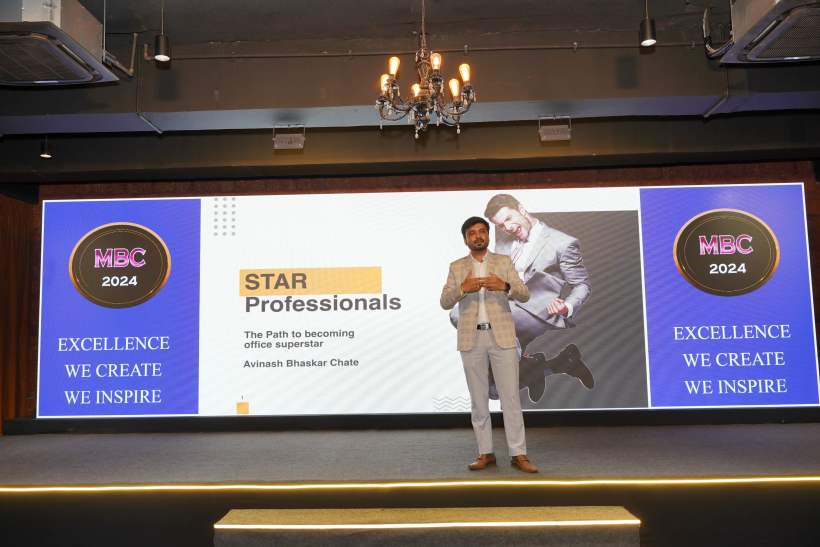
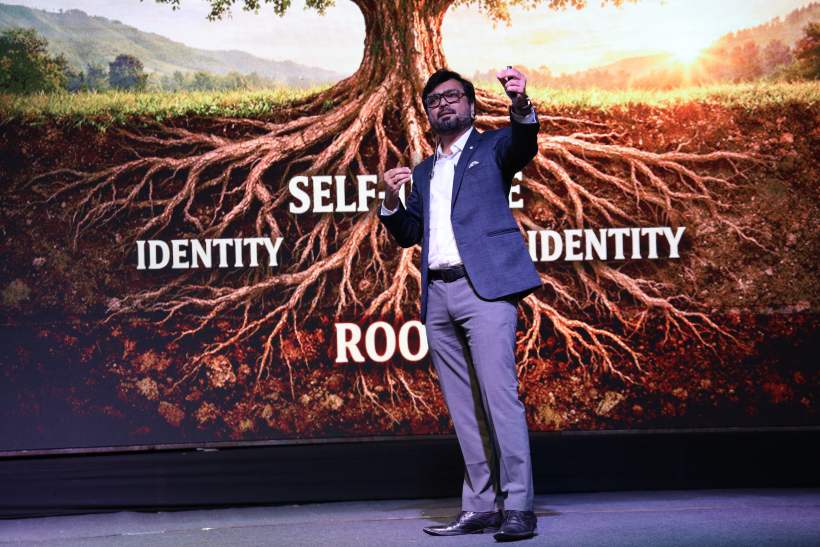
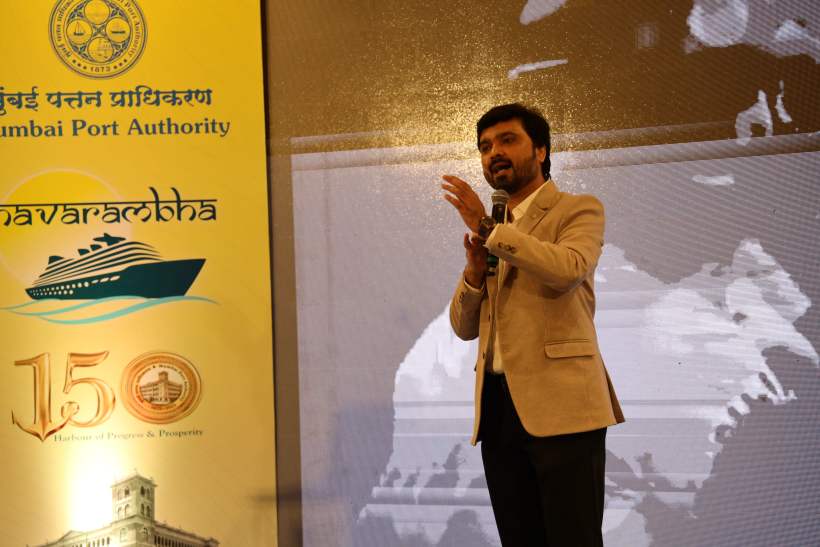
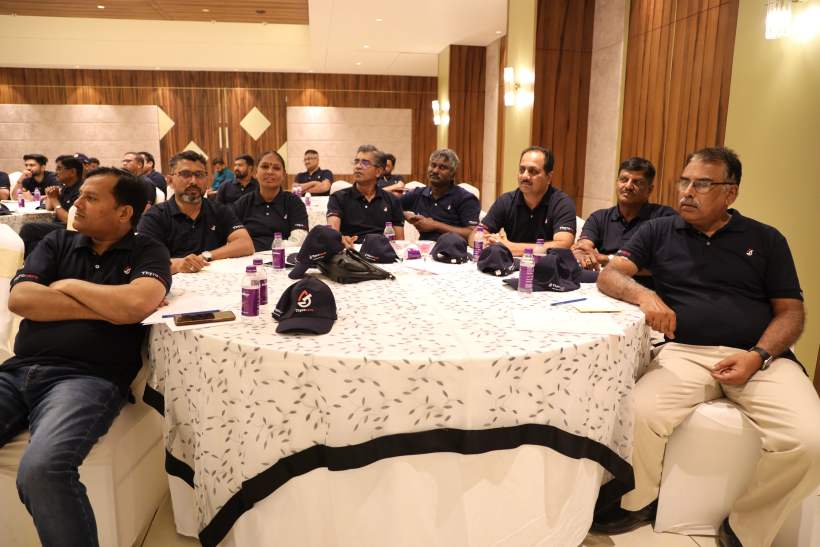
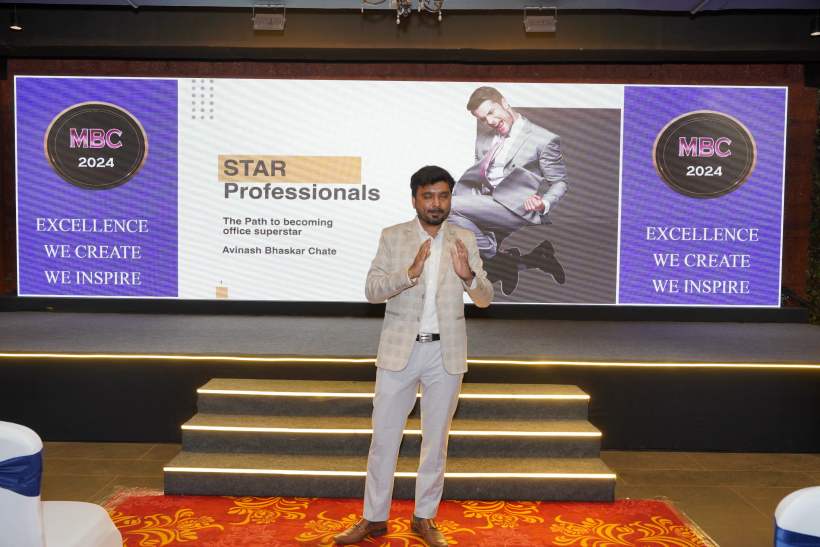
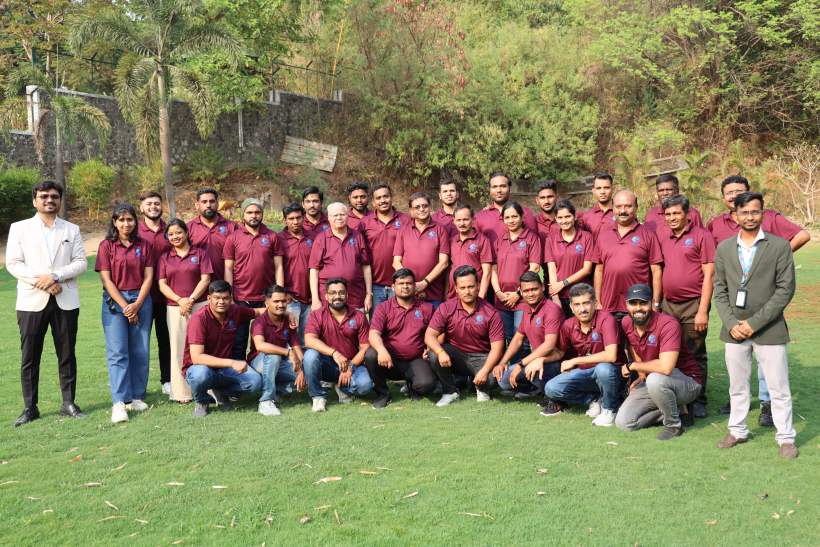
Photographs from Avinash Chate's own sessions in India. Sessions in this market are delivered by the same facilitator, in the same format.
Booking a keynote speaker for a Malaysian event?
Share your name and WhatsApp number and you will get a reply within one business day — usually the same day. Include the date and the venue if you have them, and say whether a claimable in-house session is attached.
Prefer to talk now? ☎ +91 87936 30001 · WhatsApp · Email
Sectors Served in Malaysia
Shared services and global business services first, because that is where the fit is strongest: Malaysia counted 749 global business services companies in 2025 under the national GBS strategy reported by the GBS Malaysia Strategy 2022-2027 mid-term report, up 66.8 per cent since 2021, and eighty-seven per cent of the new GBS companies established between 2021 and mid-2025 landed in Selangor or Kuala Lumpur. Electronics and semiconductors next, where InvestPenang records RM358.1 billion in exports and roughly sixty per cent of Malaysia's electrical and electronics exports out of Penang alone. Then banking and financial services, where Bank Negara Malaysia licenses sixteen full-fledged Islamic banks alongside the commercial and investment banks on its list of licensed financial institutions. Then energy: PETRONAS announced in June 2025 that it would cut more than five thousand roles, around ten per cent of its workforce, alongside a hiring freeze running to December 2026, and the town hall for the people who stayed is a real, dated need across that whole vendor ecosystem. Manufacturing in the Klang Valley and in Johor rounds it out, where the Johor-Singapore Special Economic Zone signed in January 2025 has new plants standing up entirely new supervisory layers.
Frequently Asked Questions
How is an India-based motivational speaker actually engaged for a Malaysian event?
The clean route is a direct engagement by your own HR, L&D or events function for your own internal event, under your organisation's contract. Avinash Chate is engaged as the named speaker, flies in for the date, delivers the keynote and flies out. There is no Malaysian office, no Malaysian entity and no local registration in the picture, and none is needed for a company running an event for its own people. If procurement would rather contract through a locally registered supplier, or through the event agency already holding the venue and the production, that works equally well with him named as the speaker on the running order.
Can the speaker fee be claimed against our HRD Corp levy?
Part of the answer is yes and part of it is no, and the split matters more than a slogan. An after-dinner keynote at an annual dinner or a family day is an event, not a training programme, and it is not the thing the levy was built to reimburse. A structured in-house session — a half-day or full-day programme for one organisation, with objectives and an outline — is a different case. The documented route there is that the course runs through an HRD Corp registered training provider with him named as the foreign-based trainer delivering it. HRD Corp's FAQ for Claimable Courses states that a foreign-based trainer may deliver for a registered provider without holding a TTT certificate or TTT exemption, where the trainer collaborates with that local provider and submits a profile stating their credentials. Confirm the route and the paperwork with your HRD Corp officer before the grant application. This page will not pretend the answer is simpler than that.
Is Avinash Chate an HRD Corp registered or accredited trainer?
No, and it is written here rather than left for you to discover. He is not on the HRD Corp accredited-trainer register, holds no TTT certificate or TTT exemption, and cannot register a claimable course himself — only HRD Corp registered training providers can do that. A public open-enrolment course in Malaysia would need either a registered local provider or a One-Off Approval, which HRD Corp allows for a foreign-based provider running a public workshop, seminar or conference in Malaysia up to four times a year, applied for a month before the date. What he can do is stand in front of your own people at your own event, or deliver inside a claimable in-house course that an HRD Corp registered training provider runs, which is what almost every enquiry on this page is actually about.
What about the immigration pass and the travel side of it?
The pass is applied for by the Malaysian host company through the Immigration Department's Expatriate Services Division, not by the speaker. The real lead-time driver is whether your company is already registered on the ESD portal — an employer that has never sponsored a foreigner registers the company first, and that is the step that takes the time, not the pass. Entry requirements for Indian nationals change, so nothing is asserted here about them; the position is confirmed with the Malaysian High Commission before every trip. Tell us the route your immigration or HR team wants to use and the lead time gets built into the date.
How much lead time do you need for a Malaysian keynote?
Four to six weeks is comfortable. That covers the brief call, the work of finding out what this particular audience has already been told this year, the script cut to your theme, whatever pass or documentation your side is filing, and the flights. Two to three weeks is workable when the date and the theme are already fixed and your company is already ESD-registered. Two scheduling points are worth raising early. Kelantan, Terengganu and Kedah run a Friday and Saturday weekend, while Johor reverted to a Saturday and Sunday weekend from 1 January 2025. And Ramadan in 2027 is expected to run from around 8 February to 9 March, with Hari Raya Aidilfitri expected around 10 March — expected, because the dates are confirmed only after moon-sighting by the religious authorities. Sessions inside that window are usually restructured to an earlier start and no lunch break.
What audience size works for a keynote?
A keynote scales in a way a workshop does not. Two hundred at a sales conference or six hundred at an annual dinner makes no difference to the format, because the outcome being bought is a shared reference the whole company can quote back on Monday. Below about sixty people the room stops behaving like an audience and starts behaving like a workshop, and at that size a half-day working session usually returns more than a speech would. Both are on the table, and the brief decides which. The half-day is also the format that has a claimable route worth discussing with your HRD Corp officer, which the after-dinner speech does not.
Which language is the keynote delivered in?
English. It is the working language of a Malaysian corporate room and there is no good reason for it to be anything else. Malaysia ranks first in Asia and twenty-fourth globally on the EF English Proficiency Index for 2025, in the high-proficiency band, and Kuala Lumpur's own score of 588 sits above the national 581. There is no language problem here to solve, so this page does not invent one. Hindi and Marathi are additional capabilities that earn their place only on a multi-country programme that also stops at an Indian plant, where the same content has to land without a second speaker being brought in to rewrite it. In Malaysia the room is an English room and stays one.
Can the session run online instead of in person?
Yes, and for a quarterly town hall or a follow-through session it is often the sensible choice. Malaysia and India sit two and a half hours apart, so a live virtual slot places easily in both working days. What does not travel well online is the keynote meant to change the temperature of a room — an annual dinner, a conference opener, the session after a hard restructuring — because a reaction four hundred people have together is the thing being bought. A common pattern is one in-person keynote in Kuala Lumpur or Penang followed by shorter virtual sessions across the quarter.
What does the written proposal contain?
The outcome in your words, the audience and what they are walking in from, the theme and the arc of the talk, the running-order slot and the timing, what happens in the room and what the audience leaves holding, the speaker profile, what your side provides on stage, and the follow-through if there is any. If a claimable in-house session is attached, the proposal states what it is and what it is not, so nothing has to be walked back at the grant stage. It also says plainly what a keynote will not do, because a speech does not close a capability gap on its own. You get all of it before any invoice is raised.
How is the cost of a Malaysian keynote worked out?
It is built from the format and the length of the slot, how many sessions run on the trip, whether a workshop or a second-city stop is attached, the preparation the brief actually requires, and the travel and accommodation your side is arranging — all quoted as separate lines so nothing is buried. Two practical notes. Where an in-house claimable session is in scope, HRD Corp's Allowable Cost Matrix caps an in-house course at RM10,500 per day per group, and separately allows an overseas trainer's airfare plus a daily allowance for accommodation, meals and land transport capped at RM400 per trainer per day — that is your headroom, not a price. And ask your finance team what withholding position LHDN requires on a payment to a non-resident, at quotation stage rather than at invoice stage, so the quote and the payment agree. There is no published rate card.
Plan Your Malaysian Keynote
To scope it, share the date and the venue, the kind of event and the slot in the running order, how many people are in the hall and which sites they are coming from, what the audience has just been through as a business, and the one thing the talk has to leave behind. Say too whether a claimable in-house session is meant to sit alongside it, because that changes the paperwork rather than the talk. A call follows within one business day, and you get a written outline before anything is committed. The full training topic library and contact details are a click away.
Have a Malaysian date on the calendar?
Annual dinners, sales conferences, town halls and family days — one speaker, briefed to your room.
Check Date Availability →