Leadership Training in Malaysia
Your manager asked the room whether the plan would hold. His head of department had already said it would. Nobody spoke, he wrote that down as agreement, and six weeks later the work came back wrong with no meeting anyone can point to. Avinash Chate runs leadership training in Malaysia for shared-services, plant and regional teams, in English, with the disagreement on the table before it costs a quarter.
Kuala Lumpur · Penang · Johor · India-based, travels for engagements

Why Silence in That Meeting Was Not Agreement
It is the most ordinary failure in a Malaysian management room and it almost never gets recorded as one. A decision is put to a group that includes the person who made it, the group has nothing to gain from contradicting him in front of everyone, and the meeting ends on time. The manager running it leaves with a mandate he does not actually have. He finds out in the delivery numbers, or in a resignation, or in the second version of the same project.
Research on national work culture puts Malaysia at the top of the power-distance scale. Hofstede's country data scores Malaysia at 100 on the power-distance index, the highest of any country in the set, a ranking The Star reported when the comparison was published. That is not a statement about any person in your room and it should never be used as one. It is a design constraint on the session. If the most senior person in the room speaks first, the room will agree. So the session has to be built so that disagreement can happen without anyone having to visibly contradict a senior in front of peers — small groups before plenary, written input before spoken, and the senior person briefed to go last.
The English is not the obstacle, and pretending it is insults the room. The EF English Proficiency Index 2025 places Malaysia first in Asia and twenty-fourth globally at 581, in the high-proficiency band, with Kuala Lumpur at 588. Every word of the programme runs in English, because English is already the working language of the building. If a proposal in front of you leads with a language solution, ask what problem it thinks it is solving.
What is actually mixed is the reporting line, not the vocabulary. A Klang Valley or Bayan Lepas cohort is assembled out of several first languages and several schooling systems, and it sits alongside expatriate managers reporting into a head office in another time zone. Three directions, one week. The same manager has to give feedback that reads as fair upward, sideways into a matrix and downward onto a shop floor — with one set of habits, none of which he was ever taught.
A programme that teaches models does nothing about any of this. More often than a facilitator likes to admit, the models were already known and were never once used. What changes behaviour is structuring the work so the objection surfaces at no social cost, and then making each manager practise it badly once, in the room, in front of people who will see him do it again on Monday.
What the Programme Covers
Every programme is cut to the outcome you name in the brief. These are the modules that do the most work with Malaysian leadership teams.
Getting an Honest Answer Upwards
The practical skill of surfacing a real objection from someone who has decided it is not worth voicing while a senior is present. How the question is framed, who is asked first, what happens in the pause, and why the corridor conversation afterwards is where your risk register actually lives. Built on trust and psychological safety.
The KITE Leadership Framework
The spine of the programme. The KITE Leadership Framework gives a manager one structure for emotional, relational and performance capability, so the vocabulary from day one survives into the fourth month instead of dissolving into good intentions.
First-Time Managers Promoted for Output
The hardest transition in any plant or service centre. He was promoted because he was the fastest, and being fastest is now the problem: the work still routes through him, his team waits, and he reads the waiting as their inexperience rather than as his own habit. Undoing that is the module. This is the first-time manager module.
Difficult Conversations Without Flattening the Person
Underperformance, a missed commitment, a behaviour that everyone has noticed and nobody has named. What reads as direct and fair to one person in the room reads as public humiliation to the next, and a manager needs a structure that survives both readings. See difficult conversations.
Leading a Team Through a Restructure
For the survivors, who are the group nobody budgets for. Holding a team together when the headcount question has been asked out loud, answering what you are not allowed to answer, and keeping delivery upright through it. See change management and resilience.
Coaching Across the Malaysia and India Line
A Kuala Lumpur manager running an Indian delivery team, or the reverse, sits on a line where a status update, an escalation and a slipping date get reported differently at each end. The coaching and feedback module is built for that gap, alongside cross-cultural communication.
Formats
A 90-minute leadership keynote inside your annual conference, town hall or sales kickoff. A one-day workshop, which is what most Malaysian calendars can protect and what the levy claim is structured around anyway. A two-day behavioural programme when you want practised skill rather than shared language, usually split across cohorts of twelve to twenty-five. A modular programme running one day a month across a quarter, with virtual reinforcement between blocks on Malaysian time. A multi-site version where the same framework runs in your Malaysian office and your Indian sites without the content being commissioned and re-written twice. And a train-the-trainer track so your own L&D team carries the framework forward after the engagement ends. All of it is in-company and built to your brief; there is no public calendar to buy a seat on, which is also why the overseas-provider route applies rather than the public-course one. The flagship structure is the Leadership Development Program, with Emotional Intelligence at Work as the usual companion module.
The HRD Corp Question, Answered Before You Ask It
The first thing an L&D manager will want from a page like this one is the levy position, so it goes first. Start with the mechanics. Under the PSMB Act, HRD Corp collects a compulsory levy of one per cent of monthly wages from employers with ten or more Malaysian employees, and half a per cent from employers with five to nine who opt in. HRD Corp's own guidance attaches a condition worth knowing before you apply: an overseas trainer is for where the expertise is not available locally, so the justification your officer wants is about the specific expertise rather than about the trainer. Treat every figure here as a claim ceiling to check with your HRD Corp officer, not as an approval. Collection reached a record RM2.3 billion in 2024. Under Employers' Circular 7/2019 an unutilised balance above a retained RM10,000 is forfeited after two years, and HRD Corp has redirected unused balances before. For most employers reading this, the constraint is not budget. It is a balance with a clock on it.
An overseas trainer can be paid out of that balance, and HRD Corp says so in its own guidebook. The Allowable Cost Matrix names Overseas among the categories of non-registered training provider whose training can still be claimed, defined as a provider based outside Malaysia with no company registered in Malaysia. For a public course the route is tighter: HRD Corp's one-off approval for a foreign-based provider covers public workshops, seminars and conferences and is capped at four a year, so a public course usually needs a locally registered partner instead. An in-house course is the different case: your own employees, your own premises, and the justification for engaging an overseas provider supplied in your own grant application. A closed leadership cohort for your own managers is an in-house course. That distinction decides the whole question, which is why it is set out here rather than left for the third meeting.
Now the half that no badge prints. He is not on HRD Corp's accredited-trainer register, and HRD Corp's own trainer page says only accredited trainers are qualified to train employees contributing to HRD Corp. That line governs who may register as a provider; the Allowable Cost Matrix and the claimable-courses FAQ carve out the overseas and foreign-trainer routes above, and the FAQ states plainly that foreign-based trainers may deliver for a registered provider without a TTT exemption or certificate. Both things are true and this page will not hide the tension between them. He also cannot register a claimable course himself and cannot sell a public open-enrolment course here. Confirm the route with your own HRD Corp officer before the grant application goes in.
The ceilings are worth knowing because they are your headroom, not his price. The Allowable Cost Matrix caps a customised in-house course at RM10,500 per day per group for a full day of at least seven hours, and RM6,000 for a half day of four hours or less. Separately, an overseas trainer's airfare is claimable, and the external and overseas trainer allowance covers food, accommodation and land transport for the duration of the programme. HRD Corp states a 48-hour grant approval turnaround where the documents are complete. A day rate priced out of India sits well inside that ceiling. The matrix is revised periodically, so the edition current when you apply is the one that governs.
The pass and the calendar are the other two things that move dates. The Professional Visit Pass is granted to a foreign professional to provide services on behalf of an overseas company on a temporary basis for up to twelve months; it is applied for by the Malaysian host company through the Immigration Department's Expatriate Services Division, not by the trainer, and the sponsor has to be registered on the ESD portal before anything else can start. Whether a one-day in-house session needs that pass or sits under a business visit is your immigration team's decision and this page will not guess at it. Entry requirements for Indian nationals change, so the current position is confirmed with the Malaysian High Commission before every trip. On the calendar: Kelantan, Terengganu and Kedah keep a Friday to Saturday weekend, Johor reverted to Saturday to Sunday on 1 January 2025, and Ramadan in 2027 is expected to run from 8 February to 9 March with Hari Raya Aidilfitri expected on 10 March, subject to moon-sighting confirmation. Full days during Ramadan are usually restructured — earlier start, earlier finish, no lunch break — and nothing is scheduled across Raya.
And the honest boundary. Avinash Chate is based in Maharashtra and travels for engagements. There is no Malaysian office, no Malaysian entity, no local licence, no HRD Corp registration, no past delivery in Malaysia and no Malaysian client list on this page, because none of that exists yet. What exists is a documented Indian record — the Reserve Bank of India, JSW Steel, BARC, Ferrero, Hitachi, Mumbai Port Authority, the Indian Army and the Border Roads Organisation — and a buyer running a mixed reporting line can judge for himself whether a central bank and an atomic research centre are easier rooms than his own.
Everything on that list is checkable before you call. Start with the source library, the training evidence, the reviews and the India-based speaker page for international events, which sets out the travel and contracting position in full.
From the room
Real sessions, photographed as they ran.
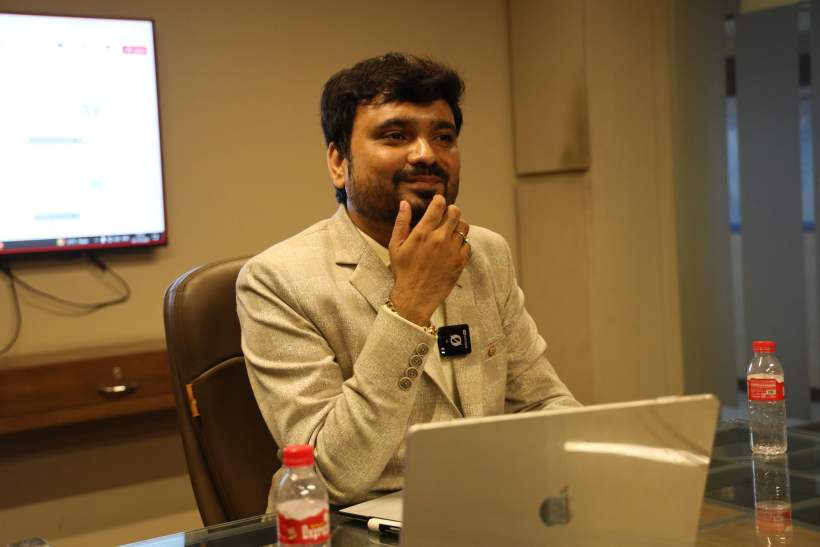
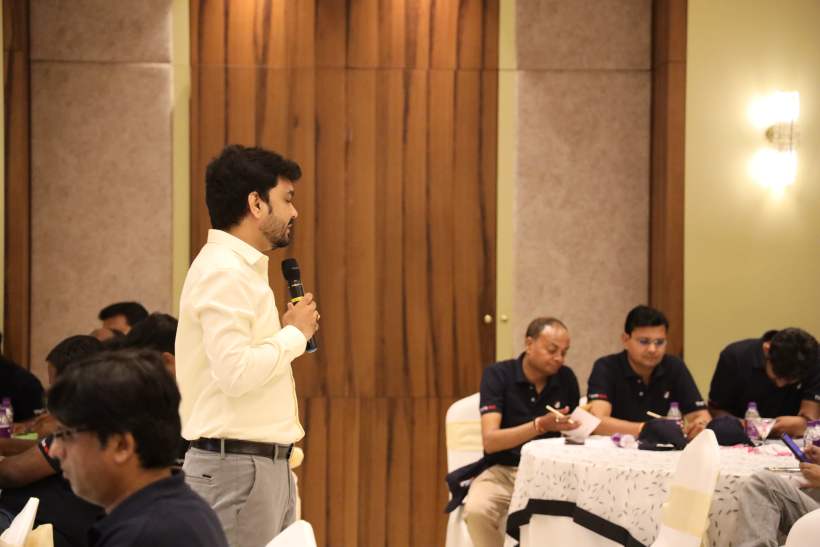
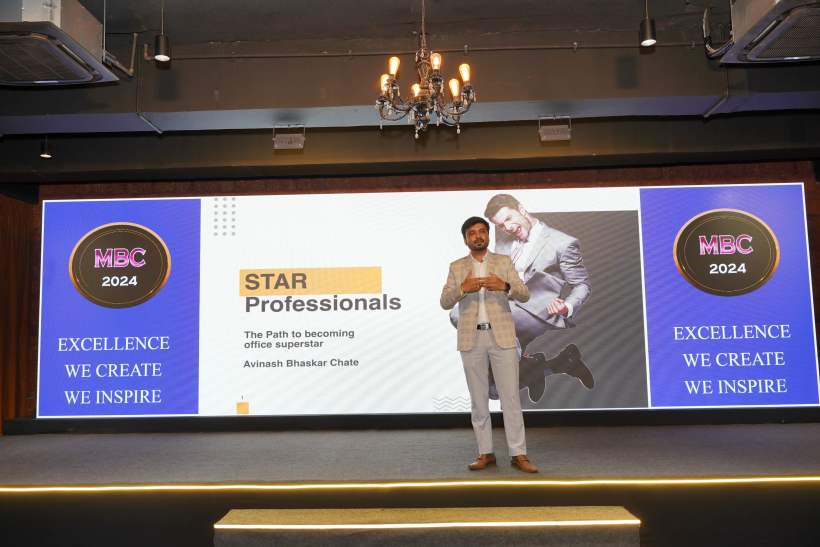
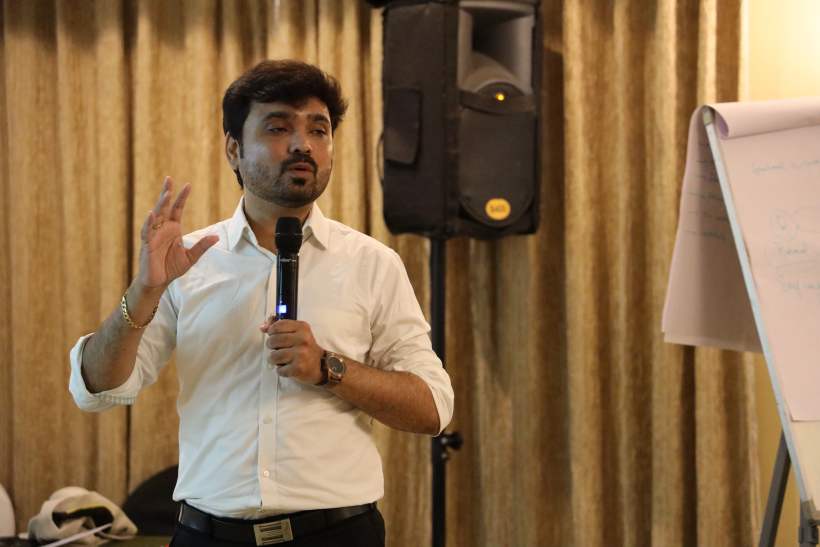
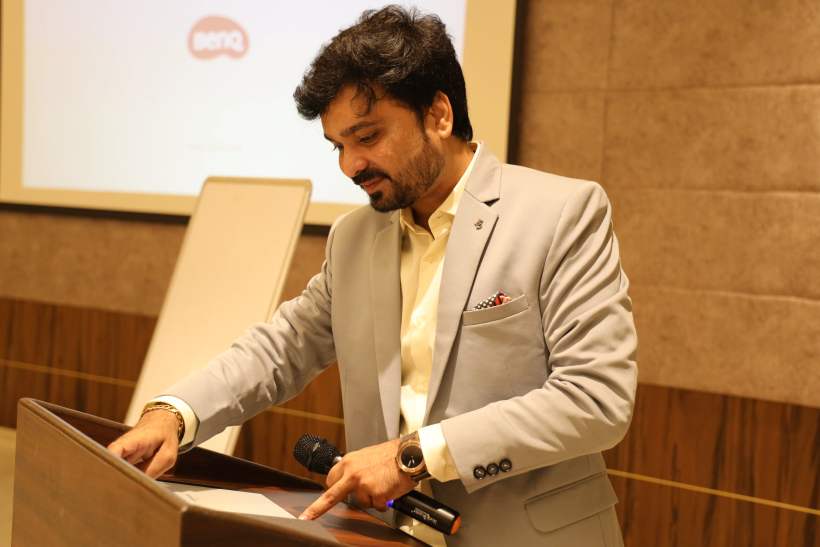

Photographs from Avinash Chate's own sessions in India. Sessions in this market are delivered by the same facilitator, in the same format.
Planning a leadership programme in Malaysia?
Share your name and WhatsApp number and you will get a reply within one business day — usually the same day. Include the dates if you have them, and say whether the programme is going through an HRD Corp grant application.
Prefer to talk now? ☎ +91 87936 30001 · WhatsApp · Email
Sectors Served in Malaysia
Shared services and global business services first, because that is where the fit is sharpest: InvestKL counts around 749 GBS companies employing over 250,000 people, and the GBS Malaysia Strategy 2022–2027 mid-term report puts about eighty-seven per cent of new GBS companies established between 2021 and mid-2025 in Selangor or Kuala Lumpur. Young workforce, high turnover, levy-registered multinational employers, and first-time managers whose work is judged by people they have never met in the United States and Europe. Then electronics and semiconductors in Penang, where InvestPenang records RM358.1 billion in electrical and electronics exports, around sixty per cent of the national total — the engineer-to-manager transition and the plant-floor-to-headquarters interface are the recurring briefs. Then oil, gas and energy, where PETRONAS announced a rightsizing of about ten per cent of its workforce on 5 June 2025, with promotions and hiring frozen to December 2026 and a stated focus on employee welfare through the transition, which puts change management and first-time-manager work in front of a whole contractor ecosystem. Then banking and financial services, where Bank Negara Malaysia licenses 24 commercial banks and 16 Islamic banks. Then manufacturing in the Klang Valley and Johor, where the Johor–Singapore Special Economic Zone signed on 7 January 2025 has new plants standing up brand-new supervisory layers, and where frontline supervisor development maps directly. Plantations and hospitality buy this work too, though an estate with a largely migrant workforce is the honest exception — that room needs a facilitator who has actually stood in one, and this practice has not stood in a Malaysian one yet.
Frequently Asked Questions
Can our HRD Corp levy pay for a trainer who is based in India?
For a closed in-house programme, yes, and the route runs through HRD Corp's own Allowable Cost Matrix. The Allowable Cost Matrix sets out costs for an overseas trainer delivering in-house, defined as a provider based outside Malaysia with no company registered in Malaysia. For a public course the position is tighter: HRD Corp's one-off approval route for a foreign-based provider covers public workshops, seminars and conferences and is capped at four a year, so a public course normally needs a locally registered partner instead. An in-house course is the different case: your own employees, on your own premises, with the justification for engaging an overseas provider supplied in your own grant application. A closed leadership cohort for your own managers is an in-house course. Confirm the route with your own HRD Corp officer before the grant application goes in, because that decision belongs to them and not to the trainer.
Is Avinash Chate an HRD Corp registered or accredited trainer?
No, and this page will not blur it. He is not on HRD Corp's accredited-trainer register, he holds no TTT certificate or exemption, and he cannot register a claimable course himself, because only HRD Corp registered training providers can do that. He also cannot sell a public open-enrolment course in Malaysia without a locally registered partner or a one-off HRD Corp approval, and that one-off route for a foreign-based provider covers public workshops, seminars and conferences and is capped at four a year. What he can be is the named facilitator on an employer's in-house programme claimed under the overseas-provider route, or the foreign-based trainer engaged through a local registered provider, which HRD Corp's claimable-courses FAQ permits without a TTT exemption. Those are the employer's routes, not his registration, and the difference is worth stating before your finance team finds it.
How is an India-based leadership trainer actually engaged for a Malaysian session?
The clean route is a direct engagement by your own L&D or HR function to train your own employees, on your own premises, under your organisation's contract. Avinash Chate is engaged as the named facilitator, flies in for the dates, delivers the programme and flies out. There is no Malaysian office and no Malaysian entity in the picture, and none is needed for a company training its own people in-house. If your procurement prefers a locally registered vendor on the purchase order, contracting through a Malaysian registered training provider with him named as the facilitator also works, and that is the same structure HRD Corp's FAQ describes for a foreign-based trainer.
Does he need a pass to run a session in Malaysia?
That is your immigration or HR team's call, and this page will not guess at it. The relevant instrument is the Professional Visit Pass, granted to a foreign professional to provide services on behalf of an overseas company on a temporary basis for up to twelve months. It is applied for by the Malaysian host company through the Immigration Department's Expatriate Services Division, not by the trainer, and the applicant has to be outside Malaysia when it is filed. The real lead-time driver is that the sponsoring company must be registered on the ESD portal first, which an employer who has never sponsored a foreigner has to do before anything else starts. Entry requirements for Indian nationals change, so the current position is confirmed before every trip rather than asserted here.
How much lead time do you need for a Malaysian programme?
Four to six weeks is comfortable. That covers the discovery call, the written outline, your approval of the content, the grant paperwork on your side and the flights. Two to three weeks is possible when the brief is settled and the dates are held. HRD Corp states a 48-hour grant approval turnaround where the documents are complete, so the grant is rarely the constraint. What is worth planning around is the calendar: most of the country works Monday to Friday, Kelantan, Terengganu and Kedah keep a Friday to Saturday weekend, and Johor went back to a Saturday to Sunday weekend on 1 January 2025.
What is the right group size for a leadership programme?
Twelve to twenty-five is where leadership work lands hardest, because everyone in the room has to speak and be seen doing it. Up to about forty still works for a workshop with structured sub-groups. Beyond that the format has to change to a keynote, which shifts the outcome from practised skill to shared language. In a Malaysian organisation a cohort split across three or four cycles usually beats one large room, particularly where the group mixes department heads with the first-time managers who report to them — that mix is exactly the one where the junior half goes quiet.
Which language is the programme delivered in?
English, start to finish. English is the working language of Malaysian corporates and the EF English Proficiency Index 2025 places Malaysia first in Asia and twenty-fourth globally, with Kuala Lumpur scoring above the national figure. There is no language gap here to solve and none will be manufactured. Hindi and Marathi are additional delivery capabilities, and they matter only on a multi-site programme where the same content also has to run in an Indian plant or branch network. They are not what a Malaysian cohort is buying, and no claim is made to deliver in Bahasa Malaysia, Mandarin or Tamil.
Can the programme run online instead of in person?
Yes, and for some content it is the better choice. Coaching conversations, feedback practice and follow-through sessions run well as virtual blocks on Malaysian time, which is a two-and-a-half-hour offset from India and needs no compromise from either side. What does not travel well online is the first day of a behavioural programme, where the room has to become safe enough for a manager to say something uncomfortable in front of people who outrank him. A common pattern is one in-person block in Kuala Lumpur or Penang followed by shorter virtual reinforcement sessions across the following quarter.
What does the written proposal contain?
The objective in your words, the audience and cohort structure, a session-by-session outline with the activities named, the timings mapped to your working week, the facilitator profile, what your side needs to provide, and the follow-through. Because most Malaysian buyers are claiming against a levy balance, it also sets out the day and half-day structure in the form the grant application asks for, and states the overseas-provider position plainly rather than leaving it to be discovered. It says what the programme will not do. You get it before any invoice is raised, and the content is agreed with you before the dates are locked.
How is the cost worked out, and what should we budget?
There is no price list, because a two-hour keynote for two hundred people and a three-cohort behavioural programme are not the same purchase. The quote is built from the format, the number of days, the number of cohorts, the design work the brief needs and the travel. What is worth knowing is your own headroom: HRD Corp's Allowable Cost Matrix caps a customised in-house course at RM10,500 per day per group and RM6,000 for a half day, and an overseas trainer's airfare, accommodation, land transport and meals are separately claimable line items. A day rate priced from India sits well inside that ceiling. The matrix is revised periodically, so check the edition current when you apply. Whether Malaysian withholding tax applies to the invoice, and what relief the double taxation agreement gives, is a question for your own tax advisor.
Plan Your Malaysian Leadership Programme
To scope it, share the city and the date window, how many managers are attending and at what level, whether the programme is going through an HRD Corp grant application, whether any Indian sites are in scope, and the one behaviour the programme has to change. A call follows within 48 hours, and you get a written outline before anything is committed. Full training topic library and contact details are a click away.
Building manager capability in Malaysia this year?
Kuala Lumpur, Penang and Johor teams — one facilitator, one framework, in English.
Check Date Availability →