Leadership Training in Singapore
Your regional manager runs a team across five nationalities, and not one of them will say the plan is broken while his skip-level is sitting in the room. He leaves the meeting with a mandate he does not have. Avinash Chate runs leadership training in Singapore for regional-headquarters and multinational teams, in English, with the room's actual disagreement on the table before it costs a quarter.
Singapore · Regional HQ and APAC teams · India-based, travels for engagements
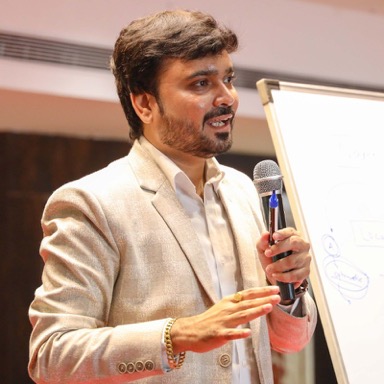
Why Nobody Tells Your Regional Manager the Plan Is Broken
A leadership cohort in a Singapore regional office is a harder room to read than it looks. The managers hold different passports and grew up in different first languages, they carry different assumptions about what a committed date means, and they work in English because it is the shared language rather than the one most of them think in. A director asks the room for objections, hears that the team can look at it, and writes that down as agreement. The project slips six weeks later and nobody can point to the meeting where it went wrong.
The obstacle is not resistance to learning. Hofstede scores Singapore at 8 on uncertainty avoidance, close to the lowest in the world. Singaporean professionals are unusually comfortable with change, ambiguity and an unfamiliar method, and they will run a novel exercise without complaint. The same country scores 74 on power distance and 20 on individualism. So the room will try anything you ask it to try, and it will still not contradict a senior person in front of the group.
Candour in these rooms runs one way. A senior person can be direct with a junior one; the reverse almost never happens in front of a group. Erin Meyer's work places Singapore among the confrontation-avoiding, high-context cultures, where negative feedback is cushioned and meaning sits in what was not said. A manager who was trained to ask the room for concerns will get silence and file it as alignment. He is not being lied to. He asked a question that costs something to answer honestly, and nobody paid.
And the room is multi-normed, which is the part most facilitators miss. Around four in ten of the workforce is foreign, 1.91 million of the 6.11 million population are non-residents, and the Economic Development Board counts 4,700-plus multinationals running their Asia-Pacific headquarters from the country. Confrontation-avoidance is not one behaviour. A Japanese manager, an Indian manager and an Indonesian manager avoid it in three different ways, and a facilitator who knows one set of norms reads consensus where three different things are happening at once.
A programme that teaches models does nothing about any of this. What changes behaviour is structuring the work so that dissent surfaces without anyone having to visibly contradict a senior in front of peers, and then making each manager practise it badly once, in the room, before he runs it with his own team on Monday.
What the Programme Covers
Every programme is cut to the outcome you name in the brief. These are the modules that do the most work with Singapore leadership teams.
Getting an Honest Answer in a Quiet Room
The practical skill of surfacing a real objection from someone who has decided not to voice one while a senior is present. How the question is framed, who is asked first, what happens in the pause, and why the conversation after the meeting is where your actual risk register lives.
The KITE Leadership Framework
The spine of the programme. The KITE Leadership Framework gives a manager one structure for emotional, relational and performance capability, so the vocabulary from day one survives into the fourth month instead of dissolving into good intentions.
First-Time Managers Promoted for Output
The hardest transition in any regional office. Delegating work you can do faster yourself, holding a standard without being the loudest person in the room, and stopping being the best individual contributor on the team. This is the first-time manager module.
Difficult Conversations Across Mixed Norms
Underperformance, missed commitments and behaviour, handled without the manager either flinching or flattening the person. What reads as direct and fair to one nationality in the room reads as humiliation to another, and a manager needs a structure that survives both readings. See difficult conversations.
Influence Without Authority in a Regional Matrix
In an Asia-Pacific headquarters almost nothing important sits inside one manager's authority. Getting a decision through a matrix, a group function and a head office in another time zone is a separate skill from managing a team, and it is the one that stalls careers here. See influence without authority.
Coaching Across the Singapore and India Line
A Singapore manager running an India delivery team, or the reverse, sits on a line where both sides avoid open confrontation and still express hierarchy, commitment and a slipping date differently. The coaching and feedback module is built for that gap, alongside cross-cultural communication.
Formats
A 90-minute leadership keynote inside your regional conference, town hall or sales kickoff. A one-day workshop, which is what most Singapore calendars can actually protect. A two-day behavioural programme when you want practised skill rather than shared language, usually split across cohorts of twelve to twenty-five. A modular programme running one day a month across a quarter, with virtual reinforcement between blocks on Singapore time. A multi-site version where the same framework runs in your Singapore office and your Indian sites without the content being commissioned and re-written twice. And a train-the-trainer track so your own L&D team carries the framework forward after the engagement ends. All of it is in-company and built to your brief; there is no public calendar to buy a seat on. The flagship structure is the Leadership Development Program, with Emotional Intelligence at Work as the usual companion module.
The Funding Question, Answered Before You Ask It
Nearly every training page in Singapore opens with a WSQ or SkillsFuture badge, so the absence of one on this page is the first thing an L&D manager will notice. Here is the plain version. These programmes are not SSG, SkillsFuture or WSQ funded, and they are not claimable. Saying nothing about it would read as evasion, and it is checkable in one click anyway.
The reason is three separate gates. An Registered Training Provider has to be registered as a Singapore business entity with a valid UEN. From 1 April 2026, an adult educator delivering an SSG-funded course must hold WSQ ACTA, WSQ ACLP or an SSG-deemed equivalent and appear on the National Adult Educator Registry, which closes the workaround of sub-contracting through a local ATO, because the funding claim would then fail on the trainer rather than on the entity. And the course fee grant flows to Singapore Citizens and Permanent Residents only. He clears none of the three, and no wording makes that different.
What matters is that your room was never fundable. Of the 55,500 jobs added across 2025, 43,900 went to non-residents. Put a regional leadership cohort in a room and a large share of it is on an Employment Pass, which means no provider in the country could have got that share subsidised. Funding is a domestic-workforce instrument. A cross-border management cohort, a keynote at your regional offsite and a partner meet are bought out of business-unit budget, and the buyer never raises SkillsFuture at all.
The work-pass position. The Ministry of Manpower treats conducting a seminar, conference, workshop or talk as a speaker, facilitator or trainer as a Work Pass Exempt Activity: notify before the activity commences, up to a cumulative ninety days a calendar year. The exemption is excluded where the event's main purpose is selling or promoting goods or services, or where it relates to religion, to race or community generally, or is cause-related or politically directed. A closed in-house leadership programme is none of those, and where the exemption does not fit the route is a Miscellaneous Work Pass.
And the honest boundary. Avinash Chate is based in Maharashtra and travels for engagements. There is no Singapore office, no Singapore entity, no UEN, no accreditation, no past delivery in Singapore and no Singaporean client list on this page, because none of that exists. What exists is a documented Indian record — the Reserve Bank of India, JSW Steel, BARC, Ferrero, Hitachi, Mumbai Port Authority, the Indian Army and the Border Roads Organisation — and a buyer running a multinational reporting line can judge for himself whether a central bank and an atomic research centre are easier rooms than his own.
Everything on that list is checkable before you call. Start with the source library, the training evidence, the reviews and the India-based speaker page for international events, which sets out the travel and contracting position in full.
From the room
Real sessions, photographed as they ran.
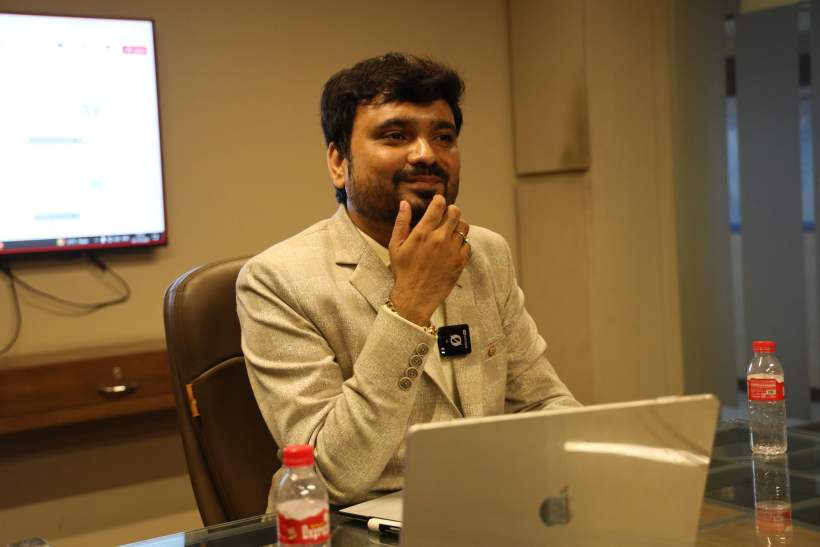
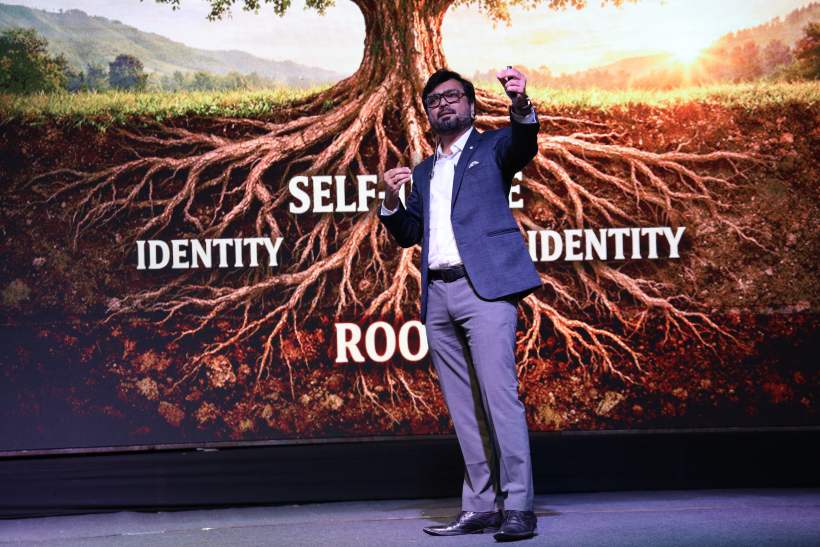
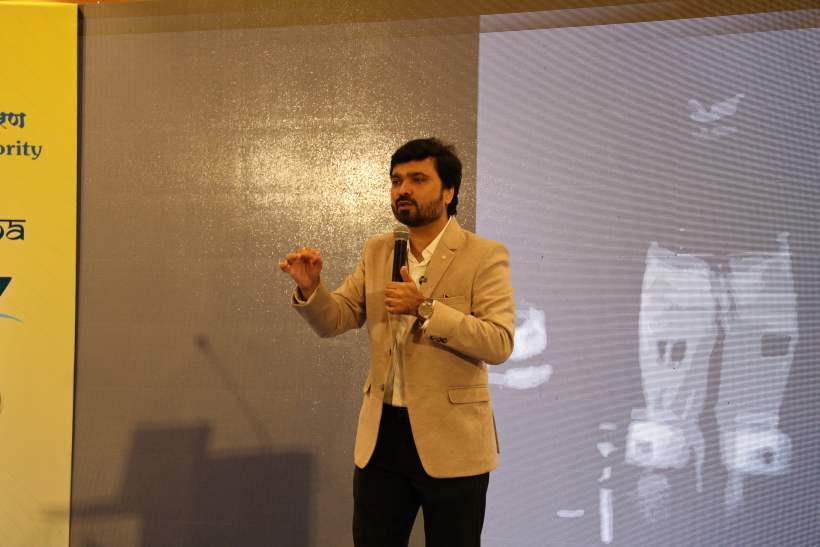
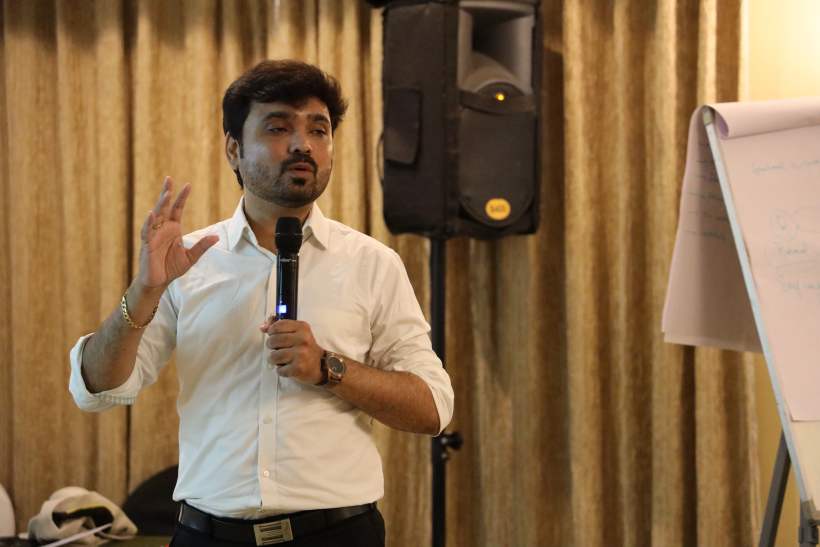
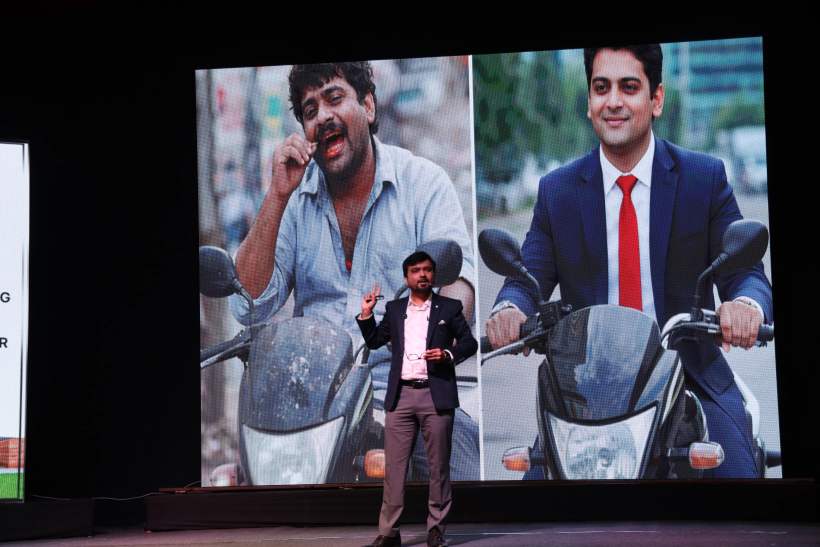
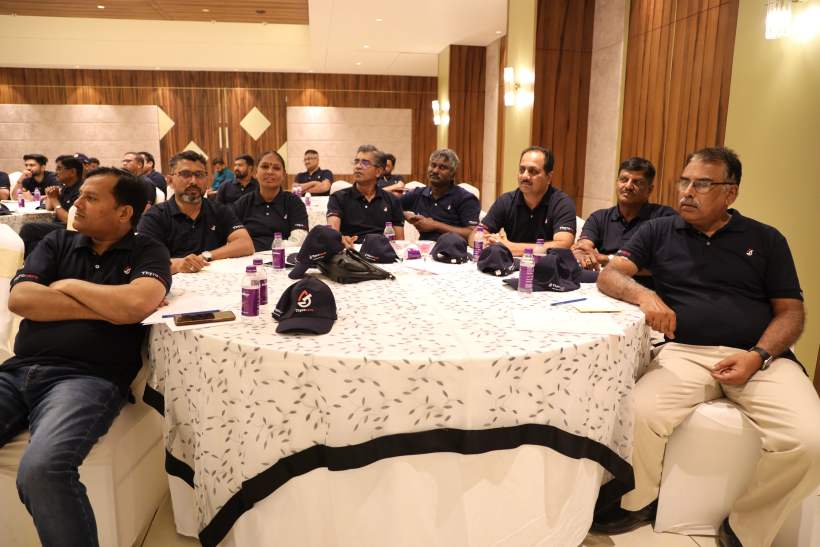
Photographs from Avinash Chate's own sessions in India. Sessions in this market are delivered by the same facilitator, in the same format.
Planning a leadership programme in Singapore?
Share your name and WhatsApp number and you will get a reply within one business day — usually the same day. Include the dates if you have them, most briefs are scoped on a first call.
Prefer to talk now? ☎ +91 87936 30001 · WhatsApp · Email
Sectors Served in Singapore
Regional headquarters first, because that is where the fit is sharpest: the Economic Development Board counts 4,700-plus multinationals running Asia-Pacific headquarters from Singapore, and those managers run teams across India, South East Asia and Greater China. Then banking and financial services, where the Monetary Authority of Singapore reports more than 2,500 licensed financial institutions employing close to 200,000 people, and where the unfunded half — regional desks, Employment Pass-heavy teams, leadership offsites — is the part this reaches. Then shipping, maritime and logistics, around seven per cent of GDP and roughly 170,000 professionals, highly multinational and hierarchical, where frontline supervisor and difficult-conversation work maps directly. Then the manufacturing cluster on Jurong Island, 100-plus companies in energy and chemicals, where a documented record with JSW Steel and Hitachi is the credible bridge, because plant culture is the same problem in a different postcode. Professional services, hospitality and healthcare groups also buy this work, though public healthcare clusters procure through accredited channels and are the weakest fit.
Frequently Asked Questions
Are these programmes SkillsFuture, SSG or WSQ funded?
No, and it is better to say so on the first page than in the third meeting. Three separate gates apply and each one is independently disqualifying. An Registered Training Provider must be a Singapore-registered business entity with a valid UEN, and he has neither. From 1 April 2026 an adult educator delivering an SSG-funded course that is certifiable and non-WSQ must hold WSQ ACTA, WSQ ACLP or an SSG-deemed equivalent and be registered on the National Adult Educator Registry, which also narrows the sub-contract-through-a-local-provider route for those courses for funded delivery, because the funding claim would fail on the trainer rather than on the entity. And SSG course fee grants flow to Singapore Citizens and Permanent Residents only. These are commercially budgeted programmes bought on your own P&L.
If it is not subsidised, why do most regional-HQ buyers not care?
Because a regional-HQ leadership cohort is structurally un-subsidisable before anyone chooses a provider. Around four in ten of Singapore's labour force are foreign workers, and 1.91 million of the 6.11 million population are non-residents. Of the 55,500 jobs added across 2025, 43,900 went to non-residents. If half the managers in your room are Employment Pass holders, no provider — accredited or not — can get that half funded. Subsidy-chasing is a domestic-workforce play. Cross-border leadership cohorts, keynotes, sales kickoffs, partner meets and offsites are almost never routed through course-fee funding in the first place.
How is an India-based leadership trainer actually engaged for a Singapore session?
The clean route is a direct engagement by your own L&D or HR function to train your own employees, on your own premises, under your organisation's contract. Avinash Chate is engaged as the named facilitator, flies in for the dates, delivers the programme and flies out. There is no Singapore office, no Singapore entity and no UEN in the picture, and none is needed for a company training its own people in-house on a commercial budget. If your procurement prefers a locally registered vendor on the purchase order, contracting through a Singapore-registered training provider with him named as the facilitator also works. The engagement is contracted and invoiced by his Indian practice, so ask your own finance team to confirm its withholding position with its tax advisor before the purchase order is raised.
Does he need a work pass to run a session in Singapore?
Not an Employment Pass. Conducting a seminar, conference, workshop or talk as a speaker, moderator, facilitator or trainer is listed by the Ministry of Manpower as a Work Pass Exempt Activity: your side notifies MOM on arrival, before the activity commences, and the exemption runs to a cumulative ninety days per calendar year. The exemption does not apply where the main purpose of the event is the sale or promotion of goods or services, or where the event relates to religion, to race or community generally, or is cause-related or politically directed — a closed in-house leadership programme is none of those. Where the exemption does not fit, the route is a Miscellaneous Work Pass. It is a notification, not a visa saga, and it is worth confirming the current position with MOM at the time of booking.
How much lead time do you need for a Singapore programme?
Four to six weeks is comfortable. That covers the discovery call, the written outline, your approval of the content, the flights. Two to three weeks is possible when the brief is already settled and the dates are held. Direct flights from India run daily, so travel itself is never the constraint. Your own approvals are.
What is the right group size for a leadership programme?
Twelve to twenty-five is where leadership work lands hardest, because everyone in the room has to speak and be seen doing it. Up to about forty still works for a workshop with structured sub-groups. Beyond that the format has to change to a keynote, which shifts the outcome from practised skill to shared language. In a Singapore regional office a cohort split across three or four cycles usually beats one large room, particularly where the group mixes country heads with first-time managers who report to them.
Which language is the programme delivered in?
English. In a Singapore regional-HQ room English is the working language and the programme stays in it from the first minute to the last. Hindi and Marathi are additional delivery capabilities most competitors do not have, and they matter on multi-site programmes where the same content also has to run in an Indian plant or branch network — they are never a substitute for the English room, and they are not what a Singapore cohort is buying.
Can the programme run online instead of in person?
Yes, and for some content it is the better choice. Coaching conversations, feedback practice and follow-through sessions run well as virtual blocks on Singapore time, which is a two-and-a-half-hour offset from India and needs no compromise from either side. What does not travel well online is the first day of a behavioural programme, where the room has to become safe enough for a manager to say something uncomfortable in front of peers who outrank him. A common pattern is one in-person block in Singapore followed by shorter virtual reinforcement sessions over the following quarter.
What does the written proposal contain?
The objective in your words, the audience and cohort structure, a session-by-session outline with the activities named, the timings mapped to your working week, the facilitator profile, what your side needs to provide, and the follow-through. It states plainly what the programme will not do, and it states the funding position rather than leaving it to be discovered. You get it before any invoice is raised, and the content is agreed with you before the dates are locked.
Can the same programme run in our India offices and in Singapore?
That is the case where this is worth more than a local provider. A Singapore manager running an India delivery team, or an India manager reporting into a Singapore HQ, sits on a line where both cultures avoid open confrontation but express hierarchy, commitment and a slipping deadline differently. Running the same framework in both rooms, rather than commissioning two providers and re-writing the content twice, is the practical version of that. The Indian record behind it is documented — the Reserve Bank of India, JSW Steel, BARC, Ferrero, Hitachi, Mumbai Port Authority, the Indian Army and the Border Roads Organisation.
Plan Your Singapore Leadership Programme
To scope it, share the venue and the date window, how many managers are attending and at what level, how many nationalities and reporting lines are in the room, whether any Indian sites are in scope, and the one behaviour the programme has to change. A call follows within 48 hours, and you get a written outline before anything is committed. Full training topic library and contact details are a click away.
Building leadership capability in Singapore this year?
Regional HQ and multinational teams — one facilitator, one framework, both sides of the India line.
Check Date Availability →