Corporate Training in Singapore
A Singapore team will take on an unfamiliar method without hesitation and still not tell the country head that the timeline is impossible. The gap between those two behaviours is where a regional project quietly goes wrong. Avinash Chate runs corporate training in Singapore for regional-headquarters, banking, maritime and industrial teams, delivered in English.
Singapore · Regional headquarters and APAC teams · India-based, travels for engagements
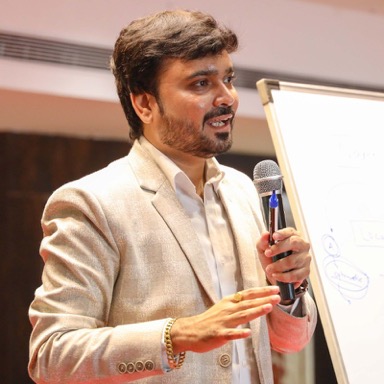
Nobody in the Room Is Struggling With English
A meeting in a regional office puts several nationalities around one table, with several first languages between them and one working language everybody speaks well. That last part is what makes the failure so hard to catch. The brief is understood, the exercise is done properly, the room says yes, and the work still comes back wrong in week six.
So treating it as a language problem wastes the budget. What this room will not do is contradict a senior person in front of the group, which means a director who asks for objections and hears none has written down an agreement that was never given. The country scores behind that behaviour, and what a facilitator does about it in the room, are set out on the leadership training page. This page is about the harder version of the same problem: what it costs an L&D function that is buying for more than one kind of room.
Because a Singapore mandate is almost never one room. The same function is buying for a regional leadership cohort in the CBD, a banking desk, a maritime operations team and a shop floor on Jurong Island inside the same financial year. MAS puts the financial sector at more than 2,500 licensed institutions employing close to two hundred thousand people. Shipping and logistics runs to roughly a hundred and seventy thousand professionals. More than a hundred energy and chemicals companies operate on Jurong Island. Those four rooms need the same behaviour out of their managers and will not sit through the same session to get it.
Which is where a vendor list quietly comes apart. A course catalogue solves the spread by sending a different trainer to each population, and the standard drifts between them — the leadership cohort gets the senior name on the website, the shop floor gets whoever was free that week, and the two groups end up with different vocabulary for the same behaviour. What holds a multi-population programme together is one facilitator carrying one framework into all four rooms and cutting the level, the examples and the pace to each. It is also why the number of cohorts, rather than the number of days, is the line that actually moves the cost.
None of that is fixed by a deck of models, because nobody in these rooms is short of models. It is fixed by cutting one framework four ways and putting the same standard into four very different rooms, so that the vocabulary a manager hears in the CBD is the vocabulary his supervisor hears on the plant floor two months later.
What the Programme Covers
Every programme is cut to the outcome you name in the brief. These are the modules that do the most work with Singapore-based teams, drawn from the full training topic library.
Getting an Honest Answer Upwards
The practical skill of putting a question in a form a junior can safely answer truthfully while their manager is in the room. Where the honest answer actually lives in a hierarchical team, why the corridor conversation afterwards holds the real risk register, and how a manager stops reading a quiet room as an aligned one. Built on trust and psychological safety.
The KITE Leadership Framework
The spine of the programme. The KITE Leadership Framework gives a manager one structure for emotional, relational and performance capability, so the vocabulary from day one survives into the fourth month instead of dissolving into good intentions.
Cross-Border Teams and Mixed Feedback Norms
What reads as direct and useful to one nationality reads as humiliation to another, and a regional manager needs a structure that holds up under both readings. This is the cross-cultural communication module, aimed at Singapore reporting lines that run into India, Southeast Asia and Greater China.
First-Time Managers Promoted for Output
The hardest transition in any fast-growing office. Delegating work you can still do faster yourself, holding a standard without being the loudest person in the room, and giving up being the best individual contributor on the team. This is the first-time manager module.
Coaching and Feedback Across the Reporting Line
Most managers in a regional office were never taught to coach, and the ones who were learned it in a culture where the junior argues back. Coaching and feedback rebuilds the conversation for a team that will not, so a development discussion produces something other than agreement.
Influence Without Authority in a Regional Matrix
In a regional headquarters almost nothing that matters sits inside one manager's authority. Getting a decision through a group function and a head office in another time zone is a separate skill from running a team, and it is the one that stalls careers here. See influence without authority and difficult conversations.
Formats
A 90-minute keynote inside your annual conference, town hall or sales kickoff. A one-day workshop, which is what most Singapore calendars can actually protect. A two-day behavioural programme when you want practised skill rather than shared language, usually split across cohorts of twelve to twenty-five. A modular programme running one day a month across a quarter, with virtual reinforcement between blocks for teams spread across the region. And a train-the-trainer track so your own L&D team carries the framework forward after the engagement ends. All of it is in-company and built to your brief; there is no public calendar to buy a seat on. The flagship structure is the Leadership Development Program, with Emotional Intelligence at Work and Team Building Excellence as the usual companion modules.
The Funding Question, Answered Before You Ask It
Most corporate training pages in Singapore open with the same badges: WSQ, SkillsFuture, SSG-approved. This one carries none of them, so the position goes at the top rather than in a footer. These programmes are not SSG-funded and are not claimable. There is no Registered Training Provider status, no Singapore UEN, no ACTA or ACLP certification and no listing on the National Adult Educator Registry. Staying quiet about that would read as evasion, and you would have found out in one click anyway.
For the rooms this page is written for, it changes very little. SSG course fee grants flow to Singapore Citizens and Permanent Residents. Put half a regional leadership cohort on Employment Passes, which is routine rather than unusual in a regional-headquarters cohort, and that half is not subsidisable by anybody, an accredited provider included. Subsidy is an instrument for developing the domestic workforce. A cross-border leadership programme, a sales kickoff, a partner meet or a conference keynote is bought on the P&L out of an L&D or business-unit budget, and in those conversations SkillsFuture never comes up at all.
Arriving legally has a short answer too. The Ministry of Manpower lists organising or conducting a seminar, conference, workshop or talk, as speaker, moderator, facilitator or trainer, as a Work Pass Exempt Activity: your side notifies MOM before it begins, and the exemption covers up to ninety cumulative days in a calendar year. Events whose main purpose is selling or promoting goods and services fall outside it, as do events relating to religion, race or community, and a Miscellaneous Work Pass covers those instead. It is an administrative notification, not a hiring decision.
You are hiring one named facilitator. The institutions that rank for this search sell course lists and funding badges. Here the person who writes the outline is the person who takes the room, and the same person takes the follow-through session in the fourth month. He is a TEDxBEC speaker, the author of The Winning Edge and The Unanswered, the creator of the KITE Leadership Framework, with 80-plus organisations and 25,541-plus professionals behind him and 202 Google reviews at 4.9 stars.
And the honest boundary. Avinash Chate is based in Maharashtra and travels for engagements. There is no Singapore office, no Singapore entity, no local number, no past delivery here and no Singaporean client named on this page, because none of that exists yet. What exists is a documented Indian record — the Reserve Bank of India, JSW Steel, BARC, Ferrero, Hitachi, Mumbai Port Authority, the Indian Army and the Border Roads Organisation — and a regional HR head can judge for themselves whether a central bank and an atomic research centre are easier rooms than their own.
All of that is checkable before you call. Start with the source library, the training evidence, the reviews and the India-based speaker page for international events, which sets out the travel and contracting position in full.
From the room
Real sessions, photographed as they ran.
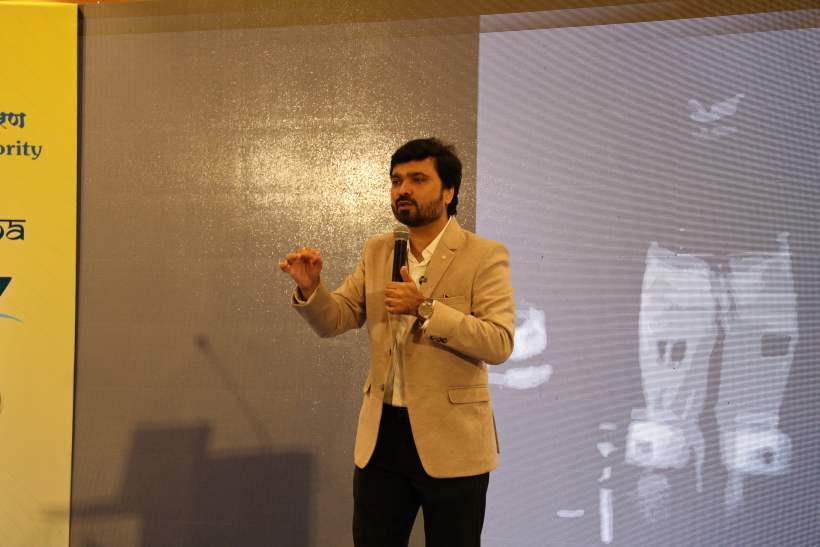
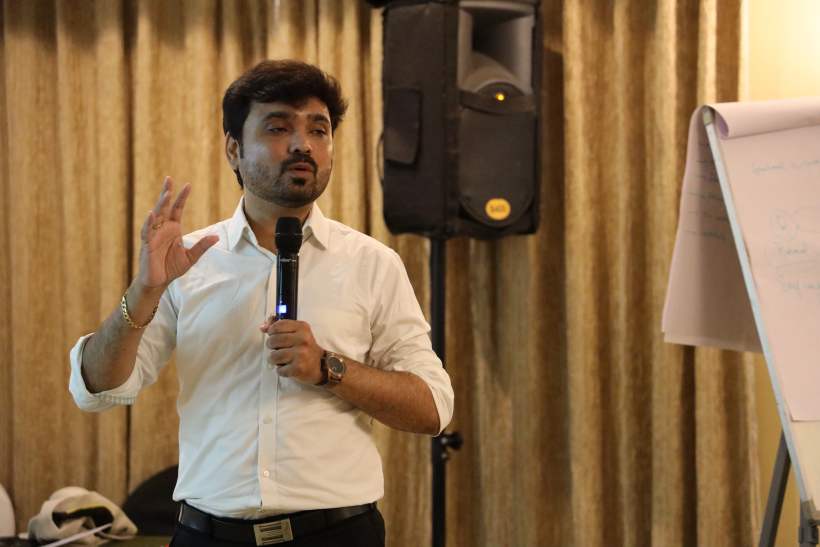
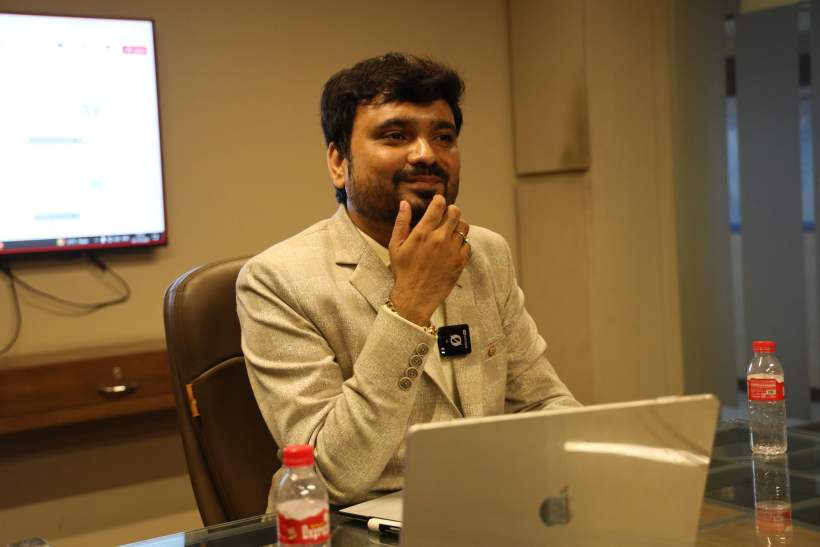


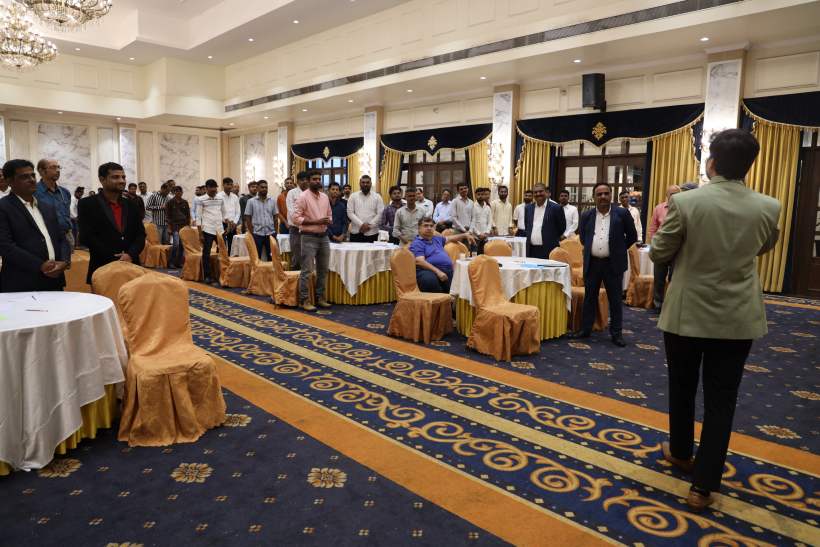
Photographs from Avinash Chate's own sessions in India. Sessions in this market are delivered by the same facilitator, in the same format.
Planning a corporate training programme in Singapore?
Share your name and WhatsApp number and you will get a reply within one business day — usually the same day. Include the dates if you have them. Most briefs are scoped on a first call.
Prefer to talk now? ☎ +91 87936 30001 · WhatsApp · Email
Sectors Served in Singapore
Regional headquarters come first, because that is where the fit is cleanest: EDB counts more than 4,700 multinationals running an Asia-Pacific regional headquarters from Singapore, and the managers in those buildings run teams across several countries at once. That is where the commercial desks buy sales training in Singapore, and where a regional head with nobody left to contradict him buys executive coaching. Banking and financial services second — MAS puts the sector at more than 2,500 licensed financial institutions employing close to 200,000 people, and a credit or investment committee is the room public speaking training is built for. Shipping, maritime and logistics third, at roughly seven per cent of GDP and about 170,000 professionals, where the work is frontline supervision and difficult conversations rather than strategy. Manufacturing fourth, where more than 100 companies operate on Jurong Island and the energy and chemicals sector employs around 27,000 people; the shop-floor problems there are the same ones a JSW Steel or a Hitachi Astemo plant has. Professional services, hospitality and tourism groups buy this work too. Healthcare is the honest exception: the public clusters procure through accredited channels, so it is the weakest fit for an unfunded offer and is not a sector this page chases.
Frequently Asked Questions
How is an India-based corporate trainer actually engaged for a Singapore programme?
The clean route is a direct engagement by your own L&D or HR function to train your own employees, on your own premises, under your organisation's contract. Avinash Chate is engaged as the named facilitator, flies in for the dates, delivers the programme and flies out. There is no Singapore office, no Singapore entity, no UEN and no local licence in the picture — and none is needed for a company training its own people in-house on its own budget. If your procurement prefers to contract through a locally registered provider instead, that also works, with him named as the facilitator.
Are these programmes SkillsFuture, SSG or WSQ funded?
No, and it is better said in the first email than found out in the third. SSG funding runs through an Registered Training Provider holding a Singapore UEN, and from 1 April 2026 adult educators delivering SSG-funded certifiable non-WSQ courses must hold WSQ ACTA or ACLP, or an SSG-deemed equivalent, and be registered on the National Adult Educator Registry run by SUSS and IAL. He holds none of those, and this page claims none of them. Separately, course fee grants flow only to Singapore Citizens and Permanent Residents, so a cohort carrying a large share of Employment Pass holders is not fully subsidisable by any provider, accredited or otherwise. These programmes are bought on a company's own L&D or business-unit budget.
Does he need an Employment Pass to run a session in Singapore?
No. The Ministry of Manpower lists organising or conducting a seminar, conference, workshop or talk — as speaker, moderator, facilitator or trainer — as a Work Pass Exempt Activity. Your side notifies MOM before the activity begins, and the exemption covers up to ninety cumulative days in a calendar year. It does not apply where the main purpose of the event is the sale or promotion of goods and services, or where the event relates to religion, race or community, or is cause-related or politically directed; a Miscellaneous Work Pass covers those instead. This is an administrative notification rather than a hiring decision, which is why a visiting facilitator is simpler to book than most buyers assume.
How much lead time do you need for a Singapore programme?
Four to six weeks is comfortable. That covers the discovery call, the written outline, your approval of the content, the flights. Two to three weeks is possible when the brief is already clear and the dates are held. Direct services run daily from Mumbai and Delhi, so the travel itself is never the constraint — your own approval cycle is.
What is the right group size for a behavioural programme?
Twelve to twenty-five is where this work lands hardest, because everyone in the room has to speak and be seen doing it. Up to about forty still works for a workshop built on structured sub-groups. Beyond that the format has to change to a keynote, which shifts the outcome from practised skill to shared language. Splitting a cohort across three or four cycles usually beats one large room, particularly where the group mixes country heads with first-time managers who will not contradict them.
Which language is the programme delivered in?
English. That is the working language of a Singapore regional-headquarters room and it stays the working language for the whole programme — the difficulty in these rooms is never English. Hindi and Marathi are an additional capability most facilitators do not carry, and they matter only on multi-site programmes where the same content also has to land in an Indian plant or office. For Singapore delivery they are not part of the offer.
Can the programme run online instead of in person?
Yes, and for some content it is the better choice. Coaching conversations, feedback practice and follow-through sessions run well as virtual blocks on Singapore time, which sits two and a half hours ahead of India. What does not travel well online is the first day of a behavioural programme, where the room has to become safe enough for a manager to say something uncomfortable in front of peers. The common pattern is one in-person block in Singapore followed by shorter virtual reinforcement sessions across the next quarter.
What does the written proposal contain?
The objective in your words, the audience and cohort structure, a session-by-session outline with the activities named, the timings mapped to your working week, the facilitator profile, what your side needs to provide, and the follow-through. It also states plainly what the programme will not do. You get it before any invoice is raised, and the content is agreed with you before the dates are locked.
Is Singapore withholding tax deducted from the invoice?
Your finance team will raise this before you do, so here it is. IRAS treats a visiting trainer, consultant or coach as a non-resident professional, and income attributable to services performed in Singapore is subject to a final withholding tax of fifteen per cent of the gross fee, or twenty-four per cent of net income where that election is made. Your side files and remits it. The India-Singapore double taxation agreement governs relief on the Indian side. Confirm your own position with your tax advisor; the practical point is that the deduction is normal and expected, and it is quoted around rather than argued about.
How is the cost of a Singapore programme worked out?
It is built from the format and the number of days, the number of cohorts, whether the work is a keynote or a behavioural programme with follow-through, and the travel and accommodation your side is arranging — all quoted as separate lines so nothing is buried. Share the dates, the audience, the cohort size and the outcome you need and you get a specific written quote within one business day. There is no published rate card, because a conference keynote for three hundred people and a three-cohort manager programme are not the same purchase.
Plan Your Singapore Programme
To scope it, share the venue, the date window, how many managers are attending and at what level, how many nationalities and reporting lines are in the room, who will file the MOM notification, and the one behaviour the programme has to change. A call follows within 48 hours, and you get a written outline before anything is committed. The full training topic library and contact details are a click away.
Building leadership capability in Singapore this year?
Regional headquarters, banking, maritime and industrial teams — one facilitator, one standard, in English.
Check Date Availability →