Team Building in Singapore
Your team got out of the escape room in forty minutes, the group photo went up on the intranet, and on Monday the same two functions still route everything through the same senior manager and still do not tell him when a date is going to slip. Avinash Chate runs team building in Singapore as a facilitated programme with a structured debrief, not an afternoon out.
Singapore · Regional HQ and multinational teams · India-based, travels for engagements
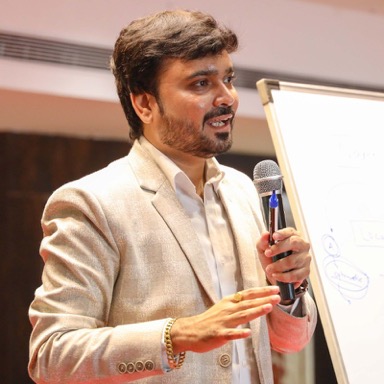
Why the Offsite Was Fun and Nothing Changed
Everyone enjoyed it. That is not the complaint. The complaint is that the thing you actually booked it to fix — two teams who quietly work around each other, a manager who finds out about slippage from the client rather than from his own people — was exactly as broken on Tuesday morning as it was on Friday afternoon.
A Singapore team is not short of energy. Ask this room to do an unfamiliar exercise and it will do it, without complaint and without needing to be sold on it first. Ask the same room, the same afternoon, to tell the most senior person present that his plan will not work, and it goes quiet. Everything an activity day is good at sits on the first side of that line. Everything you booked it to fix sits on the second.
An activity produces behaviour. It does not produce a rule. Your two functions worked around each other inside the escape room in exactly the way they work around each other on a Tuesday — that is the useful part, and it was over in forty minutes with nobody naming it. The group leaves with a pleasant memory of having been quick, and the memory is not attached to anything anyone can do differently. The pattern was in the room. Nobody wrote it down.
The churn keeps rebuilding the problem. Total employment in Singapore rose by 55,500 in 2025, and 43,900 of those roles — seventy-nine per cent — went to non-residents. Teams here are assembled fast, from several countries at once, and are frequently a different set of people a year later. Whatever working agreement a group reaches in an offsite has to survive the joiners who were never in the room.
An activity cannot reach any of that on its own, however well it is run. What reaches it is what happens after the activity, when someone with no stake in the internal politics puts the group's own behaviour in front of it and asks the question nobody in the reporting line can safely ask.
What the Programme Covers
Every programme is cut to the outcome you name in the brief. These are the modules that do the most work with multinational teams based in Singapore.
The Debrief, Not the Activity
Where most of the value sits — the team looking at what it just did under mild pressure, naming the pattern, and agreeing one thing it will do differently on Monday. This is the core of team building training.
Dissent That Reaches the Senior Person
The whole difficulty of a high power distance room in one module. Building a team habit where a disagreement gets onto the table without anybody having to visibly contradict a senior colleague, which is what trust and psychological safety means in practice rather than on a poster.
Two Functions, One Customer
The regional office version of the silo problem: sales and delivery, or the Singapore hub and the market team, each behaving rationally and jointly producing a worse outcome. The cross-functional collaboration module works on the handover, not on goodwill.
Disagreement Without Damage
A team that never argues is usually avoiding rather than agreeing. Practising the argument that improves the decision, and separating it from the argument that costs a working relationship. See conflict management.
What a Yes Means in Four Cultures
Directness, commitment language and how a slipping deadline gets communicated all vary across the nationalities sitting in one Singapore team. The cross-cultural communication module gives the team a shared reading of a signal it is currently reading four different ways.
Teams That Are Never in One Room
A Singapore manager running people in India, Malaysia, Indonesia or Greater China gets a fraction of the informal signal a co-located manager gets. The remote and hybrid team leadership module builds the rhythm that replaces it.
Formats
A half-day facilitated team session dropped into an offsite your own team is already organising. A one-day team building programme, which is what most Singapore calendars can genuinely protect. A two-day programme for a leadership team where you want a practised habit rather than a shared vocabulary, usually run in cohorts of twelve to twenty-five. A facilitated debrief bolted onto an activity day that an events vendor is running, when the activity is already booked and you want it to leave something behind. A modular programme across a quarter with virtual reinforcement between blocks. And a train-the-trainer track so your own L&D team carries the debrief structure forward. All of it is in-company and built to your brief; there is no public calendar to buy a seat on. The flagship structures are Team Building Excellence and Outbound Training, with the full menu of exercises set out under corporate team building activities.
When an Activity Day Is Right, and When It Is Not
Search for team building in Singapore and you will mostly find activity and event companies — escape rooms, laser tag, terrarium workshops, art jamming, city-wide races. They are good at what they sell, and what they sell is a well-run day. There is no point pretending that is the same trade as this one, and no point pretending it is always the inferior purchase either.
Book the activity day when the goal is the day. A team that has just survived a punishing quarter needs to laugh together. Two merged offices need forty people to put faces to names. A small, new, already candid team does not have a behaviour problem to solve, and a facilitator would be inventing one. In all three cases an events vendor will do it better and cheaper than a trainer will.
Book the facilitated programme when you can name the behaviour. Work getting redone. Decisions reopened three times. One function finding out late, every time. A manager who is told everything is fine right up until it is not. Each of those repeats, and each of them costs the team time it can count. The exercise is chosen so the pattern surfaces inside it early enough to work on, and the debrief is where the team looks at its own behaviour and decides what to do about it. The mechanics of how that debrief is structured stay in the room — what the buyer needs to know is that the exercise is the diagnostic and the debrief is the intervention.
The funding question, answered plainly. These programmes are not SkillsFuture, SSG or WSQ funded, and there is no accreditation claim anywhere on this page. An Registered Training Provider needs a Singapore entity and a UEN; from 1 April 2026 an adult educator delivering SSG-supported training needs a place on the National Adult Educator Registry; and SSG course fee grants reach only Singapore Citizens and Permanent Residents. For a regional-HQ team that is a smaller loss than it sounds, because with roughly forty per cent of the workforce here on foreign passes, a good part of that room was never subsidisable by any provider. Programmes like this are bought on a company's own budget, the way a consulting engagement is.
And the honest boundary. Avinash Chate is based in Maharashtra and travels for engagements. There is no Singapore office, no Singapore entity, no local licence, no past delivery in Singapore and no Singaporean client list on this page, because none of that exists yet. What exists is a documented Indian record — the Reserve Bank of India, JSW Steel, BARC, Ferrero, Mumbai Port Authority, Hitachi, the Indian Army and the Border Roads Organisation — built in rooms that are themselves multilingual, hierarchical and reluctant to contradict a senior person in public.
Everything on that list is checkable before you call. Start with the source library, the training evidence and the India-based speaker page for international events, which sets out the travel and contracting position in full.
From the room
Real sessions, photographed as they ran.
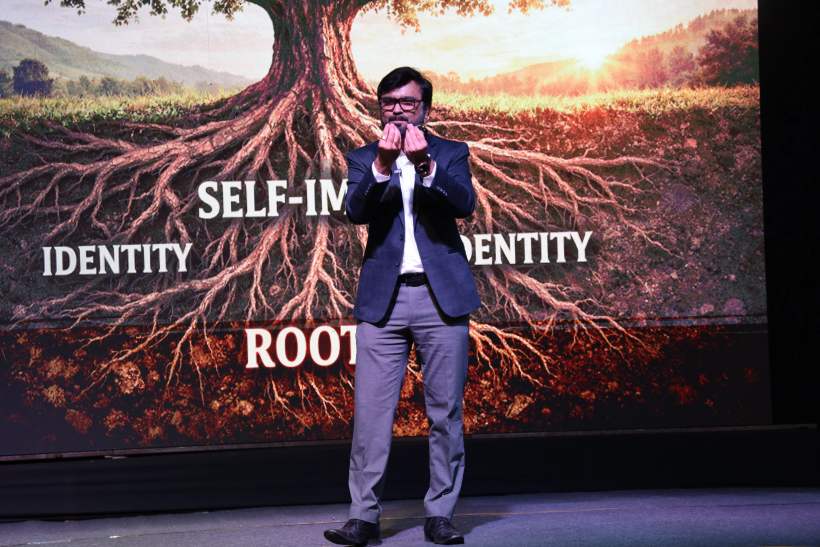
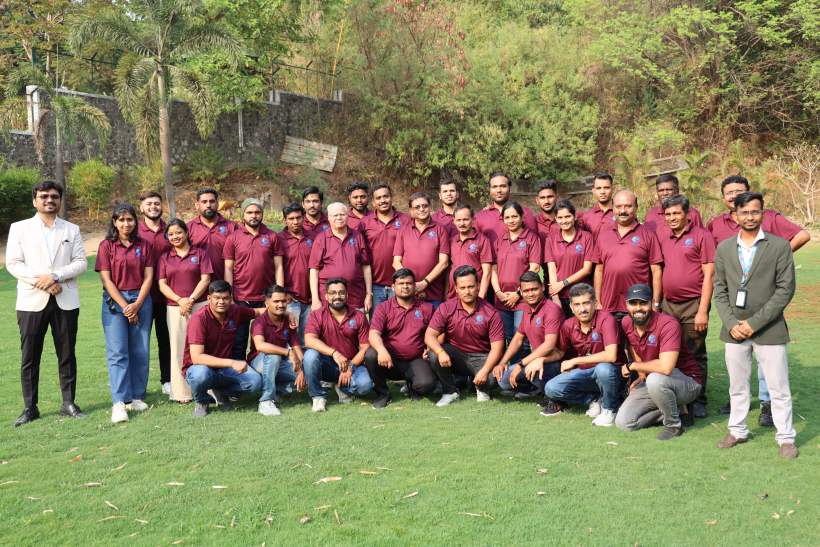

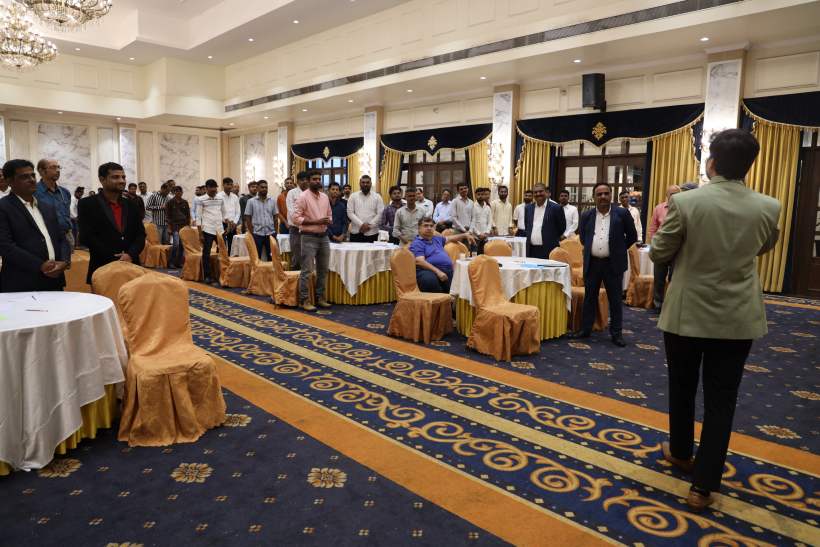
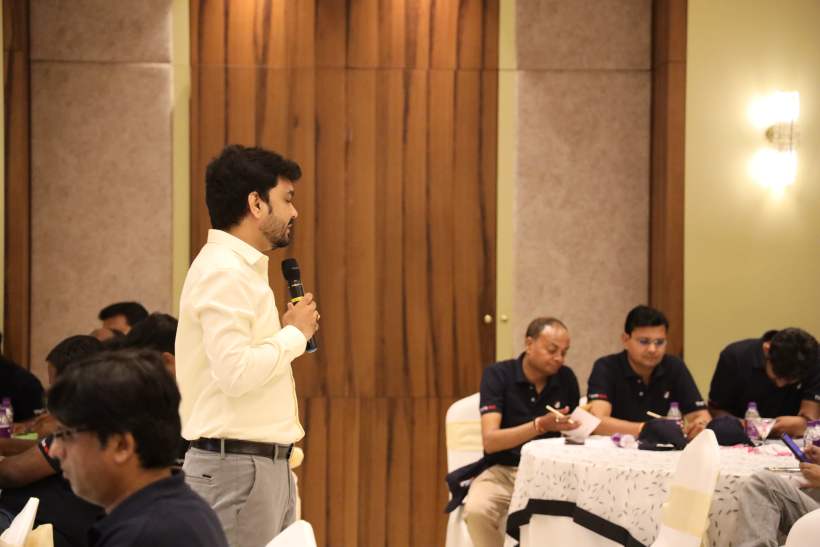
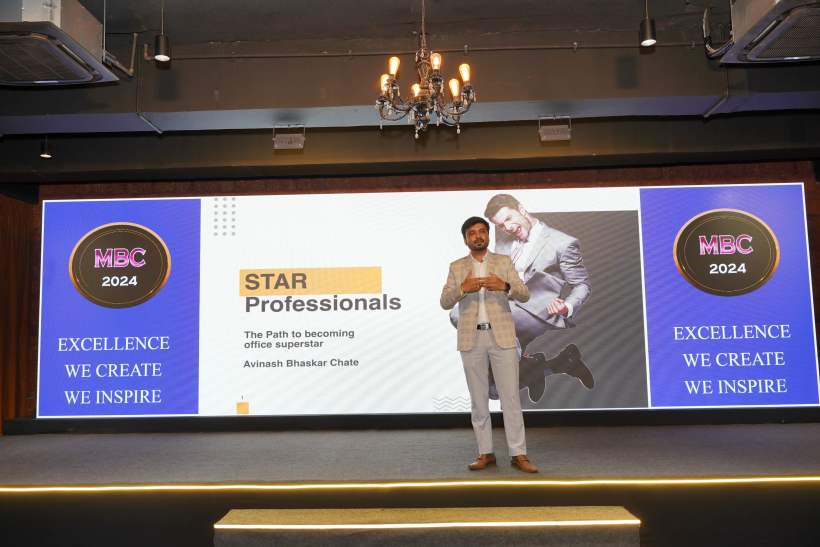
Photographs from Avinash Chate's own sessions in India. Sessions in this market are delivered by the same facilitator, in the same format.
Planning a team offsite in Singapore?
Share your name and WhatsApp number and you will get a reply within one business day — usually the same day. Tell us the one behaviour you want different afterwards, and the dates if you have them.
Prefer to talk now? ☎ +91 87936 30001 · WhatsApp · Email
Sectors Served in Singapore
Asia-Pacific regional headquarters first, because a team assembled from six countries to run a dozen markets is where a facilitated debrief pays for itself fastest. Then banking and financial services, where MAS counts more than 2,500 licensed financial institutions employing close to 200,000 people. Then shipping, maritime and logistics, worth around seven per cent of GDP with roughly 170,000 professionals in a hierarchical, safety-critical and thoroughly multinational industry. Then manufacturing on Jurong Island, where more than a hundred energy and chemicals companies run shop floors whose supervisor problems look a great deal like the plant rooms already on the client list. Professional services, hospitality and healthcare teams are welcome too, though the last two buy training through subsidised channels more often than not.
Frequently Asked Questions
Is this different from an escape room, a laser tag afternoon or an amazing race?
Completely, and the difference is worth being blunt about. The team building market in Singapore is largely served by activity and event vendors — escape rooms, laser tag, terrarium workshops, art jamming, city-wide races — and they are good at what they do. What they sell is a well-run day. What is sold here is a facilitated programme where the exercise is only the pretext and the structured debrief afterwards is the actual product: what your team just did under mild pressure, who spoke, who did not, and which of those patterns keeps turning up in the work afterwards. If your team has done activity days before and nothing was different on Monday, the debrief is the part that was missing.
When is a pure activity day genuinely the better purchase?
More often than a facilitator likes to admit. If a group has just come through a brutal quarter and needs to laugh together, book the activity day. If two offices have merged and forty people simply need to put faces to names, book the activity day. If the team is small, new and already candid with each other, a facilitated session will feel like solving a problem they do not have. Facilitation earns its keep when there is a specific, repeating behaviour you can name — work getting redone, decisions reopened, one function quietly not telling another something — and you want it different in ninety days.
How is an India-based facilitator actually engaged for a Singapore programme?
The clean route is a direct engagement by your own L&D, HR or business unit to develop your own people, on your own premises or at your chosen venue, under your organisation's contract. Avinash Chate is engaged as the named facilitator, flies in for the dates, runs the programme and flies out. There is no Singapore office, no Singapore entity and no UEN in the picture. If your procurement prefers to contract through a locally registered provider with him named as the facilitator, that works too — with one caveat covered below: neither route makes the delivery eligible for national training funding.
Are these programmes SkillsFuture, SSG or WSQ funded?
No, and the page will not pretend otherwise. An Registered Training Provider must be a Singapore-registered entity with a valid UEN, which he does not have. From 1 April 2026 an adult educator delivering an SSG-funded certifiable non-WSQ course has to be listed on the National Adult Educator Registry, and on a funded certifiable course has to hold WSQ ACTA, WSQ ACLP or an SSG-deemed equivalent as well — so subcontracting through a local ATO would not rescue a funding claim either, because the claim would fail on the trainer. SSG course fee grants also flow only to Singapore Citizens and Permanent Residents. For most regional-HQ cohorts this changes very little: with a large share of the room on Employment Passes, that share was never subsidisable by any provider, accredited or not. These are commercially budgeted programmes bought out of L&D or business-unit budget.
Does he need a work pass to facilitate a session in Singapore?
Not an Employment Pass. The Ministry of Manpower treats activities directly related to organising or conducting a seminar, conference, workshop, gathering or talk — including as speaker, moderator, facilitator or trainer — as a Work Pass Exempt Activity, notified to MOM on arrival, before it starts, up to a cumulative ninety days in a calendar year. The exemption does not cover an event whose main purpose is the sale or promotion of goods or services, or one relating to religion, race or community, or a cause-related or politically directed event; a Miscellaneous Work Pass is the route in those cases. Your side should confirm which one your event falls under before the notification is filed, because the answer depends on how your event is framed, not on who is facilitating it.
How much lead time do you need?
Four to six weeks is comfortable. That covers the discovery call, the written outline, your sign-off on the content, the MOM notification and the venue. Two to three weeks is workable when the brief is already clear and the dates are held. Travel is rarely the constraint on a Singapore booking — your own internal approvals and the calendar of the people who actually need to be in the room are.
What is the right group size for a facilitated team session?
Twelve to twenty-five is where team work lands hardest, because everyone has to speak and be seen doing it, and nobody can hide inside a sub-group. Up to about forty still works with structured sub-groups and a longer debrief. Beyond that the format has to change to a keynote or a large-group session, which shifts the outcome from a changed team habit to a shared vocabulary. A department of a hundred is usually better served by four cohorts than by one large room, particularly when it mixes senior managers with people who report to them.
Which languages are used, and does that matter in a Singapore room?
English, and it stays English. A Singapore regional-HQ or CBD team is an English room, that is the working language of the business, and nothing about the programme is delivered any other way. Hindi and Marathi are additional capabilities most facilitators do not carry, and they only become relevant when the same regional programme also has to run for an India-side plant, site or field cohort — the same framework, the same facilitator, delivered in the language that room actually thinks in rather than split across two trainers and two versions of the material.
Can it run online instead of in person?
Partly, and it is worth being precise about which parts. Follow-through sessions, cross-site check-ins and coaching blocks for a team split across Singapore, India and the rest of the region run well virtually on Singapore time. What does not survive the move online is the first block of a team programme, where the whole point is that people are in one room, under mild pressure, watching each other behave. A common pattern is one in-person block in Singapore followed by shorter virtual sessions across the following quarter.
What does the written proposal contain, and how is the cost worked out?
The proposal states the outcome in your words, the cohort structure, a session-by-session outline with the activities named, the debrief design, the timings, the facilitator profile, what your side provides, the follow-through — and plainly what the programme will not do. The cost is built from the format and number of days, the number of cohorts, whether it is a single facilitated session or a programme with reinforcement, and the travel and accommodation your side is arranging, all quoted as separate lines so nothing is buried. There is no published rate card, because a half-day team session for one department and a four-cohort programme across a quarter are not the same purchase. Share the dates, the group size and the behaviour you want changed, and you get a specific written quote within one business day, invoiced from India, with your finance team confirming its own withholding position.
Plan Your Singapore Team Programme
To scope it, share the date window, how many people are attending and which functions they sit in, whether the group already works together or has just been assembled, whether an activity or venue is already booked, and the one behaviour the programme has to change. A call follows within 48 hours, and you get a written outline before anything is committed. The full training topic library and contact details are a click away.
Want the offsite to still matter on Monday?
Facilitated team building in Singapore — one facilitator, an exercise chosen for your problem, and a debrief your team can use on Monday.
Check Date Availability →