Sales Training in Singapore
Your account manager files the call as a strong one. The buyer agreed the problem was real, agreed the numbers worked, asked for the proposal in writing. Nobody ever said no. Four months on the account renews with the supplier it has used for six years. Avinash Chate runs sales training in Singapore for B2B and regional-account teams selling across Asia, delivered in English.
Singapore · B2B and regional-account teams · India-based, travels for engagements
Why a Direct Close Reads as Rude in Half the Region
Open your own pipeline. Count the opportunities that have sat at eighty per cent since the quarter opened without moving a stage. Then ask what the seller actually knows about each one: who signs, who can block it without ever meeting them, and what that buyer is measured on this year. In most regional teams the honest answer is a name and a job title. Everything else in the CRM field is the seller's reading of a meeting.
The deal did not fail on price. It failed on a yes that was never a yes. Hofstede scores Singapore at 74 on power distance, 20 on individualism and 8 on uncertainty avoidance, and Erin Meyer places it among the confrontation-avoiding, high-context cultures. Several of the markets a Singapore desk sells into score in the same direction. In rooms like those a buyer who disagrees with your commercial model does not say so across the table; the disagreement moves to an internal conversation you were never in, and what reaches you is politeness. A seller trained to treat agreement as a buying signal will log that meeting as progress and forecast it.
A Singapore sales desk is almost never selling to Singapore. EDB counts more than 4,700 multinationals running an Asia-Pacific regional headquarters from the country, and the commercial teams in those buildings carry accounts across several markets at once. That is the structural fact this training exists for. The same account manager will present to a procurement committee in one market where the most junior person asks the sharpest question, and to one in another market where nobody speaks until the senior person has, and both meetings will be recorded in the same CRM field. The skill is reading whether a yes carries weight behind it. In a room whose signals the seller did not grow up with, that is not instinct. It has to be taught as method.
The long enterprise cycle hides the error for two quarters. In a transactional business a misread meeting is corrected within a week, because the order either arrives or it does not. In regional B2B, where an evaluation runs across a technical team, a business owner, a procurement function and often a head office in a third country, the same misread sits inside the forecast until the renewal date arrives. By then the seller has built three more opportunities on the same reading. So the work starts at qualification and multi-threading, not at closing technique. And the coaching cadence afterwards matters more than the workshop did.
And the sales manager is usually the last person the programme reaches. Most commercial teams promote the strongest individual seller and then ask that person to run deal reviews, which is a different job requiring a different question set. Ask a seller whether he feels good about the deal and you get back the same optimistic answer the buyer gave him, one layer up. If the review question does not change, the workshop content decays inside a quarter and the pipeline goes back to looking exactly as it did before.
A new closing technique fixes none of that, because nobody on a regional team is short of closing techniques. What works is giving the whole commercial line — sellers, account managers and the people who run the reviews — one structure for testing a commitment, so that the word used by a seller in Singapore means the same thing when the country manager repeats it in the forecast call. The broader behavioural picture across a Singapore mandate is on the corporate training in Singapore page; the India-wide version of the sales curriculum is set out under sales training.
What the Programme Covers
Every programme is cut to the outcome you name in the brief, and the role-plays are written from your own live opportunities rather than from generic case studies. These are the modules that do the most work with Singapore-based commercial teams, drawn from the full training topic library.
Consultative Discovery in a Room That Agrees
How to build a question set that a polite buyer cannot answer politely: cost of the current state in the buyer's own numbers, who inside their organisation loses if this changes, and what has to be true for a decision to happen by a date. Sellers practise until they can hear the difference between interest and commitment. Built on consultative selling.
The KITE Leadership Framework
The spine of the programme. The KITE Leadership Framework gives a seller and a sales manager one structure for emotional, relational and performance capability, so the vocabulary from the workshop survives into the fourth month of deal reviews instead of dissolving into good intentions.
Regional Account Selling Across Buying Norms
What counts as a clear commitment in one market reads as pressure in the next, and an account manager covering six of them needs a method rather than six checklists. This is the cross-cultural communication module rebuilt for a commercial conversation, aimed at Singapore desks selling into India, Southeast Asia and Greater China.
Key Accounts Across a Long Enterprise Cycle
Multi-threading a deal so it does not die when one contact changes role, mapping the people who can say no without ever meeting you, and running an account plan that survives a territory reshuffle. This is the key account management module, with channel partner management added where the region is sold indirectly.
Negotiation Without the Direct Close
Holding price when the buyer will not argue about it in front of you, trading rather than discounting, and asking for a decision in a form that a confrontation-avoiding room can actually give. Built on negotiation skills and difficult conversations.
Coaching the Sales Manager, Not Only the Seller
The module that decides whether the rest of it lasts. Running a deal review that produces evidence instead of optimism, giving a seller a correction they will act on, and holding a standard across a team spread over several time zones. Built on coaching and feedback and influence without authority.
Formats
A 90-minute keynote inside your regional sales kickoff, annual conference or partner meet, which is the cheapest format per head and buys shared language rather than practised skill — the brief for that sits under sales kickoff speaking. A one-day workshop, which is what most commercial calendars can protect outside quarter-end. A two-day behavioural programme when you want a seller to have run the new conversation badly and then well in front of peers, usually split across cohorts of twelve to twenty-five. A modular programme running one day a month across a quarter, with virtual deal clinics between blocks tied to live opportunities, which costs more in calendar time and is the only format that reliably moves a forecast. And a train-the-trainer track so your own sales managers carry the review discipline forward after the engagement ends. All of it is in-company and built to your brief; there is no public calendar to buy a seat on. The flagship structure is Sales and Marketing Transformation, with Channel Partner Empowerment as the usual companion where the region is sold through distributors.
What a Visiting Sales Trainer Can and Cannot Do Here
The first thing a Singapore L&D lead checks is funding, so it belongs at the top of this page rather than buried in an FAQ. These programmes are not SSG-funded and cannot be claimed: no Registered Training Provider status, no Singapore UEN, no ACTA or ACLP certification, no listing on the National Adult Educator Registry. That is a real cost and it should sit against the rest of the decision honestly. What a sales director is usually weighing instead is whether a subsidised generic course changes what happens on a call next quarter, and that is a fair question to ask of any provider, funded or not.
For a regional commercial team it changes very little. SSG course fee grants flow to Singapore Citizens and Permanent Residents. Put half a regional sales team on Employment Passes, which is routine rather than unusual on a desk covering six markets, and that half is not subsidisable by anybody, an accredited provider included. Subsidy is an instrument for developing the domestic workforce. A regional sales kickoff, a partner meet or an account-management programme for a team that carries a cross-border quota is bought on the P&L out of a commercial or L&D budget, and in those conversations SkillsFuture never comes up at all.
Arriving legally has a short answer too, with one line worth reading twice on a sales page. The Ministry of Manpower lists organising or conducting a seminar, conference, workshop or talk, as speaker, moderator, facilitator or trainer, as a Work Pass Exempt Activity: your side notifies MOM before the activity begins, and the exemption covers up to ninety cumulative days in a calendar year. Events whose main purpose is the sale or promotion of goods and services fall outside it, as do events relating to religion, race or community, and a Miscellaneous Work Pass covers those instead. An in-company skills workshop for your own sellers is training; a customer-facing launch is not, and the distinction is worth settling with your own HR function when the session sits inside a wider commercial event. The notification is filed after arrival and before the session starts, so it is not a pre-trip clearance your side has to chase weeks ahead of the dates.
You are hiring one named facilitator. Ask the next question instead, of any provider on your shortlist: who personally stands in front of the sellers, is that the same person who writes the outline, and is it the same person again for the follow-through session in the fourth month? Here the answer is one name. He is a TEDxBEC speaker, the author of The Winning Edge and The Unanswered, the creator of the KITE Leadership Framework, with 80-plus organisations and 25,541-plus professionals behind him and 202 Google reviews at 4.9 stars.
And the honest boundary. Avinash Chate is based in Maharashtra and travels for engagements. There is no Singapore office, no Singapore entity, no local number, no past delivery here and no Singaporean client named on this page, because none of that exists yet. What exists is a documented Indian record — the Reserve Bank of India, JSW Steel, BARC, Ferrero, Hitachi, Mumbai Port Authority, the Indian Army and the Border Roads Organisation — and a regional sales director can judge for themselves whether a central bank and an atomic research centre are easier rooms than a quota-carrying team in a bad quarter.
There is no published rate card, because a sales kickoff keynote for two hundred people and a three-cohort account-management programme are not the same purchase. What moves the number is the number of cohorts rather than the number of days, whether coaching follow-through is included, and the travel your side is arranging. Withholding tax is the other line your finance team will raise before you do: IRAS treats a visiting trainer or consultant as a non-resident professional, and income attributable to services performed in Singapore carries a final withholding tax of fifteen per cent of the gross fee, or twenty-four per cent of net income where that election is made. Your side files and remits it, the India-Singapore double taxation agreement governs relief on the Indian side, and your own tax advisor should confirm your position. The practical point is that the deduction is normal and expected, and it is quoted around rather than argued about.
All of that is checkable before you call. Start with the source library, the training evidence, the reviews and the India-based speaker page for international events, which sets out the travel and contracting position in full.
From the room
Real sessions, photographed as they ran.
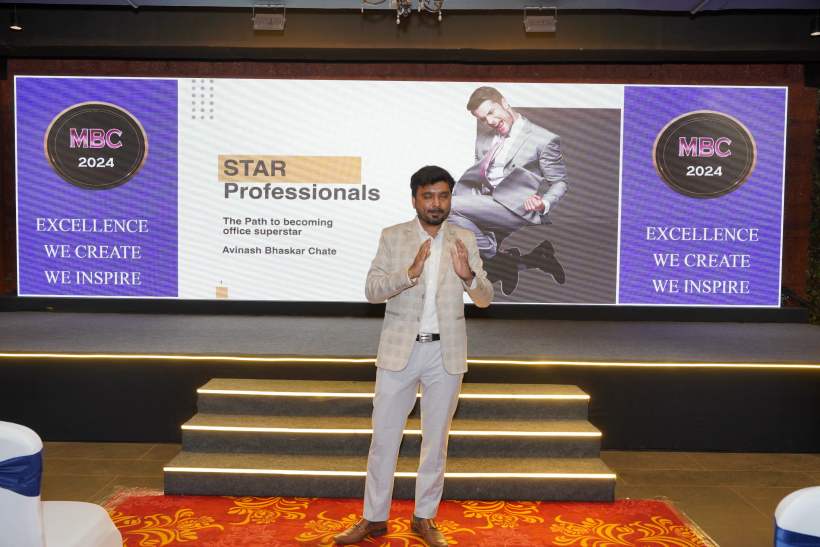
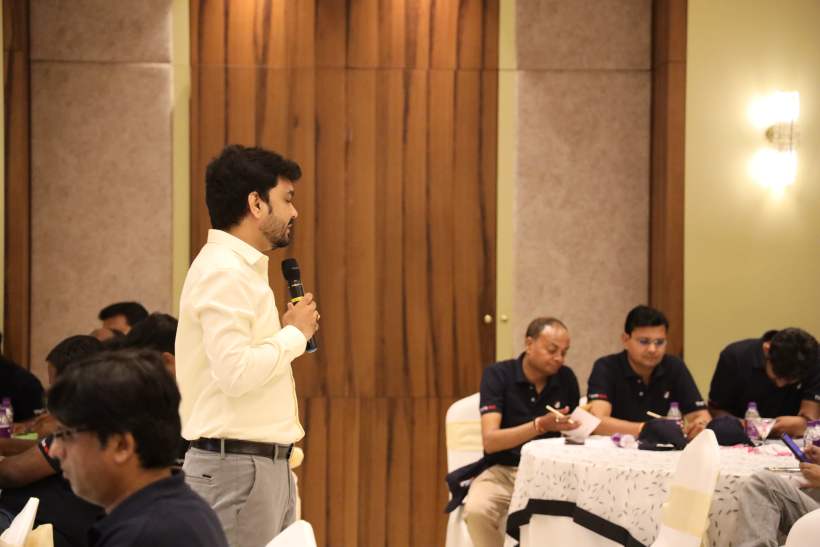
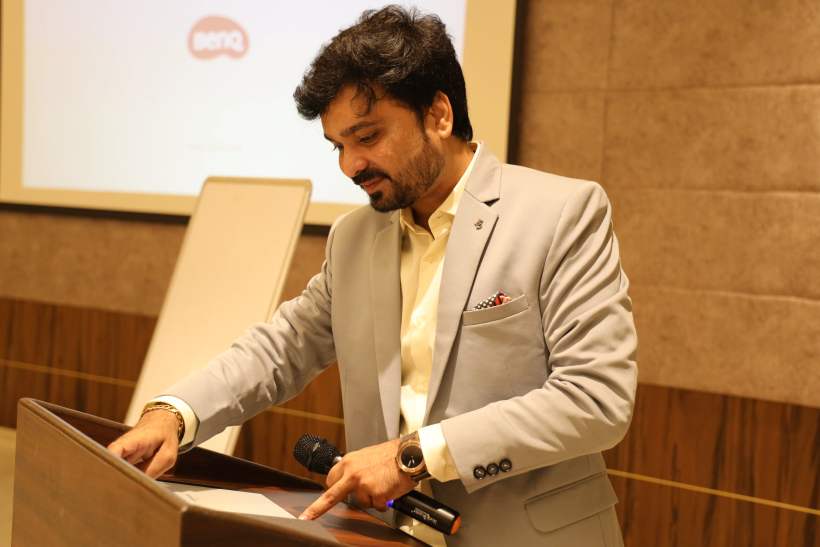
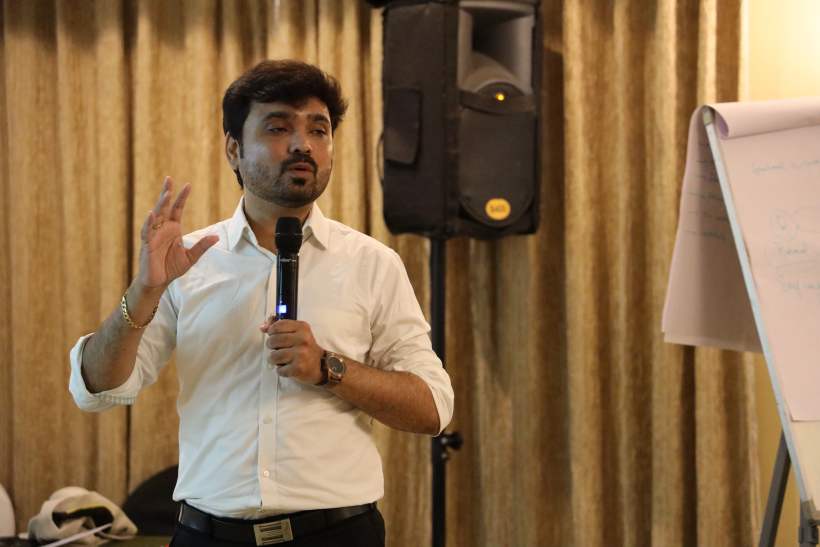
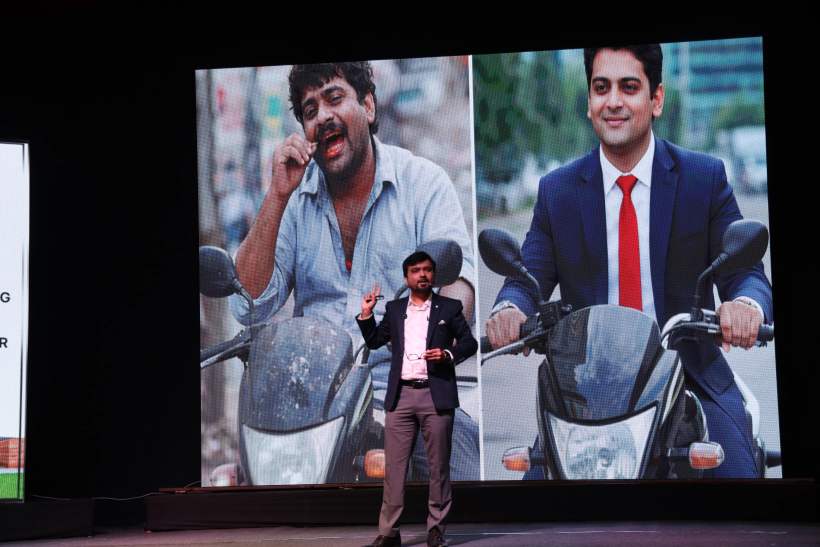
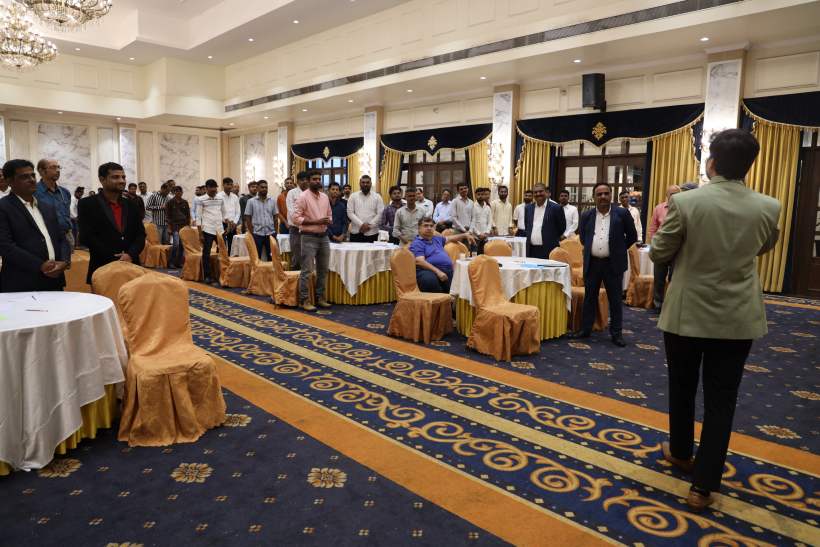
Photographs from Avinash Chate's own sessions in India. Sessions in this market are delivered by the same facilitator, in the same format.
Planning a sales training programme in Singapore?
Share your name and WhatsApp number and you will get a reply within one business day — usually the same day. Include the dates and the markets your team sells into. Most briefs are scoped on a first call.
Prefer to talk now? ☎ +91 87936 30001 · WhatsApp · Email
Sectors Served in Singapore
Regional headquarters come first, because that is where the fit is cleanest: EDB counts more than 4,700 multinationals running an Asia-Pacific regional headquarters from Singapore, and the commercial teams in those buildings carry quota across several markets at once. Banking and financial services second — MAS puts the sector at more than 2,500 licensed financial institutions employing close to 200,000 people, where the sale is a relationship held over years and the risk is a relationship manager who confuses access with commitment. Shipping, maritime and logistics third, at roughly seven per cent of GDP and about 170,000 professionals, where the commercial conversation runs through agents and long tender cycles. Manufacturing and industrial distribution fourth, where more than 100 companies operate on Jurong Island and the energy and chemicals sector employs around 27,000 people; the selling problem there is technical credibility in front of an engineering buyer, which is recognisably the same problem as selling into a JSW Steel or a Hitachi Astemo. Technology, professional services and channel-led businesses selling through partners buy this work too. Public-sector procurement is the honest exception: it buys through accredited and tendered channels, so it is the weakest fit for an unfunded offer and is not a sector this page chases.
Frequently Asked Questions
How is an India-based sales trainer actually engaged for a Singapore programme?
The clean route is a direct engagement by your own L&D, HR or commercial function to train your own sales team, on your own premises, under your organisation's contract. Avinash Chate is engaged as the named facilitator, flies in for the dates, delivers the programme and flies out. There is no Singapore office, no Singapore entity, no UEN and no local licence in the picture — and none is needed for a company training its own people in-house on its own budget. If your procurement prefers to contract through a locally registered provider instead, that also works, with him named as the facilitator rather than left as a line item.
Are these sales programmes SkillsFuture, SSG or WSQ funded?
No, and it is better said in the first email than found out in the third. SSG funding runs through a Registered Training Provider holding a Singapore UEN, and from 1 April 2026 adult educators delivering SSG-funded certifiable non-WSQ courses must hold WSQ ACTA or ACLP, or an SSG-deemed equivalent, and be registered on the National Adult Educator Registry run by SUSS and IAL. He holds none of those, and this page claims none of them. Separately, SSG course fee grants flow only to Singapore Citizens and Permanent Residents, so a regional sales team carrying a large share of Employment Pass holders is not fully subsidisable by any provider, accredited or otherwise. These programmes are bought on a commercial or L&D budget.
Does he need an Employment Pass to run a sales workshop in Singapore?
No. The Ministry of Manpower lists organising or conducting a seminar, conference, workshop or talk — as speaker, moderator, facilitator or trainer — as a Work Pass Exempt Activity. The notification is filed with MOM after arrival and before the activity begins, and the exemption covers up to ninety cumulative days in a calendar year. It does not apply where the main purpose of the event is the sale or promotion of goods and services, which is worth reading carefully on a sales page: an in-company skills workshop for your own sellers is training, while a customer-facing product launch or a promotional event is not, and a Miscellaneous Work Pass covers that instead. The notification is administrative rather than a hiring decision.
How much lead time do you need for a Singapore sales programme?
Four to six weeks is comfortable. That covers the discovery call, time with two or three of your sellers so the role-plays use your real deals rather than generic ones, the written outline, your approval of the content, and the flights. Three weeks is usually workable when the brief is already clear and the dates are held. Direct services run daily from Mumbai and Delhi, so the travel itself is never the constraint — your own approval cycle is.
What is the right group size for a sales programme?
Twelve to twenty-five is where this work lands hardest, because every seller has to run a live conversation in front of the room and be seen doing it. Up to about forty still works for a workshop built on structured sub-groups. Beyond that the format has to change to a kickoff keynote, which shifts the outcome from practised skill to shared language across the region. Splitting a regional team across three or four cycles usually beats one large room, particularly where the group mixes country managers with new sellers who will not contradict them in front of a quota.
Which language is the programme delivered in?
English. That is the working language of a Singapore commercial team and it stays the working language for the whole programme — the difficulty in these rooms is never English. Hindi and Marathi are an additional capability, and they matter only on multi-site programmes where the same sales content also has to land with a distributor team in an Indian market. For Singapore delivery they are not part of the offer.
Can the programme run online instead of in person?
Yes, and a regional team spread across six markets often has no choice. Deal reviews, objection drills and coaching clinics run well as virtual blocks on Singapore time, which sits two and a half hours ahead of India. What does not travel well online is the first day, where a seller has to be recorded getting a discovery conversation wrong in front of peers and then run it again. The common pattern is one in-person block in Singapore for the whole team, followed by shorter virtual reinforcement sessions tied to live opportunities across the next quarter.
Does this work for a team selling out of Singapore into several Asian markets?
That is the case the programme is built around. A Singapore desk usually carries accounts in markets whose buyers signal disagreement in very different ways, and a seller trained on one set of norms reads a polite room as a committed one. The module work is deliberately market-agnostic: it teaches a seller to test a yes rather than to memorise a country checklist, because the same account team will be given a new territory next year. Where a specific market matters to your pipeline, name it in the brief and the role-play scenarios are written around it.
What does the written proposal contain?
The commercial objective in your words, the audience and cohort structure, a session-by-session outline with the activities and role-plays named, the timings mapped to your working week and your quarter-end, the facilitator profile, what your side needs to provide, and the follow-through. It also states plainly what the programme will not do — it will not fix a pricing problem, a product gap or a territory design that is sending sellers at the wrong accounts. You get it before any invoice is raised, and the content is agreed with you before the dates are locked.
How is the cost of a Singapore sales programme worked out?
It is built from the format and the number of days, the number of cohorts, whether the work is a kickoff keynote or a behavioural sales programme with coaching follow-through, and the travel and accommodation your side is arranging — all quoted as separate lines so nothing is buried. Your finance team will also raise withholding tax: IRAS treats a visiting trainer or consultant as a non-resident professional, and income attributable to services performed in Singapore is subject to a final withholding tax of fifteen per cent of the gross fee, or twenty-four per cent of net income where that election is made, with your side filing and remitting it. Share the dates, the audience, the cohort size and the outcome you need and you get a specific written quote within one business day. There is no published rate card, because a sales kickoff keynote for two hundred people and a three-cohort account-management programme are not the same purchase.
Plan Your Singapore Sales Programme
To scope it, share the venue, the date window, how many sellers are attending and at what level, which markets they carry, whether sales managers are in the room or in a separate cohort, who will file the MOM notification, and the one commercial behaviour the programme has to change. A call follows within 48 hours, and you get a written outline before anything is committed. The full training topic library and contact details are a click away.
Building sales capability in Singapore this year?
B2B sellers, regional account managers and the people who run their deal reviews — one facilitator, one standard, in English.
Check Date Availability →