Pune IT Company 4 Crore Fraud: Colleague Trust Trap
Pune IT Company 4 Crore Fraud: Colleague Trust Trap A shocking incident from Pune where an IT professional befriended hi...
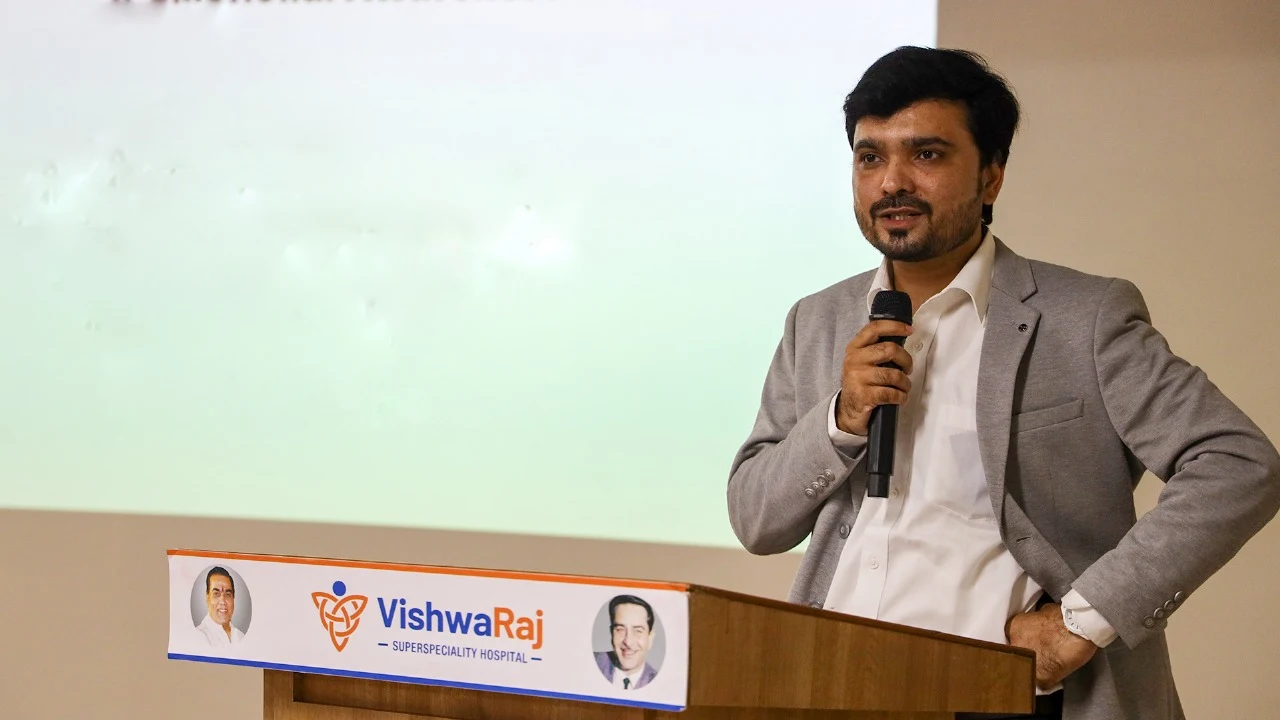
Avinash Chate - Leadership Development Expert training management team
The Colleague Trust Trap: How to Build Healthy Workplace Relationships Without Losing JudgmentIn every workplace, trust is the glue that holds teams together. We collaborate better, communicate faster, and support each other more naturally when trust is present. But there is an uncomfortable truth I want to address today: trust without boundaries can become a trap.
Key takeaway: Be warm, be respectful, be supportive, but never switch off your judgment simply because someone feels familiar.
Recently, many professionals were shaken by a case in which a colleague reportedly earned the confidence of co-workers, promised attractive returns, collected large sums of money, and then disappeared from their professional circle. Incidents like this are not only about money. They are about misplaced trust, emotional influence, and the failure to maintain healthy workplace boundaries.
As Avinash Chate, I have worked with leaders and teams across 80+ organizations, and one pattern is clear: people rarely get misled only by logic. They get misled when emotions overpower clarity. That is why soft skills are not just about speaking well or presenting confidently. They are also about self-awareness, decision-making, assertiveness, and the courage to say no.
Why intelligent professionals still fall into trust traps
Many people assume that only naive or financially careless individuals get manipulated. I disagree. Even highly educated, experienced, and capable professionals can get pulled into a trust trap when the relationship feels personal.
At work, familiarity grows quickly. We meet the same people every day, share tea breaks, discuss family matters, celebrate birthdays, handle pressure together, and sometimes even travel for work. This repeated interaction creates emotional comfort. The mind starts treating professional proximity as proof of personal credibility.
That is where the danger begins.
Someone may appear helpful, friendly, generous, and confident. They may speak with certainty. They may use social proof by saying others have already joined. They may create urgency. They may present themselves as caring well-wishers. None of this is evidence of integrity.
I often tell participants in my corporate training sessions that trust should be built in layers. Professional trust means I can rely on you for work. Personal trust means I can share parts of my life with you. Financial trust is a completely different category. Mixing all three without reflection is where people get hurt.
Professional closeness is not the same as financial credibility. A good colleague is not automatically a trustworthy advisor.
The hidden cost of blurred workplace boundaries
When people cross healthy workplace boundaries, the damage goes beyond financial loss. The emotional consequences are deep. Victims often feel ashamed, angry, betrayed, and isolated. They stop trusting others. Team morale suffers. Informal collaboration becomes weaker. Suspicion replaces openness.
This is why I say that workplace boundaries are not cold or unfriendly. They are protective. Boundaries preserve respect.
A healthy workplace relationship includes empathy, cooperation, and mutual support. But it also includes limits. Not every conversation must become personal. Not every request deserves a yes. Not every opportunity shared by a colleague should be accepted without independent verification.
In my sessions, Avinash Chate emphasizes that mature professionals learn to separate three things: emotion, obligation, and decision. Just because someone has helped you at work does not mean you owe them trust in unrelated personal matters. Gratitude should not replace due diligence.
This is especially relevant for young professionals who are eager to belong. Sometimes the desire to be accepted in a group leads people to agree with things they would normally question. They fear looking rude, negative, or suspicious. But let me say this clearly: asking questions is not disrespect. It is responsibility.
How strong communication can protect you
Most people think communication skills are only about speaking impressively. In reality, communication is also about asking the right questions, expressing discomfort, and declining politely but firmly.
If someone in your professional circle approaches you with a personal financial proposal, you do not need to react emotionally. You need a calm script. For example:
I prefer to keep financial decisions separate from workplace relationships.
I do not make investment choices without independent consultation.
I am not comfortable mixing personal money matters with professional connections.
Please do not take it personally, but I have a fixed rule about this.
These are not harsh responses. They are clear responses. And clarity is a leadership habit, not just a communication habit.
One reason I have always focused on people development is that confidence is not only about public speaking. Confidence is also about boundary-setting. In the KITE Leadership Framework, one of the most practical lessons is that emotionally mature professionals do not get carried away by pressure, persuasion, or popularity. They stay anchored in values.
That is the difference between reactive people and responsible people.
If you want to understand how leaders can avoid emotional overreaction to new ideas and influence, I also recommend reading Why Great Ideas Get Rejected at First: The Addiction Model Every Leader Must Understand. It offers a useful perspective on how human judgment gets shaped by emotion and bias.
What leaders and HR teams must teach employees
This issue is not only an individual lesson. It is also an organizational lesson. Companies must actively build cultures where professionalism and personal respect coexist with healthy caution.
Leaders should regularly reinforce a few simple principles. First, workplace relationships should remain respectful and collaborative, but employees should avoid entering personal financial arrangements with co-workers. Second, team members should feel safe saying no without social backlash. Third, managers should encourage employees to seek guidance when they feel pressured or confused.
I have seen this need across industries, including in learning interventions associated with respected organizations such as NRB Bearings. No matter the sector, one truth remains the same: people perform best in environments where trust is balanced with wisdom.
As a TEDx speaker and author of The Winning Edge, I strongly believe that ethics training should not be limited to policies. It must include real conversations about influence, peer pressure, emotional manipulation, and personal accountability.
Organizations often invest in technical capability, but long-term culture is shaped by human capability. That is where communication, assertiveness, integrity, and self-leadership become essential.
If your teams are growing fast and you want to strengthen motivation and workplace maturity, you may also find value in Best Motivational Speaker in Bangalore for Startup Culture and Motivational Speaker for Pune’s Talegaon and Ranjangaon Industrial Zones: Inspiring Manufacturing Excellence Beyond City Limits.
Five personal rules I recommend for every professional
Whenever I speak to employees, managers, or emerging leaders, I suggest a few non-negotiable rules. These rules are simple, but they can save people from emotional and financial pain.
Rule 1: Do not confuse access with character. Just because someone is around you every day does not mean you fully know them.
Rule 2: Never make money decisions under social pressure. If a proposal is genuine, it can wait for verification.
Rule 3: Keep your no ready. You do not need a dramatic reason to decline. A clear boundary is enough.
Rule 4: Verify independently. Do not rely on a colleague’s confidence, charm, or mutual friendships as proof.
Rule 5: Protect your emotional balance. If you are feeling excited, guilty, rushed, or flattered, pause before deciding.
These are not rules of fear. They are rules of maturity. The goal is not to become suspicious of everyone. The goal is to become responsible for your own decisions.
Trust people, but lead yourself first
I want to end with an important distinction. I am not asking you to become cold, distant, or cynical. Workplaces need trust. Teams need positive relationships. Careers grow faster when people collaborate generously.
But trust must walk with awareness.
Avinash Chate believes that true professionalism is not just about competence. It is about emotional discipline. It is about knowing when to connect and when to step back. It is about being kind without being careless.
When you lead yourself well, you do not get carried away by charm, urgency, or group influence. You stay grounded. You ask questions. You verify. You protect your values, your money, your peace of mind, and your future.
That is not distrust. That is self-leadership.
If you want to build a workplace culture rooted in trust, communication, accountability, and mature professional relationships, book a corporate training session. Through practical, high-impact learning experiences, Avinash Chate helps teams strengthen judgment, motivation, leadership, and people skills that truly matter.
Frequently Asked Questions
How can professionals maintain trust at work without becoming overly suspicious?
The right approach is balanced trust. Be respectful, collaborative, and open, but do not make personal or financial decisions based only on familiarity. Healthy trust includes clear boundaries and independent thinking.
Why do employees get influenced by colleagues in personal matters?
Repeated interaction creates comfort and emotional closeness. People begin to assume that professional familiarity equals personal credibility. That assumption can reduce caution and lead to poor judgment.
What should I say if a colleague pressures me into a personal financial decision?
Use a calm and clear response. You can say that you do not mix workplace relationships with personal financial matters and that you only make such decisions after independent consultation.
What role do companies play in preventing workplace trust traps?
Organizations should promote a culture of professionalism, boundary-setting, and psychological safety. Employees should feel comfortable saying no, asking questions, and seeking support without fear of judgment.
How can corporate training help in such situations?
Corporate training strengthens communication, assertiveness, self-awareness, ethical judgment, and leadership maturity. These skills help employees make better decisions, handle influence wisely, and maintain healthy workplace relationships.
Related Articles by Avinash Chate
- The Mirroring Technique That Helps You Build Trust and Close More Deals
- Motivational Speaker for Pune BPO and KPO Night-Shift Teams — Combating Burnout and Boosting Engagement
- Micro Management vs Ownership: Lessons for Maharashtra's Corporate Leaders
About the Author
Avinash Chate is a TEDx speaker, published author of The Winning Edge and The Unanswered, and founder of The Future Corporate & Business Coaching. With over 15 years of experience training 80+ organizations including Mauli Sahkari Patsanstha Marya, Navsahyadri Education Society's Group of Institutions, Institute of Company Secretaries of India, NRB Bearings, Avinash is recognized as Maharashtra's leading corporate trainer. He created the KITE Leadership Framework and the 25-Star Competency Framework™, delivering high-impact programs across leadership, team building, sales transformation, and emotional intelligence.
📞 +91 8793630001 | ✉️ connect@avinashchate.com | 🌐 avinashchate.com
Book Avinash Chate for Your Next Event
Maharashtra's #1 Corporate Trainer · India's leading Motivational Speaker & Team Building Expert · 2x TEDx · Available across India in English, Hindi & Marathi.
✅ Thanks! Avinash team will reach out within 24 hours.'}).catch(function(e){f.outerHTML='Something went wrong. WhatsApp +91 8793630001
'});return false;"> Select Service Motivational Speaking / Keynote Team Building Workshop Corporate Training / Leadership Development Manager Development Employee Training Outbound Training Book Avinash Now →Or WhatsApp directly: +91 87936 30001
Avinash Chate services
Corporate Trainer in Pune · Top Corporate Trainers in Pune · Leadership Trainer in Pune · Top Leadership Trainers in Pune · Team Building Trainer in Pune · Top Team Building Trainers in Pune · Motivational Speaker in Pune · Top Motivational Speakers in Maharashtra · All service locations
← Back to all articles · Book Avinash Chate
By Avinash Chate — Maharashtra’s #1 Corporate Trainer & Motivational Speaker. .