Suryakumar Yadav’s Savage Reply to Moshin Naqvi
Have you ever done great work but someone else took the credit? Or stayed silent when you should have spoken up? Suryakumar Yadav just showed us the perfect res...
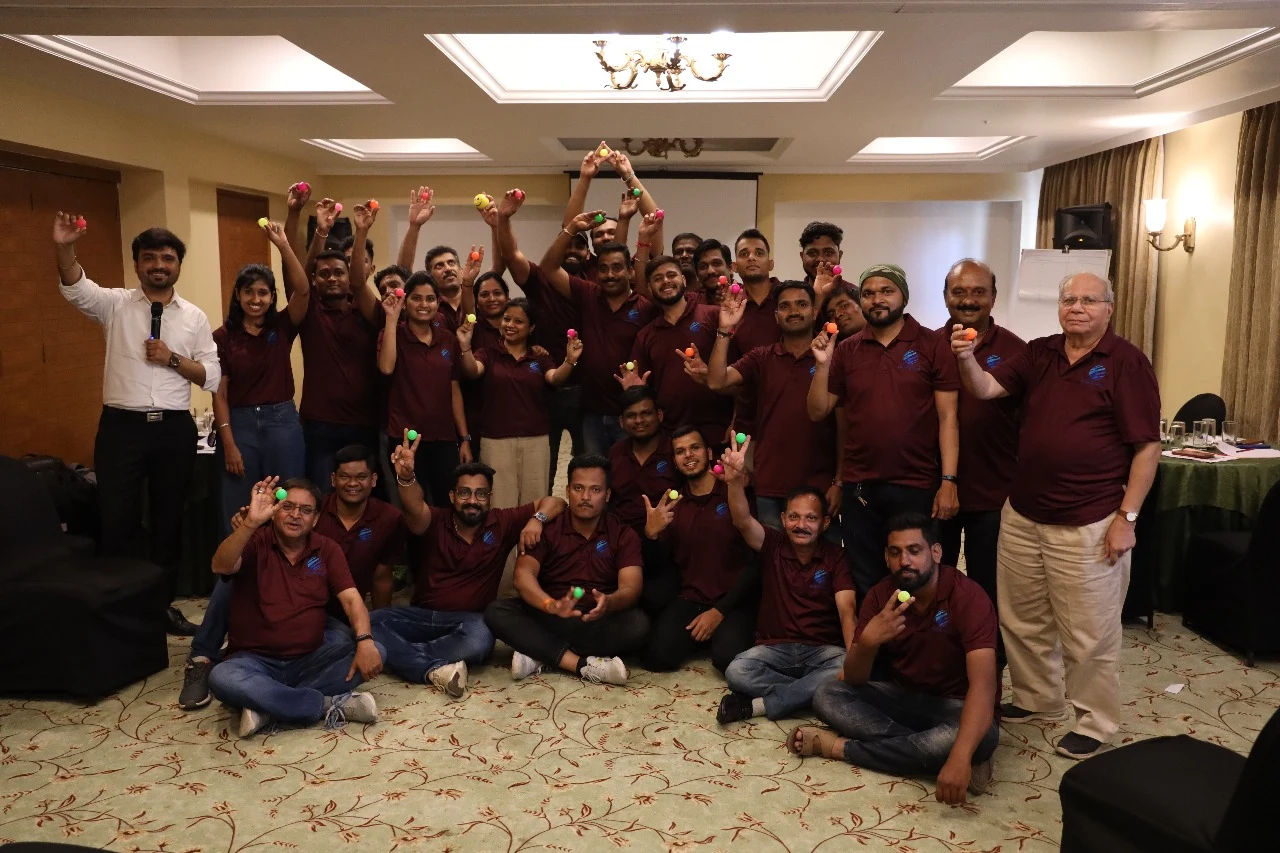
Avinash Chate - Leadership Coach at employee engagement session
Strategic Patience at Work: What Suryakumar Yadav’s Reply Teaches Us About Dignity, Timing, and LeadershipThere are moments in every professional journey when your work speaks loudly, but the room stays strangely silent. You deliver results, stay committed, and carry responsibility, yet someone else tries to take the spotlight, distort the narrative, or reduce your contribution. In such moments, many people either react too fast or remain silent for too long.
Key takeaway: Real strength is not in reacting instantly. It is in choosing the right moment, the right words, and the right attitude.
That is why the recent moment involving Suryakumar Yadav caught my attention. His response was not loud, emotional, or defensive. It carried something far more powerful: strategic patience. As a corporate trainer, I believe these moments are not just sports stories. They are leadership lessons. They teach us how top performers handle pressure, poor judgment, and subtle disrespect without losing self-respect.
Over 15+ years, I have worked with professionals across industries and leadership levels, and I have seen one truth repeatedly: the people who grow consistently are not always the loudest. They are the ones who know when to pause, when to observe, and when to respond with clarity. That is a lesson I often share as Avinash Chate, a TEDx speaker and author of The Winning Edge.
Why strategic patience is a power skill in the workplace
Many people misunderstand patience. They think patience means weakness, delay, or avoidance. I see it differently. Strategic patience means emotional control with awareness. It means you do not let another person’s behaviour decide your response.
In the workplace, this matters deeply. Sometimes your manager overlooks your effort. Sometimes a colleague presents your idea as their own. Sometimes leadership sends mixed signals. Sometimes recognition goes to the visible person, not the valuable one. In these moments, impulsive reactions may satisfy the ego, but they rarely build long-term credibility.
Strategic patience gives you an edge. It allows you to read the situation fully. It helps you separate emotion from action. It protects your dignity while preserving your influence.
I have seen this in leadership workshops with teams from organizations such as ADS Technologies. The highest-performing professionals are not those who react to every provocation. They are those who understand timing. They know that a calm and well-framed response can carry far more authority than an angry outburst.
You do not need to win every moment. You need to win trust, respect, and long-term credibility.
The PAUSE method: A practical response to workplace politics
When people ask me how to handle credit theft, unfair comments, or poor leadership behaviour, I often recommend a simple approach: the PAUSE method. It is practical, powerful, and easy to remember.
P – Pause before reacting
Your first emotion is rarely your best strategy. When something hurts your ego or challenges your effort, pause. Give yourself space. Even a few minutes of distance can prevent unnecessary damage.
This is where maturity begins. If you react in anger, your message gets buried under your tone. If you pause, your response becomes more intentional.
A – Assess the situation clearly
Ask yourself: What exactly happened? Was it deliberate or careless? Is this a pattern or a one-time issue? Who needs to hear my response? What outcome do I want?
This step is critical because not every slight deserves the same response. Some issues need a private conversation. Some need public clarification. Some need documentation. Some need complete silence.
U – Understand the power dynamics
Every workplace has visible and invisible power structures. Before responding, understand the environment. Who influences decisions? Who is watching? Who already knows the truth? This is not manipulation. This is awareness.
In my leadership sessions, I remind participants that emotional intelligence is not only about empathy. It is also about situational judgment.
S – Speak with clarity, not bitterness
When the time comes to respond, be clear. State facts. Own your contribution. Avoid sarcasm, personal attacks, or emotional drama. Dignity is a competitive advantage.
A simple statement delivered with confidence can reset the narrative. The goal is not to humiliate the other person. The goal is to ensure truth is visible.
E – Exit the emotional trap
Do not stay mentally trapped in the incident. Learn from it, respond to it, and move forward. If you keep replaying the injustice in your mind, you give the moment more power than it deserves.
That is why strategic patience is not passive. It is active self-leadership.
How top performers protect their dignity without becoming aggressive
One of the biggest mistakes professionals make is assuming they have only two options: stay silent or become confrontational. In reality, there is a third option: assertive dignity.
Assertive dignity means you do not shrink, and you do not explode. You stand firm. You communicate with self-respect. You let your words reflect maturity.
This is closely aligned with the KITE Leadership Framework, where effective leadership is built not only on knowledge and execution, but also on emotional steadiness and trust-building behaviour. The way you respond under pressure shapes how others perceive your leadership potential.
As Avinash Chate, I often tell professionals that your career is not built only by your performance. It is also built by your presence. Can people trust you in difficult moments? Can you handle provocation without losing balance? Can you protect your contribution without damaging relationships unnecessarily?
These questions matter because workplaces are human spaces. Results are important, but reputation travels through behaviour.
Do not interrupt emotionally charged situations unless necessary.
Document your work and contributions consistently.
Use facts and examples when clarifying your role.
Address recurring issues early before resentment builds.
Choose respect over revenge every single time.
What to do when someone else takes credit for your work
This is one of the most common workplace frustrations, and it affects motivation deeply. When your effort is not acknowledged, it can make you question your value. But the solution is not emotional withdrawal.
First, build visibility before the problem happens. Share progress updates. Communicate outcomes clearly. Keep stakeholders informed. Quiet excellence is admirable, but invisible excellence is risky.
Second, if credit is taken unfairly, address it professionally. You can say, “I would like to add a point here. I was closely involved in developing this approach, and I would be happy to explain the thinking behind it.” This is not arrogance. This is ownership.
Third, focus on patterns. A one-time oversight may not need escalation. A repeated pattern does. Mature professionals do not overreact to every incident, but they also do not normalize disrespect.
I have seen many talented people suffer because they believed hard work alone would protect them. Hard work is essential, but communication protects contribution. That is why Avinash Chate emphasizes soft skills not as optional polish, but as career survival tools.
If you want to reflect further on the importance of values and ambition, I recommend reading When Ambition Crosses the Line: What a Disturbing Incident Reveals About Success Without Values. It connects strongly with how we define success beyond ego and recognition.
How leaders should respond when teams feel ignored or undervalued
This lesson is not only for employees. It is equally important for leaders. If people in your team feel unseen, unheard, or repeatedly overshadowed, performance will eventually drop. Motivation cannot survive for long in an environment where contribution is not respected.
Leaders must create a culture where recognition is fair, communication is transparent, and credit is shared honestly. A strong team is not built by authority alone. It is built by trust.
As a trainer working with 80+ organizations, I have observed that teams become stronger when leaders do three simple things consistently: acknowledge effort publicly, give feedback privately, and correct misattribution quickly. These are not complicated acts, but they create powerful emotional safety.
When leaders fail to do this, politics grows. When leaders do it well, ownership grows.
If you are planning to strengthen leadership and people capability in your organization, you may also find value in Corporate Training Budget Planning for Indian Companies 2026 in Mumbai. It offers useful direction on building long-term development priorities.
And while market leadership is often discussed from many angles, I always remind professionals that human capability remains central. You can explore a broader business perspective here: AI and Data Will Decide the Next Market Leaders. Even there, the real differentiator is how people think, decide, and lead.
Your calm response can become your strongest statement
Not every battle needs noise. Not every insult needs immediate correction. Not every unfair moment needs a dramatic confrontation. Sometimes the strongest response is composed, precise, and timely.
That is what strategic patience teaches us. It is not about suppressing your voice. It is about strengthening it. When you respond after reflection, your words carry weight. When you speak from dignity, people listen differently.
This is the kind of mindset I encourage in every leadership and motivation session. Whether you are an individual contributor, a sales professional, a team leader, or a business owner, your ability to manage difficult moments defines your growth.
As Avinash Chate, I believe that real professionalism is visible not in easy moments, but in uncomfortable ones. Anyone can stay calm when things go their way. Character is revealed when they do not.
If you want to build these capabilities in your team through practical and high-impact learning, book a corporate training session here. As a TEDx speaker and author of The Winning Edge, I continue to work with organizations that want stronger leaders, better communication, and more resilient teams.
Frequently Asked Questions
What is strategic patience in the workplace?
Strategic patience is the ability to stay emotionally controlled, assess a situation carefully, and respond at the right time with clarity and dignity instead of reacting impulsively.
How should I respond if someone takes credit for my work?
Respond professionally by clarifying your contribution with facts, confidence, and respect. Do not attack the person emotionally, but do make your role visible.
Is staying silent a sign of maturity?
Not always. Silence can be wise in some situations, but repeated silence in the face of unfairness can damage your confidence and credibility. The key is knowing when to speak and how to speak.
Can soft skills really help in workplace politics?
Yes. Soft skills such as communication, emotional intelligence, assertiveness, and leadership presence help professionals navigate difficult people and complex situations more effectively.
How can organizations build this mindset in teams?
Organizations can build this mindset through focused corporate training in communication, leadership, conflict handling, team trust, and emotional resilience, supported by leaders who model these behaviours consistently.
Related Articles by Avinash Chate
- The Mirroring Technique That Helps You Build Trust and Close More Deals
- The Career Cost of Saying ‘I’m Not Ready’
- Motivational Speaker for Pune BPO and KPO Night-Shift Teams — Combating Burnout and Boosting Engagement
About the Author
Avinash Chate is a TEDx speaker, published author of The Winning Edge and The Unanswered, and founder of The Future Corporate & Business Coaching. With over 15 years of experience training 80+ organizations including Kiran Gems, Kwality Walls, Daspati Maratha Charitable Trust Mumbai, Perfexan Chem Pvt. Ltd, Avinash is recognized as Maharashtra's leading corporate trainer. He created the KITE Leadership Framework and the 25-Star Competency Framework™, delivering high-impact programs across leadership, team building, sales transformation, and emotional intelligence.
📞 +91 8793630001 | ✉️ connect@avinashchate.com | 🌐 avinashchate.com
Book Avinash Chate for Your Next Event
Maharashtra's #1 Corporate Trainer · India's leading Motivational Speaker & Team Building Expert · 2x TEDx · Available across India in English, Hindi & Marathi.
✅ Thanks! Avinash team will reach out within 24 hours.'}).catch(function(e){f.outerHTML='Something went wrong. WhatsApp +91 8793630001
'});return false;"> Select Service Motivational Speaking / Keynote Team Building Workshop Corporate Training / Leadership Development Manager Development Employee Training Outbound Training Book Avinash Now →Or WhatsApp directly: +91 87936 30001
Avinash Chate services
Corporate Trainer in Maharashtra · Top Corporate Trainers in Maharashtra · Leadership Trainer in Maharashtra · Top Leadership Trainers in Maharashtra · Team Building Trainer in Maharashtra · Top Team Building Trainers in Maharashtra · Motivational Speaker in Maharashtra · Top Motivational Speakers in Maharashtra · All service locations
← Back to all articles · Book Avinash Chate
By Avinash Chate — Maharashtra’s #1 Corporate Trainer & Motivational Speaker. .