Sehwag Mindset जे Corporate People Ignore करतात
अनेक प्रोफेशनल्स कामात मागे राहतात कारण त्यांच्यात क्षमता नसते म्हणून नाही, तर ते खूप विचार करत राहतात. निर्णय उशिरा होतात आणि संधी हातातून निघून जातात. या व्हि...
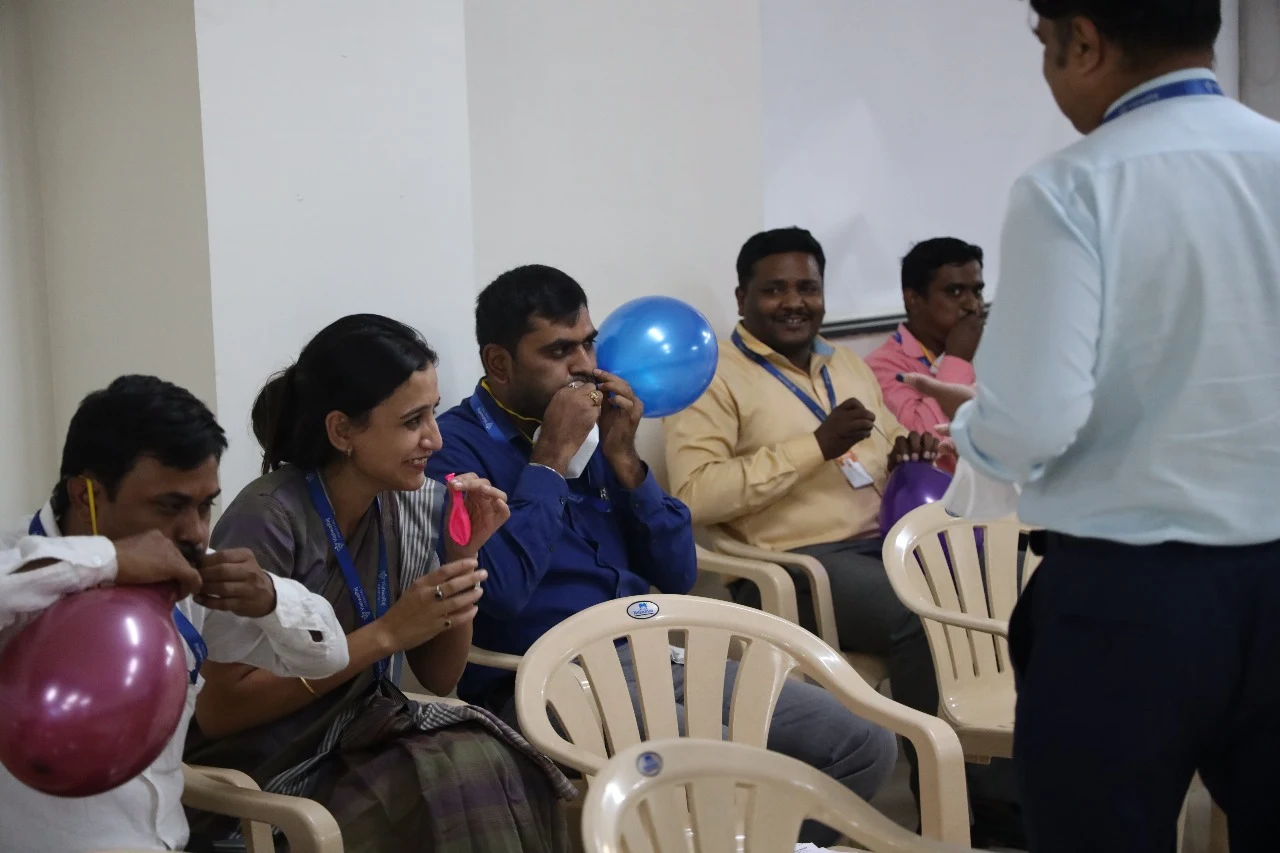
Avinash Chate - Top Motivational Speaker at corporate training program
The Sehwag Mindset: Why Fast Action Beats Overthinking at WorkIn my work with leaders, managers, sales teams, and young professionals across India, I have noticed one pattern again and again: people rarely lose because they are incapable. They lose because they delay action. They keep preparing, keep analyzing, keep waiting for the perfect moment, and by the time they are ready, the opportunity has moved on.
Key takeaway: In the workplace, momentum often rewards the person who acts with clarity, not the person who waits for complete certainty.
This is why I often talk about what I call the Sehwag mindset. Virender Sehwag was not remembered only for talent. He was remembered for intent. He put pressure back on the bowler. He did not begin with fear. He began with action. That mindset has a powerful lesson for corporate professionals.
As Avinash Chate, a TEDx speaker and author of The Winning Edge, I have seen this principle play out in boardrooms, review meetings, sales conversations, and leadership journeys. After working with 80+ organizations, I can say this with conviction: the professionals who grow faster are not always the smartest in the room. Very often, they are the ones who convert thought into action faster than others.
Why Overthinking Makes Capable People Look Average
Overthinking is dangerous because it disguises itself as intelligence. It feels responsible. It feels mature. It feels like you are being careful. But in reality, overthinking often becomes a sophisticated form of fear.
You may have seen this in your own workplace. One person gets an idea and immediately tests it. Another person keeps refining the idea for weeks. One person starts a difficult conversation and clears misunderstandings. Another person keeps rehearsing and saying, “I will talk tomorrow.” One person takes ownership of a client opportunity. Another keeps waiting for more confidence.
The result is simple. Action creates learning. Delay creates doubt.
When professionals overthink, three things happen. First, their confidence drops because they keep imagining worst-case scenarios. Second, their speed slows down, and in today’s workplace, slow response often means lost trust. Third, they start admiring decisive people while secretly questioning their own ability.
I have met many talented professionals who were not lacking knowledge. They were lacking execution courage. That is why the Sehwag mindset matters so much. It teaches us that pressure does not always have to be absorbed. Sometimes, it has to be redirected.
What the Sehwag Mindset Really Means in Corporate Life
Let us be clear. Fast action does not mean careless action. It does not mean impulsive behavior or reckless decisions. The Sehwag mindset in corporate life means acting with prepared instinct. It means trusting your training, your experience, and your judgment enough to move.
In practical terms, this mindset looks like this:
You respond to opportunities before self-doubt becomes louder than your capability.
You speak up in meetings when you have value to add.
You make timely decisions instead of stretching every discussion endlessly.
You start before you feel fully ready, then improve as you go.
You treat action as a way to create clarity, not as something that must wait for clarity.
This is one reason I connect this idea with my KITE Leadership Framework. Strong leadership is not just about vision. It is also about initiative, trust, and execution. Leaders who wait too long weaken team energy. Leaders who act with thoughtfulness create movement, and movement creates belief.
Avinash Chate has often said in training sessions that teams do not need endless motivational lines. They need visible examples of courageous action. Once one person starts, others begin to believe that progress is possible.
How Action Builds Confidence Faster Than Motivation
Many people think confidence comes first and action comes later. My experience says the opposite. In most cases, action comes first and confidence follows.
This is true in presentations, leadership roles, sales conversations, conflict resolution, and career growth. If you wait to feel fearless before acting, you may wait forever. But if you act despite discomfort, your mind begins to update its belief about what you are capable of doing.
That is why motivation alone is never enough. Motivation can start the fire, but action keeps it alive.
I remember interacting with teams in organizations such as JM Aluext Profiles Pvt Ltd, where one recurring need in professional growth conversations was this: people wanted to become more proactive, more confident, and more visible. The real shift did not happen when they merely understood concepts. The shift happened when they started applying those ideas in daily work.
If you want to build confidence at work, do these simple things consistently:
Take one decision each day without unnecessary delay.
Volunteer for one visible responsibility each week.
Initiate one meaningful conversation you have been postponing.
Share one idea in a meeting instead of staying silent.
Review action taken, not just plans made.
These are small moves, but they train your mind to stop worshipping hesitation.
Professionals do not become powerful when they stop feeling fear. They become powerful when fear stops deciding their next move.
The Difference Between Preparation and Paralysis
Preparation is useful. Paralysis is expensive. The challenge is that many professionals confuse the two.
Preparation says, “Let me understand the situation and move well.” Paralysis says, “Let me wait until nothing can go wrong.” But that second condition never arrives. No presentation is ever perfectly ready. No career move is ever risk-free. No leadership decision comes with total certainty.
One of the healthiest habits you can build is to ask yourself a simple question: am I improving the decision, or am I avoiding the discomfort of making it?
This question changes everything. It helps you identify whether your delay is strategic or emotional. And in many cases, the truth is uncomfortable. We are not waiting for better data. We are waiting for less fear.
If this resonates with you, I would also recommend reading When Emotions Cloud Judgment, Let Performance Speak. Emotional clarity is essential if you want to act decisively under pressure.
Similarly, decisive action becomes even more powerful when supported by strong presence and non-verbal communication. That is why I often tell professionals to also explore People Hear Your Body Before Your Words. The way you carry yourself can either support your intent or weaken it.
How Leaders Can Create a Culture of Action
The Sehwag mindset is not only for individuals. It is also for teams. A team becomes slow when leaders punish initiative, overcontrol every decision, or create fear around mistakes. A team becomes agile when leaders reward ownership, encourage timely decisions, and treat learning as part of growth.
If you are a leader, here is how you can build a culture of action:
Set clear expectations, then allow people room to execute.
Appreciate initiative, not just final outcomes.
Reduce unnecessary approval layers in everyday work.
Teach teams to learn quickly instead of fearing errors endlessly.
Model decisiveness in your own behavior.
In many of my corporate training and leadership development sessions, I have seen that teams become more energetic when they step out of routine thinking and experience challenge-based learning together. That is one reason experiential learning matters so much. If you want to explore this further, visit Outbound Training Near Pune — Lonavala Khandala Panchgani Programs. Such learning experiences often reveal how quickly people can grow when they stop overprocessing and start engaging fully.
Avinash Chate believes that leadership is not proven by how long you think about action. It is proven by whether your presence helps others move forward with courage and clarity.
Your Career Will Not Change by Intention Alone
This is the hard truth many professionals need to hear: good intentions do not create career growth. Action does. Talent does not speak for itself forever. At some stage, your initiative, your communication, your courage, and your consistency start speaking louder than your potential.
If you have been waiting for the right mood, the right confidence, the right timing, or the right guarantee, you may be waiting too long. The workplace rewards those who can think well and move well.
That is the real lesson of the Sehwag mindset. Put pressure on hesitation. Attack the inner delay that keeps telling you to wait. Trust your preparation, commit to action, and let momentum become your advantage.
As Avinash Chate, I have seen professionals transform not when life became easier, but when they stopped making hesitation their habit. If you want to grow in leadership, communication, motivation, team effectiveness, or personal impact, begin with this one shift: act before doubt becomes your manager.
If your organization wants to build a more proactive, confident, and high-performing workforce, book a corporate training session here.
Frequently Asked Questions
What is the Sehwag mindset in the workplace?
The Sehwag mindset in the workplace means acting with confidence, intent, and timely decision-making instead of getting trapped in overthinking. It is about using preparation to move forward, not to delay action.
Does fast action mean careless decisions?
No. Fast action does not mean reckless action. It means avoiding unnecessary hesitation and making thoughtful decisions with available clarity, experience, and responsibility.
Why do professionals overthink so much?
Professionals often overthink because they fear failure, judgment, mistakes, or uncertainty. Overthinking can feel like caution, but many times it is simply fear taking a more acceptable form.
How can I become more action-oriented at work?
Start with small daily actions. Make timely decisions, speak up in meetings, volunteer for responsibility, and stop waiting for perfect confidence. Confidence usually grows after action, not before it.
Can corporate training help teams become more proactive?
Yes. The right corporate training can improve ownership, communication, leadership behavior, and execution mindset. It helps teams replace hesitation with clarity, collaboration, and confident action.
Related Articles by Avinash Chate
- Motivational Speaker for Pune BPO and KPO Night-Shift Teams — Combating Burnout and Boosting Engagement
- Micro Management vs Ownership: Lessons for Maharashtra's Corporate Leaders
- When the Hunger for Power Kills Humanity
About the Author
Avinash Chate is a TEDx speaker, published author of The Winning Edge and The Unanswered, and founder of The Future Corporate & Business Coaching. With over 15 years of experience training 80+ organizations including Sports Authority of India, Rajuri Steels, MP REAL TECH PVT.LTD (Wilson), Kaeser Compressors India, Avinash is recognized as Maharashtra's leading corporate trainer. He created the KITE Leadership Framework and the 25-Star Competency Framework™, delivering high-impact programs across leadership, team building, sales transformation, and emotional intelligence.
📞 +91 8793630001 | ✉️ connect@avinashchate.com | 🌐 avinashchate.com
Book Avinash Chate for Your Next Event
Maharashtra's #1 Corporate Trainer · India's leading Motivational Speaker & Team Building Expert · 2x TEDx · Available across India in English, Hindi & Marathi.
✅ Thanks! Avinash team will reach out within 24 hours.'}).catch(function(e){f.outerHTML='Something went wrong. WhatsApp +91 8793630001
'});return false;"> Select Service Motivational Speaking / Keynote Team Building Workshop Corporate Training / Leadership Development Manager Development Employee Training Outbound Training Book Avinash Now →Or WhatsApp directly: +91 87936 30001
Avinash Chate services
Corporate Trainer in Maharashtra · Top Corporate Trainers in Maharashtra · Leadership Trainer in Maharashtra · Top Leadership Trainers in Maharashtra · Team Building Trainer in Maharashtra · Top Team Building Trainers in Maharashtra · Motivational Speaker in Maharashtra · Top Motivational Speakers in Maharashtra · All service locations
← Back to all articles · Book Avinash Chate
By Avinash Chate — Maharashtra’s #1 Corporate Trainer & Motivational Speaker. .