93% Communication is NON-VERBAL | 7-38-55 Rule Explained | Body Language Masterclass
Boss kehta hai: "Haan, tum presentation do." Lekin uski body language kuch aur keh rahi hai. Arms crossed. Eye contact nahi. Phone dekh raha hai. Yahi problem a...
Have you ever said the right words, yet people misunderstood you?
It happens more often than we realize. Someone says “I’m fine,” but their face tells a different story. A manager praises an employee, yet the tone sounds cold. A speaker delivers powerful words, but the audience feels no connection.
Communication is not just about what we say. It is about how we say it and how we carry ourselves while saying it.
Psychologist Albert Mehrabian’s famous 7-38-55 rule explains this beautifully. According to his research, when people communicate emotions or attitudes, only 7% of the message comes from words, 38% comes from tone of voice, and a massive 55% comes from body language.
This doesn’t mean words are unimportant. Words still shape ideas. But when words, tone, and body language send different signals, people trust what they see and feel more than what they hear.
Imagine a leader saying, “I trust my team,” while avoiding eye contact and speaking in a doubtful tone. The words say trust, but the body and tone say something else. Instantly, the message loses its power.
Great communicators understand this simple truth: communication is alignment.
Your words, your voice, and your body must move in the same direction.
Start by becoming aware of your body language. Stand straight. Lift your chest slightly. Keep your chin up. Maintain comfortable eye contact. Small adjustments in posture instantly change the energy you project. Interestingly, researchers have also found that confident body postures can influence your own mindset by reducing stress hormones and boosting confidence.
Next comes your tone of voice. The same sentence can inspire, motivate, offend, or confuse depending on the tone. A warm tone builds trust. A sharp tone creates distance. People don’t just listen to the message — they listen to the emotion inside the message.
And finally, the words themselves. Words give direction to the conversation. But they become powerful only when the tone and body language support them.
Another powerful skill is learning to observe others. Communication is not only about expressing; it is also about understanding. Notice small signals. Crossed arms may indicate defensiveness. Leaning forward often signals interest. Frequent phone checking usually means attention is drifting away.
These subtle cues tell you what people may not be saying aloud.
The most effective communicators — leaders, teachers, and speakers — are not just good with words. They are deeply aware of energy, presence, and human signals.
Because communication is not simply spoken. It is felt.
When your words, voice, and body move together, your message gains clarity, authenticity, and influence.
And that is when communication truly begins to work.
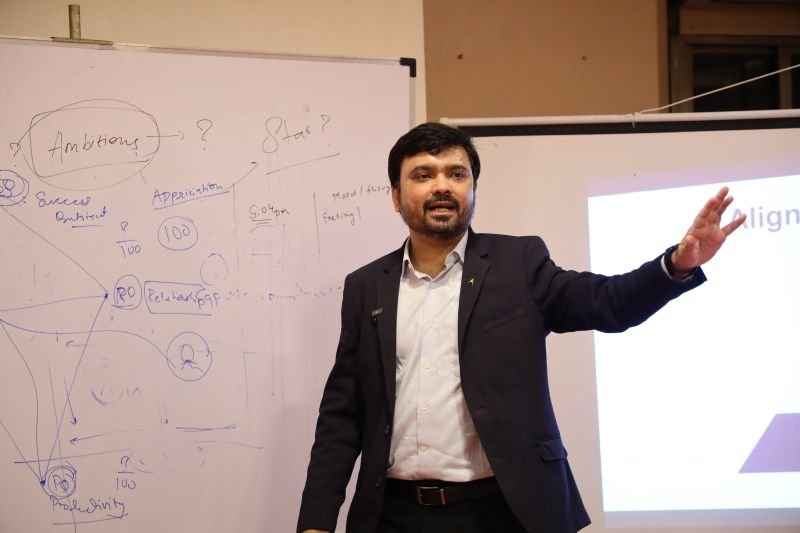
In the attached YouTube video, Avinash Chate explains this concept in a simple and relatable way. Drawing from his experience as a corporate trainer and motivational speaker, he shows how the 7-38-55 rule plays out in everyday conversations — in workplaces, leadership situations, and personal interactions. Through practical examples and easy techniques, he helps viewers understand how aligning words, tone, and body language can instantly improve the way people communicate and connect with others.
Related Articles by Avinash Chate
- From Reaction to Leadership: Mastering Emotional Control at Work
- Mastering Communication Skills in Jalgaon: 5 Essential Tips for Managers
Avinash Chate
India's Leading Corporate Trainer | TEDx Speaker | Author
With 80+ organizations trained including RBI, JSW Steels, and Ferrero, Avinash Chate delivers high-impact corporate training across India. Creator of the KITE Leadership Framework and bestselling author of "The Winning Edge."
Website YouTubeBook Avinash Chate for Your Next Event
Maharashtra's #1 Corporate Trainer · India's leading Motivational Speaker & Team Building Expert · 2x TEDx · Available across India in English, Hindi & Marathi.
✅ Thanks! Avinash team will reach out within 24 hours.'}).catch(function(e){f.outerHTML='Something went wrong. WhatsApp +91 8793630001
'});return false;"> Select Service Motivational Speaking / Keynote Team Building Workshop Corporate Training / Leadership Development Manager Development Employee Training Outbound Training Book Avinash Now →Or WhatsApp directly: +91 87936 30001
Avinash Chate services
Corporate Trainer in Maharashtra · Top Corporate Trainers in Maharashtra · Leadership Trainer in Maharashtra · Top Leadership Trainers in Maharashtra · Team Building Trainer in Maharashtra · Top Team Building Trainers in Maharashtra · Motivational Speaker in Maharashtra · Top Motivational Speakers in Maharashtra · All service locations
← Back to all articles · Book Avinash Chate
By Avinash Chate — Maharashtra’s #1 Corporate Trainer & Motivational Speaker. .