Time Management Strategies for Busy Professionals India 2026
Indian professionals lose 2 hours daily to context-switching. Avinash Chate's time management playbook from training 1,000+ corporate leaders: cut what doesn't compound.
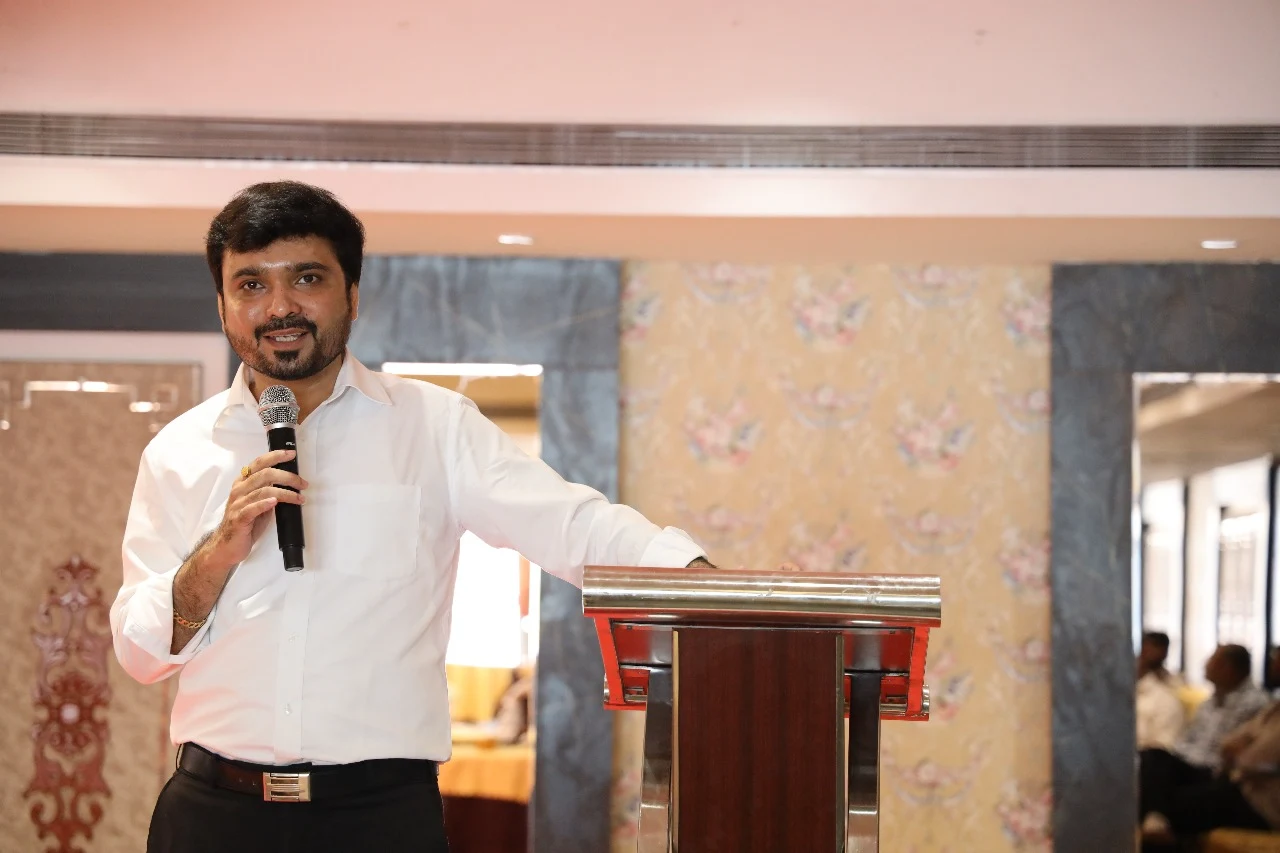
Indian working professionals lose nearly 2 hours daily to context-switching, meeting overload, and notification chaos — McKinsey India research shows productive deep work has dropped from 4 hours to 2.3 hours since 2020. Here is the time management playbook I have taught across 1,000+ corporates from Bajaj Auto to RBI: cut what does not compound, automate what does.
TL;DR- Block 3 hours daily for deep work — guard it like a board meeting
- Batch shallow tasks into one 90-minute window — don't sprinkle them across the day
- Cut meetings to 25 minutes — Parkinson's Law works for time as much as money
- Default to async — only meet when decisions need real-time alignment
- Audit your calendar weekly — kill anything that didn't move a metric
Why are Indian professionals so time-poor in 2026?
Indian professionals work an average of 51 hours per week — among the highest globally. Yet productivity per hour is 30% below US and European peers. Why? Three reasons. First, meeting culture: 18 hours per week in meetings on average. Second, notification overload: 178 phone interruptions daily per LocalCircles 2026 survey. Third, weak boundaries between work and personal life since WFH normalized. Companies like Infosys and TCS have started "no-meeting Wednesdays" but the real shift happens at the individual level.
How do top corporate leaders manage 60-hour weeks without burnout?
Trust me — leaders who actually deliver 60-hour weeks without burnout share three habits. They protect 3 hours daily for deep work with no calls, no Slack, no email. They batch all reactive tasks like emails and approvals into a single 90-minute afternoon block. They run weekly calendar audits where every recurring meeting gets reviewed every quarter. I have seen this transform CXOs at L&T and Mahindra — meetings dropped 40%, output rose, and most importantly, weekend work disappeared.
| Practice | Time Saved/Week | Difficulty | Impact |
|---|---|---|---|
| 3-hour daily deep work block | 5-7 hrs | Hard | Very High |
| Batch email/Slack to 2 windows | 3-4 hrs | Easy | High |
| 25-min meetings instead of 60 | 4-5 hrs | Medium | High |
| Weekly calendar audit | 2-3 hrs | Easy | High |
| No-meeting Wednesdays | 4-6 hrs | Medium | High |
| Source: McKinsey India 2026, Cal Newport Deep Work, Avinash Chate client benchmarks |
What is the difference between deep work and shallow work in practice?
Here is the thing — deep work means focused, undisturbed work that creates lasting value: writing strategy, building a deck, designing a process. Shallow work is reactive: replying to emails, attending status updates, responding to chats. Most professionals do 80% shallow, 20% deep. Top performers flip it. Cal Newport's research shows deep work output is roughly 4 times shallow work output per hour. Block 9 AM to 12 noon for deep work — that is when your prefrontal cortex peaks.
Which time management tools actually save time for Indian executives?
The good news is most Indian executives don't need expensive tools. Google Calendar to block deep work in advance, Notion as a single source of truth for all projects, Slack with notifications OFF during deep blocks, and a good notebook beat any "productivity app". KPIT and Persistent are training their managers on this stack. The exception: AI tools like Claude and ChatGPT for first drafts of emails, decks, and reports — that is where the real time savings of 2026 sit. Used right, AI saves 5-7 hours per week.
How to handle WhatsApp, email and team chats without losing focus?
WhatsApp and email handling — what most people don't realize is the cost isn't the time spent reading messages, it's the context-switching. Each WhatsApp ping costs roughly 23 minutes of refocus time. Solution: turn off WhatsApp and Slack notifications during deep work blocks. Check email at 11 AM, 3 PM and 6 PM only. Use auto-responders for routine queries. Bajaj Auto's senior managers run this exact protocol — meeting load is down 35%, decision latency is down 40%.
What is the ROI of time management training for Indian companies?
The ROI of time management training for Indian corporates is concrete and measurable. Companies that invest 2-3 days training their managers see: 35% fewer meetings, 25% faster decision-making, 18% rise in employee satisfaction scores, and lower attrition. At our recent training for a Pune IT company with 250 employees, the team saved an estimated 2,400 hours in the first quarter alone. That is roughly ₹1.2 crore in salary cost recovered, just from cutting useless meetings and protecting deep work blocks.
Book Avinash Chate for Your Next Event
TEDx speaker. 11+ yrs training Army, BRO, RBI, BARC, JSW. Available for keynotes, leadership training, team building & manager development at your office or event venue.
✅ Thanks! Avinash's team will reach out within 24 hours.'}).catch(function(e){f.outerHTML='Something went wrong. WhatsApp +91 8793630001
'});return false;">Select ServiceKeynote / Motivational SpeakingLeadership Development TrainingTeam Building WorkshopManager DevelopmentEmployee TrainingOutbound TrainingBook Avinash Now →Or WhatsApp directly: +91 87936 30001
Frequently Asked Questions
How much deep work should Indian professionals aim for daily?
Three hours of uninterrupted deep work daily is the gold standard backed by research. Cal Newport's studies and our work with Indian corporates confirms this is achievable for 90% of professionals. The trick is consistency — same time every day. Most of our trainees at Bajaj, L&T and Infosys block 9 AM to 12 noon as their "Do Not Disturb" window. That is when complex decisions and creative work get done. Anything above 4 hours daily leads to mental fatigue.
What is the biggest time-waster for Indian managers in 2026?
Meetings. The average Indian middle manager attends 17-20 meetings per week, many of which could be a 5-line email or async update. McKinsey India's 2025 report showed Indian managers spend 21 hours per week in meetings — 35% more than US peers. The fix: every recurring meeting needs a written agenda, a decision being made, and a clear stop-time. If those three aren't there, kill the meeting.
Should I respond to my boss's WhatsApp messages immediately?
Trust me — no. Setting expectation that you respond within 2-3 hours during work hours is healthier and more sustainable than instant response. Top performers I have trained at TCS and Infosys agree on a "WhatsApp protocol" with their teams: urgent = call, important = WhatsApp with 2-hour SLA, FYI = email. Most bosses appreciate this once explained. A Pune unicorn CEO told me: I respect people who manage their time, not their phone.
Which time management training format works best for Indian corporates?
Two-day intensive in-person workshops with role-plays produce the best behavioral change. Online webinars give knowledge but rarely change habits. We run the "Time Mastery for Indian Leaders" program at client offices in Pune, Mumbai, Bangalore, Nagpur and Sambhajinagar — 2 days, max 25 participants, includes individual calendar audits and 4 weekly follow-up calls. Typical investment ₹1,500-2,500 per participant. ROI in saved time: 30-50 times the investment.
ACAvinash Chate
India's Leading Corporate Trainer | TEDx Speaker | Author
With 80+ organizations trained including RBI, JSW Steels, and Ferrero, Avinash Chate delivers high-impact corporate training across India. Creator of the KITE Leadership Framework and bestselling author of "The Winning Edge."
Website YouTubeRelated Articles by Avinash Chate
- From Reaction to Leadership: Mastering Emotional Control at Work
- The Drama Triangle at Work: The Hidden Pattern Destroying Team Performance
- The Ferob Model: Understanding People Before Managing Them
Avinash Chate TEDx Speaker · Founder, The Future Corporate · 11+ yrs experience Avinash has trained Indian Army, BRO, RBI, BARC, JSW Steel and 1000+ corporate leaders across India. His work focuses on leadership development, communication skills, and behavioural training rooted in Indian values and modern business needs. |
Avinash Chate services
Corporate Trainer in Chhatrapati Sambhajinagar (Aurangabad) · Top Corporate Trainers in Maharashtra · Leadership Trainer in Chhatrapati Sambhajinagar (Aurangabad) · Top Leadership Trainers in Maharashtra · Team Building Trainer in Chhatrapati Sambhajinagar (Aurangabad) · Top Team Building Trainers in Maharashtra · Motivational Speaker in Chhatrapati Sambhajinagar (Aurangabad) · Top Motivational Speakers in Maharashtra · All service locations
← Back to all articles · Book Avinash Chate
By Avinash Chate — Maharashtra’s #1 Corporate Trainer & Motivational Speaker. .