Behavioural Trainer in Mumbai
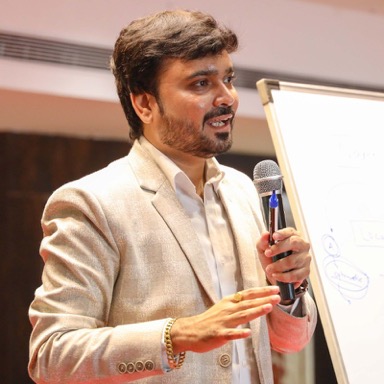
Mumbai teams burn out fast — long commutes, hybrid handover gaps, and silos across BKC, Powai and the Thane-Belapur belt. Avinash Chate, TEDx speaker and creator of The Winning Kite (KITE) framework, runs corporate behavioural training across BFSI, IT and manufacturing cohorts. Sessions run in English, Hindi and Marathi.
English, Hindi and Marathi
Why Mumbai Corporates Need Behavioural Training
Mumbai splits into five behaviour-load belts. BKC houses BFSI HQs where cross-vertical handover dominates. Andheri SEEPZ runs IT and BPO on tight SLAs. Powai is a deep-tech cluster around the IIT-Powai talent pool. Navi Mumbai — Vashi and Belapur — hosts BFSI back-offices and shop-floor manufacturing. The Thane belt carries heavy manufacturing and warehousing. The friction across these belts is not skill — it is behaviour. Behavioural training is what closes it.
Avinash's Behavioural Training Approach
The practice is anchored in two diagnostic instruments and one philosophy — behaviour is observable and changeable, but only with deliberate reinforcement.
The KITE Framework
The Winning Kite anchors every program across four pillars — EQ (emotional intelligence), RQ (relationships and trust), PQ (performance and delivery rituals) and Achievement (the 90-day scorecard that converts insight into outcomes). Read more at the KITE Leadership Framework.
The 25-Star Competency Framework
Mumbai cohorts are pre-scored across 25 observable workplace behaviours. The diagnostic decides which competencies the cohort actually needs to lift.
Behavioural Diagnostics
Pre-program interviews with the sponsor and a one-page diagnostic naming the actual behaviour gap. The flagship program is Becoming A Star At The Workplace.
Formats Available in Mumbai
Keynote for BKC town-halls. Half-day for a focused reset on one KITE pillar. 1-day in-house at BKC, Andheri SEEPZ, Powai, Vashi, Belapur or Thane. 2-day residential at Lonavala or Khandala for senior leadership and post-merger integration resets. Hybrid formats for distributed teams.
Recent Behavioural Engagement in Mumbai
A BFSI cohort headquartered in BKC recently ran a 2-day residential at Khandala for 36 mid-managers across operations, risk and product. The brief was sharp — siloed decision-making between Lower Parel product squads and Vikhroli operations was costing them two-week launch delays per quarter, and the root cause was behavioural: product escalated late, operations defaulted to blocking, and risk used jargon as defence. We anchored the engagement in the KITE framework, opening with EQ on disagreement etiquette, then RQ rebuilding through cross-tower challenges. PQ converted insight into three concrete rituals — a Monday cross-function stand-up, a shared escalation matrix, and a Friday retrospective. The cohort signed a 90-day behavioural scorecard before leaving. At the 30 and 60-day pulses, launch-delay frequency had narrowed by roughly half.
Frequently Asked Questions
What is behavioural training?
Behavioural training is structured behaviour change — not motivation, not a workshop high. It diagnoses the actual habits, default responses and team norms holding a cohort back, then rewires them through deliberate practice, debriefs and 90-day reinforcement. Avinash Chate's practice anchors every program in the KITE framework (EQ + RQ + PQ + Achievement) and the 25-Star Competency Framework so behaviour shifts are observable, not just felt.
How long is a behavioural training program in Mumbai?
Formats range from a 90-minute keynote at a BKC town-hall, to a half-day or 1-day in-house at Andheri SEEPZ or Powai, to a 2-day residential at Lonavala or Khandala. Most Mumbai HR partners pick a 1-day in-house for first cohorts and a 2-day residential for senior leadership or post-merger integration resets.
Can sessions be delivered in Marathi or Hindi?
Yes. Sessions run in English, Hindi and Marathi. BFSI cohorts at BKC and Lower Parel typically run English-led; Thane belt, Vashi and Belapur manufacturing or operations cohorts respond materially better to Hindi-Marathi mixed delivery.
Do you provide post-program reinforcement?
Every Mumbai engagement closes with a 90-day reinforcement plan — a signed behavioural scorecard, 30-day and 60-day pulse check-ins, and a structured debrief at day 90 with the sponsoring HRBP. Behaviour change without reinforcement decays inside three weeks; reinforcement is non-negotiable.
Our teams are split between BKC and Andheri East. One venue or two runs?
Two short runs, almost always. The same programme is delivered at each location on back-to-back days, attendance and punctuality hold because nobody is fighting the trains, and both cohorts are debriefed with the sponsor as one group so the message stays single.
Have you worked with Mumbai organisations, or is Mumbai new ground for the practice?
Sessions have been delivered for the Reserve Bank of India and the Mumbai Port Authority, and the wider national roster spans JSW Steel, Hitachi Astemo, Ferrero, BARC and the Indian Army. Mumbai sits inside the home belt: the largest share of work across 80-plus organisations has been delivered in the Pune–Mumbai corridor.
Explore More
The BFSI floor and the agency floor ask different questions
Banking and financial services generate Mumbai's steadiest briefs: relationship managers and branch teams carrying quarter targets, team leaders inheriting reportees older and longer-tenured than themselves, and floors where compliance has taught everyone to write emails instead of having conversations. Around results season the friction is predictable: targets against capacity, credit against sales. What keeps it professional is a manager who can hold a straight conversation, and that is a smaller population than any org chart suggests.
The Lower Parel economy asks for something else. Agencies and media houses mint managers young, run them through pitch cycles and lose them fast. The brief is usually about leading creative people without flattening them, and about a twenty-nine-year-old suddenly running a team of six. Pharma headquarters ask for field-force effectiveness and first-line manager development. The port and logistics companies on the eastern side ask for supervisor communication, shift discipline and safety conversations that actually land.
Across all of them runs Mumbai's version of the national problem: the first-time manager. The city promotes fast, teams are lean, and the step from top performer to team leader arrives without notice. Whether the floor is a dealing room, a newsroom or a container yard, the failure pattern is identical. Feedback avoided. Delegation hoarded. Escalations sent upward instead of conversations held downward. And it responds to the same disciplined work on communication and emotional intelligence.
Design the session around the fast local
Attendance in this city is a railway question before it is an engagement question. Teams live along the Western, Central and Harbour lines. A 9 am start in BKC is a 6 am alarm in Virar or Dombivli, and a session that runs past six begins dissolving as people quietly calculate their train. Mumbai buys tight formats for good reason: crisp half-days, one-day programmes that start at 9:30 and land by 5:30, and staggered batches so a branch network or a trading floor is never empty.
Venue logic follows the same arithmetic. A training room inside the office beats a hotel two line-changes away. For quarter-end teams the honest design is often two short runs rather than one long day, because pulling forty revenue-carrying people off a floor for eight hours is a real cost and everyone in the room knows it.
The room turns honest after the senior-most person leaves
There is a moment on a BKC banking floor that decides whether a session works, and it arrives when the senior-most person in the room walks out. Until then the answers are correct, brief and useless. Everyone is aligned. Escalation works well and feedback is given regularly. Nobody in that room is lying. They are doing the arithmetic every employee in every company does, and weighing one honest sentence against a career gives an answer that is entirely sensible.
So the design has to buy that candour rather than hope for it. Sometimes it is as simple as the sponsor opening the session, saying plainly why the programme exists and then going back to work. Sometimes it is splitting a mixed-grade room into two runs, so that nobody has to practise a difficult conversation while their own boss watches. Sometimes it is working on paper before anybody speaks, because a written answer is easier to give than a spoken one when the room is ranked.
None of this is unique to Mumbai. It is a hierarchy problem, and this city simply carries more hierarchy per square foot than most. Seniority in the room changes what gets said, and every floor here has seniority in the room. A trainer who fails to clear that hurdle in the first hour earns a polite, well-rated session and changes nobody's behaviour on Monday.
Three languages in one training room
English carries Mumbai's boardrooms. Hindi is the floor's lingua franca. Marathi is the register of the public sector, the docks and much of the front-line workforce. A single session for a branch network or an operations team can move through all three inside an hour, and the trainer has to move with it rather than parking in English and losing the back half of the room. Avinash delivers in all three and switches as the room requires, which is exactly what this city's mixed floors need.
Switching register in the middle of a room is a distinct skill, and it is not the same thing as translating. It means noticing inside the first fifteen minutes that a point is landing with the front three rows and sliding off the back four. The fix is almost never to repeat it more slowly. The fix is to change who the example belongs to, so the same idea arrives carried by a story from a branch counter rather than a boardroom, in the language that counter actually runs on. Then say so out loud. A room told the switch is deliberate settles; a room that suspects the trainer is improvising does not.
Register matters as much as language. A regulator's floor, the port's operational hierarchy and a private bank's sales floor each carry a formality of their own. A session pitched at the wrong one is dismissed inside the first few minutes. Reading that register early, in the diagnostic rather than in the room, is part of the craft.
On the record: real work connected to Mumbai
These are specific, verifiable engagements — named organisations and what was actually delivered — not a generic client wall.
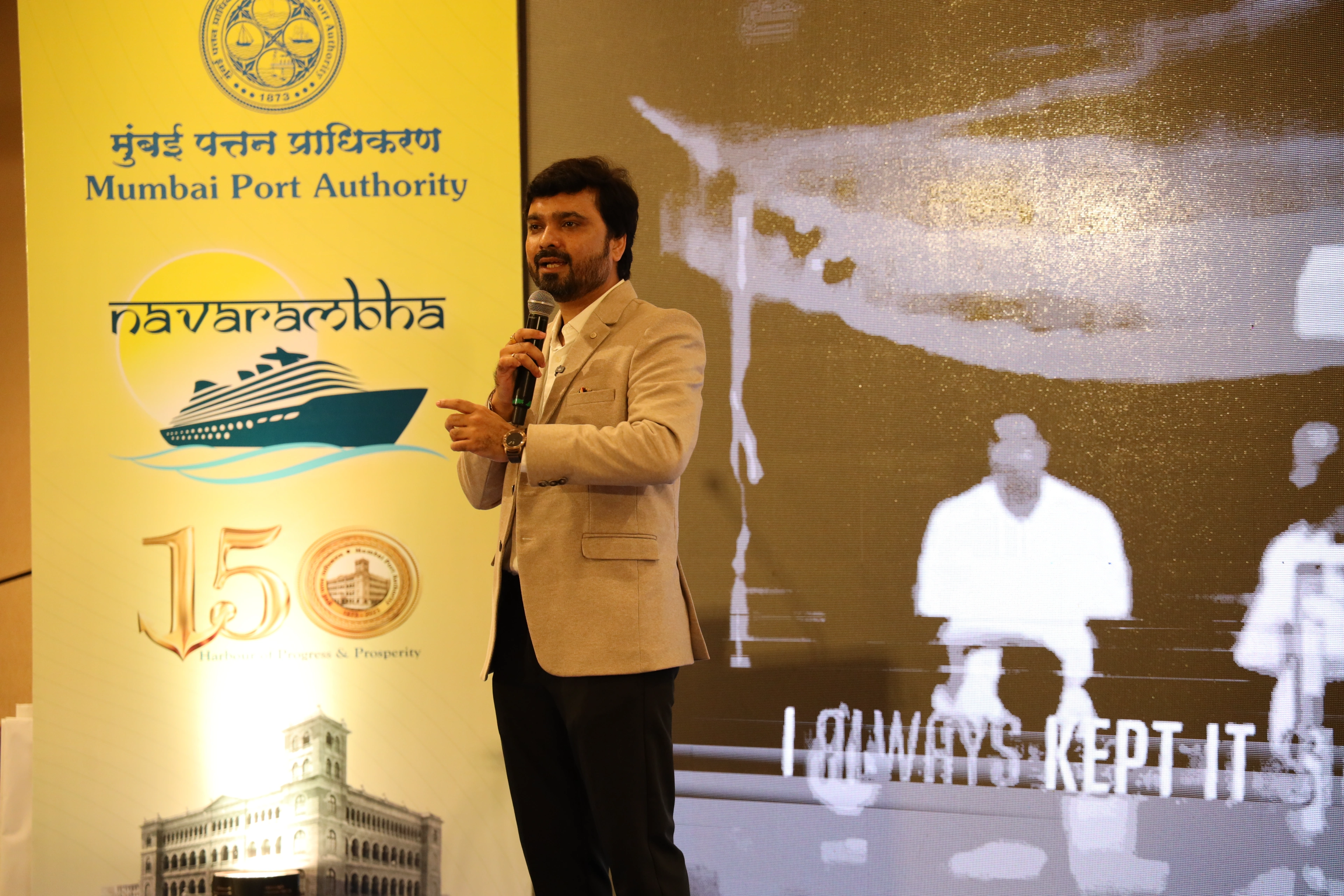
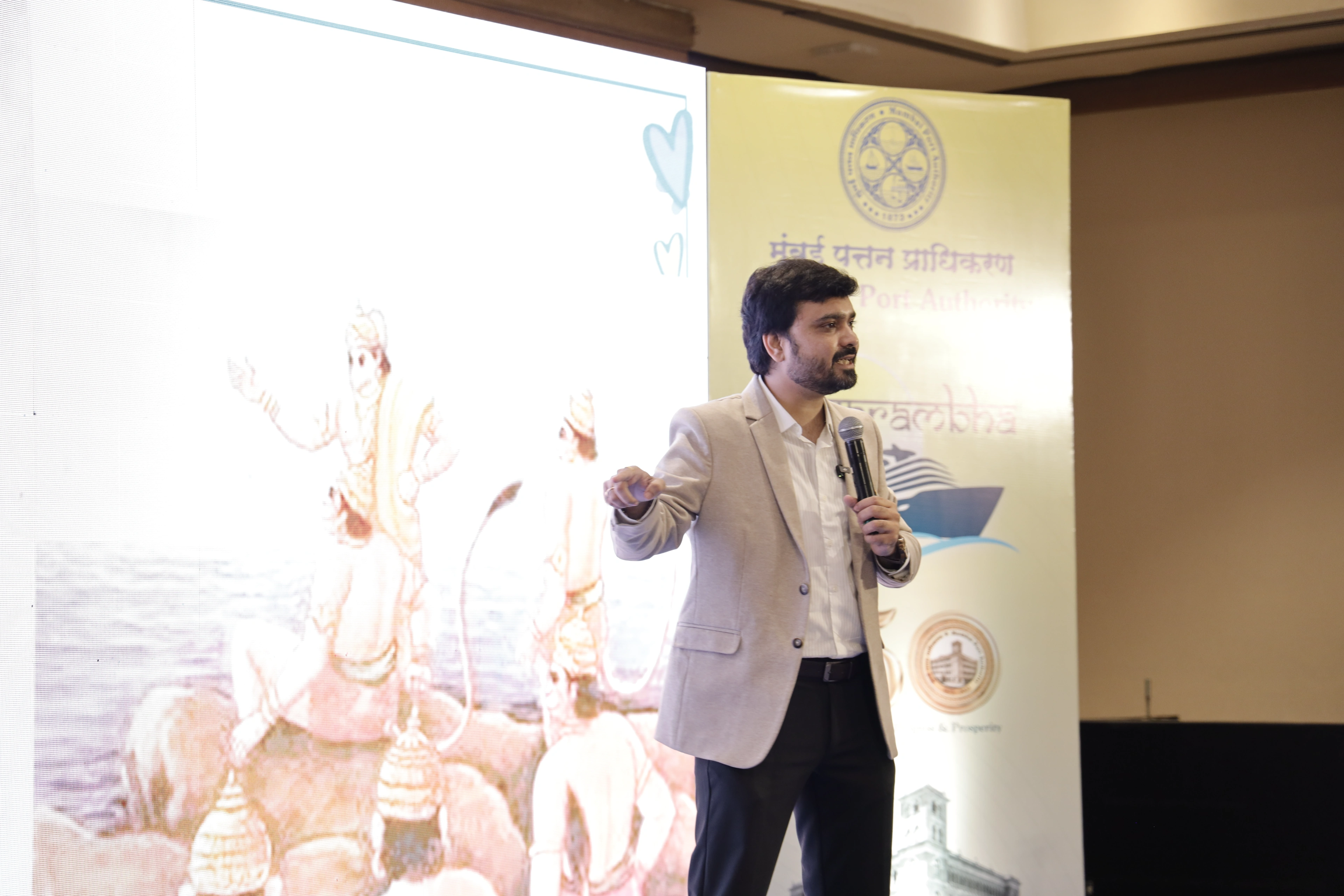
Mumbai Port Authority
Navarambh induction programme for newly recruited officers
Held at Taj President, Cuffe Parade in November 2025 for the authority’s young officers; published as a first-party case study (published record).
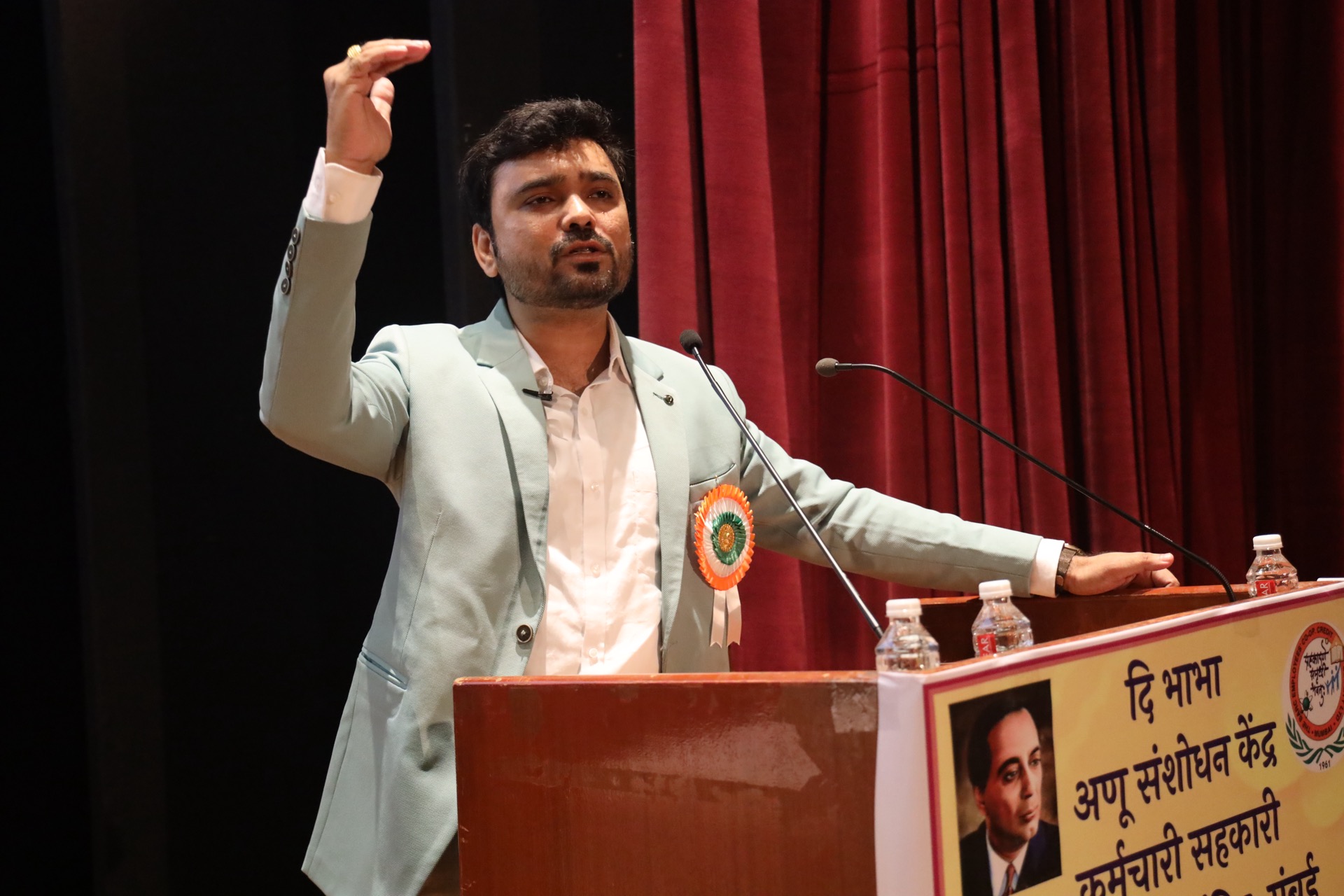
Bhabha Atomic Research Centre
Employee motivation and leadership session
Session for the BARC employees’ co-operative credit society in Mumbai, January 2025.
Thyrocare Technologies Ltd.
Business-growth coaching for the dealer network
Mumbai-headquartered diagnostics company; dealer coaching programme delivered in April 2024.
Gadharva Finchart Enterprises LLP
Training for financial advisors and sales consultants
Mumbai financial-services firm; two-day programme held in Mumbai in September 2025.
Daspati Maratha Charitable Trust
Chief-guest address
Community event at Shivaji Mandir, Dadar in November 2025.
From real sessions
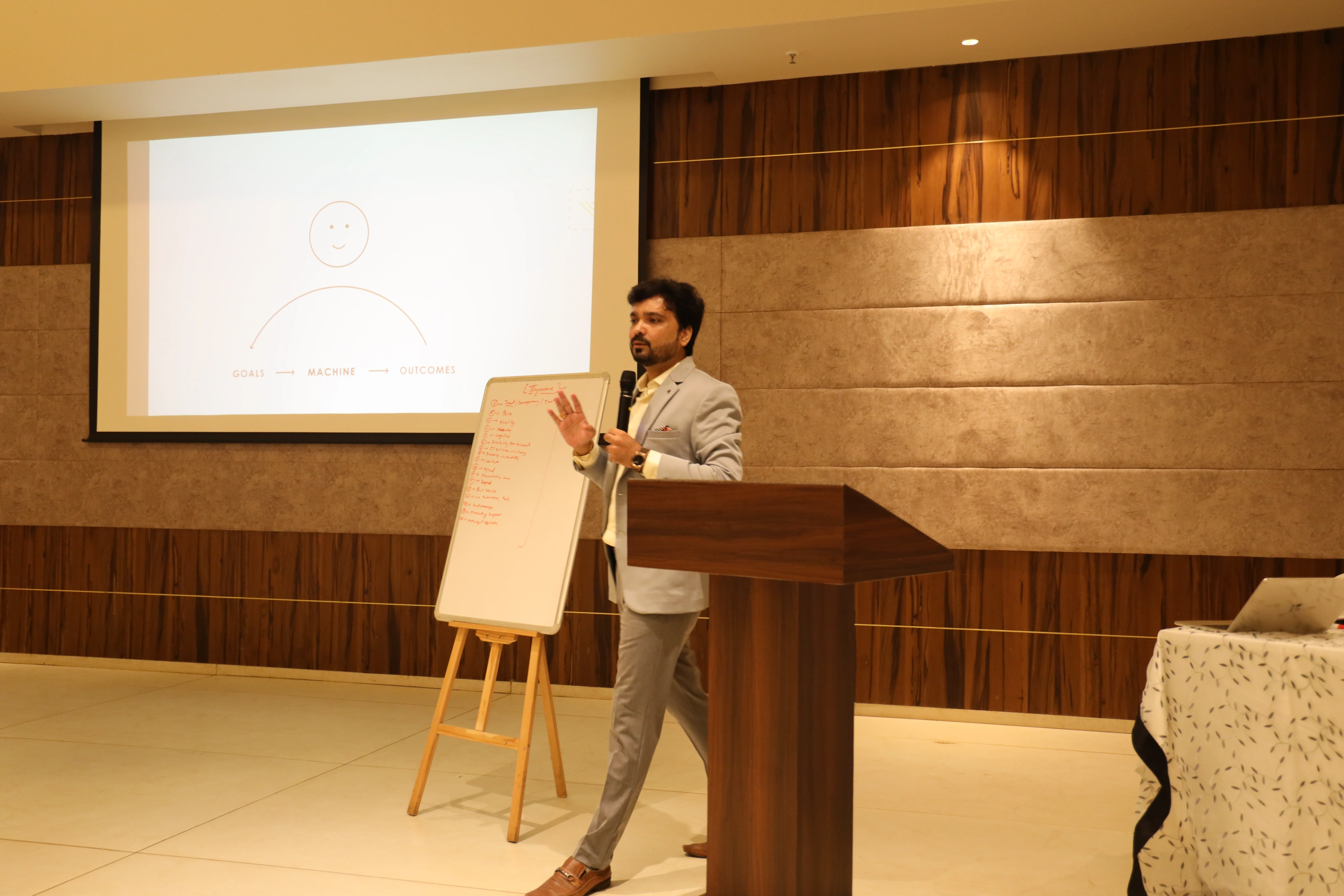
Real rooms, real teams — photographs from delivered sessions, not stock imagery.
Who He Has Trained
Plan Your Mumbai Behavioural Program
To scope a Mumbai program, share cohort size, location (in-house or off-site), preferred dates and the behaviour gap in one line. A diagnostic call follows within 48 hours.
Request a Proposal →Planning this for your team?
Share your name and WhatsApp number and you will get a reply within one business day — usually the same day. Tell us the audience, the objective and rough dates and you get a specific proposal.
Prefer to talk now? ☎ +91 87936 30001 · WhatsApp · Email