Behavioural Trainer in Nashik
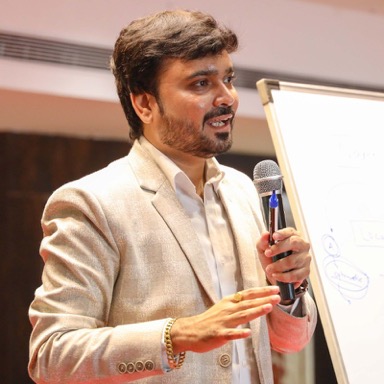
Nashik is one of Maharashtra's most under-rated industrial corridors — auto-component in Satpur and Ambad, engineering and pharma in Sinnar, and a fast-growing food processing cluster in Dindori. Avinash Chate, TEDx speaker and creator of The Winning Kite (KITE) framework, runs corporate behavioural training tuned to the Nashik workforce. Sessions run in English, Hindi and Marathi.
English, Hindi and Marathi
Why Nashik Corporates Need Behavioural Training
Satpur MIDC is the old centre — auto-component, defence engineering and electrical majors. Ambad MIDC carries light engineering, plastics and pharma. Sinnar hosts process industries and large engineering OEMs. Dindori is now one of western India's most active food processing belts. Each runs a different rhythm. A single regional HR head often manages cohorts across all four — and the behaviour gap across that spread is exactly what behavioural training closes.
Avinash's Behavioural Training Approach
The practice is anchored in two diagnostic instruments and one philosophy — behaviour is observable and changeable, but only with deliberate reinforcement.
The KITE Framework
The Winning Kite anchors every program across four pillars — EQ (emotional intelligence), RQ (relationships and trust), PQ (performance and delivery rituals) and Achievement (the 90-day scorecard that converts insight into outcomes). Read more at the KITE Leadership Framework.
The 25-Star Competency Framework
Nashik cohorts are pre-scored across 25 observable workplace behaviours. The diagnostic decides which competencies the cohort actually needs to lift.
Behavioural Diagnostics
Pre-program interviews with the sponsor and a one-page diagnostic naming the actual behaviour gap. The flagship program is Becoming A Star At The Workplace.
Formats Available in Nashik
Keynote for town-halls. Half-day for a focused reset on one KITE pillar. 1-day in-house at Satpur, Ambad, Sinnar or Dindori. 2-day residential at Igatpuri or Bhandardara for senior leadership and annual planning resets. Hybrid formats for distributed teams.
Recent Behavioural Engagement in Nashik
A Dindori-based food processing major recently ran a 2-day residential at Bhandardara for 28 plant supervisors and quality leads. The brief was sharp — food-safety audit findings had been trending up, and the root cause was behavioural: line supervisors prioritised throughput over visible food-safety calls, quality leads escalated late, and shift handovers skipped the food-safety section under pressure. We anchored the engagement in the KITE framework, opening with EQ on ownership and disagreement etiquette, then RQ rebuilding through cross-shift challenges. PQ converted insight into three concrete rituals — a non-negotiable food-safety section in every handover, a 10-minute escalation huddle, and a Friday quality retrospective. The cohort signed a 90-day behavioural scorecard before leaving. At the 30 and 60-day pulses, audit findings had begun to flatten.
Frequently Asked Questions
What is behavioural training?
Behavioural training is structured behaviour change — not motivation, not a workshop high. It diagnoses the actual habits, default responses and team norms holding a cohort back, then rewires them through deliberate practice, debriefs and 90-day reinforcement. Avinash Chate's practice anchors every program in the KITE framework (EQ + RQ + PQ + Achievement) and the 25-Star Competency Framework so behaviour shifts are observable, not just felt.
How long is a behavioural training program in Nashik?
Formats range from a 90-minute keynote at a Satpur or Ambad MIDC town-hall, to a half-day or 1-day in-house at Sinnar or Dindori plants, to a 2-day residential at Igatpuri or Bhandardara. Most Nashik HR partners pick a 1-day in-house for first cohorts and a 2-day residential for senior leadership or annual planning resets.
Can sessions be delivered in Marathi or Hindi?
Yes. Sessions run in English, Hindi and Marathi. Marathi is the default for Nashik shop-floor and supervisor cohorts across Satpur, Ambad, Sinnar and Dindori — bilingual delivery materially lifts participation and 90-day behaviour retention.
Do you provide post-program reinforcement?
Every Nashik engagement closes with a 90-day reinforcement plan — a signed behavioural scorecard, 30-day and 60-day pulse check-ins, and a structured debrief at day 90 with the sponsoring HRBP. Behaviour change without reinforcement decays inside three weeks; reinforcement is non-negotiable.
Can one programme cover our Satpur plant and our Sinnar unit together?
Yes, and it is usually the better choice. Mixing the two units into common cohorts builds the cross-plant relationships that vendor groups otherwise never form, and the 30-60-90 day follow-through then runs at both sites with the same language and the same yardstick.
Our supervisors are strongest in Marathi and the plant runs three shifts. How is that handled?
Marathi-first delivery is standard for supervisory cohorts in Nashik, with Hindi and English mixed in wherever the plant's own vocabulary lives. For shifts, the usual answer is two batches in one day: one before shift handover, one after. No line stops, and no supervisor sits through training at the end of a night shift.
Explore More
Wine, onions and the other Nashik economy
The district that machines aerospace components also grew India's wine story. Nashik's vineyards earned it the wine-capital title, and wine tourism has built a genuine hospitality workforce here. An hour away, Lasalgaon trades more onions than any market in Asia. Grape and onion exporters, winery tasting rooms and agro-processing units bring a completely different training need: seasonal teams that swell at harvest, customer-facing staff who must carry a premium brand, founding families professionalising a second generation.
A useful Nashik engagement respects both halves of the city. The morning cohort may be maintenance engineers from Satpur, the afternoon a sales team that spends its week on the roads between Pimpalgaon, Lasalgaon and Sinnar. The examples change entirely. The standard does not.
Mixed-day engagements of that kind are harder to design than they look, because the two cohorts have completely different relationships with the word standard: a maintenance engineer hears it as a specification he can point to, while a tasting-room host hears it as a mood she has to produce on demand for a stranger who has driven ninety minutes to be impressed. The bridge between them is that both jobs are finally judged by somebody who was not present when the work was done, and once a room accepts that, the same practice serves both halves of it. That is also why the diagnostic conversation with a Nashik sponsor covers the whole company even when the enquiry names only one part of it.
How an engagement actually runs here
Every serious Nashik programme starts with a sponsor diagnostic, which means sitting with the plant head or HR manager and naming the two or three behaviours that must visibly change on the floor. Then the session itself, built on the KITE leadership framework and the EQ, PQ and RQ lens Avinash writes about in The Winning Edge. Then the part most cities skip: a 30-60-90 day practice arc, with each participant's own manager pulled into the follow-through. A workshop that ends when the banner comes down changes nothing by Monday.
Delivery is trilingual by design. A Nashik supervisory cohort hears Marathi for the emotional truth and Hindi for shop-floor examples, with English carrying the vocabulary their appraisals are written in. That code-switching is not a compromise for weak English. It is what makes the room honest. It also settles the perennial argument between HR, which wants English handouts for the file, and the floor, which wants the real conversation, since a session can honour both without shortchanging either.
There is a moment in most supervisory sessions here when the room changes language on its own, and I have learned to wait for it rather than manage it. The first hour runs in the vocabulary of the appraisal form. Then somebody describes a real incident, and to describe it accurately he has to leave English behind, so the sentence arrives in Marathi and sometimes with more feeling than he intended. That is the point at which a session stops being a course and starts being a conversation. The only useful thing a trainer can do is follow the room instead of pulling it back.
What Nashik organisations most often ask for
First-line supervisor and shift-leader development tops the list. After it come middle-management programmes for engineers moving into people roles, then sales and dealer-network discipline for the auto and agri brands that sell out of this city. Campus-to-corporate work for the engineering graduates the estates absorb every year sits close behind. Pharma units ask for behaviour that supports their GMP obligations: deviation reporting, cross-shift handovers, accountability that survives an inspector's visit. And because Nashik retains talent against the pull of Pune and Mumbai, plant heads increasingly frame training as a retention argument. People stay where they are led well and can see themselves growing.
The national roster matters here in one honest way. Programmes Avinash has delivered across India for the Reserve Bank of India, JSW Steel, Hitachi Astemo, BARC and the Indian Army were built to a standard, and a Nashik vendor plant gets exactly that standard. Nothing about a district posting dilutes the design.
On the record: real work connected to Nashik
These are specific, verifiable engagements — named organisations and what was actually delivered — not a generic client wall.
Morbull Solution Pvt. Ltd.
Sales training and business coaching (two-day programme)
Nashik-based financial-services company; the two-day programme ran in April 2025.
Who He Has Trained
Plan Your Nashik Behavioural Program
To scope a Nashik program, share cohort size, location (in-house or off-site), preferred dates and the behaviour gap in one line. A diagnostic call follows within 48 hours.
Request a Proposal →Planning this for your team?
Share your name and WhatsApp number and you will get a reply within one business day — usually the same day. Tell us the audience, the objective and rough dates and you get a specific proposal.
Prefer to talk now? ☎ +91 87936 30001 · WhatsApp · Email