The 7 Habits of Highly Effective People Book Review: Lessons for Student Founders from HNIMR
The Covey's Crew showed how poor habits can sink a product launch. Here is what the 7 Habits teaches a first-time founder in India.
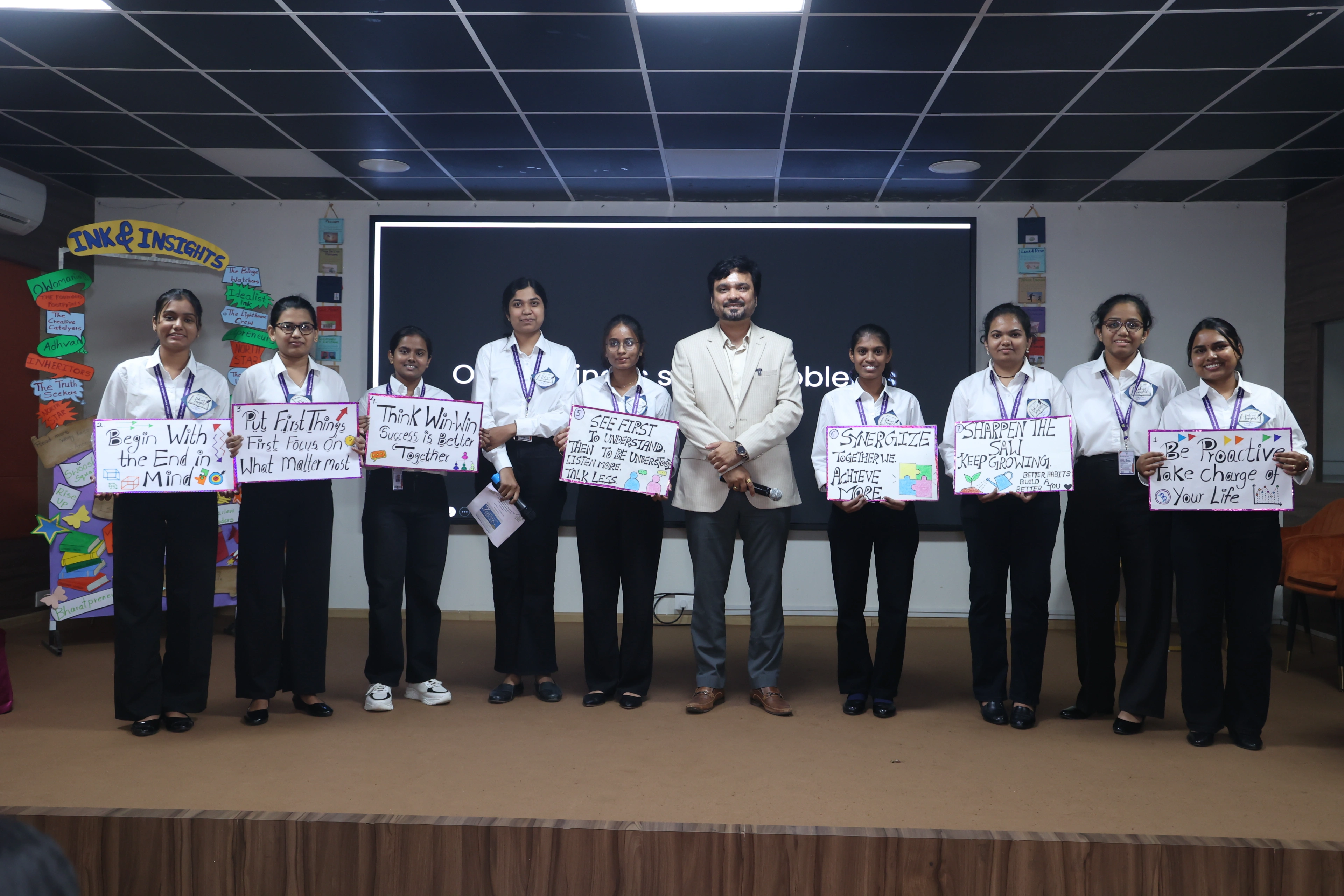
What makes a business, or a person, truly successful? Intelligence? Talent? Money? Or the habits they practise every day? That was the question The Covey's Crew opened with at "Ink & Insights", the book review competition at MKSSS's Smt. Hiraben Nanavati Institute of Management and Research for Women (HNIMR), Karvenagar, Pune, on 29 October 2026.
I was there as chief guest and judge. Of all the books on the list, The 7 Habits of Highly Effective People by Stephen R. Covey is the one most people have heard of. It was first published in 1989. It is not strictly a startup book. But I have seen many good ideas fail because of bad habits, so I was keen to hear how the team would connect it to entrepreneurship.
A product launch that went wrong
The team's point was simple. Every organisation has talented people, yet many fail to work well together. The reason is not talent. It is ineffective habits. To show this, they staged a short play about a team preparing a business launch, where blame, poor planning and last-minute confusion take over.
They then walked through the seven habits and showed, one by one, how each would have saved the launch:
- Be proactive. Take responsibility instead of blaming others. Effective leaders focus on what they can control rather than making excuses.
- Begin with the end in mind. If the team had planned the launch, budget and deadlines early, the last-minute confusion could have been avoided.
- Put first things first. Being busy is not the same as being productive. Designs, budgets and marketing plans should have been final before the deadline.
- Think win-win. Look for solutions rather than fighting over the situation.
- Seek first to understand, then to be understood. A good leader listens carefully, and only then acts.
- Synergise. Combine everyone's strengths. If someone falls behind, bring them along.
- Sharpen the saw. Keep learning and improving, review your mistakes and plan better.
Then came a moment no script could plan. The team's video would not play. Instead of freezing, the presenter said they were in exactly the situation the fourth habit talks about. The video was not playing, so they would think about the situation, handle it and move on. That was the book in action, live on stage. I have seen senior managers handle a failed projector with less grace.
My questions to The Covey's Crew
I asked a simple question: among these seven habits, which is your favourite? One student said be proactive. Another said think win-win. A third chose begin with the end in mind, setting the goal first.
I also noticed their handmade charts. The lettering on all seven looked like one person's hand, so I asked who had made them. Two teammates had shared the work, three charts and four charts. When two people can make work look like one, that is synergy you can see.
The team closed with a line I liked: before leading others, we should lead ourselves. That is exactly how Covey builds the book. The first three habits are about winning inside, and only then do the next three help you win with others.
For a student founder, this order matters. Many of us want to jump straight to pitching investors and hiring a team. Covey would say: first become someone who keeps promises to yourself, plans ahead and takes responsibility. Then other people will find it easy to trust you.
Five lessons for a first-time founder
1. Stop blaming, start controlling what you can
Covey talks about the circle of influence and the circle of concern. You cannot control the economy, a competitor or the weather. You can control your follow-up, your quality and your response. Founders who spend their energy inside their circle of influence move faster.
2. Plan backwards from launch day
Begin with the end in mind is the most practical habit for a student founder. Write down the date, the budget and the result you want. Then work backwards: what must be ready a week before, a month before? The team's skit showed what happens without this. Everything piles up on the last day.
3. Do the important work before it becomes urgent
Most of us spend the day answering what is loud. Put first things first means blocking time for what matters, such as talking to customers, fixing the product and planning cash, before it turns into a crisis.
4. Make your first deals win-win
Your first supplier, your first employee and your first co-founder will remember how you treated them. If only you win, the relationship will not last. Covey's idea of the emotional bank account fits here: trust grows through small, steady deposits.
5. Sharpen the saw so you do not burn out
Founders love to work 18-hour days and call it passion. Covey asks you to renew body, mind, heart and spirit. Sleep, reading, family and exercise are not breaks from the business. They keep you able to run it.
What I took away
The Covey's Crew made an old book feel new by putting it inside a business story everyone could relate to. Their best moment was not on a slide. It was when the video failed and they stayed calm. A habit is what you do when there is no time to think, and that day they showed theirs.
If you run a college or company
I run book-review and entrepreneurship sessions, and habit-building workshops for students and teams, built on books like this one and on real workplace situations. If you would like one for your campus or company, get in touch here.
With thanks to HNIMR
My thanks to Dr. Priyanka Singh, Director of HNIMR; Mrs. Manjushree K. Nawale, Librarian, and her library team, who organised Ink & Insights 2026; Mr. Vishwajeet Deshmukh, Placement Officer; Mr. Devadatta Sant; and Ms. Minal Kotwal, for hosting me so warmly and making the day run so smoothly. And to every student who stood on that stage with a book in hand: thank you for the courage and the creativity.
Related Articles by Avinash Chate
- Be a Hyper-Realist: Ray Dalio's Radical Approach to Seeing Business Truth
- No Shortcuts Book Review: 5 Founder Lessons from HNIMR Pune
- Ink & Insights 2026 at HNIMR Pune: 21 Books, 21 Lessons for Student Founders
Work with Avinash Chate
- Best Motivational Speaker in Maharashtra →
- Best Motivational Speaker in Mumbai →
- Best Motivational Speaker in Pune →
| AC | Avinash ChateIndia's Leading Corporate Trainer | TEDx Speaker | Author With 1000+ organizations trained including RBI, JSW Steels, and Ferrero, Avinash Chate delivers high-impact corporate training across India. Creator of the KITE Leadership Framework and bestselling author of "The Winning Edge." Website YouTube |
Avinash Chate services
Corporate Trainer in Maharashtra · Top Corporate Trainers in Maharashtra · Leadership Trainer in Maharashtra · Top Leadership Trainers in Maharashtra · Motivational Speaker in Maharashtra · Top Motivational Speakers in Maharashtra · All service locations
← Back to all articles · Book Avinash Chate
By Avinash Chate — Maharashtra’s #1 Corporate Trainer & Motivational Speaker. .