AI Will Replace You in 4 Years If You Ignore This
In today’s fast-changing corporate world, many professionals feel stuck when new technologies disrupt their comfort zone. One of the biggest challenges employee...
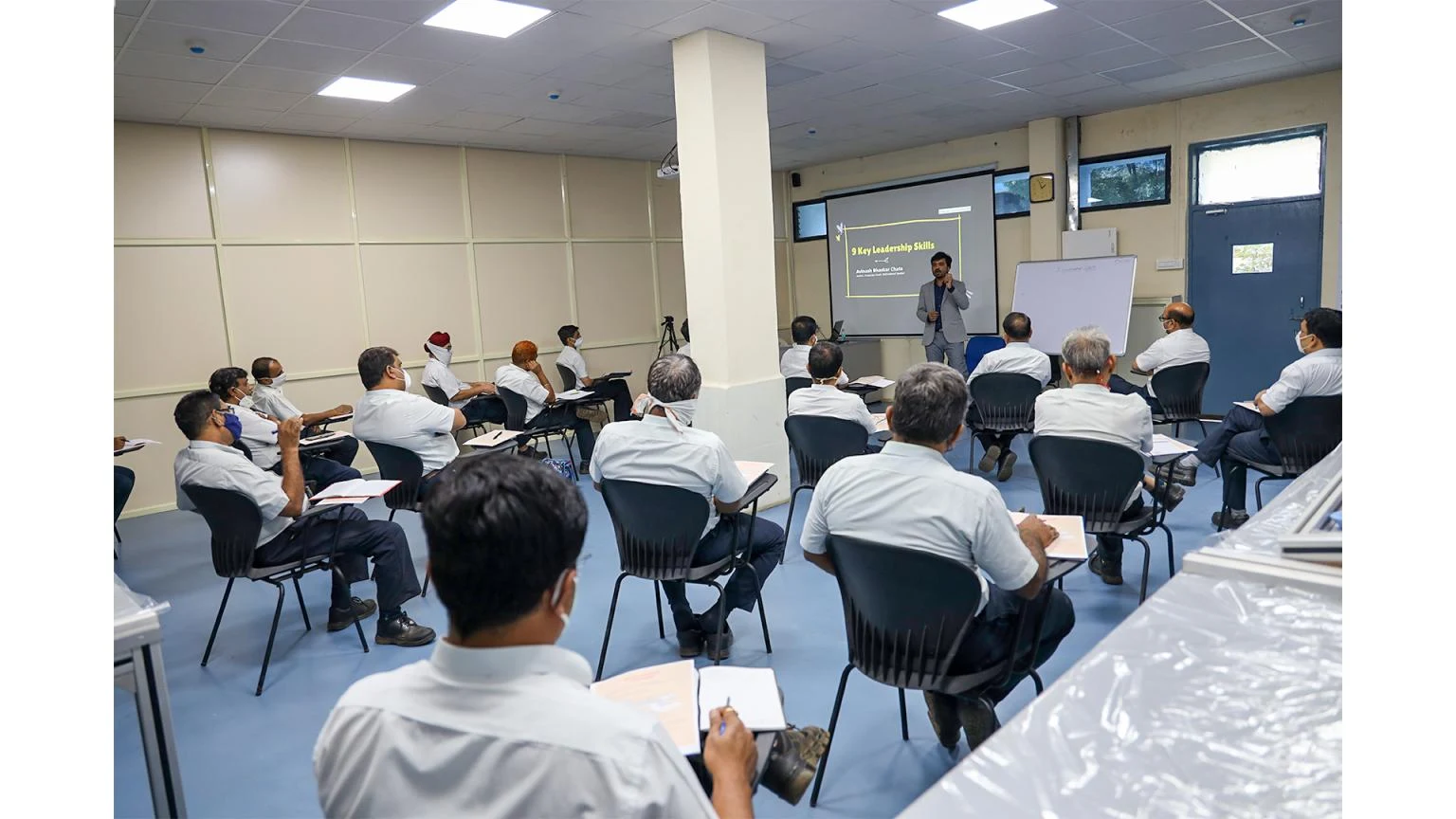
Here's the hard truth — AI won't replace you directly. Another professional who uses AI will, because they'll do your job twice as fast at half the cost. I've been saying this in sessions at TCS, Infosys, and Bosch for two years now, and the evidence is accelerating. AI/ML hiring in India grew +25% YoY and NASSCOM-Deloitte projects 1.25 million AI-ready professionals needed by 2027. The window to act is closing fast.
TL;DR- AI won't replace you — a human using AI will, and that's an urgent distinction
- AI/ML hiring in India grew +25% YoY — the premium for AI skills is already here
- The professionals most at risk are those actively choosing not to learn AI tools
- Adapting to AI is simpler than most Indian professionals think — it starts with 30 minutes daily
- Avinash Chate's framework gives Indian professionals a clear path to staying irreplaceable
The Real Reason AI Will Replace Some Indian Professionals But Not Others
The real reason AI will replace some Indian professionals isn't because AI is more intelligent. AI systems today are quite narrow — good at specific, well-defined tasks. The real threat is productivity multiplication. A financial analyst using AI tools can produce in one hour what took eight hours before. An engineer using AI code assistants produces in one day what took one week. When companies discover this productivity gap, they need fewer people doing the old way. The risk isn't AI — it's the professional who refuses to change.
Which Indian Professionals Are Most at Risk of AI Displacement in 2026?
The Indian professionals most at risk of AI displacement in 2026 are those in roles that involve high-volume, process-driven work: data entry operators, basic report writers, first-level customer service agents, junior legal researchers, and entry-level financial reconciliation staff. This doesn't mean these roles disappear overnight — it means headcount in these functions will shrink significantly over the next 4 years as AI efficiency compounds. If you're in one of these roles, the window to pivot is now, not when your position is eliminated. The warning isn't pessimism — it's the most useful information I can give you.
The Warning Signs That Your Role Is Being Automated Right Now
The warning signs that your role is being automated right now are visible if you know what to look for. Watch for these signals: your company is investing in AI tools for your department; processes that took your team days now take hours; management is talking about 'efficiency' and 'optimisation' more than 'growth'; junior roles in your function aren't being backfilled when people leave; and AI vendors are being invited to present to your leadership team. If you're seeing three or more of these signals in your organisation today, AI automation of your department is already in progress. Act now.
| Professional Type | Current AI Exposure | Urgency to Adapt | Recommended First Step |
|---|---|---|---|
| Data entry & basic processing roles | Very High — directly automated now | Immediate | Start AI tools course this week; pivot to QA/oversight role |
| First-level customer service | High — AI handles most routine queries | Within 6 months | Develop complex relationship management and escalation skills |
| Report writers & analysts | High — AI generates standard reports | Within 6 months | Focus on interpretation, strategy, and decision support |
| Software developers | Medium — AI augments, doesn't replace | Within 12 months | Learn to use AI coding assistants; move into AI architecture |
| Managers & team leaders | Low — human judgement still primary | Within 24 months | Develop AI governance and AI-powered team management skills |
| Senior specialists & consultants | Low — domain expertise still premium | Monitoring level | Add AI tools to amplify domain output and advisory value |
Why Ignoring AI Is the Most Dangerous Career Decision You Can Make in India
Here's the thing — ignoring AI is the most dangerous career decision an Indian professional can make right now, and I see it happening every day. The professionals I'm most worried about aren't the ones who are afraid of AI — fear can be overcome. I'm worried about those who are complacent, who believe their experience and tenure will protect them. Experience and tenure are valuable, but they don't override productivity economics. When companies realise that 5 AI-empowered employees can do the work of 20 traditionally-working employees, mathematics takes over. Complacency is the enemy.
The 5 Things You Must Do Right Now to Stay Irreplaceable in the AI Era
The 5 things you must do right now to stay irreplaceable in the AI era: First, pick one AI tool and use it daily in your actual work — ChatGPT, Copilot, or whatever your company provides. Second, identify which parts of your role are most at risk of automation and actively develop the human-unique elements — relationships, judgement, creativity. Third, complete one AI certification by end of Q2 2026 — NASSCOM FutureSkills and Google offer free options. Fourth, become your team's go-to person for AI tool adoption — be the bridge, not the blocker. Fifth, have an honest career conversation with your manager about your AI development plan.
How Avinash Chate's Corporate Training Is Helping Indian Professionals Adapt to AI
In my corporate training programmes at TCS, Infosys, KPIT, and Bajaj Auto, I've seen the same pattern: the professionals who engage with AI early become the most valuable people in their organisations within 12-18 months. They get promoted faster, earn more, and have more job security — not because they're more technically gifted, but because they're more adaptable. I don't teach people to become AI engineers. I teach them to become AI-confident leaders who can direct, evaluate, and leverage AI tools in their specific domain. That's the skill that makes you irreplaceable.
Your 90-Day AI Adaptation Plan for Indian Professionals Who Are Starting Today
Your 90-day AI adaptation plan starts today. Day 1-30: install and daily-use one AI tool for your actual work tasks — drafting, summarising, researching, or analysing, depending on your role. Day 31-60: complete one structured AI fundamentals course (10-15 hours total) on Coursera, NASSCOM FutureSkills, or LinkedIn Learning. Day 61-90: identify and implement one AI-powered improvement to your team's existing workflow and document the results. By Day 90, you'll have practical AI experience, theoretical knowledge, and a visible contribution — the three things that make you the person your organisation invests in when restructuring happens. Don't wait for Day 91.
Book Avinash Chate for Your Next Event
TEDx speaker. 11+ yrs training Army, BRO, RBI, BARC, JSW. Available for keynotes, leadership training, team building & manager development at your office or event venue.
✅ Thanks! Avinash team will reach out within 24 hours.'}).catch(function(e){f.outerHTML='Something went wrong. WhatsApp +91 8793630001
'});return false;">Select ServiceKeynote / Motivational SpeakingLeadership Development TrainingTeam Building WorkshopManager DevelopmentEmployee TrainingOutbound TrainingBook Avinash Now →Or WhatsApp directly: +91 87936 30001
Related Articles by Avinash Chate
- The Ferrari Insult That Created Lamborghini — A Mindset Story India Needs
- The Dark Marketing Secret Behind Listerine That Changed Everything
- Why Corporate Success Feels Empty and What Truly Makes It Meaningful
Avinash Chate TEDx Speaker · Founder, The Future Corporate · 11+ yrs experience Avinash has trained Indian Army, BRO, RBI, BARC, JSW Steel and 1000+ corporate leaders across India. His work focuses on leadership development, communication skills, and behavioural training rooted in Indian values and modern business needs. |
Frequently Asked Questions
Will AI really replace Indian professionals in the next 4 years?
AI will replace some roles in their current form, but the more accurate picture is that professionals who use AI will replace those who don't. NASSCOM-Deloitte data shows 1.25 million new AI-related roles will be created in India by 2027 — even as certain process-heavy positions shrink. The net effect depends entirely on whether Indian professionals choose to upskill. The 4-year timeline isn't a scare tactic — it's the realistic window based on current AI adoption rates in Indian companies. Those who act now have a significant advantage over those who wait.
What types of Indian jobs are safest from AI replacement?
The Indian jobs safest from AI replacement are those requiring complex human judgement, emotional intelligence, physical dexterity in unpredictable environments, relationship management, and creative strategy. Doctors, counsellors, senior corporate trainers, strategic consultants, negotiators, and hands-on tradespeople have significant protection from AI automation in the near term. Roles that combine deep domain expertise with strong people skills are the most resilient. The pattern is clear: the more human interaction and unpredictable judgement a role requires, the safer it is from automation — and the more valuable it becomes as AI handles routine work.
How do I start learning AI skills if I have no technology background?
Starting AI learning without a technology background is easier than you think. Begin with ChatGPT or Microsoft Copilot — available free or through your company. Spend 20 minutes daily using these tools for tasks you already do: drafting emails, summarising documents, preparing presentations. After 2-3 weeks of daily use, you'll have more practical AI fluency than 80% of your colleagues. Then take one structured course — Google's AI Essentials or NASSCOM FutureSkills courses are designed for non-technical professionals. The key is practical daily use, not theoretical study. Start with your real work, not a tutorial.
How is Avinash Chate helping Indian professionals adapt to AI in his training programmes?
My AI adaptation programmes for Indian professionals are built around practical competence, not theoretical awareness. I use a three-step framework: first, we assess where each professional's role sits on the AI exposure spectrum. Second, we identify the human-unique strengths they should amplify while adopting AI tools. Third, we build a personalised AI integration plan that fits their specific role and industry. At TCS and Infosys, this approach has produced measurable results: participants report significant improvements in both productivity and career confidence within 90 days of the programme. The goal is always the same: make AI your greatest career asset, not your greatest anxiety.
Avinash Chate services
Corporate Trainer in Maharashtra · Top Corporate Trainers in Maharashtra · Leadership Trainer in Maharashtra · Top Leadership Trainers in Maharashtra · Team Building Trainer in Maharashtra · Top Team Building Trainers in Maharashtra · Motivational Speaker in Maharashtra · Top Motivational Speakers in Maharashtra · All service locations
← Back to all articles · Book Avinash Chate
By Avinash Chate — Maharashtra’s #1 Corporate Trainer & Motivational Speaker. .