Are You Solving the Wrong Problem? The Most Expensive Mistake in Business
Most managers work hard on the wrong problem. Learn how the Ackoff Diagnosis principle from The Winning Edge stops this costly mistake before it starts.
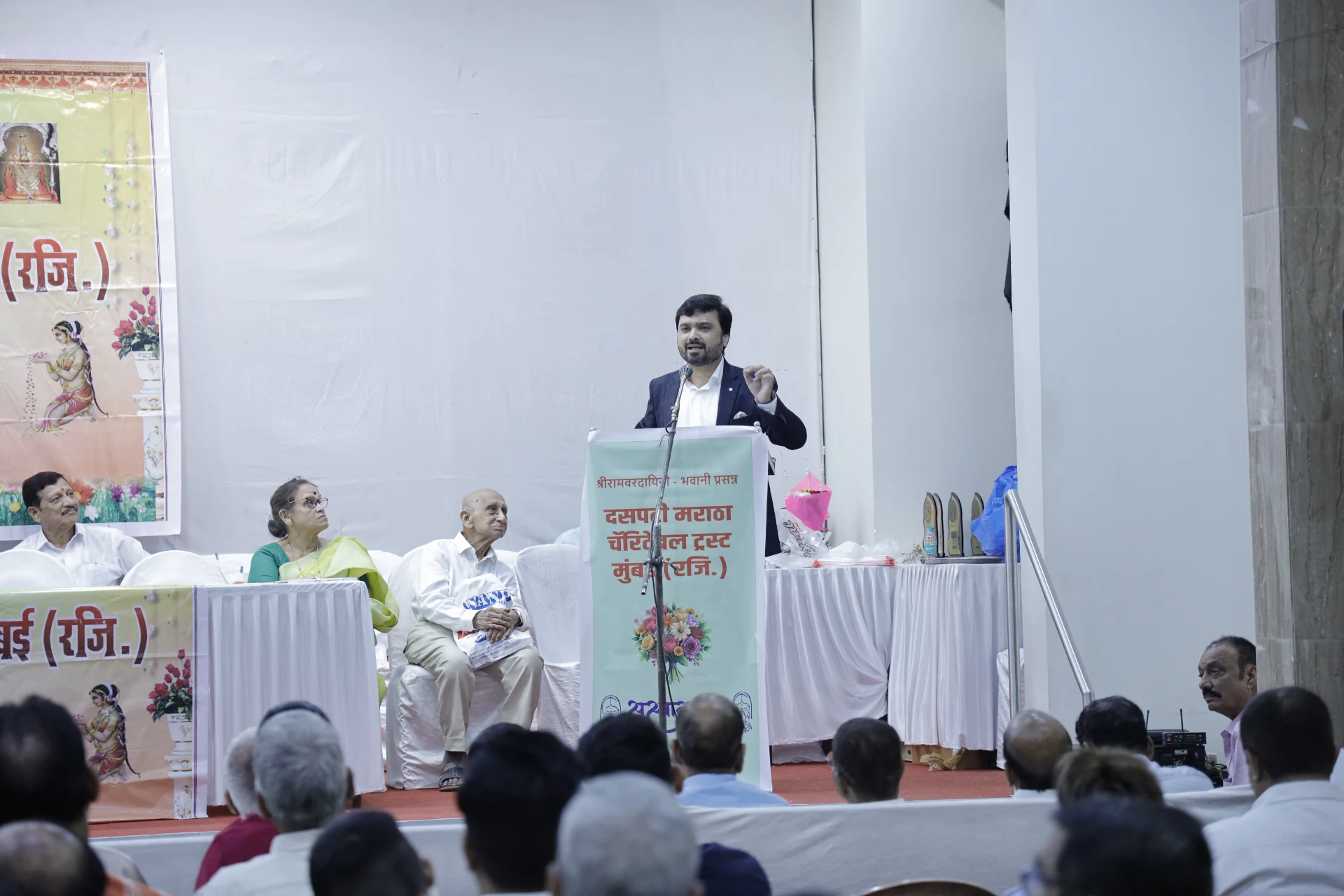
There is a moment I witness in almost every boardroom I walk into across Pune, Mumbai, and the rest of Maharashtra. A team is visibly stressed, a deadline is looming, and everyone is working furiously — yet the results are not improving. When I ask, "What problem are you solving right now?" the answers come fast and confident. But when I probe a little deeper, I find the same expensive truth: the team is solving the wrong problem.
In my book The Winning Edge, The Champion Mindset, I dedicate significant space to what I call the Diagnosis step — the discipline of correctly identifying the real problem before you invest a single rupee or a single hour in a solution. This idea is not new. Systems thinker and business professor Russell L. Ackoff said it best decades ago, and his words still hit like a hammer on Indian leadership today.
If you are a manager, a business owner, or a team leader, I want you to read what follows carefully. It could save your organisation more money, time, and morale than any productivity tool you will ever buy.
The Ackoff Warning Every Indian Leader Needs to Hear
Russell L. Ackoff was one of the sharpest systems thinkers of the twentieth century. He studied why organisations fail, and his conclusion was blunt and uncomfortable:
"We fail more often because we solve the wrong problem than because we get the wrong solution to the right problem." — Russell L. Ackoff
Read that again. We do not fail because our solutions are bad. We fail because we are solving the wrong problem in the first place. The solution may be perfectly executed — and still completely useless, or even harmful, because it addresses a symptom rather than a root cause.
In my corporate training sessions, I call this the Most Expensive Mistake in Business. It is expensive not just in money, but in time, team energy, credibility, and opportunity cost. A company that keeps solving the wrong problem keeps cycling through the same crises — re-hiring, re-training, re-launching — and never quite understands why the needle refuses to move.
Why This Is Especially Relevant in Indian Workplaces
Indian professional culture tends to celebrate speed and hustle. We admire the leader who moves fast, makes quick calls, and visibly stays busy. What we undervalue — and what The Winning Edge pushes back on — is the discipline of pausing to diagnose before acting.
Many corporate training programs in India fail for exactly this reason. They address surface behaviour — communication skills, time management, presentation techniques — without ever diagnosing the root-cause belief systems and leadership assumptions driving those behaviours. You cannot fix what you have not correctly identified.
A corporate training workshop where teams learn to separate problems from root causes before jumping to solutions.The Ray Dalio Model: Why Diagnosis Is Step Three
In The Winning Edge, I draw on Ray Dalio's five-step model for achieving goals — a framework I have adapted and used with hundreds of teams across India. Step three in that model is Diagnosis, and its placement is deliberate. You set a clear goal, you identify the problems blocking that goal, and then — before you jump to solutions — you diagnose the root cause.
Most managers in the sessions I run skip step three almost entirely. They go from "we have a problem" straight to "here is the solution." The result? They are efficient at solving the wrong thing.
What Diagnosis Actually Means
In The Winning Edge, I describe diagnosis the way a good doctor approaches a patient. A doctor does not prescribe medicine the moment you walk through the door. She observes, she asks questions, she runs tests. Only after she has correctly identified the condition does she prescribe a course of action.
The same discipline applies in business:
- Observe without judgment first. Gather what is actually happening, not what you assume is happening.
- Separate the symptom from the disease. High attrition is a symptom. The root cause might be a toxic manager, unclear career paths, or broken onboarding — three very different problems requiring three very different solutions.
- Be as objective as a doctor. Your ego, your past experience, and your organisational politics are all enemies of accurate diagnosis. The truth is not always what is convenient.
- Ask "why" at least three to five times. The first answer you get is almost always a symptom. Keep drilling until you hit bedrock.
The Two Most Common Diagnostic Errors I See
- Mistaking a symptom for the cause. Sales are down — so the team blames the sales staff and runs a motivation workshop. But the real problem is a pricing strategy that makes the product uncompetitive. No motivation workshop will fix a pricing problem.
- Working hard on a real problem that is not the priority problem. The company spends six months improving customer onboarding when the actual reason customers leave is poor post-sale support. Both are real problems, but solving the non-priority one first just burns resources.
Action Versus Analysis: Finding the Balance
I want to be honest with you here, because some readers will push back: "Avinash, are you telling us to slow down and think forever before acting? That is not how business works."
No, I am not. Salvador Dali once said:
"Have no fear of perfection — you will never reach it."
Analysis paralysis — endlessly studying a problem without acting — is its own failure mode. The goal of diagnosis is not to achieve perfect certainty. It is to avoid the trap of confidently executing the wrong solution. There is a critical difference between deliberate diagnosis and endless dithering.
Herb Kelleher, the legendary founder of Southwest Airlines, was famous for saying:
"We have a strategic plan. It is called doing things."
I love that quote. But "doing things" only works when you have first been clear about which things matter. Kelleher was a man of action — but he was also ruthlessly clear on Southwest's core problem to solve: make air travel affordable and reliable for ordinary Americans. Every action flowed from that diagnosed priority. His bias for action was not random; it was focused by correct diagnosis.
The Champion Mindset on Diagnosis
In The Winning Edge, I describe the Champion Mindset as the ability to see reality clearly — without the distortions of ego, fear, or wishful thinking — and then act decisively based on that clear picture. Diagnosis is at the heart of this mindset. Champions do not just work hard. They work hard on the right things, because they have taken the time to correctly understand the situation before they act.
This is what separates average performers from genuine high-performers in Indian organisations. Both groups are busy. Both groups are working. The difference is that high-performers pause long enough to ask: "Are we solving the right problem?"
How to Apply the Diagnosis Discipline in Your Team
Here is a simple framework I share in my corporate training workshops that teams can start using immediately:
The STOP-DIG-ACT Method
- STOP — Before committing resources to any solution, call a brief diagnostic pause. Even 30 minutes of structured thinking at the start of a problem saves weeks of misdirected effort later.
- DIG — Use structured questions: What exactly is happening? Since when? In which contexts? Who is affected? What changed right before this started? Keep asking "why" until you reach root cause.
- ACT — Once you have diagnosed correctly, act fast and decisively. Bias for action is a virtue — but only after correct diagnosis, not instead of it.
Build Diagnosis Into Your Team Culture
In the organisations I work with across Pune and Mumbai, I encourage leaders to make diagnosis a visible team habit, not a solo leadership responsibility. When team members feel safe saying "wait, are we solving the right problem here?" — that is a psychologically safe, high-performance culture. When nobody dares question the direction, symptoms accumulate silently until they become crises.
Practical steps to build this culture:
- Open every problem-solving meeting with a five-minute "diagnosis check" — write the problem statement on the board and ask if the team agrees that is the real problem.
- Reward the team member who correctly reframes a problem over the one who simply executes fastest.
- In post-mortems after failures, always ask: "Did we solve the right problem?" before asking "Did we execute well?"
Real-World Patterns I Have Seen in Indian Organisations
Without naming specific clients, I can share patterns I see repeatedly in my work across Maharashtra:
The Training-as-Cure Trap
A company notices that employee performance is declining. The instinctive response is to book a training program. But training addresses knowledge and skill gaps. If the actual root cause is a broken incentive structure, a misaligned role, or a toxic team dynamic — training will not move the needle. I have seen companies run three rounds of training in two years and see no sustained improvement, simply because nobody paused to diagnose the real problem first.
The Technology-as-Solution Trap
A sales team is missing targets. Leadership invests in expensive CRM software. But the real problem is that the team lacks clarity on which customer segment to target. No CRM will solve a strategic clarity problem. Technology is a force multiplier — it multiplies whatever exists, good or bad. If the underlying process is broken, better technology just executes the broken process faster.
The People-as-Problem Trap
This is the most emotionally charged misdiagnosis. A manager decides the problem is a difficult employee. That person is managed out. The same problems continue with the next employee. Because the real issue was the system, the process, or the leadership — not the individual.
Building leaders who diagnose before they act — corporate training across Pune, Mumbai and Maharashtra.The Leader as Diagnostician: A New Mental Model
I want to leave you with a mental model shift that I believe every Indian manager and business owner needs to make. Stop thinking of yourself primarily as a problem-solver. Start thinking of yourself as a diagnostician first, and a problem-solver second.
Your value as a leader is not measured by how many solutions you generate. It is measured by how often those solutions actually work — because you invested the time and discipline to correctly identify what needed solving in the first place.
A great diagnostician asks better questions than average leaders. She resists the pressure to look busy by acting immediately. She is comfortable sitting with the discomfort of "I do not know yet" long enough to find out what is actually true. And then, once she has diagnosed correctly — she acts with total commitment and speed.
That is the Champion Mindset. That is The Winning Edge.
Bring this to your team. I run problem-diagnosis and leadership-focused corporate training and keynotes for companies across Pune, Mumbai and all of Maharashtra. If your team is working hard but not moving the needle, let us find the real problem together.
Book a session · Explore corporate training programs
Frequently Asked Questions
What does Russell Ackoff mean by solving the wrong problem?
Russell L. Ackoff, a renowned systems thinker and business professor, observed that organisations most often fail not because they find the wrong solution, but because they misidentify the problem itself. They address symptoms — the visible, surface-level issues — while the real root cause continues unchecked. In my corporate training work across India, this is the single most common and most expensive leadership mistake I encounter. The fix is to invest in correct diagnosis before committing to any solution.
How is the Diagnosis step used in the Ray Dalio five-step model?
In Ray Dalio's five-step model for achieving goals — which I adapt and teach in The Winning Edge — Diagnosis is the third step. After setting a clear goal and identifying problems blocking that goal, you pause to find the root cause of those problems before designing solutions. The model places diagnosis deliberately between problem-identification and solution-design because skipping it is the most reliable way to waste effort on actions that cannot actually solve your real challenge.
How can Indian managers avoid the trap of solving the wrong problem?
In my workshops across Pune and Mumbai, I teach a simple discipline: before investing any resource in a solution, write the problem statement down and challenge the team to agree that it is the real problem, not just a symptom. Ask "why" at least three to five times to drill past surface symptoms to root causes. Make diagnosis a visible team habit rather than a solo leadership function. Leaders who build this discipline into their team culture consistently outperform those who reward speed of action over accuracy of diagnosis.
Why do corporate training programs sometimes fail to produce lasting change?
Most corporate training programs in India fail to produce lasting change because they address the symptom rather than the root cause. A team might need a training intervention on communication or motivation, but if the underlying issue is a broken incentive structure, unclear strategy, or dysfunctional team dynamic, no training will fix it. Before designing or commissioning a training program, the right question to ask is: have we correctly diagnosed what is actually causing the performance gap? Training is a powerful solution — but only for the right problem.
Every organisation I have worked with across Pune, Mumbai and Maharashtra has at some point caught itself solving the wrong problem. The difference between those who recover quickly and those who keep repeating the cycle is whether their leaders are willing to pause, diagnose with honesty, and then act with precision. That discipline is available to every team — and if you want to build it systematically, I would love to work with you. Reach out via the contact page, explore our corporate training programs, or learn more about my approach on the leadership trainer in Pune page.
This article is adapted from my book The Winning Edge, The Champion Mindset.Related Articles by Avinash Chate
- Why Manufacturing Industry is Difficult to Start in India: 5 Key Challenges
- Ajit Agarkar's 21-Ball ODI Fifty Against Zimbabwe: The Silent Performer's Career Blueprint
- Clive Lloyd's 1975 World Cup Final Leadership: How Bold Captaincy Wins Under Pressure
| AC | Avinash ChateIndia's Leading Corporate Trainer | TEDx Speaker | Author With 80+ organizations trained including RBI, JSW Steels, and Ferrero, Avinash Chate delivers high-impact corporate training across India. Creator of the KITE Leadership Framework and bestselling author of "The Winning Edge." Website YouTube |
Avinash Chate services
Corporate Trainer in Maharashtra · Top Corporate Trainers in Maharashtra · Leadership Trainer in Maharashtra · Top Leadership Trainers in Maharashtra · Motivational Speaker in Maharashtra · Top Motivational Speakers in Maharashtra · All service locations
← Back to all articles · Book Avinash Chate
By Avinash Chate — Maharashtra’s #1 Corporate Trainer & Motivational Speaker. .